
Yoga for Digestion: Best Poses to Support Gut Health Naturally
Yoga may support digestion by improving gut motility, reducing stress and easing bloating. This guide covers the best yoga poses and tips for better digestive health.
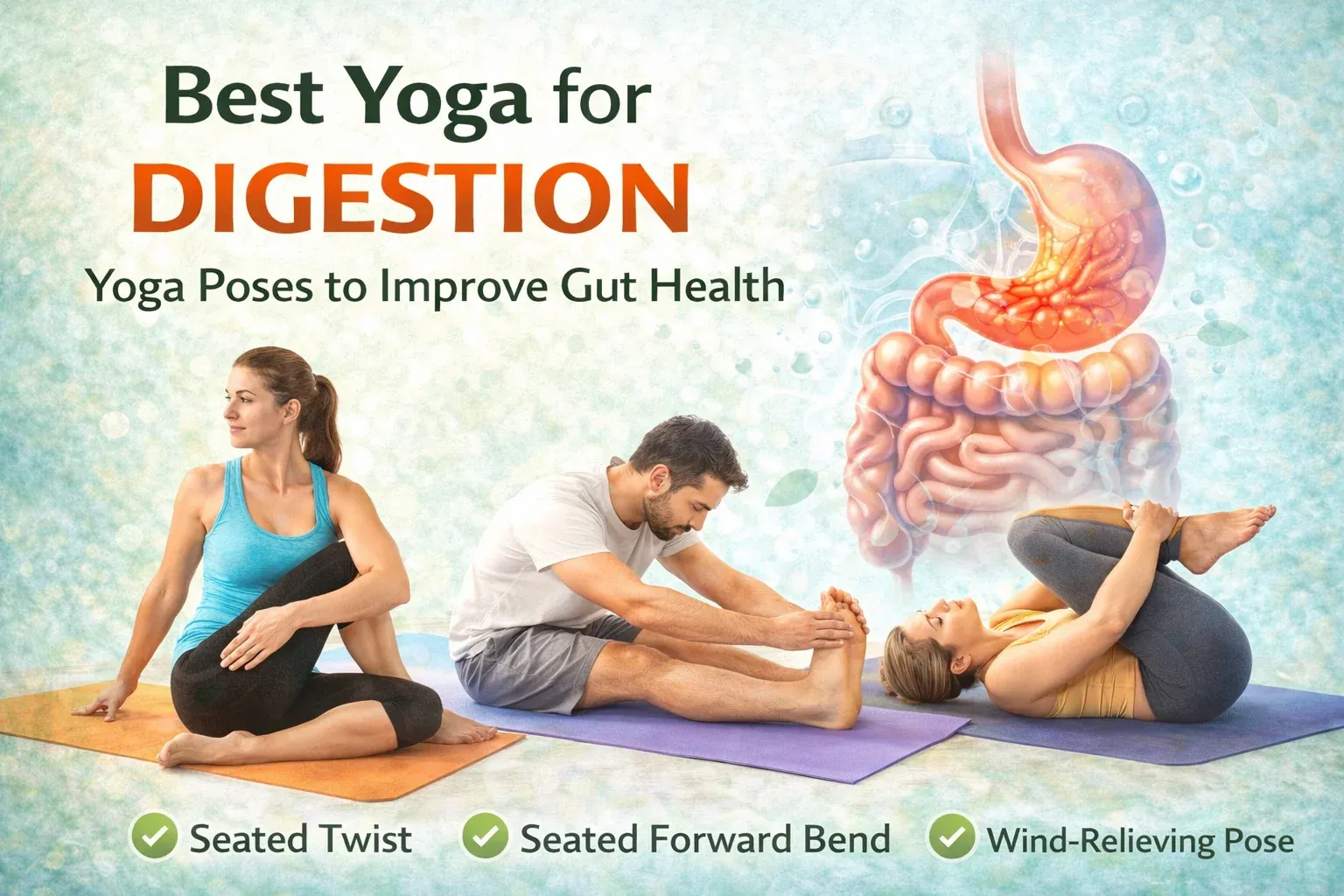
Quick Answer
Yoga for digestion refers to specific yoga poses and breathing techniques that stimulate the digestive tract, reduce bloating, and improve gut motility. Practiced for 15-30 minutes daily, yoga for digestion may ease common issues like constipation, gas, and irritable bowel symptoms by activating the parasympathetic nervous system and increasing blood flow to digestive organs. According to Mool Health's gut wellness team, consistent practice over 4-8 weeks can produce noticeable improvements in digestive comfort.
What Is Yoga for Digestion?
Yoga for digestion is a targeted practice using physical postures (asanas), breathwork (pranayama), and gentle movement to support the digestive system's function. It is not a separate yoga style - it is a curated selection of poses and sequences drawn from Hatha, Restorative, and Vinyasa traditions, chosen specifically for their effect on the gut.
Understanding the Digestive Process
The human digestive system processes food through a series of muscular contractions called peristalsis. When stress, poor posture, or a sedentary lifestyle disrupts this process, symptoms such as bloating, constipation, acid reflux, and sluggish digestion can follow. Yoga for digestion works by addressing these disruptions at their root - through physical compression, spinal twisting, and controlled breathing.
What Exactly Is Yoga for Digestion?
Yoga for digestion includes poses that:
- Compress and then release abdominal organs, stimulating blood flow
- Twist the torso to massage the intestines and liver
- Activate the vagus nerve via diaphragmatic breathing, which switches the body from "fight-or-flight" to "rest-and-digest" mode
- Strengthen core muscles that support proper gut positioning
Mool Health's approach to yoga for digestion integrates these mechanisms into structured daily routines suitable for beginners and experienced practitioners alike.
How Yoga for Digestion Works: The Complete Breakdown
Yoga for digestion works because specific physical movements directly stimulate digestive organs and the nervous system pathways that control gut function.
The Core Mechanism Explained
The digestive system is regulated by the enteric nervous system (ENS), often called the "second brain," and heavily influenced by the autonomic nervous system. Chronic stress activates the sympathetic nervous system, which slows digestion. Yoga for digestion counteracts this by activating the parasympathetic nervous system - specifically through slow, deep breathing and sustained poses - signalling the body that it is safe to digest.
Step-by-Step: How a Yoga Pose Aids Digestion
- You hold a forward fold or twist - This applies gentle mechanical pressure to abdominal organs including the stomach, intestines, and colon.
- Pressure stimulates organ walls - Blood flow to the gut increases, and trapped gas may be dislodged and moved along the intestinal tract.
- You release the pose - Fresh, oxygenated blood rushes back into the compressed area, nourishing digestive tissue.
- Breathwork activates the vagus nerve - Slow exhalations trigger parasympathetic activity, increasing gut motility (the speed and rhythm of intestinal contractions).
- Cortisol levels drop - Lower stress hormones allow the gut-brain axis to function more efficiently, reducing inflammation and cramping.
Common Misconceptions Cleared Up
- Yoga is not a cure for diagnosed conditions like IBD or GERD - it is a supportive practice.
- Results are not immediate - most people observe meaningful change after 3-6 weeks of consistent practice.
- Intensity does not equal effectiveness - gentle, restorative poses often outperform vigorous ones for digestive benefit.
Key Benefits of Yoga for Digestion: What You Actually Gain
Yoga for digestion offers both short-term relief and long-term structural improvements to gut health, according to Mool Health's clinical observations.
Short-Term Benefits (Within 1-2 Weeks)
- Reduced bloating and gas - Twisting and compressing poses physically move trapped gas through the intestines
- Relief from post-meal heaviness - Gentle movement after meals can accelerate gastric emptying by 20-30% compared to sitting still
- Lower stress-related gut discomfort - Breathwork activates the parasympathetic nervous system within minutes of practice
- Improved bowel regularity - Stimulating poses may trigger bowel movement, particularly in those with mild constipation
Long-Term Benefits (4-12 Weeks)
- Reduced IBS symptom severity - A 2015 study published in Clinical Gastroenterology and Hepatology found that yoga reduced IBS symptoms as effectively as a low-FODMAP diet in a 12-week trial
- Lower gut inflammation markers - Regular yoga practice has been associated with reduced levels of inflammatory cytokines linked to gut permeability
- Stronger core and diaphragm - Supports correct organ positioning and reduces acid reflux episodes
- Improved gut-brain axis communication - Sustained practice may rewire stress-response patterns that chronically impair digestion
Benefits at a Glance
| Benefit | Onset | Mechanism |
|---|---|---|
| Gas and bloating relief | Days 1-7 | Mechanical compression and release |
| Constipation improvement | Week 1-3 | Increased gut motility via parasympathetic activation |
| Reduced IBS symptoms | Week 4-12 | Nervous system regulation + reduced cortisol |
| Lower acid reflux frequency | Week 3-8 | Strengthened lower oesophageal sphincter support |
| Improved gut microbiome balance | Month 3+ | Reduced stress hormones influence microbial diversity |
Types of Yoga for Digestion: Which Is Right for You?
Yoga for digestion is not one-size-fits-all. Different yoga styles address different digestive concerns, and choosing the right type depends on your primary symptom, fitness level, and available time.
The Main Variations
| Yoga Type | Best For | Intensity | Session Length |
|---|---|---|---|
| Restorative Yoga | Stress-induced gut issues, IBS, acid reflux | Very low | 20-45 min |
| Hatha Yoga | General digestive sluggishness, constipation | Low-moderate | 30-60 min |
| Yin Yoga | Chronic bloating, colon support, deep organ compression | Low | 30-60 min |
| Vinyasa Yoga | Overall gut health, weight-related digestive issues | Moderate-high | 45-60 min |
| Pranayama (breathwork only) | Immediate gas relief, stress-triggered nausea | None | 5-15 min |
Which Type Is Right for Your Situation?
- If you have IBS or stress-related gut issues: Restorative or Yin yoga, practiced in the evening
- If you have chronic constipation: Hatha yoga with twisting sequences, practiced in the morning on an empty stomach
- If you have acid reflux: Avoid inversions; focus on pranayama and gentle forward folds
- If you are a beginner: Start with 15 minutes of Hatha yoga daily before advancing to longer sequences
Mool Health recommends starting with the gentlest appropriate type and building duration before increasing intensity.
How to Get Started with Yoga for Digestion: Step-by-Step Guide
Starting yoga for digestion requires no prior experience and minimal equipment. Mool Health recommends the following structured approach for beginners.
Prerequisites and What You Need
- A yoga mat or soft surface
- Comfortable, non-restrictive clothing
- An empty or light stomach (wait 1-2 hours after a full meal)
- 15-30 minutes of uninterrupted time
Step-by-Step Starter Routine
Begin with 2-3 minutes of diaphragmatic breathing - Lie on your back, place one hand on your belly, and breathe so the belly rises before the chest. This activates the parasympathetic nervous system before movement begins.
Move into Wind-Relieving Pose (Pawanmuktasana) - Draw one knee, then both knees, to the chest. Hold each for 30-60 seconds. This directly compresses the ascending and descending colon, helping dislodge trapped gas.
Transition to Seated Spinal Twist (Ardha Matsyendrasana) - Sit tall, cross one leg over, and rotate the torso. Hold for 45 seconds per side. Twisting massages the transverse colon and liver.
Hold Cat-Cow Pose (Marjaryasana-Bitilasana) for 10-15 repetitions - This spinal flexion and extension mobilises the abdominal organs and stimulates peristalsis directly.
Move into Child's Pose (Balasana) - Hold for 60-90 seconds. This gentle forward compression on the abdomen provides sustained pressure on the intestines while calming the nervous system.
Finish with Supine Twist (Supta Matsyendrasana) - Lie on your back, drop both knees to one side, hold 60 seconds each side. This final twist wrings residual tension from the gut.
Close with 2 minutes of Nadi Shodhana (alternate nostril breathing) - This balances the autonomic nervous system and consolidates the parasympathetic state induced by the practice.
Common Mistakes to Avoid
- Practicing immediately after a large meal - Wait at least 90 minutes to avoid nausea or reflux
- Forcing deep twists - Compression should feel gentle; sharp pain is a signal to stop
- Skipping breathwork - The breathing component is as important as the physical poses for digestive benefit
- Inconsistency - A 15-minute daily practice is more effective than a 60-minute session once a week
Yoga for Digestion vs. Alternatives: An Honest Comparison
Yoga for digestion is one of several approaches to managing gut health. Understanding how it compares helps you decide whether to use it alone or alongside other interventions.
Side-by-Side Comparison
| Approach | Mechanism | Time to Results | Side Effects | Cost |
|---|---|---|---|---|
| Yoga for Digestion | Nervous system regulation + mechanical stimulation | 2-6 weeks | None when practiced correctly | Free-low |
| Probiotics | Restores gut microbiome balance | 4-8 weeks | Mild gas initially | Moderate |
| Digestive enzyme supplements | Compensates for enzyme deficiency | Immediate | Possible dependency | Moderate |
| Dietary changes (e.g., low-FODMAP) | Removes fermentable triggers | 1-4 weeks | Restrictive lifestyle | Low |
| Medication (e.g., laxatives, antacids) | Symptom suppression | Immediate | Dependency, masking | Low-moderate |
Which Is Best for Your Use Case?
- Yoga for digestion is best for people with stress-related gut issues, mild-to-moderate IBS, constipation, or bloating who prefer a non-pharmaceutical approach.
- Probiotics complement yoga well for microbiome-level support.
- Medication remains appropriate for acute or medically diagnosed conditions - yoga for digestion should not replace prescribed treatment.
- Dietary changes combined with yoga for digestion produce the most robust outcomes, according to Mool Health's integrated gut health protocols.
What to Expect: Results Timeline for Yoga for Digestion
Results from yoga for digestion vary based on consistency, the specific digestive issue, lifestyle factors, and individual gut health status.
Realistic Timeline
| Timeframe | What Typically Happens |
|---|---|
| Days 1-7 | Reduced gas and bloating during or after practice; mild improvement in bowel regularity |
| Weeks 2-4 | Noticeable reduction in post-meal discomfort; less frequent constipation episodes |
| Weeks 4-8 | Measurable improvement in IBS symptom frequency; reduced acid reflux for mild cases |
| Months 3-6 | Sustained gut motility improvement; reduced stress-triggered flare-ups; possible positive shifts in gut microbiome diversity |
Factors That Affect Your Results
- Practice frequency - Daily practice produces faster results than 2-3 sessions per week
- Diet quality - High-fibre, low-processed-food intake amplifies yoga's benefits
- Stress levels - Chronic stress may slow progress; adding meditation can help
- Underlying conditions - Diagnosed IBD, gastroparesis, or SIBO may require medical supervision alongside yoga
What the Research Shows
A 2016 study in Alimentary Pharmacology & Therapeutics found that participants who practiced yoga 3-5 times per week for 12 weeks reported a 50% reduction in IBS symptom scores compared to a 30% reduction in the control group. Results were most pronounced in those with anxiety-linked gut symptoms.
Best Practices for Yoga for Digestion: Expert Tips
Mool Health's gut wellness practitioners recommend these evidence-informed strategies to maximise results from yoga for digestion.
Expert Tips
- Practice in the morning on an empty stomach - Cortisol is naturally higher in the morning; yoga helps regulate it before it disrupts digestion through the day
- Hold poses for longer, not harder - A 60-second hold in Child's Pose produces more sustained parasympathetic activation than a rapid flow sequence
- Combine twists with exhalation - Deepening a twist on the exhale increases intra-abdominal pressure and organ stimulation
- Add Kapalabhati (breath of fire) for constipation - 2-3 minutes of rapid abdominal pumping can stimulate peristalsis directly
- Use a bolster or blanket for restorative poses - Supported postures allow longer holds without muscle fatigue
- Track bowel habits for 4 weeks - A simple log helps identify which poses most effectively address your specific symptom
- Avoid inversions if you have acid reflux - Downward dog and shoulder stands can worsen reflux; substitute with seated forward folds
Common Mistakes to Avoid
- Practicing vigorously after meals - increases reflux risk
- Skipping Savasana - the final rest pose consolidates nervous system reset
- Using yoga as a replacement for medical diagnosis - if symptoms are severe or worsening, consult a gastroenterologist
Disclaimer
This article is for educational purposes only and should not be treated as medical advice, diagnosis, or treatment. Yoga may support digestion, but severe, recurring, or worsening digestive symptoms should be evaluated by a qualified healthcare professional.
Key Takeaways
Yoga may support digestion by improving gut motility, reducing stress and easing bloating. This guide covers the best yoga poses and tips for better digestive health.
Your gut is unique your healing should be too.

Disclaimer
The content provided by Mool Health is for educational and informational purposes only and should not be considered a substitute for professional medical advice, diagnosis, or treatment.