
What Is Digestion? A Complete Guide to How Your Body Breaks Down Food
An easy-to-follow guide to digestion, from chewing and saliva to nutrient absorption and elimination. It explains digestive organs, digestion types, timing & symptoms.
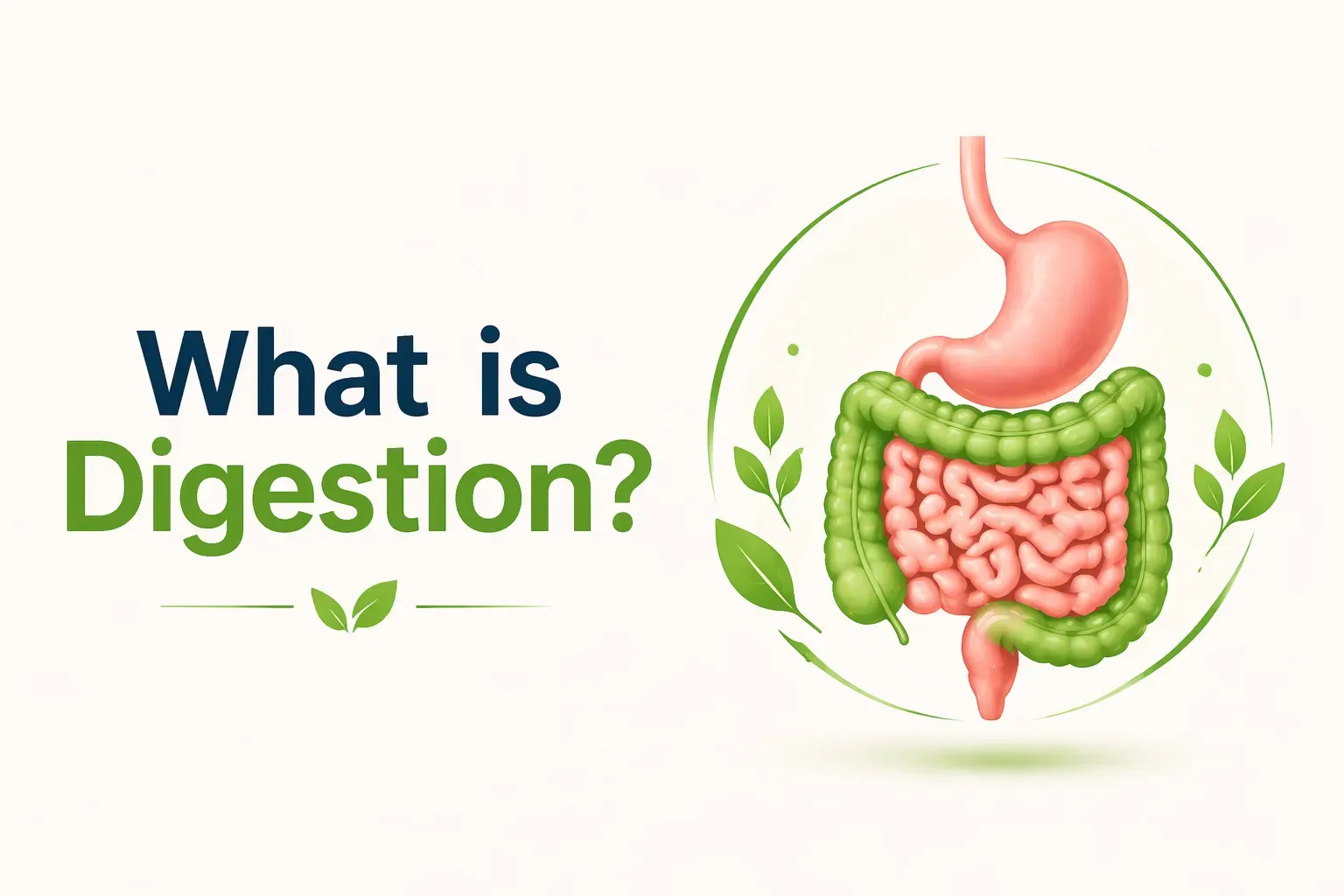
Quick Answer
Digestion is the process by which the body breaks food down into nutrients that can be absorbed into the bloodstream and used for energy, growth, and cell repair. It begins in the mouth with saliva, continues through the stomach and small intestine, and ends when the large intestine reabsorbs water and forms stool.
- Mechanical digestion physically breaks food into smaller pieces.
- Chemical digestion uses enzymes, stomach acid, and bile to break molecular bonds.
- Most nutrient absorption happens in the small intestine.
- The liver, pancreas, and gallbladder supply essential digestive substances.
- Persistent pain, blood in stool, vomiting, black stools, or unexplained weight loss need medical care.
Most people think of digestion as something the stomach does. In reality, it is a coordinated sequence involving multiple organs, digestive juices, enzymes, bile, and water. The process begins the moment food enters the mouth and finishes when undigested waste leaves the body.
Understanding how digestion works can make it easier to recognise why symptoms such as bloating, acidity, constipation, fatigue after meals, or changing bowel habits may occur. The key question is often not simply what symptom is present, but which stage of digestion may need attention.
- What digestion is and why it is necessary for survival.
- The step-by-step journey of food through the digestive tract.
- The roles of saliva, stomach acid, bile, liver, pancreas, enzymes, and water.
- How long digestion can take and what can slow or speed up transit.
- Signs that may suggest a digestive problem needs medical attention.
How Digestion Works: Stage by Stage
The digestive tract is a long, connected pathway from the mouth to the anus. At each stage, food is moved, broken down, mixed with digestive substances, absorbed, or prepared for elimination.
| Stage | Location | What Happens |
|---|---|---|
| Ingestion | Mouth | Food enters the body. Chewing and saliva begin the first steps of breakdown. |
| Propulsion | Oesophagus | Peristalsis moves the swallowed bolus toward the stomach. |
| Mechanical digestion | Stomach and small intestine | Muscular movement churns and mixes food into smaller, more manageable particles. |
| Chemical digestion | Stomach and small intestine | Acid, bile, and enzymes break carbohydrates, fats, and proteins into absorbable forms. |
| Absorption | Small intestine | Nutrients cross the intestinal wall into the bloodstream or lymphatic system. |
| Water reabsorption | Large intestine | Water and electrolytes are reabsorbed while stool forms. |
| Elimination | Rectum and anus | Undigested waste is expelled from the body. |
What Is Digestion?
Digestion is the mechanical and chemical breakdown of food into smaller molecules that the body can absorb and use. Foods such as rice, dal, vegetables, proteins, and fats are too complex for cells to absorb directly. Digestion converts them into simpler forms:
- Carbohydrates: glucose and other simple sugars.
- Proteins: amino acids and small peptides.
- Fats: fatty acids and glycerol-related products.
- Vitamins and minerals: released from the food matrix for absorption.
Once these nutrients are broken down, they cross the intestinal wall and enter the bloodstream for distribution throughout the body. Material that is not absorbed moves into the large intestine and is eventually expelled as stool.
Why Is Digestion Necessary?
Digestion is necessary because the molecules in food are too large and complex for cells to use directly. Without digestion, nutrition would not be possible, even if the diet were otherwise adequate.
- Glucose: provides energy for the brain, muscles, and cells that make ATP.
- Amino acids: help build and repair tissues and support enzymes, hormones, and immune function.
- Fatty acids: support cell membranes, hormone production, and fat-soluble vitamin absorption.
- Vitamins and minerals: contribute to many essential functions, from oxygen transport to nerve signalling.
- Water: supports fluid balance, blood volume, and cellular hydration.
When digestion or absorption is impaired, people may not get the full benefit from the food they eat. This can contribute to symptoms such as fatigue after meals, gas, bloating, bowel changes, and nutrient deficiencies.
What Are the Two Types of Digestion?
There are two fundamental types of digestion. Most stages of the digestive process use one or both at the same time.
Mechanical Digestion
Mechanical digestion is the physical breakdown of food into smaller pieces without changing its chemical structure. It increases the surface area available for enzymes and digestive juices to work on.
- Mouth: Chewing, also called mastication, breaks food into smaller pieces and helps form a soft bolus for swallowing.
- Stomach: Muscular contractions churn food with gastric juices, turning it into a semi-liquid mixture called chyme.
- Small intestine: Segmentation contractions mix chyme with bile and enzymes while moving it against the intestinal wall.
Chemical Digestion
Chemical digestion uses enzymes, stomach acid, and bile to break the chemical bonds inside large food molecules. This creates smaller building blocks that the intestinal lining can absorb.
| Location | Digestive Agent | Main Role |
|---|---|---|
| Mouth | Salivary amylase | Begins starch digestion. |
| Stomach | Hydrochloric acid and pepsin | Begins protein digestion and helps control many food-borne microbes. |
| Small intestine | Pancreatic enzymes and bile | Continues carbohydrate, protein, and fat digestion. |
| Small intestine lining | Brush border enzymes | Completes the final breakdown of certain sugars and peptides. |
Mechanical digestion creates surface area, while chemical digestion breaks molecular bonds. Both are essential, and one cannot fully make up for a problem in the other.
What Is the Role of Saliva in Digestion?
The role of saliva in digestion of food begins before swallowing. Saliva is made by the salivary glands and serves several functions at once.
- Salivary amylase: starts breaking starch into shorter sugar chains.
- Lubrication: mucus in saliva helps form a smooth bolus that can be swallowed more easily.
- Taste activation: food molecules need to dissolve in saliva before taste receptors can detect them.
- Oral protection: saliva contains substances that help protect the mouth from microbes.
- pH buffering: saliva can help limit the effect of acidic foods on tooth enamel.
Low saliva production can make chewing, swallowing, and the earliest stages of digestion more difficult.
What Is the Role of the Stomach in Digestion?
The stomach is a muscular, J-shaped organ that stores food temporarily and processes it with gastric juices. Depending on meal composition, food may remain in the stomach for several hours before moving into the small intestine.
- Mechanical churning: stomach contractions mix food with gastric juice and turn it into chyme.
- Acid secretion: parietal cells release hydrochloric acid, creating the acidic environment needed for key digestive actions.
- Enzyme activation: hydrochloric acid helps convert pepsinogen into pepsin, which begins protein digestion.
The stomach also controls how quickly chyme moves into the small intestine through the pyloric sphincter. This helps prevent the small intestine from being overloaded.
What Is the Role of HCl in Digestion?
Hydrochloric acid, also called HCl, is made by parietal cells in the stomach lining. It is important for protein digestion and for maintaining the acidic conditions of the stomach.
- Activating pepsin: HCl converts inactive pepsinogen into pepsin, which helps digest proteins.
- Unfolding proteins: the acidic environment makes proteins easier for enzymes to act on.
- Supporting defence: stomach acid helps limit many pathogens that enter with food.
- Releasing vitamin B12: HCl helps separate B12 from food proteins so it can later be absorbed.
- Supporting iron absorption: acidic conditions help make dietary iron more available for absorption.
Digestive symptoms can have different causes. Understanding the causes of acidity can help distinguish occasional reflux or heartburn from symptoms that may need clinical assessment.
For recurring upper-digestive discomfort with bloating, the Acidity & Bloating Kit can be considered as part of a routine that also includes appropriate food, hydration, and lifestyle changes.
What Is the Role of Bile in Digestion?
Bile is a yellow-green fluid produced by the liver, stored in the gallbladder, and released into the small intestine when food containing fat arrives. It does not contain digestive enzymes, but it is still essential for fat digestion.
- Emulsifying fats: bile salts break larger fat globules into smaller droplets, creating more surface area for lipase to work.
- Supporting fat digestion: bile helps create the conditions in which pancreatic lipase can work efficiently.
- Helping absorb vitamins: vitamins A, D, E, and K require normal fat digestion and bile activity for absorption.
- Balancing acidity: bile is alkaline and helps raise the pH of chyme entering the small intestine.
- Carrying waste: bile carries certain waste products from the liver into the digestive tract for elimination.
Read more about the role of bile in digestion and why it matters for fat absorption.
What Is the Role of the Liver in Digestion?
The liver is the largest internal organ and an important metabolic centre. Its digestive role includes much more than producing bile.
- Bile production: the liver makes bile needed for fat digestion and fat-soluble vitamin absorption.
- Nutrient processing: nutrients absorbed from the intestine travel to the liver through the portal vein for processing.
- Detoxification: the liver processes many drugs, alcohols, toxins, and metabolic by-products.
- Protein synthesis: it makes proteins that support fluid balance, blood clotting, and nutrient transport.
- Cholesterol regulation: it helps make and regulate cholesterol.
Jaundice, dark urine, pale stools, persistent upper-right abdominal pain, or unexplained fatigue should be assessed by a clinician.
What Is the Role of the Pancreas in Digestion?
The pancreas has both digestive and hormonal functions. Its exocrine function releases enzymes into the small intestine to support the digestion of carbohydrates, fats, proteins, and nucleic acids.
| Pancreatic Enzyme | Acts On | Produces |
|---|---|---|
| Pancreatic amylase | Starch | Shorter sugar chains, including maltose. |
| Pancreatic lipase | Triglycerides | Fatty acids and monoglycerides. |
| Trypsin and chymotrypsin | Proteins | Smaller peptide fragments. |
| Carboxypeptidase | Peptides | Smaller peptides and amino-acid units. |
| Nucleases | DNA and RNA | Nucleotides. |
The pancreas also releases bicarbonate, which helps neutralise acidic chyme from the stomach so intestinal and pancreatic enzymes can function in a more suitable environment.
What Is the Role of the Small Intestine in Digestion?
The small intestine is the main site of digestion and nutrient absorption. It is the longest section of the digestive tract and is divided into three regions.
- Duodenum: receives chyme from the stomach, bile from the liver and gallbladder, and pancreatic juice.
- Jejunum: absorbs much of the glucose, amino acids, fatty acids, vitamins, and minerals from food.
- Ileum: absorbs vitamin B12, recycles bile salts, and takes up remaining nutrients.
The inner surface of the small intestine contains villi and microvilli, which greatly increase the area available for absorption.
What Is the Role of Enzymes in Digestion?
Enzymes are proteins that speed up chemical reactions without being used up. In digestion, they help break large food molecules into smaller components the body can absorb.
- Salivary amylase: starts starch digestion in the mouth.
- Pepsin: begins protein digestion in the stomach.
- Pancreatic amylase: continues starch digestion in the small intestine.
- Pancreatic lipase: breaks down triglycerides into absorbable fat components.
- Trypsin and chymotrypsin: continue protein digestion in the small intestine.
- Brush border enzymes: complete the digestion of certain sugars and peptides at the intestinal lining.
Ongoing symptoms that may suggest maldigestion or malabsorption, such as persistent oily stools, unexplained weight loss, or nutrient deficiencies, need medical evaluation.
What Is the Role of Water in Digestion?
Water is not broken down during digestion, but it is necessary at every stage of the digestive process.
- Saliva formation: water is the main component of saliva.
- Enzyme activity: digestive enzymes work in water-based environments.
- Gastric juice distribution: water helps distribute stomach acid through stomach contents.
- Nutrient transport: dissolved nutrients travel through the intestinal wall and bloodstream in fluid.
- Stool formation: the large intestine reabsorbs water from waste, so low fluid intake can contribute to hard, dry stools.
- Mucosal protection: the protective mucus layer throughout the digestive tract is water-based.
For a practical look at fluid movement through the gut, see water digestion time and the factors that can affect it.
How Long Does Digestion Take?
Digestion does not happen in a few minutes. A mixed meal may take roughly 24 to 72 hours to travel from mouth to elimination, although the timing varies with meal size, fat and fibre content, hydration, stress, activity, medications, and individual health.
| Stage | Location | Typical Timing |
|---|---|---|
| Chewing and swallowing | Mouth and oesophagus | Usually minutes. |
| Gastric emptying | Stomach | Often around 2 to 4 hours, with liquids usually moving faster and high-fat meals moving more slowly. |
| Small intestinal transit | Duodenum, jejunum, and ileum | Often around 2 to 6 hours. |
| Large intestinal transit | Colon | Can vary widely, often taking many additional hours. |
| Total mouth-to-elimination time | Full digestive tract | Commonly about 24 to 72 hours, with substantial individual variation. |
High-fat meals, dehydration, low fibre intake, stress, some medications, and inactivity can slow transit. Very rapid transit can also be a problem because it may limit nutrient absorption.
Where Does Digestion of Starch Begin?
Digestion of starch begins in the mouth. When chewing starts, salivary glands release salivary amylase, an enzyme that begins breaking starch into shorter sugar chains.
The Journey of Carbohydrate Digestion
- Mouth: salivary amylase begins starch digestion.
- Stomach: the acidic environment inactivates salivary amylase, so starch digestion largely pauses.
- Small intestine: pancreatic amylase continues starch digestion.
- Intestinal lining: brush border enzymes help convert sugars such as maltose, sucrose, and lactose into absorbable monosaccharides.
Foods with more intact fibre and structure generally take longer to reach the final stages of carbohydrate digestion than refined carbohydrates do.
What Happens to Protein and Fat During Digestion?
Protein digestion begins in the stomach, where acid and pepsin start breaking proteins into smaller fragments. In the small intestine, pancreatic proteases and brush border enzymes continue the process until amino acids and small peptides can be absorbed.
Fat digestion occurs mainly in the small intestine. Bile disperses dietary fat into smaller droplets, and pancreatic lipase breaks triglycerides into absorbable components. These products are absorbed through intestinal cells and move through lymph and blood.
What Happens in the Large Intestine?
The large intestine absorbs water and electrolytes from material that was not absorbed earlier in the digestive tract. Gut bacteria also ferment some fibre and carbohydrates that reach the colon, producing gases and short-chain fatty acids. Stool forms as water is reabsorbed and waste moves toward the rectum.
When hard stools or infrequent bowel movements are the main concern, the Constipation Relief Kit may be more relevant alongside fluids, gradual fibre intake, regular movement, and medical advice when symptoms persist.
How to Support Healthy Digestion
There is no single habit or food that supports every digestive symptom. The most useful approach is usually to build consistent habits that make it easier for the digestive system to work as intended.
- Eat at a comfortable pace: slower eating and thorough chewing can reduce the mechanical workload on the stomach.
- Include fibre gradually: fruits, vegetables, pulses, and whole grains can support regularity, but increasing fibre too fast can worsen gas for some people.
- Drink enough fluids: hydration supports stool consistency and normal digestive function.
- Stay active: regular movement can support bowel regularity. Learn more about does walking help digestion and when movement may feel most comfortable.
- Notice individual triggers: meal size, alcohol, caffeine, stress, sleep, medications, and specific foods can affect different people differently.
For a broader routine, explore ways to improve digestion naturally at home with practical, everyday habits. For everyday digestive support, the Digestion Relief Kit can also fit into a routine built around mindful eating, hydration, and movement.
What Is Good for Digestion?
Good digestion is usually supported by a pattern of consistent habits rather than one food, drink, or supplement. The aim is to make eating, movement, hydration, and bowel regularity easier for your body to manage over time.
Foods That Can Support Digestion
- Fibre-rich foods: vegetables, fruits, whole grains, and lentils can support bowel regularity and feed gut bacteria.
- Fermented foods: foods such as curd, buttermilk, idli, and dosa may be included when they suit your digestion and dietary needs.
- Herbs and spices: ginger, cumin, fennel, and ajwain are commonly used in meals and may make some people feel more comfortable after eating.
- Fruit choices: papaya and pineapple contain naturally occurring enzymes, although they are not a replacement for medical care when symptoms persist.
- Balanced meals: combining carbohydrates, protein, fat, and fibre can support steadier energy and fullness after meals.
Daily Habits That Support the Digestive Process
- Chew slowly and thoroughly: this supports saliva production and reduces the amount of mechanical work required later in the digestive tract.
- Keep regular meal timing: a predictable routine can help some people maintain a comfortable digestive rhythm.
- Avoid lying down soon after meals: remaining upright for two to three hours may help people who notice reflux-like symptoms after eating.
- Manage stress where possible: stress can influence appetite, motility, and how the gut feels after meals.
- Move regularly: gentle activity such as walking can support bowel regularity and overall comfort.
Healthy vs Impaired Digestion: How to Tell the Difference
Digestive comfort can vary from day to day, but recurring symptoms are useful signals to notice. The table below offers a general comparison and is not a diagnostic tool.
| Marker | Often Seen With Comfortable Digestion | May Need Closer Attention |
|---|---|---|
| Energy after meals | Energy generally remains steady after eating. | Repeated fatigue, heaviness, or discomfort after meals. |
| Bowel pattern | Stools are usually soft, formed, and pass without marked straining. | Ongoing constipation, urgent loose stools, or a new change in bowel habits. |
| Bloating | Little or no visible distension after most meals. | Regular pressure, gas, or visible bloating soon after eating. |
| Appetite | Hunger and fullness cues feel broadly predictable. | Persistent early fullness, nausea, lack of appetite, or constant hunger. |
| Stool appearance | Food particles are not usually noticeable in stool. | Repeated oily stools, visible undigested food, black stools, or blood in stool. |
| Daily comfort | Meals are generally comfortable and do not consistently disrupt routine. | Symptoms repeatedly affect sleep, work, food choices, or quality of life. |
Symptoms do not identify a single cause by themselves. They can be linked to meal patterns, infections, medications, food intolerances, stress, digestive disorders, or other medical conditions. A clinician can help assess symptoms that are persistent or concerning.
What Research Says About Digestive Health
Digestive symptoms are common worldwide. Functional gastrointestinal disorders, which include conditions such as irritable bowel syndrome and functional dyspepsia, affect a substantial share of people and can influence daily comfort, sleep, work, and food choices.
The gut microbiome also contributes to digestion. Gut microbes help ferment fibres that reach the colon and produce short-chain fatty acids that support the cells lining the large intestine. Changes in diet, illness, medication use, stress, and sleep can all influence this ecosystem.
Modern estimates place the surface area of the small intestine at roughly 32 square metres when its folds, villi, and microvilli are fully considered. This is why the small intestine is so central to nutrient absorption.
Research on digestion continues to evolve, especially in areas such as the gut-brain connection, microbial metabolism, intestinal barrier function, and personalised dietary responses. Persistent digestive symptoms should still be assessed clinically rather than self-diagnosed from a single symptom or online checklist.
What This Means for You
Understanding the stages of digestion gives you a practical way to notice patterns without assuming that every symptom has the same cause. A few consistent actions can be a useful starting point.
- Start with chewing: slow, thorough chewing supports the earliest mechanical and chemical stages of digestion.
- Review hydration: regular fluid intake supports saliva, digestion, and stool consistency.
- Notice meal timing and stress: rushing through meals or eating during periods of high stress can change how the gut feels.
- Track symptom patterns: note whether discomfort follows specific foods, meal sizes, bedtime eating, travel, or medication changes.
- Seek timely advice: persistent symptoms or red flags deserve medical evaluation rather than repeated self-treatment.
Common Signs of Digestive Problems
Occasional digestive symptoms are common, especially after dietary changes, travel, or infection. Recurrent, persistent, or worsening symptoms are worth discussing with a clinician.
- Frequent bloating, excessive gas, or abdominal discomfort after meals.
- Heartburn, sour taste in the mouth, or regurgitation.
- Constipation, diarrhoea, or a continuing change in bowel habits.
- Feeling full quickly, nausea, or repeated vomiting.
- Unexplained weight loss, blood in stool, black stools, severe pain, fever, or difficulty swallowing.
For a clearer overview of possible symptom patterns, read about common digestion problems and when they may need medical attention.
Why Mool Health
Digestive symptoms can be influenced by meals, stress, sleep, hydration, bowel habits, and individual triggers. Mool Health encourages a whole-person view of gut health, starting with a structured assessment of symptoms and lifestyle patterns rather than focusing only on one symptom at a time.
Understand Your Digestion Better
Use a structured Gut Health Test to look more closely at the meal habits, bowel patterns, and post-meal symptoms that may be affecting your digestion.
Medical Disclaimer
This article is for general health education only and does not replace medical advice, diagnosis, or treatment. Seek medical care for persistent or worsening digestive symptoms, severe abdominal pain, vomiting, blood in stool, black stools, unexplained weight loss, fever, jaundice, or difficulty swallowing.
Key Takeaways
- Digestion breaks food into nutrients that the body can absorb and use for energy, growth, and repair.
- Mechanical digestion physically breaks food down, while chemical digestion uses enzymes, acid, and bile.
- The mouth, stomach, small intestine, large intestine, liver, pancreas, and gallbladder all have specific roles.
- Most nutrient absorption happens in the small intestine, while the large intestine mainly reabsorbs water and forms stool.
- Persistent symptoms such as blood in stool, black stools, severe pain, vomiting, unexplained weight loss, or trouble swallowing need medical evaluation.
Your gut is unique your healing should be too.

FAQs
Digestion is the process of breaking food into smaller nutrients that the body can absorb and use for energy, growth, and repair.
Digestion begins in the mouth. Chewing breaks food into smaller pieces, and saliva starts the chemical digestion of starch.
The two types are mechanical digestion, which physically breaks food into smaller pieces, and chemical digestion, which uses enzymes, acid, and bile to break food molecules into absorbable forms.
The small intestine absorbs most nutrients. Its villi and microvilli create a large surface area for nutrients to pass into the bloodstream or lymphatic system.
The stomach stores food, churns it with acid and digestive enzymes, begins protein digestion, and releases partially digested food gradually into the small intestine.
Bile helps disperse dietary fat into smaller droplets so lipase can digest it more efficiently. It also supports absorption of vitamins A, D, E, and K.
Timing varies by meal size, composition, activity, hydration, stress, medication use, and individual health. A mixed meal can take roughly 24 to 72 hours to travel from mouth to elimination.
The gut and brain communicate through nerves, hormones, and immune signals. During periods of stress, some people notice changes in appetite, stomach comfort, bowel habits, or symptoms such as bloating and reflux.
Fatigue after meals can have many causes, including meal size, sleep, blood sugar changes, medications, stress, and digestive conditions. Persistent or severe fatigue should be discussed with a qualified clinician.
With age, changes in appetite, medication use, mobility, dental health, stomach acid production, gut motility, and other health conditions can influence digestion. New or persistent symptoms should not be assumed to be a normal part of ageing.
Seek medical advice for symptoms that persist, worsen, or occur with blood in stool, black stools, unexplained weight loss, severe pain, fever, persistent vomiting, jaundice, or difficulty swallowing.
Disclaimer
The content provided by Mool Health is for educational and informational purposes only and should not be considered a substitute for professional medical advice, diagnosis, or treatment.