
Anxiety Gas Connection: Why Stress Causes Bloating and Gas
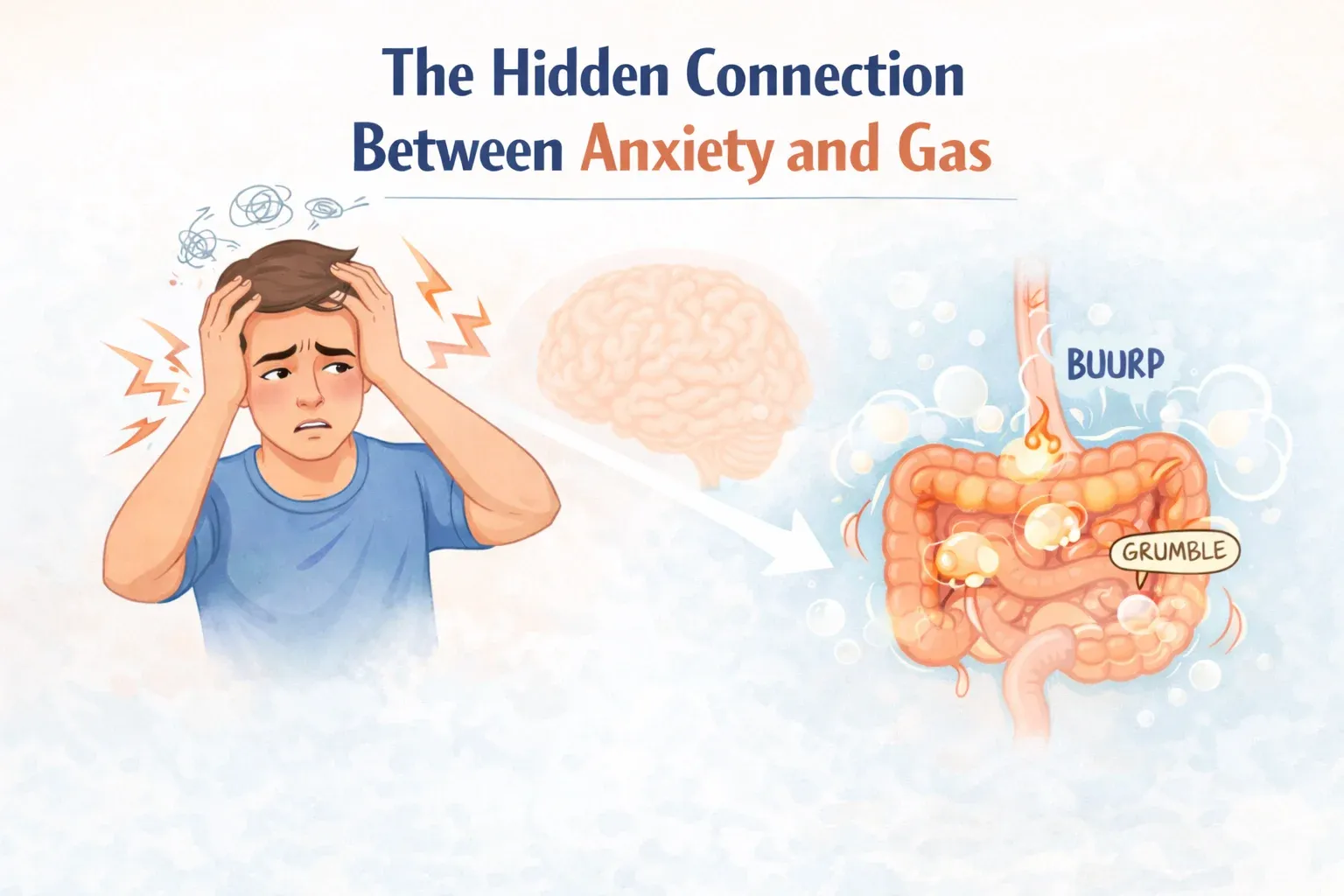
Anxiety and gas are closely linked through the gut–brain axis. Stress can slow digestion, disrupt gut bacteria, and cause bloating, gas, and a nervous stomach.
✏️ Quick Answer
Yes — anxiety and gas are directly connected through the gut-brain axis. Stress causes the gut muscles to contract irregularly, slows digestion, increases air swallowing, and disrupts gut bacteria balance — all of which produce excess gas and bloating. This anxiety gas connection is not imagined; it is a medically recognised response called stress bloating or visceral hypersensitivity.
Why Do Anxiety and Gas Often Show Up Together — The Anxiety Gas Connection
Many people notice that when their mind feels tense, their stomach also feels tight, gassy, or uncomfortable. You may feel bloated before an exam, have excessive gas during stressful workdays, or experience a "nervous stomach" before social events. This connection between anxiety and gas — and stress and gas in stomach — is not imagined. It is deeply rooted in how the brain and gut talk to each other.
In India, digestive discomfort linked to stress is very common but often brushed aside as "gas trouble." What is rarely discussed is how emotions like anxiety can directly affect digestion, gut bacteria, and even liver function. Understanding this mind–gut link can help you manage symptoms better, without fear or confusion.
This article explains the anxiety gas connection in a medically grounded but simple way, focusing on root causes rather than quick fixes.
Anxiety Stomach Gas — What Does It Actually Feel Like?
Gas linked to anxiety does not look the same in everyone. Some people feel it as constant bloating, while others experience sharp abdominal pain or frequent burping.
Common symptoms include:
- Tightness or heaviness in the upper or lower abdomen
- Excessive gas or frequent passing of wind
- Loud stomach noises during stressful moments
- Sudden bloating even after small meals
- Abdominal discomfort without clear food triggers
- Urgent need to use the toilet when anxious
These symptoms often worsen during emotional stress and reduce when the mind is calm. Medical tests may come back normal, which can be frustrating and emotionally draining.
How Are the Brain and Gut Connected — Why Anxiety Causes Gas
The gut is sometimes called the "second brain" because it has its own nervous system, known as the enteric nervous system. This system communicates constantly with the brain through a pathway called the gut–brain axis.
When anxiety is present:
- The brain sends stress signals to the gut
- Gut muscles may contract too fast or too slow
- Digestive enzymes and stomach acid become imbalanced
- Gas movement through the intestines becomes irregular
This is why emotional stress can immediately cause digestive symptoms, even without eating anything unusual.
Can Stress Cause Gas and Bloating — Stress Bloating Explained
Yes. Stress bloating is a well-recognised phenomenon in gastroenterology.
Under stress, the body enters a "fight or flight" state. Blood flow shifts away from digestion toward the brain and muscles. As a result:
- Digestion becomes less efficient
- Food may ferment more in the gut
- Gas builds up instead of passing smoothly
Stress also increases air swallowing, especially in anxious individuals who breathe rapidly or sigh frequently. This extra air adds to bloating and discomfort. You can read more about the underlying causes of gas and bloating.
Nervous Stomach Gas — What It Is and Why It Happens
A nervous stomach is a common term used to describe digestive symptoms triggered by emotional tension rather than infection or structural disease.
In a nervous stomach:
- The gut becomes overly sensitive to normal sensations
- Small amounts of gas feel painful or uncomfortable
- The person becomes hyper-aware of gut sounds and movements
This sensitivity is known as visceral hypersensitivity and is commonly seen in people with anxiety disorders, functional dyspepsia, or irritable bowel syndrome (IBS). These symptoms are often linked with broader digestive disturbances explained in bloating symptoms and causes.
Does Anxiety Cause Gas Through Gut Bacteria? The Microbiome Link
Anxiety does not just affect gut movement; it also affects the gut microbiome.
Chronic stress can:
- Reduce beneficial gut bacteria
- Increase gas-producing bacteria
- Alter fermentation of carbohydrates
This imbalance can lead to more hydrogen and methane gas production, worsening bloating and abdominal pressure. Maintaining good gut health and digestion and digestion becomes important in these situations.
Stress, Microbiome, and Gas Production
| Factor | Effect on Gut | Result |
|---|---|---|
| Chronic anxiety | Alters gut bacteria balance | More gas formation |
| Poor sleep | Reduces microbial diversity | Increased bloating |
| Irregular meals | Disrupts digestion | Gas and discomfort |
| High stress hormones | Slow digestion | Gas retention |
Anxiety Affect Digestion — How the Liver Is Also Involved
Digestion is not just about the stomach and intestines. The liver plays a key role in fat digestion, detoxification, and bile production.
Chronic anxiety can:
- Disrupt bile flow through stress hormones
- Affect appetite and eating patterns
- Increase inflammation in the gut–liver axis
Poor bile flow can lead to indigestion, heaviness after meals, and gas, especially after fatty or spicy foods commonly eaten in Indian diets. Many people also experience related symptoms such as slow digestion symptoms.
Why Does Gas Worsen During Panic or Emotional Stress?
During acute anxiety or panic:
- Breathing becomes shallow and rapid
- More air is swallowed unconsciously
- Gut muscles spasm
This sudden change can trap gas or push it quickly through the intestines, causing cramps, urgency, or embarrassing noises. The fear of these symptoms can then increase anxiety further, creating a vicious cycle.
Is Anxiety Gas a Sign of a Serious Disease?
In most cases, anxiety gas is functional, meaning there is no structural disease. However, it should not be ignored if accompanied by:
- Unexplained weight loss
- Persistent vomiting
- Blood in stools
- Severe or worsening pain
- Symptoms waking you from sleep
These signs need medical evaluation to rule out other conditions.
How Lifestyle Habits Silently Worsen Anxiety Gas
Many daily habits can quietly intensify both anxiety and digestive gas.
Lifestyle Triggers Linked to Stress Bloating
| Habit | Effect on Mind | Effect on Gut |
|---|---|---|
| Skipping meals | Blood sugar swings | Excess gas |
| Late-night eating | Poor sleep | Sluggish digestion |
| Excess tea or coffee | Increased anxiety | Acid and gas |
| Sedentary routine | Mental fatigue | Slow gut movement |
| Screen overuse | Nervous system overload | Nervous stomach |
Can Stress Cause Gas and Bloating Through Diet — Food and Eating Patterns
Yes. It is not only what you eat, but how you eat.
Eating quickly, distracted, or while stressed sends confusing signals to the gut. This can lead to incomplete digestion and more fermentation.
Foods that may worsen gas during anxiety include:
- Very spicy or oily foods
- Excess onions, cabbage, or cauliflower
- Large portions of refined carbohydrates
- Carbonated drinks
Eating patterns that support avoiding common gastric problems may help reduce these symptoms.
What Helps Calm Both Anxiety and Gas Naturally?
Managing anxiety gas requires a combined approach that supports the nervous system, digestion, and lifestyle rhythm.
Helpful strategies include:
- Eating meals at regular times
- Sitting calmly for meals without screens
- Slow breathing before and after eating
- Gentle physical activity like walking or yoga
- Adequate sleep with fixed timings
Mindful breathing, especially slow abdominal breathing, directly relaxes the gut–brain axis and helps gas pass naturally.
When Should You Seek Medical or Mental Health Support?
If anxiety gas is affecting your quality of life, social confidence, or sleep, it deserves attention.
Consider professional help if:
- Digestive symptoms persist despite lifestyle changes
- Anxiety feels constant or overwhelming
- You avoid food or social situations due to fear of gas
- You feel low, restless, or mentally exhausted
A combined approach involving a doctor, dietitian, or mental health professional often works best.
The Bigger Picture: Listening to the Mind-Gut Connection
Anxiety gas is not "just in your head," nor is it purely a stomach problem. It is the body's way of signalling imbalance across digestion, microbiome health, liver function, and lifestyle stress.
By understanding this connection, you can move away from self-blame and quick remedies, and toward gentle, sustainable changes that support both mental calm and digestive comfort.
Key Takeaways
Anxiety and gas are closely linked through the gut–brain axis. Stress can slow digestion, disrupt gut bacteria, and cause bloating, gas, and a nervous stomach.
Your gut is unique your healing should be too.

Disclaimer
The content provided by Mool Health is for educational and informational purposes only and should not be considered a substitute for professional medical advice, diagnosis, or treatment.