
Everything About GERD: Symptoms, Causes, & Treatment
This guide covers what is GERD, its symptoms, causes, treatment options including surgery, complications, and the difference between GERD, acidity, heartburn and heart attack.
✏️ Quick Answer
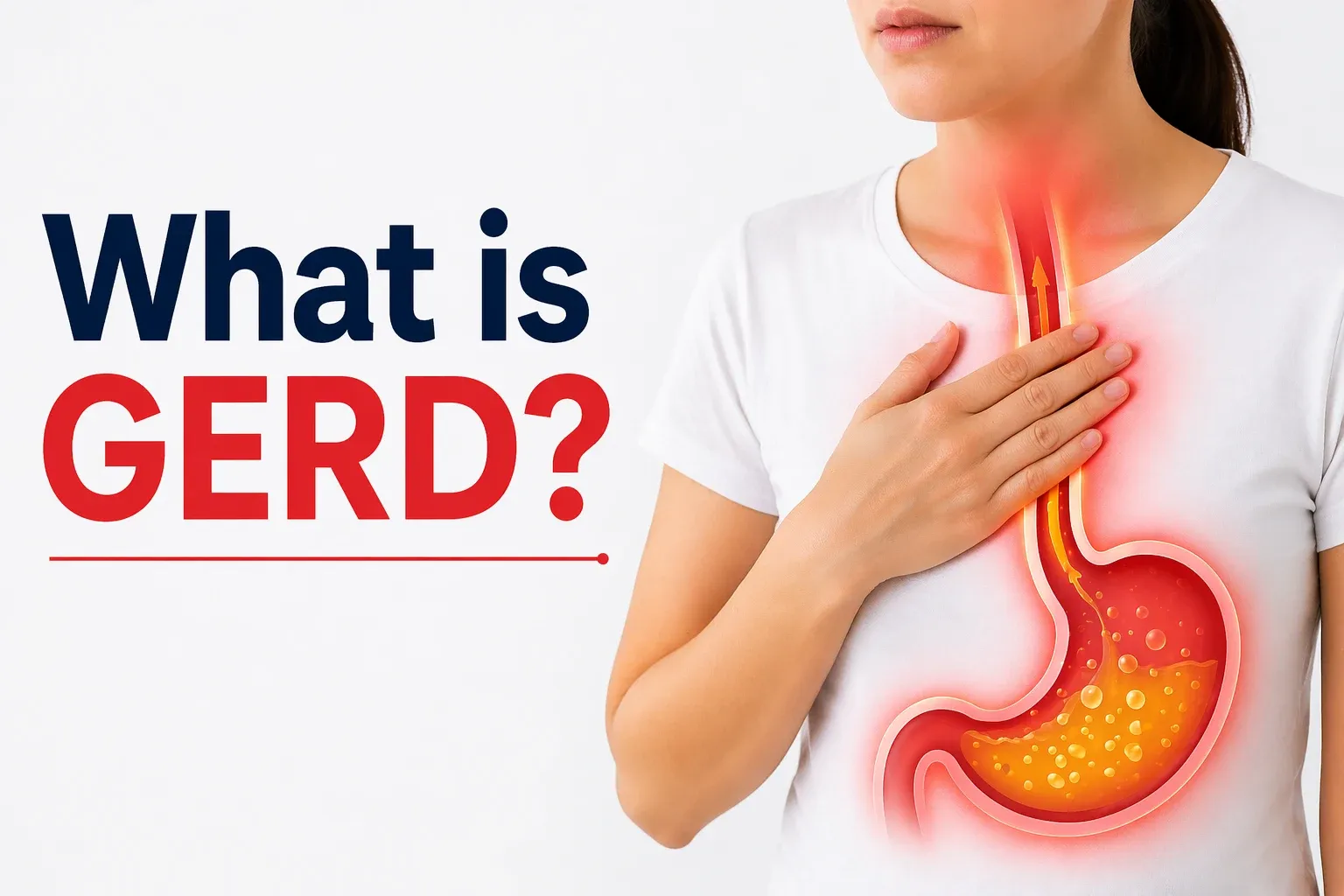
GERD (gastroesophageal reflux disease) is a chronic condition that occurs when stomach acid flows back into the esophagus (food pipe). The condition also happens due to a weak LES (lower esophageal sphincter). When your LES is too relaxed and stays open, it causes the stomach contents to travel up the esophagus. Symptoms of GERD are constant heartburn and severe chest pain. GERD is considered a severe acid reflux condition that requires professional help and cannot be treated with antacids. If you get acid reflux twice a week or more, you are suffering from chronic GERD and need a doctor's consultation.
Acid reflux is a common stomach problem that can progress to GERD. Many of our family members or we experience acidity from time to time, often because of our lifestyle habits. However, if acid reflux happens frequently, it could be a sign of a more serious problem like GERD. In this article, we will cover what is GERD, the symptoms, causes, treatment and the difference between GERD and acidity.
What Is GERD and Its Symptoms?
In medical terms, GERD, also known as gastroesophageal reflux disease, is a chronic condition characterised by acid reflux. When stomach acid travels back to the esophagus, it causes heartburn, and this is called GERD. The condition is also known as acid reflux, but there's a slight difference between GERD and acid reflux. Acid reflux is temporary and happens occasionally, while GERD is a severe acid reflux condition which requires immediate expert consultation.
Here are some GERD symptoms:
- Heartburn
- Chest pain
- Regurgitation (Food backwash)
- Nausea
- Sore throat
GERD symptoms worsen at night while sleeping or after bending down to pick up an object. The disease can also cause asthma-like symptoms, such as shortness of breath and chronic coughing.
Causes of GERD
There are several causes of GERD and acid reflux, but the main cause is acid leak into the esophagus. Let's understand how and why this happens.
For acid reflux to flow back to the esophagus, your LES, lower oesophagal sphincter, needs to be open. LES opens when you swallow food and closes again to keep its contents in the stomach. The LES also opens when you pass acid bubbles in the form of burps.
GERD or acid reflux happens when your LES is too relaxed or weak. LES is generally relaxed when you lie down after a heavy meal or when you are physically inactive.
Remember, acid reflux is temporary, but if it occurs often, you might be suffering from chronic GERD.
Understanding what is the main cause of GERD will help you effectively treat your GERD symptoms.
Other causes of GERD
- Pregnancy
- Overweight
- Obesity
- Smoking
- Medicine side effect
- High-fat foods
- Too spicy and oily food
What Is the Treatment for GERD?
People follow certain home remedies for acidity and make lifestyle changes to reduce acid reflux symptoms. But if you are suffering from GERD, it's chronic and cannot be treated with dietary and lifestyle changes. Yes, it does play a crucial role in treatment, but a doctor's consultation is a must for GERD.
During consultation, the doctor may prescribe antacids, H2 blockers, or PPIs to relieve symptoms. If the condition doesn't improve with medicines and lifestyle changes, your doctor may recommend surgery. Here are the types of surgeries that are also part of GERD acidity treatment:
1. Fundoplication
Fundoplication is the most common surgical procedure for long-term relief of GERD. In this surgery, the doctor sews the top of the stomach around esophagus to add pressure on the LES.
2. Metabolic and Bariatric Surgery
Metabolic or Bariatric surgery is a weight loss surgery performed on people who have GERD due to morbid obesity. In this surgery, doctors create a small pouch from the stomach to the small intestine to treat the condition.
You may also undergo an endoscopy procedure. Endoscopy is a surgical process performed on patients suffering from acid reflux and GERD. In this procedure, doctors insert a small, flexible tube with a light into the patient's mouth to examine the condition.
Complications of GERD (Chronic Acid Reflux)
Since GERD is a chronic acid reflux condition and requires expert consultation, it can cause complications if left untreated.
1. Esophagitis
The inflammation of the lining of the esophagus is called esophagitis. The condition can cause difficulty swallowing, a burning sensation, and chest pain.
2. Esophageal Stricture
In an Esophageal stricture, your esophagus narrows, and you feel difficulty in swallowing food. The food may also get stuck in the esophagus.
3. Barrett's Esophagus
Barrett's Esophagus is a serious condition in which the lining of your esophagus changes. This condition increases the risk of developing esophageal cancer.
4. Asthma
Acid reflux or GERD in patients with asthma can worsen the condition. One can feel irritation in the airways, leading to coughing and breathing difficulties, especially at night.
5. Laryngopharyngeal reflux
When this acid type reaches the throat, it causes chronic coughing, throat irritation, and a constant feeling of something stuck in the throat.
Difference Between GERD and Acidity
GERD and acidity are often confused by many people. GERD and its symptoms are similar to Acidity, but there are major differences one must know.
| GERD | Acidity |
|---|---|
| A condition in which acid flows back to the esophagus. | A condition in which excess stomach acid causes discomfort. |
| It occurs twice a week or more frequently. | It occurs occasionally and lasts for a few days. |
| It is usually severe and needs medical treatment. | It is usually mild and can be treated with home remedies. |
| It is caused by LES (Lower esophagal sphincter), obesity, and hiatal hernia. | It is caused by overeating, stress, and spicy foods. |
| Regurgitation, difficulty swallowing, severe chest pain and heartburn are a few GERD symptoms. | Heartburn, bloating, mild chest discomfort, and a sour taste are a few of the symptoms of acid reflux. |
Difference Between GERD and Heartburn
Acidic symptoms, such as heartburn, are also similar to GERD symptoms, which can be complicated for people. Here's the detailed information on both conditions.
| GERD | Heartburn |
|---|---|
| GERD is a chronic acid reflux condition that repeatedly happens and damages the esophagus. | Heartburn is a burning sensation that happens when the acid flows back to the esophagus. |
| It is a condition that requires medical treatment and cannot be ignored. | It is one of the GERD and acid reflux symptoms. |
| Occurs frequently, mainly twice a week and may worsen without treatment. | Occurs rarely and can be treated with home remedies. |
| It is triggered by relaxed and weak LES, obesity, and long-term poor lifestyle habits. | It is triggered by lifestyle habits such as overeating, lying down after a meal, or consuming acidic foods. |
| Requires long-term improvement through medication and treatment. | Requires lifestyle changes and antacids. |
Difference Between GERD and Heart Attack
Both conditions have different symptoms, but the commonly mistaken one is chest pain. GERD and a heart attack both cause severe chest pain that is usually difficult for people to identify whether they have a heart attack or GERD. Here's the detailed difference you must know.
| GERD | Heart Attack |
|---|---|
| GERD causes burning sensation in the esophagus called heartburn. | Heart attack causes crushing, squeezing and heaviness around chest area. |
| GERD often occurs a few times a week. | Heart attacks can happen anytime due to stress or anxiety. |
| GERD symptoms include heartburn, sourness and severe chest pain. | Heart attack symptoms include sweating, dizziness, nausea, and chest pain. |
| It needs a doctor's consultation and medical treatment. | It requires immediate hospitalisation and emergency intervention. |
How Mool Health Helps With GERD?
Mool Health focuses on stomach issues like bloating, acidity, diarrhoea, and GERD. It is a brand that offers holistic treatment for people dealing with digestive issues, rather than randomly prescribing medicines for symptoms. You can take the Mool Mool Gut Health test to identify the root cause of your stomach problem. This way, you can treat the symptoms at their source and prevent them from recurring frequently. Mool Health also provides a free diet plan based on your symptoms and expert support.
Acidity can be treated with home remedies and medications such as antacids. But for GERD, you must consult your doctor and get the treatment immediately. GERD recurring multiple times every week is a signal that the condition of your esophagus has worsened. Now that you know what is GERD and what is the treatment for GERD, identify the symptoms sooner and get the treatment before it causes you a severe health issue.
Key Takeaways
This guide covers what is GERD, its symptoms, causes, treatment options including surgery, complications, and the difference between GERD, acidity, heartburn and heart attack.
Your gut is unique your healing should be too.

Disclaimer
The content provided by Mool Health is for educational and informational purposes only and should not be considered a substitute for professional medical advice, diagnosis, or treatment.