
Slow Digestion Symptoms: Causes, Signs & What to Do
A complete guide to slow digestion symptoms, causes, bloating signs, pregnancy links, management steps and when medical evaluation is needed.
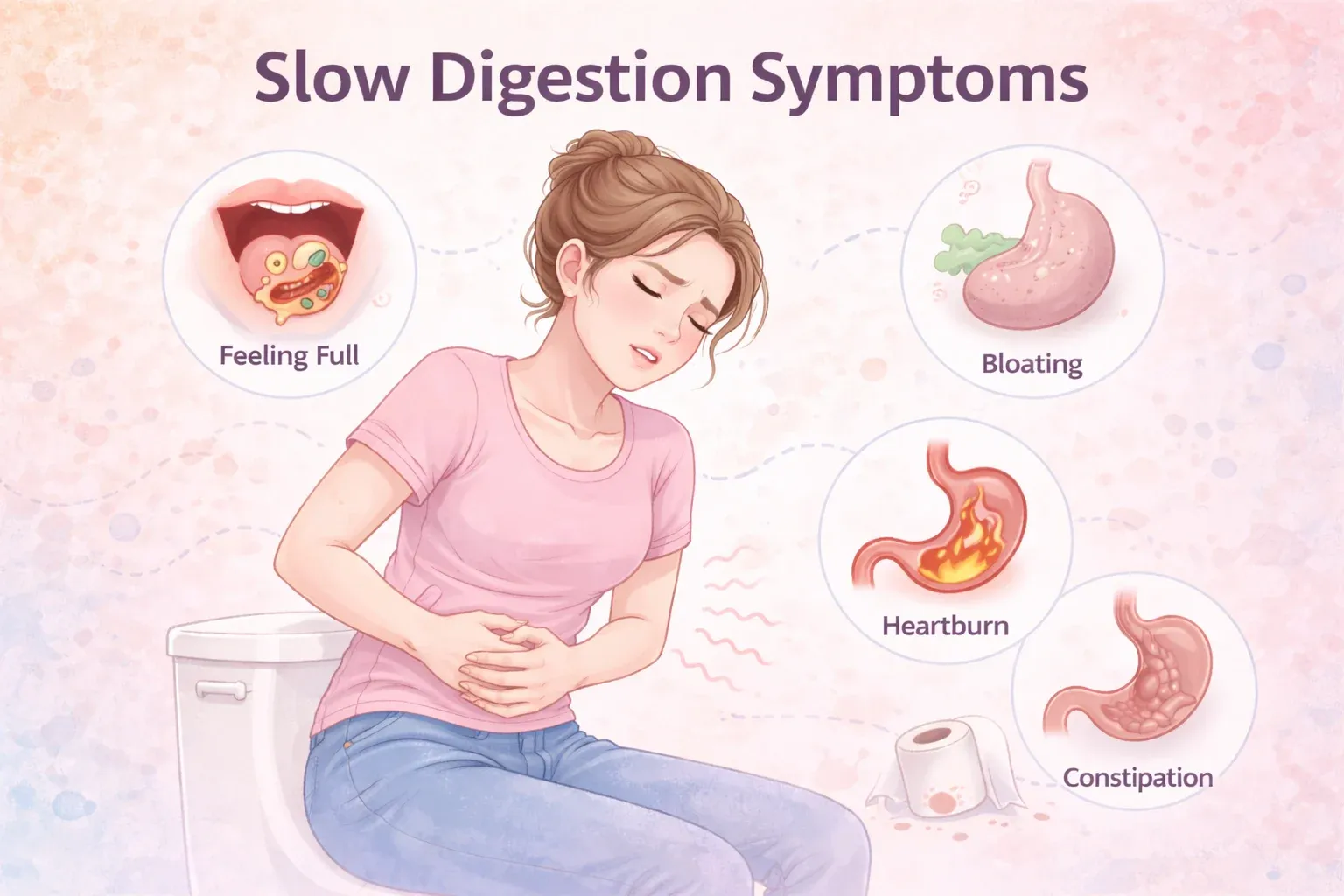
Quick Answer
Slow digestion means your stomach empties food more slowly than normal, causing symptoms like bloating, nausea, early fullness, and abdominal discomfort. These symptoms can range from mild and occasional to persistent and disruptive. Understanding the signs of a slow digestive system helps you act earlier and manage the condition more effectively.
- Main signs: Bloating, nausea, early fullness, upper abdominal discomfort, heartburn and low appetite
- Common causes: Diabetes, hypothyroidism, certain medications, stress, pregnancy and delayed gastric emptying
- Helpful steps: Smaller meals, lower fat during flare-ups, staying upright after eating and gentle walking
- Doctor needed: Symptoms lasting more than 3 to 4 weeks, weight loss, vomiting or poor blood sugar control
Slow digestion means your stomach empties food more slowly than normal, causing symptoms like bloating, nausea, early fullness, and abdominal discomfort. These symptoms can range from mild and occasional to persistent and disruptive. Understanding the signs of a slow digestive system helps you act earlier and manage the condition more effectively.
What Is Slow Digestion? A Plain-Language Definition
Slow digestion - clinically referred to as delayed gastric emptying or gastroparesis in its more severe form - occurs when the muscles of the stomach do not contract with enough force or coordination to move food into the small intestine at a normal pace. The result is food sitting in the stomach longer than it should.
Slow digestion is not a single disease. It is a symptom pattern that can stem from several underlying causes, including diabetes, nerve damage, dietary habits, and hormonal changes.
Key facts:
- The stomach typically empties a mixed meal within 4 to 5 hours
- In slow digestion, this process may take 6 hours or more
- Approximately 4% of the general population reports chronic symptoms consistent with delayed gastric emptying
- Women are more commonly affected than men
According to Mool Health's gut health team, slow digestion is frequently underdiagnosed because its symptoms overlap with other common conditions like acid reflux or irritable bowel syndrome.
What Are the Common Slow Digestion Symptoms?
Slow digestive system symptoms typically involve the upper gastrointestinal tract and often appear during or shortly after eating. Recognising these signs early is the first step toward effective management.
Core symptoms of slow digestion include:
- Bloating - a feeling of fullness or pressure in the abdomen, often worsening after meals
- Early satiety - feeling full after eating only a small amount of food
- Nausea - occurring during or after meals, occasionally with vomiting
- Upper abdominal pain or discomfort - a dull ache or pressure below the ribcage
- Heartburn or acid reflux - caused by food remaining in the stomach and pushing stomach acid upward
- Loss of appetite - due to persistent fullness or nausea
- Unintended weight loss - in more severe or long-standing cases
- Blood sugar fluctuations - particularly relevant in people with diabetes, as slow gastric emptying affects how quickly glucose enters the bloodstream
Slow Digestion and Bloating: What Is the Connection?
Slow digestion bloating symptoms are among the most commonly reported complaints. When food sits in the stomach and intestines longer than usual, bacteria ferment it and produce gas. This gas accumulates in the digestive tract, causing visible bloating, distension, and discomfort. Studies suggest that up to 75% of people with delayed gastric emptying report bloating as their primary complaint.
How to Tell If Your Digestive System Is Slow
You may have a slow digestive system if you regularly experience two or more of the following:
- Feeling uncomfortably full more than 2 hours after eating
- Bloating that worsens throughout the day
- Nausea after standard-sized meals
- Undigested food appearing in vomit or stool
- Blood sugar levels that are difficult to control (in diabetics)
- Significant reduction in appetite over several weeks
If these symptoms persist for more than 3 to 4 weeks, Mool Health recommends consulting a healthcare provider for a formal evaluation.
How Does Slow Digestion Work? The Mechanism Explained
Understanding why slow digestion happens makes it easier to address. The process involves a specific breakdown in the stomach's normal function.
Normal digestion works as follows:
- Food enters the stomach and mixes with gastric acid and enzymes
- The stomach muscles contract rhythmically to grind food into smaller particles
- The pyloric valve (at the base of the stomach) opens to release food into the small intestine
- The vagus nerve - which runs from the brain to the stomach - coordinates this entire process
In slow digestion, this process breaks down because:
- The vagus nerve is damaged or functioning poorly, reducing the strength of stomach contractions
- The pyloric valve may not open correctly, blocking timely food passage
- Muscle function in the stomach wall is weakened, reducing the mechanical grinding of food
- As a result, food accumulates in the stomach, triggering bloating, nausea, and early fullness
The most common cause of vagus nerve damage is uncontrolled diabetes - high blood sugar over time damages the nerve, leading to diabetic gastroparesis, which affects an estimated 30 to 50% of people with long-standing diabetes.
What Causes Slow Digestion? Key Risk Factors
Slow digestion has identifiable causes in most cases. Mool Health's clinical advisors note the following as the most common triggers:
| Cause | How It Leads to Slow Digestion |
|---|---|
| Diabetes (Type 1 & 2) | High blood sugar damages the vagus nerve |
| Post-surgical changes | Surgery near the stomach can disrupt nerve or muscle function |
| Hypothyroidism | Low thyroid hormone slows muscular contractions throughout the gut |
| Certain medications | Opioid painkillers, antidepressants, and antacids can slow gastric motility |
| Stress and anxiety | The gut-brain axis disrupts normal digestive signalling |
| Scleroderma | An autoimmune condition that stiffens the stomach lining |
| Idiopathic causes | No identifiable cause found in approximately 35% of cases |
Slow Digestion as an Early Pregnancy Symptom
Slow digestion is a recognised early pregnancy symptom. During the first trimester, rising progesterone levels relax smooth muscle tissue throughout the body - including the stomach and intestines. This hormonal effect slows the movement of food through the digestive tract, causing:
- Persistent nausea, especially in the morning
- Bloating and gas
- Constipation
- A heavy or full feeling after small meals
These symptoms typically peak between weeks 6 and 10 of pregnancy and may ease by the second trimester as hormone levels stabilise. Mool Health advises pregnant individuals experiencing severe or prolonged digestive slowing to seek medical guidance, as extreme cases may affect nutritional intake.
How to Fix Slow Digestion: A Step-by-Step Guide
Managing slow digestion symptoms involves dietary changes, lifestyle adjustments, and, in some cases, medical treatment. Mool Health outlines the following evidence-informed approach:
Step 1: Adjust meal size and frequency Eat 4 to 6 small meals per day instead of 2 to 3 large ones. Smaller meals require less stomach effort to process and reduce the risk of triggering symptoms.
Step 2: Reduce fat and fibre during flare-ups High-fat foods and insoluble fibre are the slowest to digest. Temporarily lowering their intake can ease symptoms. Focus on low-fat proteins (chicken, fish, eggs) and cooked vegetables.
Step 3: Stay upright after eating Lying down after meals slows gastric emptying further. Remain upright for at least 1 to 2 hours after eating. A short, gentle walk can actively stimulate gut motility.
Step 4: Stay hydrated with liquids between meals Drinking large amounts of fluid with meals dilutes digestive enzymes and stretches the stomach. Sip water between meals rather than during.
Step 5: Review current medications If you take opioids, anticholinergics, or proton pump inhibitors, discuss with your doctor whether they may be contributing to slow digestion symptoms.
Step 6: Manage blood sugar levels For people with diabetes, maintaining HbA1c below 7% has been shown to reduce the severity of diabetic gastroparesis symptoms in clinical observations.
Step 7: Seek medical evaluation if symptoms persist A gastric emptying scan (scintigraphy) is the gold-standard diagnostic test. It measures how quickly food leaves the stomach and can confirm delayed emptying within a 4-hour testing window.
Common Mistakes to Avoid
- Eating large meals assuming hunger will override the symptoms
- Taking fibre supplements during a flare without medical advice
- Self-diagnosing with IBS and skipping gastroenterological evaluation
- Drinking carbonated beverages, which worsen bloating
Slow Digestion vs. IBS vs. GERD: Key Differences
Slow digestion symptoms overlap with several other digestive conditions. Understanding the distinctions helps ensure the right diagnosis and treatment.
| Feature | Slow Digestion | IBS | GERD |
|---|---|---|---|
| Primary symptom | Early fullness, nausea | Cramping, altered bowel habits | Heartburn, acid taste |
| Location of discomfort | Upper abdomen | Lower abdomen | Chest/throat |
| Bloating pattern | Worsens after eating, upper | Variable, lower | Worsens when lying down |
| Relation to meals | Occurs during/after eating | Triggered by specific foods | Worsens after large meals or at night |
| Vomiting | Common in severe cases | Rare | Occasional |
| Diagnostic test | Gastric emptying scan | Symptom-based criteria (Rome IV) | Endoscopy or pH monitoring |
| Treatment focus | Motility agents, diet changes | Gut-brain therapies, diet | Acid suppression, lifestyle |
Slow digestion and GERD frequently co-occur, as food retained in the stomach increases pressure and acid reflux. Mool Health recommends evaluation for both conditions when upper GI symptoms are persistent.
What to Expect: Timeline for Improvement
Results from dietary and lifestyle changes vary depending on the cause and severity of slow digestive system symptoms. Mool Health's gut health advisors provide the following general framework:
| Timeframe | What Typically Happens |
|---|---|
| Week 1-2 | Bloating and nausea may reduce with meal size adjustments and dietary changes |
| Week 3-4 | Appetite and post-meal comfort begin to stabilise with consistent habits |
| Month 2-3 | Significant symptom reduction in idiopathic cases with full dietary adherence |
| Month 3-6 | Medical treatments (prokinetics, nerve stimulation) show measurable response in clinical cases |
| Ongoing | Diabetes-related gastroparesis requires long-term blood sugar management for sustained improvement |
Clinically observed outcomes suggest that approximately 65% of people with mild-to-moderate delayed gastric emptying see meaningful improvement with dietary modifications alone within 8 to 12 weeks. Severe or diabetic gastroparesis typically requires a combined medical and dietary approach.
Best Practices for Managing Slow Digestion Symptoms
Mool Health's digestive health team recommends the following evidence-informed practices for anyone managing slow digestion:
- Chew food thoroughly - aim for 20 to 30 chews per bite to reduce the mechanical work the stomach must do
- Eat on a consistent schedule - regular meal timing trains the digestive system and stabilises gastric motility signalling
- Avoid trigger foods - common triggers include fatty meats, carbonated drinks, raw onions, citrus, and high-fat dairy
- Include ginger in your diet - ginger has demonstrated prokinetic effects in small clinical studies, accelerating gastric emptying by up to 25% in some trials
- Walk after meals - even 10 to 15 minutes of gentle walking stimulates intestinal contractions
- Limit alcohol and smoking - both impair stomach motility and worsen slow digestion bloating symptoms
- Manage stress actively - the gut-brain axis is a real physiological pathway; chronic stress measurably slows gastrointestinal transit time
- Track symptoms in a food diary - identifying personal trigger foods speeds up the management process significantly
Mool Health’s Perspective on Slow Digestion Symptoms
Mool Health looks at slow digestion as a pattern that can be linked to meal size, food type, gut motility, stress, blood sugar balance, pregnancy, medication use, or an underlying digestive condition.
The most useful first step is to track meal timing, fullness, bloating, nausea, bowel movement pattern, and symptom duration. This helps separate occasional heaviness from persistent slow digestive system symptoms that need medical evaluation.
Disclaimer
This article is for general educational purposes only and does not replace medical advice, diagnosis, or treatment. If slow digestion symptoms are persistent, severe, associated with vomiting, blood in stool, black stools, unexplained weight loss, dehydration, pregnancy-related concern, or worsening blood sugar control, consult a qualified healthcare professional.
Key Takeaways
- Slow digestion occurs when the stomach empties food more slowly than normal, causing bloating, nausea, early fullness, and upper abdominal discomfort
- Slow digestion bloating symptoms result from food fermenting in the stomach and intestines longer than usual, producing excess gas
- The most common causes include diabetes, nerve damage, hypothyroidism, certain medications, and chronic stress
- Slow digestion is a recognised early pregnancy symptom, caused by progesterone relaxing smooth muscle in the digestive tract
- Dietary changes - smaller meals, lower fat and fibre during flare-ups, staying upright after eating - resolve symptoms in approximately 65% of mild-to-moderate cases within 8 to 12 weeks
- A gastric emptying scan is the gold-standard test for confirming delayed emptying
- Persistent or severe slow digestive system symptoms warrant medical evaluation to rule out gastroparesis or an underlying systemic condition
Next step: If you have been experiencing these symptoms for more than 3 weeks, Mool Health recommends completing a symptom assessment with a qualified gut health specialist to identify the root cause and build a personalised management plan.
Your gut is unique your healing should be too.

Disclaimer
The content provided by Mool Health is for educational and informational purposes only and should not be considered a substitute for professional medical advice, diagnosis, or treatment.