
IBS Symptoms Guide: Signs, Causes & When to Worry
A complete guide to IBS symptoms, early signs, causes, triggers, IBS types, sex-specific symptoms, red flags and management steps.
Quick Answer
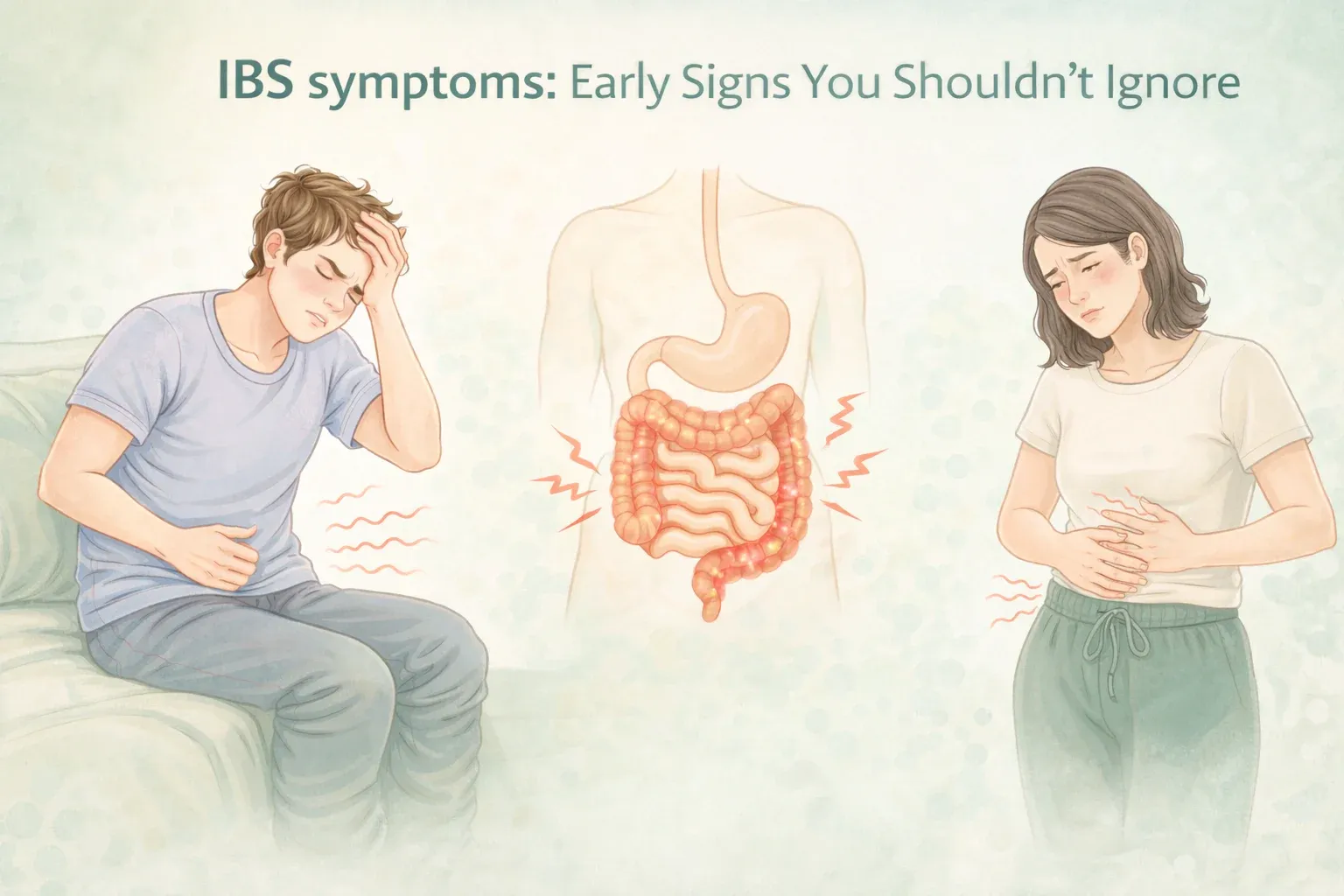
Irritable bowel syndrome (IBS) causes recurring abdominal pain, bloating, and unpredictable changes in bowel habits - diarrhoea, constipation, or both - that repeat over months. It affects an estimated 10-15% of people globally and is twice as common in women as in men. IBS does not cause bleeding, fever, or weight loss. If any of those are present, seek medical assessment immediately - those symptoms are not IBS until other causes are ruled out.
At a glance - IBS core symptoms:
- Cramping or aching pain in the lower abdomen
- Bloating and visible abdominal distension
- Diarrhoea, constipation, or alternating between both
- Mucus in stool
- Urgency or feeling of incomplete bowel emptying
Irritable bowel syndrome (IBS) causes recurring abdominal pain, bloating, and unpredictable changes in bowel habits - diarrhoea, constipation, or both - that repeat over months. It affects an estimated 10-15% of people globally and is twice as common in women as in men. IBS does not cause bleeding, fever, or weight loss. If any of those are present, seek medical assessment immediately - those symptoms are not IBS until other causes are ruled out.
At a glance - IBS core symptoms:
- Cramping or aching pain in the lower abdomen
- Bloating and visible abdominal distension
- Diarrhoea, constipation, or alternating between both
- Mucus in stool
- Urgency or feeling of incomplete bowel emptying
What Is IBS? A Plain-Language Definition
Irritable bowel syndrome (IBS) is a functional gastrointestinal disorder - meaning the bowel appears structurally normal under investigation but does not function properly. IBS produces a cluster of symptoms including abdominal cramping, bloating, gas, and altered bowel movements that occur together and recur over time.
IBS is not the same as inflammatory bowel disease (IBD). IBD conditions like Crohn's disease and ulcerative colitis involve visible inflammation or damage to the gut lining. IBS does not cause structural damage, but it can significantly reduce quality of life.
Key facts about IBS:
- Affects an estimated 10-15% of people worldwide
- Diagnosed approximately twice as often in women as in men (roughly 2:1 ratio)
- Most commonly presents before age 50
- Categorised into subtypes based on dominant stool pattern
- Cannot be detected by standard blood tests or colonoscopy - diagnosis is clinical, using the Rome IV criteria
According to Mool Health's digestive health team, most people with IBS manage symptoms rather than achieve a permanent cure - though significant, sustained relief is possible with consistent intervention.
What Does IBS Feel Like? Common Symptoms Explained
IBS symptoms vary from person to person, but certain patterns appear consistently across most cases.
Core symptoms of IBS:
- Abdominal pain or cramping - typically in the lower abdomen; often relieved after a bowel movement
- Bloating and gas - a sensation of fullness or visible distension, frequently worse after meals
- Diarrhoea (IBS-D) - loose or watery stools, sometimes with urgency
- Constipation (IBS-C) - infrequent bowel movements, hard stools, or a feeling of incomplete evacuation
- Alternating bowel habits (IBS-M) - switching between diarrhoea and constipation within the same week
- Mucus in stool - white or clear mucus visible in bowel movements
Symptoms that are NOT typical of IBS and require urgent medical review:
- Blood in stool or black, tarry stools
- Unexplained weight loss of 5% or more within 3 months
- Fever alongside gut symptoms
- Night-time symptoms that wake you from sleep
- Symptoms first appearing after age 50
These red flag symptoms may indicate a more serious condition. Mool Health recommends ruling out colorectal cancer, IBD, and coeliac disease before confirming an IBS diagnosis. IBS is a diagnosis of exclusion.
What Are the Early Symptoms of IBS? How to Spot It Before It Gets Worse
Early IBS symptoms are easy to dismiss - most people spend months attributing them to a sensitive stomach before recognising a pattern. The earliest signs are typically mild and intermittent, not the severe cramping or daily urgency that characterises established IBS.
Early and mild IBS symptoms typically include:
- Occasional lower abdominal discomfort after meals, not constant pain
- Bloating that comes and goes, often worse in the evening
- Stools that fluctuate between normal and slightly loose or harder than usual
- A vague sense of incomplete bowel emptying after going to the toilet
- Mild urgency after eating, especially after fatty or high-fibre meals
- Increased sensitivity to foods previously tolerated well
At this stage, symptoms are present on fewer than 3 days per week and do not significantly disrupt daily life.
How early IBS differs from moderate or severe IBS:
| Severity Level | Frequency | Impact on Daily Life | Typical Features |
|---|---|---|---|
| Mild IBS | Occasional flares (1-3 days/week) | Minimal disruption | Managed by minor dietary changes |
| Moderate IBS | Regular flares (3-5 days/week) | Noticeable; affects meals, social plans | Requires active dietary management |
| Severe IBS | Near-daily symptoms | Significant disruption; may affect work | Often requires medical intervention |
Research published in Gut (2014) found that approximately 40% of IBS patients report mild symptoms, 35% moderate, and 25% severe.
What triggers the shift from mild to severe IBS?
Mild IBS can escalate when two or more triggers coincide - for example, a high-stress period combined with antibiotic use. Research suggests visceral hypersensitivity increases progressively if the gut environment is not stabilised early. Identifying IBS triggers within the first 3 months of symptom onset reduces long-term severity in the majority of patients. Waiting 12 or more months is associated with a higher likelihood of developing overlapping anxiety or depression, which further complicates management.
Why Does IBS Happen? Causes and Triggers
IBS does not have a single identified cause. Current evidence points to several interacting factors that disrupt normal gut function.
Biological Causes
1. Gut-brain axis dysregulation The gut and brain communicate via the enteric nervous system. In people with IBS, this signalling may be abnormal, causing the gut to overreact to normal digestive stimuli. Studies suggest that up to 60% of IBS patients show heightened visceral sensitivity - meaning they feel pain at lower levels of gut distension than people without IBS.
2. Altered gut motility In IBS-D, the gut moves contents too quickly, limiting water absorption and resulting in loose stools. In IBS-C, movement is too slow, causing water to be over-absorbed and stools to harden.
3. Microbiome imbalance Research published in the journal Gut found that people with IBS show measurable differences in gut microbiota composition compared to healthy controls. Reduced diversity and lower levels of beneficial bacteria - including Lactobacillus and Bifidobacterium - are commonly observed.
4. Post-infectious IBS (PI-IBS) Approximately 10-15% of IBS cases begin after a confirmed gastrointestinal infection. PI-IBS may involve persistent low-grade gut inflammation that alters motility and sensitivity long after the original infection resolves.
Common Symptom Triggers
| Trigger Category | Examples |
|---|---|
| Dietary | High-FODMAP foods, alcohol, caffeine, fatty meals |
| Stress and anxiety | Work pressure, major life events, poor sleep |
| Hormonal changes | Menstrual cycle fluctuations in women |
| Medications | Antibiotics, NSAIDs, some antidepressants |
| Lifestyle | Irregular meal times, low physical activity |
According to Mool Health's digestive health team, identifying individual triggers through a structured food diary is one of the most effective first steps in IBS management.
How Does IBS Work? The Underlying Mechanism
IBS symptoms occur because communication between the brain and the enteric nervous system - the gut's own nervous network - becomes dysregulated. This is called gut-brain axis dysfunction.
Here is how the process typically unfolds:
- A trigger is introduced - a specific food, psychological stress, or a change in gut bacteria
- The enteric nervous system overreacts - nerve endings in the gut lining send exaggerated pain or urgency signals to the brain
- Gut motility is disrupted - intestinal smooth muscle contracts too quickly (diarrhoea) or too slowly (constipation)
- Visceral hypersensitivity develops - the gut becomes sensitised, meaning even normal amounts of gas or stool movement register as painful
- Symptoms cycle and recur - without intervention, the sensitised gut-brain loop tends to perpetuate itself
IBS symptoms worsen because hypersensitivity means each new trigger produces a stronger response. This is why psychological stress - which activates the same neural pathways - can trigger IBS flares even without any dietary cause.
Mool Health notes that breaking this cycle typically requires addressing both the physical gut environment (diet, microbiome) and the psychological component (stress management, sleep, and sometimes therapy) simultaneously.
What Are the Types of IBS? Subtypes Explained
IBS is classified into four subtypes based on dominant stool pattern. Knowing your subtype helps direct treatment choices accurately.
| IBS Subtype | Dominant Symptom | Stool Pattern | Key Feature |
|---|---|---|---|
| IBS-C (Constipation-predominant) | Constipation | Hard, lumpy stools >25% of the time | Straining, bloating, incomplete evacuation |
| IBS-D (Diarrhoea-predominant) | Diarrhoea | Loose or watery stools >25% of the time | Urgency, frequent bathroom trips |
| IBS-M (Mixed) | Both | Alternates between hard and loose | Unpredictable pattern |
| IBS-U (Unclassified) | Neither dominates | Does not fit IBS-C, D, or M criteria | Symptoms still meet IBS diagnostic criteria |
IBS-D and IBS-C are the most commonly diagnosed subtypes. Each type may respond differently to dietary interventions and medications. Mool Health's clinical team recommends confirming your subtype with a healthcare provider before beginning a targeted management plan.
IBS Symptoms in Women: What Makes Female IBS Different
IBS is diagnosed roughly twice as often in women as in men - but this ratio does not mean women simply experience more IBS. Women experience IBS differently, with a distinct symptom profile and specific hormonal triggers.
Key IBS symptoms more prominent or frequent in women:
- More severe bloating and abdominal distension - women with IBS report bloating as their most debilitating symptom more often than men
- Constipation-predominant IBS (IBS-C) is more common in women; men more often present with IBS-D
- Symptom fluctuation linked to the menstrual cycle - many women experience IBS flares in the days before and during their period when prostaglandin levels are high
- Higher rates of visceral hypersensitivity - women with IBS tend to feel pain at lower gut-distension thresholds than men with IBS
- Greater co-occurrence with anxiety and depression - not because IBS is psychological, but because the gut-brain axis operates more bidirectionally in women with the condition
- Pelvic floor dysfunction can coexist with IBS-C in women, producing overlapping symptoms that complicate diagnosis
How the Menstrual Cycle Affects IBS Symptoms in Women
Up to 50% of women with IBS report that gut symptoms worsen in the days before their period (the luteal phase) and during menstruation. Progesterone - which rises in the luteal phase - slows gut motility, worsening IBS-C. When progesterone drops at menstruation, prostaglandins trigger smooth muscle contractions throughout the body including the intestine, which can provoke IBS-D or mixed symptoms.
This hormonal pattern means a woman's IBS subtype may shift across the menstrual cycle - appearing as IBS-C in the week before a period and IBS-D during it. Standard IBS subtype classification may not capture this variation accurately.
IBS symptoms in women vs. men - a comparison:
| Symptom or Feature | Women with IBS | Men with IBS |
|---|---|---|
| Most common subtype | IBS-C | IBS-D |
| Dominant complaint | Bloating, constipation | Diarrhoea, urgency |
| Hormonal trigger | Yes - menstrual cycle | Less common |
| Severity of bloating | Typically higher | Typically lower |
| Psychological co-occurrence | Higher | Lower |
| Age of first presentation | Often 20s-30s | Often 30s-40s |
Management for women with IBS should account for hormonal timing. Dietary changes alone - even a correctly executed low-FODMAP trial - may produce inconsistent results if the menstrual cycle is not tracked alongside food intake.
IBS Symptoms in Men: What's Different for Male IBS Sufferers
IBS is less commonly diagnosed in men - but this likely reflects under-reporting rather than a genuinely lower prevalence. Men with IBS are less likely to seek medical help and more likely to attribute symptoms to general dietary discomfort.
How IBS typically presents in men:
- IBS-D (diarrhoea-predominant) is the most common male subtype - loose or urgent stools, often triggered by meals
- Abdominal cramping tends to be reported as sharper and more localised, compared to the diffuse cramping common in women
- Bloating is reported less often; when present it is described as a tight, hard abdomen rather than visible distension
- Rectal urgency - the sudden, strong urge to defecate - is a common early complaint in men with IBS-D
- Symptom triggers in men more commonly include alcohol, caffeine, spicy food, and occupational stress
IBS in men tends to first present in the 30s and 40s, somewhat later than the 20s-30s onset more common in women. Post-infectious IBS - triggered after gastroenteritis or food poisoning - is a particularly common onset pathway in men.
One clinically observed gap: men with IBS are statistically less likely to be referred to a gastroenterologist and more likely to be managed with dietary advice alone, meaning IBS-C in men is frequently underdiagnosed.
If you are a man experiencing recurring loose stools or urgency after meals, persistent lower abdominal cramping, or stool changes lasting more than 3 months, a formal assessment is warranted rather than assuming symptoms will resolve on their own.
IBS Warning Signs vs. Red Flags: When Is It Not IBS?
Correctly identifying symptoms that require immediate medical review is the most important safety step in IBS management.
IBS warning signs - symptoms that suggest IBS is the likely cause:
- Pain that reliably improves after a bowel movement
- Symptoms following a consistent pattern for more than 3 months
- Bloating and discomfort that worsen with specific foods and improve with dietary changes
- No blood in stool
- Symptoms began before age 50
- No unintended weight loss
Red flag symptoms - these are NOT IBS until proven otherwise:
- Blood in stool or black, tarry stools
- Unintended weight loss of 5% or more within 3 months
- Fever alongside gut symptoms
- Anaemia with no clear dietary explanation
- Nocturnal symptoms that wake you from sleep
- New symptoms appearing for the first time after age 50
- A family history of colorectal cancer or IBD
- Difficulty swallowing
IBS does not cause structural damage to the gut, does not produce bleeding, and does not trigger systemic inflammation. When any red flag is present, conditions including colorectal cancer, IBD, coeliac disease, or gastrointestinal infection must be excluded first through blood tests, stool analysis, and in some cases colonoscopy.
A direct rule of thumb: if gut symptoms include bleeding, fever, or unexplained weight loss, see a doctor within days - not weeks. IBS is a diagnosis of exclusion; red flags mean something else must be ruled out first.
Mool Health's clinical team notes that the most common management error is self-diagnosing IBS and treating it for months before discovering an underlying condition like coeliac disease or early IBD. A blood test and brief clinical review are typically all it takes to rule out the most serious alternatives.
How to Manage IBS Symptoms: A Step-by-Step Guide
Managing IBS symptoms requires a layered approach. No single treatment works for everyone, but the following steps are supported by clinical evidence and form the basis of Mool Health's gut health protocol.
Step 1: Confirm Your Diagnosis Before self-managing, rule out other conditions. A doctor may request blood tests (for coeliac disease, thyroid function), stool tests, and sometimes a colonoscopy. IBS is diagnosed using the Rome IV criteria - abdominal pain at least one day per week for the past three months, associated with changes in stool frequency or form.
Step 2: Identify Your Triggers Keep a food and symptom diary for 2-4 weeks. Record what you eat, stress levels, sleep quality, and symptoms. For women, include menstrual cycle day. This data makes it possible to identify patterns specific to your IBS subtype.
The low-FODMAP diet eliminates fermentable carbohydrates that are poorly absorbed in the small intestine and can ferment in the colon. These foods are not harmful for everyone, but in people with IBS they may trigger bloating, gas, urgency, diarrhoea, or cramping. This phase should ideally be done with a dietitian because it is restrictive and is not meant to be followed forever.
Step 4: Reintroduce Foods Systematically
After the short elimination phase, foods should be reintroduced one group at a time. This helps identify which FODMAP groups trigger symptoms and which foods can be safely brought back. Long-term IBS management should not mean avoiding every possible trigger; it should mean building the widest diet your gut can tolerate.
Step 5: Match Fibre to Your IBS Type
Fibre can help IBS, but the type matters. Soluble fibre is usually better tolerated and may help constipation and stool consistency. Insoluble fibre can worsen bloating or discomfort in some people. People with IBS-C may need gradual fibre support, while people with IBS-D may need a more cautious approach.
Step 6: Support the Gut-Brain Axis
IBS symptoms often worsen during stress because the gut and brain communicate continuously through the gut-brain axis. Sleep, breathing exercises, gentle movement, therapy, mindfulness, and stress reduction can reduce symptom intensity for some people. This does not mean IBS is “only in the mind”; it means the nervous system is part of the digestive pattern.
Step 7: Use Medicines Only When Needed
Some people need medication depending on their subtype. IBS-D may require anti-diarrhoeal support or prescription treatment. IBS-C may require stool-softening or motility-supporting options. Pain, spasms, or severe bloating may need targeted treatment. Medication should be selected by a healthcare provider after confirming the IBS subtype and ruling out red flags.
Step 8: Review Progress Every 4–6 Weeks
IBS management works best when symptoms are tracked over time. Review stool pattern, pain frequency, bloating, urgency, sleep, stress, and trigger foods every 4–6 weeks. If symptoms do not improve despite consistent changes, the diagnosis or treatment plan should be reviewed.
Mool Health’s Perspective on IBS Symptoms
Mool Health sees IBS as a recurring gut pattern, not a one-day stomach upset. The symptoms may appear in the stomach, bowel habits, bloating, pain, urgency, and stress response, but the underlying pattern usually involves gut sensitivity, motility, food triggers, microbiome changes, and the gut-brain axis together.
The most practical approach is to first rule out red flags, then identify your IBS subtype, track food and stress triggers, and build a personalised plan instead of using random restrictions. IBS management becomes easier when symptoms are understood as a pattern rather than treated as separate episodes.
Key Takeaways
A complete guide to IBS symptoms, early signs, causes, triggers, IBS types, sex-specific symptoms, red flags and management steps.
Your gut is unique your healing should be too.

Disclaimer
The content provided by Mool Health is for educational and informational purposes only and should not be considered a substitute for professional medical advice, diagnosis, or treatment.