
Reasons for Acidity: Why Your Stomach Burns and What Triggers It
A practical guide to the real reasons behind acidity, covering food triggers, meal timing, stress, medicines, reflux patterns, red flags and safe relief steps.
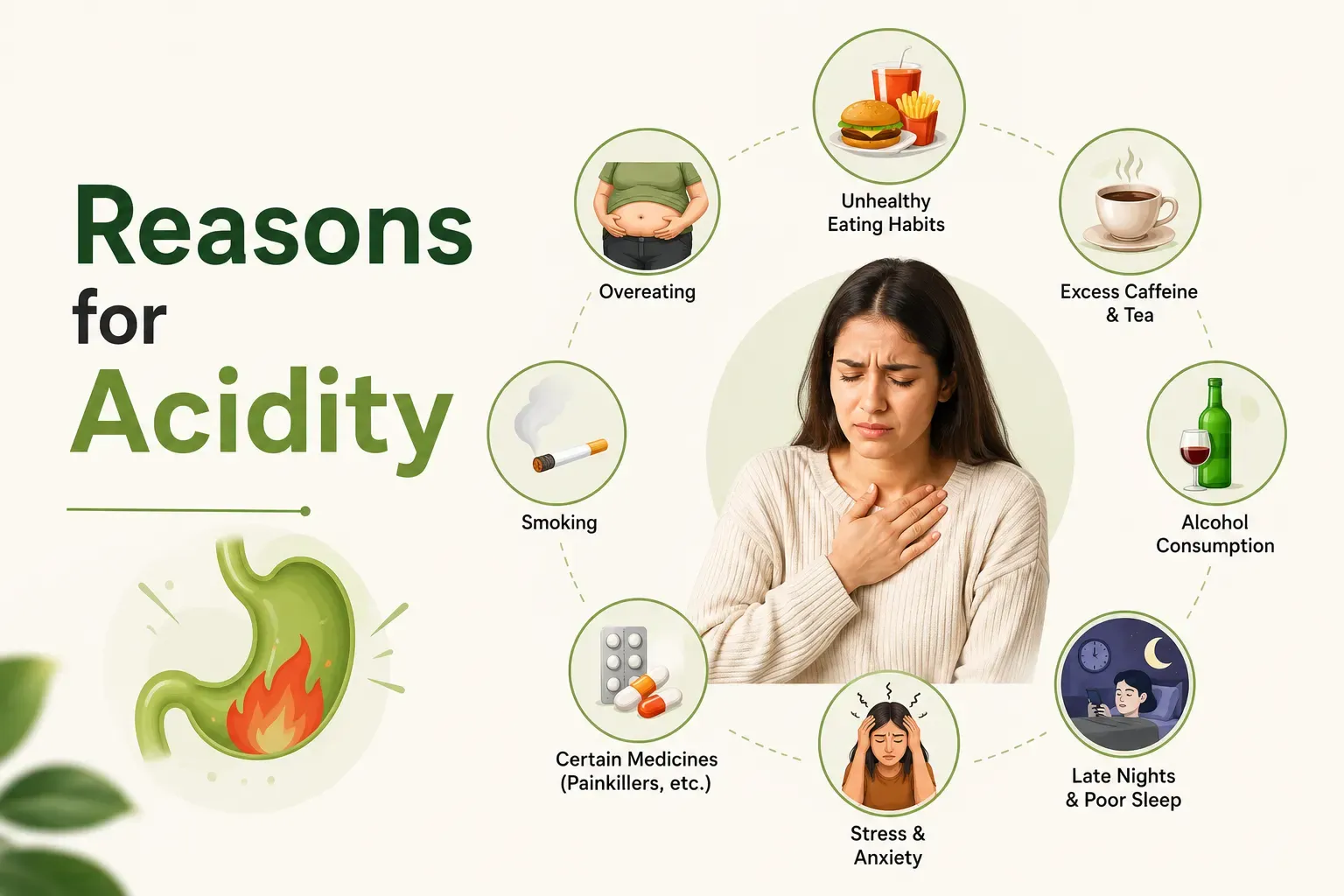
Quick Answer:
The main reasons for acidity include irregular meals, spicy or oily foods, late-night eating, excess tea or coffee, stress, smoking, obesity, pregnancy, certain medicines, and conditions like GERD or H. pylori-related stomach irritation. Acidity may feel like stomach burning, heartburn, sour burps, bloating, nausea, or a bitter taste in the mouth.
- Acidity can happen because of excess acid, reflux of acid into the food pipe, or irritation of the stomach lining.
- Food habits and meal timing are among the most common everyday triggers.
- Frequent acidity, chest burning, swallowing trouble, blood in vomit or stool, or unexplained weight loss needs medical attention.
- Long-term relief usually needs trigger identification, meal timing changes, stress control, and medical care when required.
What Is Acidity?
Acidity is a broad term people use for burning, sour burps, heartburn, stomach discomfort, or acid reflux. In medical terms, symptoms may come from excess stomach acid, irritation of the stomach lining, or stomach acid moving back into the oesophagus.
The stomach naturally produces acid to digest food. A valve between the food pipe and stomach, called the lower oesophageal sphincter, usually prevents acid from flowing upward. When this valve relaxes at the wrong time, acid can move upward and cause reflux symptoms.
If you want the basic definition first, read Mool Health's guide on what is acidity before going deeper into causes.
Why Acidity Happens: The Simple Mechanism
Acidity usually begins when acid production, stomach emptying, food habits, or the anti-reflux valve does not work smoothly. The result can be burning in the stomach, burning in the chest, sour burps, nausea, or throat irritation.
- Food or stress triggers acid release: The stomach produces acid for digestion, but some triggers may increase irritation or acid exposure.
- The stomach gets overloaded or irritated: Large meals, oily foods, alcohol, medicines, or infection may irritate the stomach lining.
- Acid may move upward: If the lower oesophageal sphincter relaxes, acid can reflux into the food pipe.
- The food pipe reacts: The oesophagus does not have the same acid protection as the stomach, so burning or chest discomfort can appear.
- Repeated exposure creates a pattern: If it happens often, symptoms may become more frequent and may need medical care.
Frequent acid reflux can overlap with GERD, especially when symptoms happen more than occasionally or affect sleep, eating, or daily comfort.
Everyday Reasons for Acidity
Most acidity triggers come from food, routine, stress, medicines, or body changes. The same trigger may not affect everyone, so the best approach is to identify your personal pattern.
| Trigger Category | Common Reasons | How It Can Cause Acidity |
|---|---|---|
| Food choices | Spicy food, fried food, citrus, tomato-based foods, chocolate, mint | May irritate the stomach or relax the anti-reflux valve in sensitive people |
| Drinks | Tea, coffee, alcohol, fizzy drinks | May increase acid exposure, stomach pressure, or reflux tendency |
| Meal timing | Long gaps, skipping meals, eating very late | Can increase empty-stomach burning or night-time reflux |
| Meal size | Large portions, overeating, heavy dinner | Raises stomach pressure and makes reflux more likely |
| Lifestyle | Smoking, lying down after food, tight clothes, low activity | Can weaken reflux protection or slow digestion |
| Body factors | Pregnancy, obesity, hiatal hernia, delayed stomach emptying | Can increase pressure on the stomach or affect reflux control |
| Medicines | Painkillers like NSAIDs, some supplements, certain long-term medicines | May irritate the stomach lining or worsen reflux in some people |
Food and Drink Triggers That Often Start Acidity
Food triggers vary, but certain foods commonly worsen acidity in people who are already sensitive.
Spicy and Oily Foods
Very spicy food and oily meals can irritate the stomach and slow digestion. When food stays longer in the stomach, reflux chances may rise, especially after a heavy dinner.
Tea, Coffee and Caffeine
Tea and coffee can trigger acidity in some people, especially when taken on an empty stomach or multiple times a day. If this is your pattern, Mool Health's guide on tea and coffee acidity can help you adjust timing and quantity.
Citrus, Tomato and Sour Foods
Orange, lemon, tomato-based gravies, vinegar-heavy foods, and very sour foods may worsen burning in people with reflux or gastritis-like symptoms.
Carbonated Drinks
Fizzy drinks add gas to the stomach. This can increase pressure and push acid upward, especially when taken with a heavy meal.
Late-Night Heavy Meals
Eating close to bedtime is a common reason for night acidity. Lying down removes the help of gravity, making it easier for acid to move upward. For deeper night-time patterns, read about night-time acidity.
Why Acidity Happens Without Eating
Acidity can also happen when you have not eaten anything for hours. Long gaps between meals, morning tea or coffee on an empty stomach, stress, poor sleep, and acid build-up may all contribute.
Some people feel burning in the morning or before breakfast because the stomach has been empty for a long time. This is why skipping meals can sometimes worsen symptoms instead of helping. You can read more about acidity without eating if this is your pattern.
Types of Acidity and What Each One May Mean
Acidity is often used as one umbrella word, but the location and timing of symptoms can tell you more about the likely reason.
| Type | Where You Feel It | Common Reason | What to Watch |
|---|---|---|---|
| Stomach acidity | Upper abdomen or stomach area | Empty stomach, spicy food, gastritis-like irritation, NSAIDs | Burning, nausea, fullness, sour burps |
| Acid reflux | Chest, throat, or food pipe | Weak reflux barrier, heavy meals, lying down after food | Heartburn, regurgitation, bitter taste |
| Morning acidity | Stomach or throat after waking | Long overnight gap, late dinner, reflux during sleep | Sour taste, throat irritation, empty-stomach burning |
| Night-time acidity | Chest or throat while lying down | Late meals, large dinner, alcohol, obesity, GERD | Sleep disturbance, cough, throat burn |
| Medication-related acidity | Stomach or chest | Painkillers, iron, potassium, some other medicines | Symptoms after starting or increasing a medicine |
Stress as a Hidden Reason for Acidity
Stress does not simply "exist in the mind". It can affect digestion through the gut-brain connection. During stress, digestion may slow down, stomach sensitivity may increase, and people may eat faster, skip meals, or rely more on tea, coffee, smoking, or late-night snacking.
This is why acidity often becomes worse during deadlines, travel, exams, poor sleep, or emotionally stressful phases. If stress also causes gas or bloating, it may help to understand the anxiety gas connection.
Medicines and Health Conditions That Can Trigger Acidity
Some medicines and health conditions can irritate the stomach lining or worsen reflux. Do not stop prescribed medicines on your own, but do discuss symptoms with your doctor if acidity starts after a new medicine.
- NSAIDs: Painkillers such as ibuprofen, aspirin, or naproxen can irritate the stomach lining in some people.
- Iron or potassium supplements: These may cause stomach irritation if not taken correctly.
- Pregnancy: Hormonal changes and pressure from the growing uterus can increase reflux.
- Obesity or abdominal weight gain: Extra pressure on the stomach may push acid upward.
- Hiatal hernia: This can affect the anti-reflux barrier.
- H. pylori infection: This bacteria can be linked with stomach inflammation and peptic ulcers.
How to Find Your Personal Acidity Trigger
The most practical way to understand acidity is to track patterns for 7 to 14 days. Do not only note what you ate. Also note timing, stress, sleep, body position, and medicines.
| What to Track | Example | Why It Matters |
|---|---|---|
| Meal timing | Breakfast skipped, dinner at 11 pm | Long gaps and late meals can trigger acidity |
| Food type | Spicy, oily, sour, heavy, fried | Helps identify food sensitivity patterns |
| Drinks | Tea, coffee, alcohol, fizzy drinks | Some drinks may relax reflux protection or irritate the stomach |
| Post-meal position | Lying down after dinner | May worsen reflux and night symptoms |
| Stress and sleep | Poor sleep, high-stress day | Can affect gut sensitivity and digestion |
| Medicines | Painkiller, iron, supplements | Some medicines can irritate the stomach |
How to Reduce Acidity Naturally
Natural relief does not mean ignoring medical care. It means correcting the everyday triggers that keep acidity coming back.
Start With Meal Timing
- Do not skip meals if empty-stomach acidity is your pattern.
- Keep dinner lighter than lunch.
- Avoid lying down soon after eating.
- Keep a gap of about 2 to 3 hours between dinner and sleep if night reflux happens.
Make Your Plate Acidity-Friendly
- Reduce very spicy, fried, sour, and heavy foods for 2 weeks.
- Choose softer, simpler meals when symptoms are active.
- Try smaller portions instead of large meals.
- Chew slowly and avoid rushing through meals.
For a practical step-by-step routine, read Mool Health's guide on how to reduce acidity naturally.
Use Home Remedies Sensibly
Some people feel temporary relief with simple options like water, bananas, coconut water, or buttermilk, depending on tolerance. These may help mild symptoms but should not be used to hide frequent or severe acidity.
You can explore safe everyday options in Mool Health's guide to acidity home remedies.
What to Eat and What to Limit During Acidity
Food choices should be personalised because one person may tolerate curd, banana, or coconut water well, while another may not. Use this table as a starting point, not a strict rulebook.
| Usually Gentler Options | Common Triggers to Limit |
|---|---|
| Soft rice, khichdi, oats, simple dal | Very spicy, oily, fried foods |
| Banana if it suits you | Excess citrus, vinegar-heavy foods, tomato-heavy gravies |
| Coconut water if tolerated | Fizzy drinks and alcohol |
| Buttermilk if dairy suits you | Tea or coffee on an empty stomach |
| Small, simple meals | Large late-night meals |
If you are unsure about specific foods, these guides may help: banana for acidity, coconut water for acidity, and buttermilk for acidity.
When Acidity Needs a Doctor
Occasional acidity after a known trigger is common. But certain symptoms need medical attention because they may suggest GERD complications, ulcer disease, infection, or another condition.
- Chest pain, especially if it is new, severe, spreading to the arm or jaw, or associated with breathlessness or sweating
- Difficulty swallowing or food getting stuck
- Vomiting blood or coffee-ground-like material
- Black stool or blood in stool
- Unexplained weight loss
- Persistent vomiting
- Acidity more than twice a week or symptoms affecting sleep
- Symptoms that do not improve despite lifestyle changes and appropriate medical advice
Acidity Relief Timeline: What to Expect
Relief depends on the cause. Some symptoms improve quickly after meal timing changes, while GERD, H. pylori-related problems, or medicine-related irritation may need medical treatment.
| Timeline | What May Improve | What to Keep in Mind |
|---|---|---|
| Same day | Mild burning may reduce after avoiding triggers and staying upright | Severe chest pain should not be assumed to be acidity |
| 2 to 7 days | Meal timing and portion control may reduce frequency | Track symptoms instead of guessing |
| 2 to 4 weeks | Consistent diet and lifestyle changes may show clearer improvement | Persistent symptoms need proper evaluation |
| 4 to 8 weeks | Doctor-guided medicines may help frequent reflux or gastritis-like symptoms | Do not self-medicate long-term |
| Long term | Weight management, smoking cessation, stress control, and meal routine reduce recurrence | Relief is usually strongest when the actual trigger is addressed |
Mool Health's Perspective on Acidity
At Mool Health, we look at acidity as a pattern, not just a single burning episode. The real trigger may be meal gaps, tea or coffee timing, late dinners, stress, gut sensitivity, poor sleep, medicines, or reflux tendency.
Mool Health's Free Gut Test helps you review your symptoms, food habits, bowel patterns, and lifestyle triggers so you can understand what may be driving repeated acidity and digestive discomfort.
Key Takeaways
- The main reasons for acidity include food triggers, irregular meals, late eating, stress, obesity, smoking, pregnancy, medicines, GERD, and stomach irritation.
- Acidity can feel like stomach burning, heartburn, sour burps, nausea, bloating, or bitter taste.
- Not all acidity is caused by "too much acid". Reflux, stomach-lining irritation, delayed digestion, and pressure on the stomach can also play a role.
- A food diary, meal timing, smaller portions, trigger reduction, stress control, and staying upright after meals can help many people.
- Red flags like chest pain, swallowing difficulty, blood, black stool, weight loss, or persistent symptoms need medical attention.
Your gut is unique your healing should be too.

FAQs
The main reasons for acidity include spicy or oily food, late meals, long gaps between meals, tea or coffee on an empty stomach, stress, smoking, obesity, pregnancy, certain medicines, GERD, and stomach irritation.
Acidity without eating can happen because of long meal gaps, morning acid build-up, stress, poor sleep, tea or coffee on an empty stomach, or reflux tendency.
Yes. Stress can affect digestion, increase gut sensitivity, worsen eating habits, and trigger reflux or burning in some people. Stress-related acidity often appears during poor sleep, deadlines, travel, or emotional stress.
Common triggers include spicy food, oily food, fried snacks, citrus, tomato-heavy dishes, chocolate, mint, alcohol, fizzy drinks, and tea or coffee, especially when taken on an empty stomach.
You can reduce acidity naturally by eating smaller meals, avoiding late dinners, staying upright after food, limiting known triggers, reducing tea or coffee on an empty stomach, managing stress, and maintaining a consistent meal routine.
See a doctor if you have severe chest pain, difficulty swallowing, vomiting blood, black stool, unexplained weight loss, persistent vomiting, frequent acidity, or symptoms that disturb sleep or do not improve.
Disclaimer
The content provided by Mool Health is for educational and informational purposes only and should not be considered a substitute for professional medical advice, diagnosis, or treatment.