
How to Reduce Acidity: Causes, Remedies & Step by Step Guide
Acidity can be reduced with simple diet and lifestyle changes, home remedies, and healthy habits that may help manage heartburn and digestive discomfort.
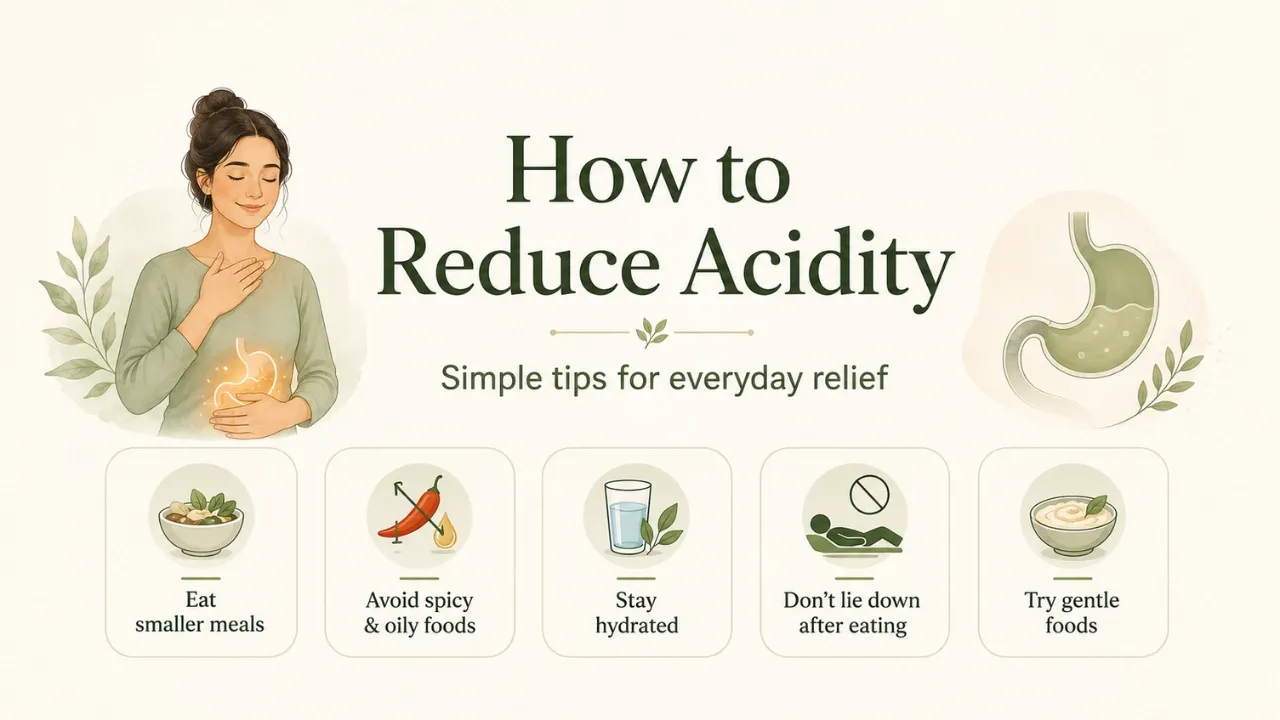
Quick Answer
Acidity happens when excess stomach acid irritates the stomach lining or flows upward into the food pipe, causing heartburn, sour burps, bloating, gas, throat burning, or chest discomfort. For quick relief, sip water slowly, stay upright, avoid spicy or fried food, and use gentle options like fennel, banana, cold milk if tolerated, jeera water, or coconut water.
For long-term control, focus on smaller meals, early dinners, a 2-3 hour gap before sleep, stress management, hydration, and identifying personal food triggers. If acidity happens more than twice a week, lasts beyond 2 weeks, wakes you at night, or comes with vomiting, black stool, weight loss, swallowing difficulty, or severe pain, medical evaluation is needed.
What Is Acidity and Why Does It Happen in the Stomach?
Acidity, also called hyperacidity or acid dyspepsia, is a condition where the stomach secretes more hydrochloric acid (HCl) than the digestive process requires. The stomach lining tolerates this acid, but the oesophagus does not. When excess acid travels upward or irritates the stomach lining, it produces symptoms ranging from mild discomfort to severe burning.
The stomach's normal acid role:
- HCl breaks down proteins and activates digestive enzymes
- It kills ingested bacteria and pathogens
- Normal gastric pH ranges between 1.5 and 3.5
- When acid secretion exceeds this balance, acidity symptoms begin
Common causes of acid reflux and gas in the stomach:
- Irregular meal timings or skipping meals
- Spicy, fried, or high-fat foods
- Carbonated beverages and caffeine
- Alcohol and tobacco use
- Non-steroidal anti-inflammatory drugs (NSAIDs) like ibuprofen
- Stress and anxiety - cortisol increases acid secretion
- Obesity - excess abdominal fat increases pressure on the lower oesophageal sphincter (LES)
- Pregnancy - hormonal changes and uterine pressure on the stomach
According to Mool Health's gut health specialists, over 30% of Indian adults experience acidity symptoms at least once a week, making it one of the most common digestive complaints in the country.
How Acidity Works: The Mechanism Behind the Burning
Acidity causes discomfort because of a specific mechanical and chemical process. Understanding this helps you target the right solution.
Step-by-step mechanism:
Acid overproduction begins - Triggers such as spicy food, stress, caffeine, or an empty stomach stimulate parietal cells in the stomach wall to secrete excess HCl.
The lower oesophageal sphincter (LES) weakens - The LES is a ring of muscle at the junction of the oesophagus and stomach. It normally stays closed to prevent acid backflow. Fatty foods, alcohol, and certain medications relax this sphincter.
Acid reflux occurs - When the LES relaxes inappropriately, stomach acid travels upward into the oesophagus, which lacks the protective mucus lining of the stomach.
Irritation and inflammation follow - The oesophageal lining responds with burning, inflammation, and in chronic cases, erosion. This is felt as burning, a sour taste, or throat irritation.
Gas builds up - Acid fermentation in the stomach and intestines produces carbon dioxide and hydrogen gas. This leads to bloating, belching, and flatulence - common symptoms of acidity and gas problems.
Why home remedies work: Many natural agents - cold milk, banana, fennel, and alkaline foods - work by neutralising excess acid (raising gastric pH) or coating the oesophageal lining, physically blocking further irritation.
How to Reduce Acidity Immediately: Fast-Acting Remedies
When acidity strikes suddenly, these approaches can reduce symptoms within 5-30 minutes.
Immediate steps to reduce acidity fast:
Drink cold milk (150-200 ml) - Milk is alkaline with a pH of approximately 6.5-6.8. It neutralises stomach acid quickly and coats the oesophagal lining. This is most effective on a partially empty stomach.
Chew fennel seeds (1 teaspoon) - Fennel contains anethole, a compound that reduces acid secretion and relaxes the gastrointestinal tract, reducing gas and acidity simultaneously.
Sip cold water slowly - Water dilutes stomach acid and helps wash residual acid from the oesophagus back into the stomach. Drink 1-2 glasses slowly, not rapidly.
Consume a ripe banana - Bananas are naturally antacid with a pH of approximately 4.5-5.2. They stimulate mucus production in the stomach, forming a protective barrier against acid.
Try ajwain (carom seeds) with water - Ajwain has thymol content that stimulates gastric secretion of enzymes, improving digestive process and reducing gas formation. Take half a teaspoon with warm water.
Elevate your head and upper body - Lie at a 30-45-degree angle, or prop up pillows. Gravity reduces acid reflux immediately by keeping acid in the stomach.
Chew sugar-free gum for 20-30 minutes - Chewing increases saliva production. Saliva is alkaline (pH 6.2-7.4) and naturally neutralises acid in the oesophagus.
Mool Health clinical note: These remedies provide symptomatic relief. Frequent acidity episodes (more than twice per week) require a structured management plan rather than repeated use of immediate remedies.
How to Reduce Acidity Naturally at Home: Proven Methods
Reducing acidity naturally at home involves consistent dietary, lifestyle, and herbal interventions. Mool Health recommends a layered approach: adjust diet first, then lifestyle, then add targeted herbal support.
Dietary Changes to Reduce Stomach Acidity
Foods that reduce acidity:
- Coconut water - Naturally alkaline, rich in electrolytes, soothes the stomach lining
- Cucumber and watermelon - High water content, alkaline-forming, reduce gastric heat
- Oatmeal - Absorbs excess acid; the soluble fibre slows digestion and reduces acid spikes
- Green vegetables - Beans, broccoli, spinach, and cauliflower are low in fat and acid-forming potential
- Ginger - Contains gingerols and shogaols that reduce inflammation and improve LES tone; use 1-2 cm of fresh ginger in warm water or food
- Buttermilk (chaas) - Contains lactic acid bacteria that balance gut pH and reduce acidity after meals
- Amla (Indian gooseberry) - Rich in vitamin C and tannins; clinically observed to reduce acid secretion and promote gastric mucosal healing
Foods to avoid when reducing acidity:
- Citrus fruits (oranges, lemons) on an empty stomach
- Tomatoes and tomato-based sauces
- Spicy foods and red chillies
- Fried and fatty foods (delay gastric emptying, increase acid production)
- Carbonated drinks (introduce CO₂ that increases intragastric pressure)
- Chocolate and mint (relax the LES)
- Coffee and strong tea (stimulate acid secretion)
Herbal and Home Remedies for Acidity
| Remedy | How It Works | Dosage |
|---|---|---|
| Aloe vera juice | Anti-inflammatory; coats oesophagal lining | 20-30 ml before meals |
| Jeera (cumin) water | Neutralises acid; stimulates enzyme secretion | 1 tsp in 1 glass warm water |
| Licorice root (mulethi) | Increases mucus secretion; protects stomach lining | 1 tsp powder in warm water |
| Tulsi (holy basil) | Reduces acid production; promotes mucus formation | 4-5 leaves chewed raw |
| Baking soda (sodium bicarbonate) | Rapid alkalising agent | ½ tsp in a glass of water - short-term only |
Caution: Baking soda should not be used regularly. It contains high sodium and can disrupt electrolyte balance with repeated use. Mool Health recommends using it only as an occasional, one-time emergency remedy.
How to Reduce Acidity in the Body: Lifestyle Changes That Work
Reducing acidity in the body long-term requires consistent lifestyle modification. According to Mool Health's gastroenterology consultants, lifestyle changes can reduce acidity frequency by up to 60-70% within 4-8 weeks when followed consistently.
Evidence-backed lifestyle steps:
Eat smaller, more frequent meals - Large meals distend the stomach and increase acid production. Aim for 4-5 smaller meals rather than 2-3 large ones. Each meal should not exceed 60-70% of your stomach's comfortable capacity.
Maintain a 2-3 hour gap between dinner and bedtime - Lying down with a full stomach increases reflux risk significantly. Studies suggest that eating within 3 hours of sleep increases acid reflux episodes by approximately 40%.
Stay upright for 2-3 hours after eating - Gravity helps retain acid in the stomach. Avoid bending or lying down immediately after meals.
Lose excess weight if overweight - Abdominal obesity increases intra-abdominal pressure, pushing acid upward. A reduction of 5-10% of body weight can meaningfully decrease acid reflux frequency in overweight individuals.
Wear loose-fitting clothing - Tight waistbands and belts increase pressure on the stomach and LES.
Manage stress actively - Psychological stress elevates cortisol, which stimulates gastrin and increases acid output. Practices such as diaphragmatic breathing, yoga, and 20-30 minutes of daily physical activity can reduce stress-related acidity.
Limit alcohol and quit smoking - Alcohol directly irritates the gastric mucosa and relaxes the LES. Smoking reduces saliva production and weakens the LES over time.
Sleep on your left side - The stomach curves to the left. This position keeps the gastro-oesophageal junction above the gastric acid pool, reducing nocturnal reflux.
Elevate the head of your bed by 15-20 cm - A wedge pillow or bed risers reduce gravitational acid reflux during sleep.
Stay adequately hydrated - Drinking 8-10 glasses of water daily helps dilute stomach acid and supports kidney-mediated acid excretion, reducing overall acid load in the body.
How to Reduce Acidity During and After Pregnancy
Acidity during pregnancy is extremely common, affecting approximately 30-80% of pregnant women. Mool Health's maternal health consultants note two primary mechanisms:
- Hormonal changes - Progesterone relaxes smooth muscle throughout the body, including the LES, making acid reflux more likely from the first trimester onward.
- Uterine pressure - As the uterus grows, particularly in the second and third trimesters, it compresses the stomach upward, reducing its capacity and pushing acid into the oesophagus.
Safe ways to reduce acidity during pregnancy:
- Eat 5-6 small meals daily instead of large ones
- Avoid lying down for at least 1.5-2 hours after eating
- Elevate the head of the bed or use a wedge pillow
- Avoid spicy, fried, and fatty foods, especially in the evening
- Drink cold milk or coconut water after meals
- Chew fennel seeds or cardamom after eating
- Avoid carbonated drinks and citrus juices
- Sleep on the left side - clinically observed to reduce nocturnal reflux in pregnancy
- Wear loose clothing around the abdomen
- Ginger tea (mild, without excess) may help with nausea-related acidity in the first trimester
Medications to avoid without medical advice in pregnancy:
- Antacids containing aluminium (may cause constipation)
- Antacids containing bicarbonate (excessive sodium intake risk)
- PPIs and H2 blockers should only be taken on a doctor's recommendation
Mool Health advisory: If acidity during pregnancy is severe, causes vomiting, or interferes with eating, consult a gynaecologist or gastroenterologist before self-medicating.
How to Reduce Hyperacidity: When Acidity Is Severe
Hyperacidity refers to a chronic or severe state of excess acid production that goes beyond typical post-meal discomfort. It may indicate conditions such as gastro-oesophageal reflux disease (GERD), gastritis, or a Helicobacter pylori infection.
Signs that acidity has progressed to hyperacidity:
- Burning sensation occurring more than twice per week
- Symptoms persist despite dietary changes and home remedies
- Regurgitation of food or sour liquid into the mouth
- Difficulty swallowing
- Unexplained weight loss
- Chest pain or chronic cough
- Acidity-related headaches (caused by referred pain and sleep disruption)
Medical management options for hyperacidity:
| Treatment Type | Examples | Mechanism |
|---|---|---|
| Antacids | Gelusil, Digene, ENO | Neutralise existing stomach acid rapidly |
| H2 blockers | Ranitidine, Famotidine | Reduce acid production by blocking H2 receptors |
| Proton pump inhibitors (PPIs) | Omeprazole, Pantoprazole | Inhibit the proton pump; reduce acid secretion by up to 90% |
| Prokinetics | Domperidone, Metoclopramide | Improve LES tone and speed gastric emptying |
| H. pylori treatment | Triple therapy (PPI + two antibiotics) | Eradicate bacterial cause if present |
PPIs and H2 blockers should be used only under medical supervision. Long-term PPI use (beyond 8 weeks without review) is associated with reduced magnesium absorption and increased risk of bone density loss.
How to Reduce Gas and Acidity Together: A Combined Approach
Gas and acidity frequently occur together because both stem from the same root cause: poor digestion and excess fermentation in the gastrointestinal tract. Mool Health's digestive health team recommends addressing both simultaneously.
Why acidity and gas occur together:
- Excess acid accelerates fermentation of undigested carbohydrates in the colon, producing gas
- Bloating from gas increases intra-abdominal pressure, worsening acid reflux
- Both conditions share common triggers: spicy foods, carbonated drinks, eating too fast, and stress
Steps to reduce both gas and acidity:
Eat slowly and chew thoroughly - Rapid eating introduces excess air into the digestive tract. Chewing each bite 20-25 times reduces air swallowing and improves pre-digestion.
Avoid gas-forming foods when acidity is active - Cabbage, beans, onions, and lentils can worsen gas. Introduce them gradually and in smaller portions.
Use digestive enzyme support - Enzymes like papain (from papaya) and bromelain (from pineapple) aid protein digestion and reduce fermentation-related gas.
Drink ajwain water or jeera water after meals - Both are carminatives - they reduce gas formation and ease acidity simultaneously. Effective within 15-30 minutes of consumption.
Try asafoetida (hing) in warm water - A small pinch of hing in warm water relieves gas cramps and reduces acid-induced bloating within 20-30 minutes.
Avoid lying down after meals - Remaining upright for at least 2 hours allows gravity to facilitate gas expulsion and prevents acid pooling in the oesophagus.
Practice gentle abdominal massage - Clockwise abdominal massage for 5-10 minutes after meals helps move gas through the intestines and reduces bloating pressure.
Acidity vs. Acid Reflux vs. GERD vs. Hyperacidity: Key Differences
These terms are often used interchangeably but describe distinct conditions with different severity levels.
| Condition | Definition | Key Feature | Treatment Level |
|---|---|---|---|
| Acidity | Temporary excess acid production | Occasional burning, bloating | Diet, home remedies |
| Acid Reflux | Acid moves back into oesophagus | Heartburn, sour taste | Lifestyle + antacids |
| Hyperacidity | Chronic or severe acid overproduction | Frequent, intense symptoms | Medical evaluation needed |
| GERD | Chronic acid reflux with oesophageal damage | >2 episodes/week for 3+ months | Prescription medication + monitoring |
| Gastritis | Inflammation of stomach lining | Pain, nausea, possible bleeding | Diagnosis-specific treatment |
Mool Health recommendation: Treating all these conditions as equivalent delays appropriate care. If symptoms persist beyond 2 weeks of home management or occur more than twice weekly, seek medical evaluation instead of repeating home remedies.
Root-Cause Approach: Why Acidity Keeps Coming Back
Repeated acidity is often not just a food-trigger problem. It can reflect irregular meal timing, poor sleep, stress, gut microbiome imbalance, slow digestion, excess abdominal pressure, or untreated reflux patterns.
Mool Health focuses on identifying why acidity keeps returning by looking at digestive rhythm, food triggers, bowel patterns, stress, sleep, and gut health. The goal is to reduce repeated symptom cycles rather than depending only on quick remedies.
Simple next-step checklist:
- Track acidity timing for 7 days
- Note whether symptoms happen after meals, on an empty stomach, or at night
- Identify common triggers such as tea, coffee, spicy food, fried food, late dinner, or stress
- Check whether gas, bloating, constipation, or loose stools occur with acidity
- Consult a doctor if symptoms are frequent, severe, or linked with warning signs
Find the Root Cause of Your Acidity
If acidity, gas, bloating, or heartburn keeps returning, understand your gut pattern before relying only on short-term remedies.
Key Takeaways
Acidity can be reduced with simple diet and lifestyle changes, home remedies, and healthy habits that may help manage heartburn and digestive discomfort.
Your gut is unique your healing should be too.

FAQs
You can reduce acidity quickly by sipping cold water, drinking cold milk if tolerated, eating a ripe banana, chewing fennel seeds, staying upright, and avoiding spicy or fried food. Frequent symptoms need medical evaluation.
To reduce acidity naturally at home, eat smaller meals, avoid late dinners, reduce caffeine and fried foods, drink enough water, manage stress, and use remedies like fennel, jeera water, coconut water, banana, or buttermilk.
Foods that may reduce acidity include bananas, oatmeal, cucumber, watermelon, coconut water, green vegetables, ginger, buttermilk, and amla. Avoid citrus, fried food, spicy meals, coffee, strong tea, and carbonated drinks during active acidity.
Long-term acidity reduction needs meal timing, smaller portions, weight management if needed, stress control, sleep routine, hydration, trigger-food tracking, and medical care for GERD, gastritis, or H. pylori if suspected.
Gas and acidity can be reduced together by eating slowly, avoiding carbonated drinks, reducing gas-forming foods during flare-ups, using jeera or ajwain water, staying upright after meals, and treating constipation early.
See a doctor if acidity occurs more than twice a week, lasts longer than 2 weeks despite home care, wakes you at night, or comes with vomiting, black stool, weight loss, chest pain, swallowing difficulty, or severe abdominal pain.
Disclaimer
The content provided by Mool Health is for educational and informational purposes only and should not be considered a substitute for professional medical advice, diagnosis, or treatment.