
Why Coffee Causes Acidity and How Tea Compares
A practical guide explaining why coffee causes acidity, how tea compares, what triggers reflux or heartburn, and safer drinking habits.
Quick Answer
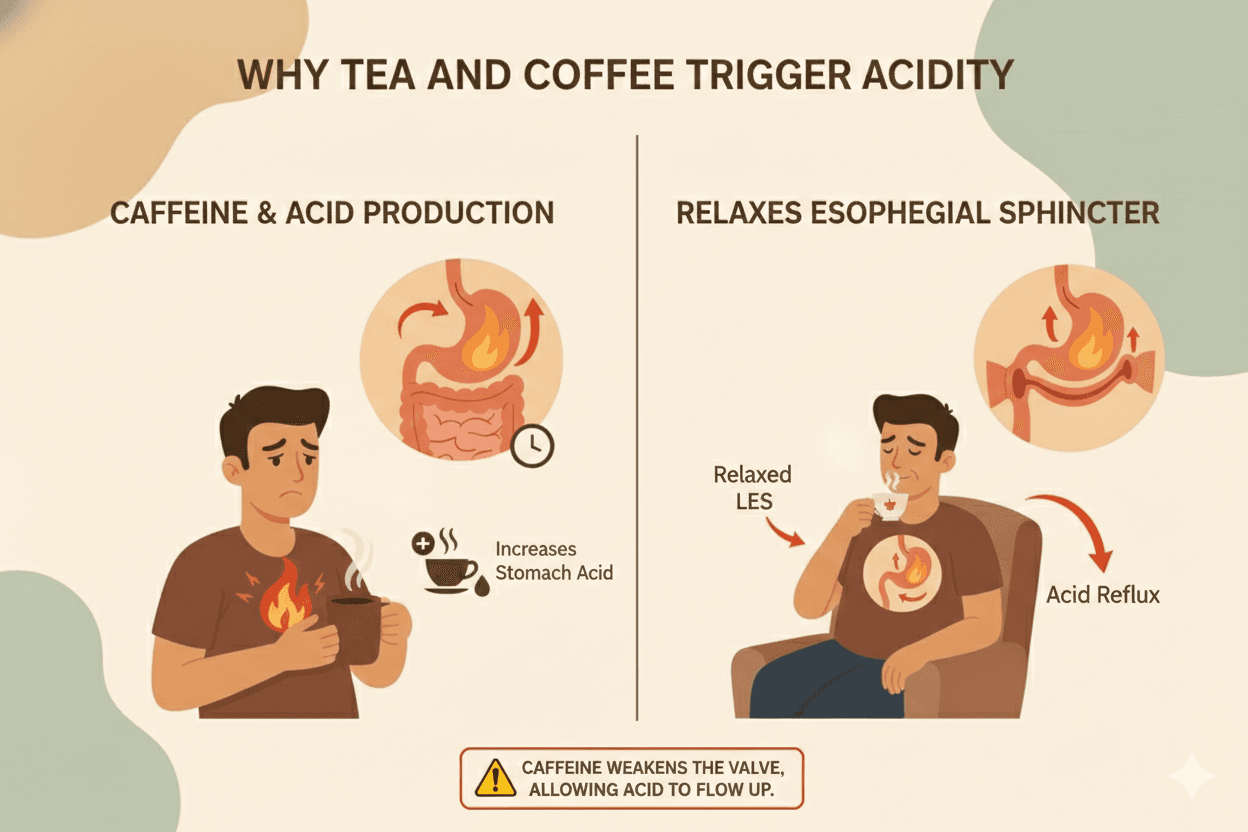
Tea and coffee trigger acidity primarily by increasing stomach acid secretion and relaxing the valve between your food pipe and stomach - not simply because of their pH levels. Coffee causes acidity more aggressively than tea, but strong black tea or kadak chai can be equally disruptive for people with sensitive digestion, especially on an empty stomach.
At a glance:
- Main mechanism: Coffee increases acid secretion and relaxes the LES valve; tea irritates the stomach lining through tannins
- Higher-risk drinks: Black coffee, espresso, filter coffee, strong black tea, and kadak chai on an empty stomach
- Safer options: Ginger tea, chamomile tea, lightly brewed green tea - taken after food
- Quick fixes: Avoid empty-stomach caffeine, reduce brew strength, wait after meals, limit to one or two cups daily
- See a doctor if: Heartburn is daily, lasts over 4 weeks, or is accompanied by swallowing pain, black stools, vomiting, or unexplained weight loss
What Is Acidity and Why Does It Happen After Tea or Coffee?
Acidity occurs when the stomach produces more acid than needed, or when stomach acid flows back into the food pipe (oesophagus). Tea and coffee are among the most common dietary triggers of this response, particularly in India where multiple cups daily - often on an empty stomach - are habitual.
When tea triggers acid reflux or coffee causes acidity, symptoms typically include:
- Burning sensation in the chest or throat
- Sour or bitter taste in the mouth
- Bloating and gas after drinking
- Nausea or a heavy feeling in the stomach
- Chest discomfort that worsens after meals or drinks
Acidity is not only about what you drink. It reflects how digestion, the gut lining, and liver function are working together. Tea and coffee affect all three layers - particularly when consumed on an empty stomach or in large quantities.
According to Mool Health's digestive health team, understanding the mechanism behind these triggers is the first step toward lasting relief without eliminating every enjoyable habit.
What Acids Are Actually in Tea and Coffee?
Tea and coffee contain different types of acids, and those differences explain why they produce different acidity symptoms.
Acids in coffee:
- Chlorogenic acids - the primary driver of gastric acid stimulation; present even in decaf
- Quinic acid - formed during roasting; increases as coffee cools; contributes to the bitter, stomach-irritating quality of stale coffee
- Citric acid - present in lighter roasts; adds perceived brightness but contributes to overall acidity
- pH: 4.8-5.1 for brewed filter coffee; 4.6-5.0 for espresso
Acids in tea:
- Tannins (tannic acid) - the main irritant; highest in black tea, lower in green tea, lowest in herbal teas
- Gallic acid - a polyphenol that can irritate the gastric mucosa in concentrated amounts
- Oxalic acid - present in small amounts; relevant mainly for people with kidney sensitivity
- pH: 6.0-7.0 for black tea; 7.0-8.0 for green tea; herbal teas vary widely
The single most important fact: tea is roughly 10-100 times less acidic than coffee by pH, yet both can trigger stomach symptoms. This is because acidity symptoms are caused more by how these drinks interact with stomach biology than by their pH level alone.
Citable finding: Tea causes acidity through tannin-induced mucosal irritation, not through excess acid production - which is why its symptoms feel different from coffee-related heartburn.
How Does Coffee Cause Acidity in the Stomach?
Coffee causes acidity through three distinct mechanisms: excess acid production, LES valve relaxation, and gut nerve stimulation. This is why black coffee causes acidity even in people who have relatively healthy digestion.
1. Coffee increases stomach acid secretion Coffee stimulates the stomach lining to release more hydrochloric acid. This happens even with decaffeinated coffee because chlorogenic acids - not just caffeine - signal the stomach's acid-producing cells (parietal cells) to activate. Researchers at the Technical University of Munich (Molecular Nutrition & Food Research, 2010) found that isolating and removing chlorogenic acids from coffee caused a significant drop in its acid-stimulating effect.
2. Coffee relaxes the lower oesophageal sphincter (LES) The LES is a muscular valve that prevents acid from travelling upward. Coffee relaxes this valve. When the LES is weakened, stomach acid can enter the food pipe - causing heartburn and reflux. This is the primary reason why coffee causes heartburn in addition to general stomach discomfort.
3. Coffee stimulates gut nerves Caffeine activates the gut's nervous system and increases gastrointestinal movement. In some people, this overstimulates the stomach, leading to cramping, pain, or acid discomfort alongside bowel urgency.
People with existing gastritis, reflux, or sensitive digestion experience all three effects more intensely. Mool Health's clinical team notes that addressing all three mechanisms - not just reducing caffeine - produces more durable relief.
Why Does Tea Trigger Acid Reflux Even Though It Feels Lighter?
Tea triggers acid reflux through a different mechanism than coffee - primarily through tannin-induced mucosal irritation rather than excess acid production. This is why tea-related acidity often presents as stomach pain or nausea rather than classic heartburn.
Tannins irritate the stomach lining Tea contains tannins - polyphenolic compounds that bind to proteins in the stomach lining and irritate the gastric mucosa. When the stomach lining is irritated, even normal acid levels cause discomfort. Strong black tea, over-brewed tea, and kadak chai contain higher tannin concentrations and are therefore more likely to cause symptoms.
Why tea causes acidity on an empty stomach Drinking tea first thing in the morning without eating means the stomach lining has no food buffer. This exposes the mucosa directly to tannin irritation and caffeine-induced acid stimulation simultaneously. This combination is one of the most consistent reasons why tea causes acidity and shakiness in the morning.
Why milk tea (chai) can still cause problems Chai may feel gentler initially because milk buffers tannins. However, milk fat slows gastric emptying - the stomach holds its contents, including acid, for longer. When food, caffeine, and acid remain in the stomach for extended periods, the risk of reflux and bloating increases. A strong, long-boiled chai can also concentrate tannins enough to overcome milk's buffering effect entirely.
What Happens in Your Body Within 60 Minutes of Drinking Tea or Coffee?
Most people feel the effects of tea or coffee within 30-60 minutes. Here is what is happening at each stage.
0-10 minutes: Caffeine enters the bloodstream Caffeine is absorbed through the stomach and small intestine rapidly. Within 10 minutes, blood caffeine levels begin to rise. The stomach's acid-producing cells (parietal cells) receive their first signal to increase hydrochloric acid output.
10-30 minutes: Acid secretion peaks Gastric acid secretion rises significantly. Research published in Digestive Diseases and Sciences (1994) established that caffeine activates cAMP-mediated pathways in parietal cells, with acid output peaking between 30-60 minutes after consumption. This is when most people first notice burning, heaviness, or nausea - particularly on an empty stomach.
30-60 minutes: LES relaxation in coffee drinkers In coffee drinkers, the lower oesophageal sphincter begins to relax. This is when heartburn and acid reflux symptoms typically begin.
60-120 minutes: Tannin effect in tea drinkers For tea drinkers, tannins that have been absorbed begin exerting their effect on the gastric mucosa. The stomach lining becomes more sensitive to normal acid levels. This is why tea-related discomfort can feel delayed compared to coffee-related symptoms.
120-240 minutes: Slow metabolisers still feel it People with a slow CYP1A2 genetic variant - the liver enzyme that clears caffeine - metabolise caffeine up to four times more slowly. In these individuals, gastric acid remains elevated for three to four hours instead of the usual 60-90 minutes (Nature Reviews Gastroenterology & Hepatology, 2016).
Key takeaway: Eating before your tea or coffee creates a physical buffer that slows absorption in the 0-30 minute window - which is why it is the single most effective habit change for most people.
Tea vs Coffee: Which Causes More Acidity?
Coffee is generally the stronger acidity trigger, but tea is not far behind for people with sensitive stomachs. The key difference lies in how each drink causes symptoms - coffee primarily through LES relaxation and acid stimulation; tea through tannin-induced mucosal irritation.
| Factor | Black Tea | Chai (Milk Tea) | Filter Coffee | Espresso |
|---|---|---|---|---|
| pH range | 6.0-7.0 | 6.5-7.0 | 4.8-5.1 | 4.6-5.0 |
| Caffeine per cup | 30-60 mg | 25-45 mg | 80-120 mg | 60-75 mg |
| Tannin content | High | Moderate | Low | Low |
| LES relaxation effect | Mild | Mild | Strong | Strong |
| Gastric acid stimulation | Moderate | Mild-Moderate | High | High |
| Risk on empty stomach | High | Moderate | Very High | Very High |
LES = Lower Oesophageal Sphincter - the valve between the food pipe and stomach.
Key insight from Mool Health: Coffee is roughly 10 times more acidic than tea by pH. More importantly, it contains chlorogenic acids that directly trigger excess gastric acid production AND relax the LES - a dual mechanism that makes it the stronger trigger. Tea causes irritation to the stomach lining without necessarily increasing acid volume, which explains the different symptom profiles.
If you need to choose between the two:
- Green tea (lightly brewed, taken after food) is the least likely to trigger acidity
- Chai with ginger may ease mild acidity - ginger has documented anti-nausea and gut-motility benefits
- Filter coffee and espresso are the strongest triggers and should always be consumed after a meal
- Decaf coffee still stimulates gastric acid through chlorogenic acid content - it is lower-risk, not zero-risk
Which Teas Are Safest for People With Acidity?
Not all teas carry the same acidity risk. The main variables are tannin content, caffeine level, pH, and how the tea is brewed.
| Tea Type | pH Range | Tannin Level | Caffeine (per cup) | Acidity Risk |
|---|---|---|---|---|
| Chamomile tea | 6.0-7.0 | Very low | 0 mg | Very low |
| Ginger tea | 6.5-7.0 | Very low | 0 mg | Very low |
| Licorice root tea | 6.5-7.5 | Very low | 0 mg | Very low |
| Green tea (lightly brewed) | 7.0-8.0 | Low | 20-35 mg | Low |
| White tea | 6.5-7.5 | Low | 15-30 mg | Low |
| Oolong tea | 6.5-7.5 | Moderate | 30-50 mg | Moderate |
| Chai / milk tea (light brew) | 6.5-7.0 | Moderate | 25-45 mg | Moderate |
| Black tea (standard brew) | 6.0-7.0 | High | 30-60 mg | High |
| Kadak chai (strong, long-boiled) | 5.5-6.5 | Very high | 40-60 mg | Very high |
| Matcha (concentrated) | 6.5-7.5 | High | 60-80 mg | High |
How to read this table:
- "Very low risk" teas are generally safe for most people even on an empty stomach
- "Low risk" teas are safe for most people after food
- "Moderate" and above should always be taken after eating, with reduced brew strength
Why ginger tea is worth trying on high-acidity days: Ginger contains gingerols and shogaols - compounds with documented anti-nausea and pro-motility effects. A 2019 meta-analysis in Food Science & Nutrition found ginger supplementation significantly reduced nausea and improved gastric emptying. A lightly brewed ginger tea after a meal is one of the few hot beverages that may actively ease rather than worsen digestive discomfort.
The matcha trap: Matcha is often marketed as a gentler alternative to coffee, but it contains 60-80 mg of caffeine per serving - comparable to a short espresso - along with high tannin concentration from whole-leaf powder. Matcha is not a safe default for acidity-prone individuals.
What Does the Research Say About Caffeine and Stomach Acid?
The clinical evidence on why coffee causes heartburn and why tea triggers acid reflux is more specific than most people realise. Mool Health's digestive health team reviewed the key research to clarify exactly what is happening in the stomach.
Caffeine activates acid-producing cells within 30-60 minutes Research published in Digestive Diseases and Sciences (1994) and confirmed across multiple meta-analyses established that caffeine stimulates gastric acid secretion by activating cAMP-mediated pathways in parietal cells. This effect peaks within 30-60 minutes of consumption and can last up to two hours.
Chlorogenic acids are a separate trigger in coffee The 2010 study from the Technical University of Munich (Molecular Nutrition & Food Research) demonstrated that chlorogenic acids - distinct from caffeine - independently trigger gastric acid release. Removing them caused a significantly larger drop in acid stimulation than removing caffeine alone. This explains why black coffee causes acidity even in decaffeinated form.
Tannins in tea damage the mucosal barrier, not acid volume Research published in the Journal of Agricultural and Food Chemistry (2007) found that tannins exert their primary effect on the gastric mucosa - the protective lining of the stomach - rather than on acid production. A compromised mucosal barrier makes normal acid levels feel painful, which explains why tea-related symptoms typically present as stomach pain rather than heartburn.
Slow caffeine metabolisers experience significantly more acidity Genetic variants in the CYP1A2 enzyme determine how quickly caffeine clears the body. People with a slow CYP1A2 variant metabolise caffeine up to four times more slowly. In these individuals, even one cup of coffee can keep gastric acid elevated for three to four hours instead of the typical 60-90 minutes (Nature Reviews Gastroenterology & Hepatology, 2016).
Summary of research findings:
- Caffeine stimulates acid within 30-60 minutes; effect lasts up to 2 hours
- Chlorogenic acids in coffee drive a significant portion of acid stimulation independently of caffeine
- Tannins in tea cause mucosal irritation rather than excess acid production
- Individual sensitivity is largely determined by genetic caffeine metabolism speed (CYP1A2 enzyme)
How Caffeine Digestion Affects Acidity in the Body
Caffeine digestion - the process by which the liver breaks down and clears caffeine - directly determines how long acid stimulation lasts after drinking tea or coffee.
Caffeine is absorbed rapidly into the bloodstream and stimulates the release of stress hormones including adrenaline. This shifts the body into an alert state, reduces blood flow to the digestive tract, and increases acid secretion simultaneously.
If liver function is sluggish - due to fatty liver, irregular meals, alcohol intake, or chronic poor sleep - caffeine metabolism slows down. The result is prolonged acid stimulation and worsening acidity symptoms that can last several hours after a single cup.
According to Mool Health's clinical team, this is why treating acidity purely at the stomach level gives incomplete results. When the liver is under strain, caffeine digestion inefficiency becomes part of the problem - and managing acidity requires addressing liver and metabolic health alongside dietary changes.
How Does Gut Health Connect to Tea, Coffee, and Acidity?
The gut microbiome - trillions of bacteria living in the digestive tract - helps regulate acid balance and protect the stomach lining. Frequent tea and coffee consumption, especially on an empty stomach, can disturb this balance over time.
Key ways gut health affects caffeine-related acidity:
- Excess acid from caffeine can reduce beneficial bacteria, making the gut more reactive over time
- Empty-stomach caffeine irritates the gut lining, reducing its capacity to buffer acid
- Poor gut microbiome diversity can increase sensitivity to acid, tannins, caffeine, and reflux triggers
- Stress, poor sleep, and irregular meals can worsen both gut imbalance and caffeine-related acidity
This is why some people tolerate tea or coffee well for years and suddenly develop acidity later. The drink may be the trigger, but gut resilience determines how strongly the body reacts.
How to Reduce Acidity After Tea or Coffee
You do not always need to quit tea or coffee completely. For many people, the right timing, strength, quantity, and food pairing can reduce symptoms significantly.
Practical fixes:
- Never drink tea or coffee as the first thing on an empty stomach
- Eat a small buffer food first, such as banana, soaked almonds, plain toast, or oatmeal
- Reduce brew strength and avoid long-boiled kadak chai
- Limit tea or coffee to one or two cups per day
- Avoid caffeine after 4 PM if reflux worsens at night
- Choose ginger tea, chamomile tea, or lightly brewed green tea on high-acidity days
- Avoid lying down for at least 30-45 minutes after drinking tea or coffee
What to avoid after acidity starts:
- More caffeine to settle the stomach
- Spicy breakfast or fried snacks
- Citrus juice immediately after coffee or tea
- Carbonated drinks, which increase stomach pressure and reflux
When to See a Doctor for Tea or Coffee-Related Acidity
Occasional acidity after strong tea or coffee is common. However, recurring symptoms may point to GERD, gastritis, functional dyspepsia, H. pylori infection, or a deeper gut imbalance.
See a doctor if you have:
- Heartburn more than twice a week
- Symptoms lasting longer than 4 weeks
- Difficulty swallowing or pain while swallowing
- Black stools or blood in vomit
- Unexplained weight loss
- Vomiting that does not settle
- Chest pain with sweating, arm pain, or breathlessness
Do not assume every chest burning episode is acidity. If chest pain feels unusual, severe, or spreads to the arm or jaw, seek urgent medical care.
Understand Your Acidity Triggers
If tea, coffee, heartburn, bloating, or reflux keeps returning, start by understanding your gut pattern instead of guessing with quick fixes.
Key Takeaways
A practical guide explaining why coffee causes acidity, how tea compares, what triggers reflux or heartburn, and safer drinking habits.
Your gut is unique your healing should be too.

FAQs
Coffee causes acidity by stimulating stomach acid secretion, relaxing the lower oesophageal sphincter, and activating gut nerves. Chlorogenic acids and caffeine both contribute to this effect.
Tea can cause acidity because tannins irritate the stomach lining, especially when taken strong, over-brewed, or on an empty stomach. Tea may cause discomfort even when its pH is less acidic than coffee.
Yes, tea is usually less acidic than coffee by pH. However, strong black tea and kadak chai can still trigger acidity because tannins irritate the stomach lining.
You may be able to drink tea or coffee if symptoms are mild, but avoid taking them on an empty stomach. Reduce brew strength, limit quantity, and take them after food.
Chamomile tea, ginger tea, and lightly brewed green tea are generally safer options for people with acidity. Strong black tea, kadak chai, and matcha may worsen symptoms in sensitive people.
Drink water, avoid lying down, eat a small non-spicy meal, and avoid more caffeine. If symptoms are frequent, reduce coffee strength and avoid drinking it on an empty stomach.
See a doctor if heartburn happens more than twice a week, lasts over 4 weeks, wakes you at night, or comes with vomiting, black stools, difficulty swallowing, chest pain, or weight loss.
Disclaimer
The content provided by Mool Health is for educational and informational purposes only and should not be considered a substitute for professional medical advice, diagnosis, or treatment.