
Empty Stomach Acidity: Causes, Symptoms & What to Eat or Drink
A complete guide on why acidity happens on an empty stomach, common morning symptoms, tea and coffee triggers, safe foods, drinks, red flags and relief tips.
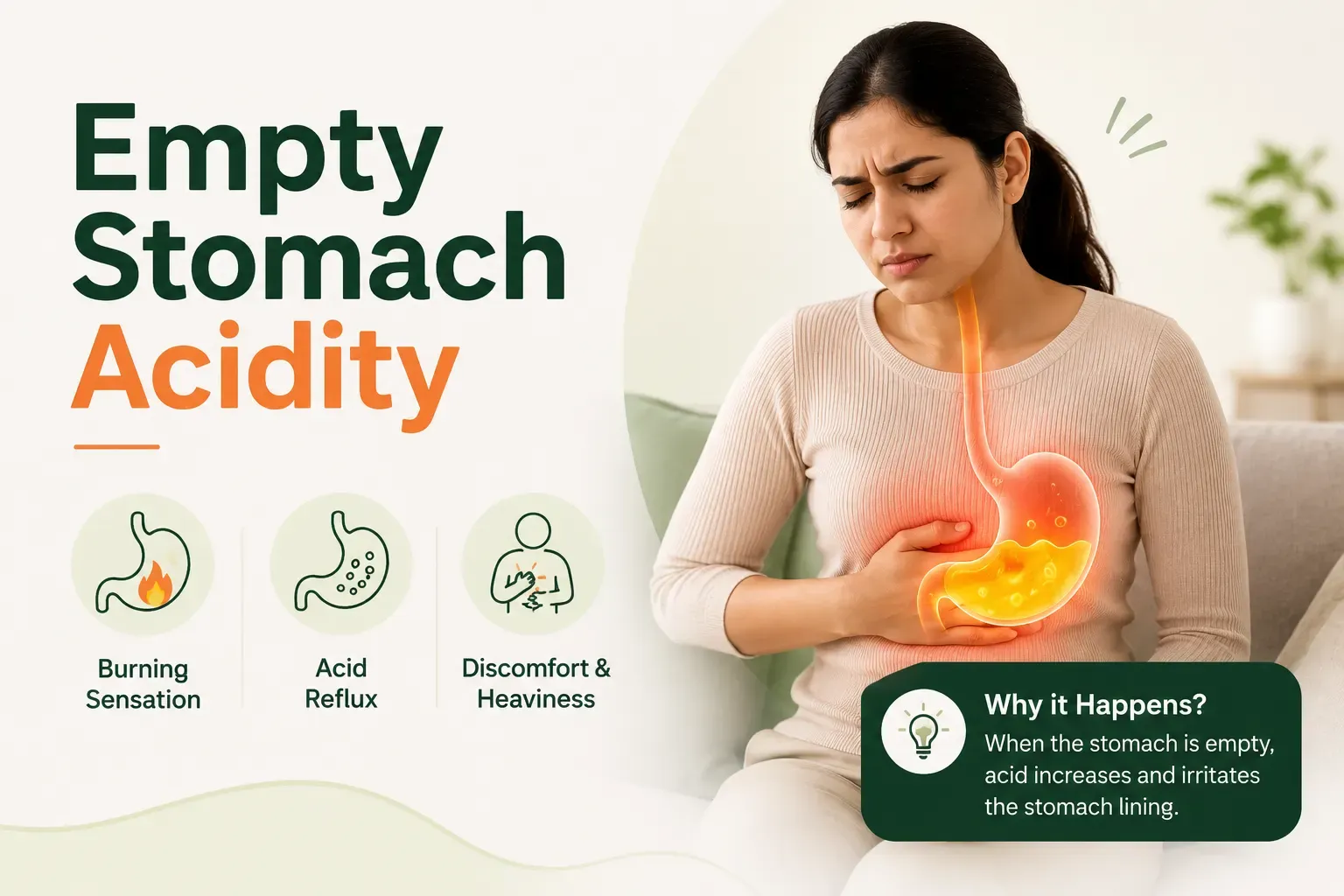
Quick Answer
Acidity can happen on an empty stomach because the stomach keeps producing acid even when there is no food to buffer it. Long fasting, early morning acid rhythm, stress, poor sleep, bile imbalance, and tea or coffee before breakfast can make symptoms worse.
- Common symptoms include chest burning, sour taste, nausea, belching, and upper abdominal discomfort.
- Warm water, ripe banana, soaked almonds, and an early light breakfast may help buffer acid.
- Avoid tea, coffee, lemon water, fruit juice, and long fasting when acidity is active.
- Frequent acidity, swallowing difficulty, weight loss, black stools, vomiting, or persistent chest pain needs medical advice.
Acidity on an empty stomach is not just hunger pangs. The stomach produces hydrochloric acid continuously , even during fasting , and without food to act as a buffer, that acid directly irritates the stomach lining or flows upward into the oesophagus. This is why millions of people wake up with chest burning or a sour taste before their first meal.
Empty stomach acidity is driven by three simultaneous processes: the body's circadian rhythm peaks acid production between 4-8 AM, cortisol released during the morning wake-up response stimulates further acid secretion, and there is nothing in the stomach to absorb or neutralise that acid. Understanding these patterns , not just reaching for antacids , is what allows lasting relief.
What Is Empty Stomach Acidity?
Empty stomach acidity is the irritation of the stomach lining or oesophagus caused by accumulated hydrochloric acid (HCl) during periods when no food is present to buffer it.
Acid is essential for digestion. The problem is not that acid exists , it is that acid production continues on a biological schedule regardless of whether food is present. When the stomach is empty for several hours:
- Acid accumulates directly against the stomach lining
- The protective mucus layer thins gradually over fasting hours
- The lower oesophageal sphincter (LES) , the valve between stomach and food pipe , may relax, allowing acid to move upward
According to Mool Health's gut health team, empty stomach acidity is one of the most common and most misunderstood digestive complaints, often dismissed as simple hunger when it reflects a deeper rhythm imbalance.
Empty stomach acidity differs from occasional post-meal heartburn. It is a pattern driven by fasting duration, circadian biology, stress hormones, and bile flow , not just by what you ate.
What Are the Symptoms of Empty Stomach Acidity?
Empty stomach acidity produces a recognisable cluster of symptoms that appear before eating, typically between 4 AM and 9 AM.
Common symptoms include:
- Burning sensation in the chest or throat
- Sour or bitter taste in the mouth upon waking
- Nausea or mild bloating without having eaten
- Heaviness or discomfort in the upper abdomen
- Headache or fatigue that seems linked to the digestive system
- Belching or a feeling of fullness in an empty stomach
Symptoms may feel stronger on days following poor sleep, late dinners, alcohol consumption, or high stress , because all of these factors increase acid load and reduce mucosal protection overnight.
Mool Health notes that bitter taste in the morning (as opposed to sour) often points toward bile reflux rather than pure acid reflux , an important distinction for choosing the right management approach.
What Is the Difference Between Acidity, Acid Reflux, Heartburn, and GERD?
These four terms are often used interchangeably, but they describe distinct events. Understanding the difference helps identify what is actually happening in your digestive system.
| Term | What It Means | Where You Feel It | Empty Stomach Trigger? |
|---|---|---|---|
| Acidity | Excess HCl produced in the stomach | Stomach, upper abdomen | Yes , very common |
| Acid reflux | Acid moving upward through the LES into the oesophagus | Chest, throat, mouth | Yes , LES relaxes when stomach is empty |
| Heartburn | Burning sensation caused by acid reflux | Chest, throat | Yes , it is the symptom of reflux |
| GERD | Chronic acid reflux occurring more than twice per week | Persistent chest and throat | Often worsens on empty stomach |
| Bile reflux | Bile (not acid) flowing upward from the stomach | Bitter taste, nausea | Yes , especially in the morning before eating |
On an empty stomach, all five of these can overlap. Most morning symptoms represent a combination of acidity and mild reflux , not GERD. GERD is clinically diagnosed only when reflux occurs more than twice a week consistently and begins to disrupt daily function or cause oesophageal inflammation.
According to Mool Health's digestive health framework, identifying which of these is occurring is the first step toward choosing the right intervention , whether that is routine change, dietary adjustment, or medical evaluation.
How Does the Stomach Produce Acid on an Empty Stomach? The Mechanism Explained
The stomach produces acid through a hormonally controlled system that does not pause during fasting. Understanding this mechanism explains why empty stomach acidity is a physiological process, not simply a reaction to food choices.
Step 1 , The brain sends the first signal (Cephalic Phase). Even before eating , when you smell food, feel hungry, or simply wake up , the vagus nerve signals the stomach to begin acid production. This occurs before a single bite enters the mouth.
Step 2 , Gastrin is released. Gastrin, a hormone produced by G-cells in the stomach lining, directs parietal cells to secrete hydrochloric acid (HCl) into the stomach cavity.
Step 3 , HCl accumulates with no buffer. Normally, food , particularly protein , absorbs and neutralises HCl. On an empty stomach, HCl builds up directly against the stomach lining. The protective mucus layer thins over hours of fasting, which is why longer fasting periods produce more uncomfortable symptoms.
Step 4 , The LES relaxes. The lower oesophageal sphincter is kept tense by food pressure and normal digestive signals. In a fasted state, especially under stress, LES pressure drops, allowing acid to travel upward and cause reflux symptoms.
Step 5 , Circadian rhythm amplifies morning acid. Research on circadian gastric physiology confirms that gastric acid secretion follows a 24-hour rhythm, peaking in the early morning hours. This is why acidity is most common between 4-8 AM even without eating anything.
The stomach secretes approximately 1.5-3 litres of gastric acid daily, regardless of food intake. On an empty stomach, that acid has no food to act on , leaving the stomach lining and oesophagus directly exposed.
Why Is Acid Reflux Worse on an Empty Stomach?
Acid reflux is measurably worse on an empty stomach because three protective mechanisms weaken simultaneously when no food is present.
When the stomach contains food, food physically absorbs HCl, stomach pressure keeps the LES closed, and digestive signals maintain sphincter tone. Remove food and all three protections reduce at once.
Why morning is typically the most severe time:
- Circadian acid production peaks between 4-8 AM
- Overnight fasting of 8-10 hours progressively thins the protective mucus layer
- Lying horizontal during sleep allows acid to pool near the LES
- The cortisol awakening response , a natural morning hormone surge , directly stimulates acid secretion
Who experiences empty stomach acid reflux most severely:
| Profile | Why Empty Stomach Hits Harder |
|---|---|
| People who skip breakfast | No acid buffer for 14-16 hour fasting window |
| Late-night eaters | Liver and bile cycle disrupted overnight |
| High-stress individuals | Cortisol increases acid and reduces LES tone |
| People who drink tea or coffee first thing | Caffeine relaxes LES and stimulates acid simultaneously |
| Those with existing gastritis | Thinner mucus layer, less structural protection |
Mool Health's clinical team observes that "indigestion in the morning without eating" , nausea, heaviness, or upper abdominal discomfort , typically reflects acid accumulation, not food-related indigestion. The mechanism is identical to acid reflux; the symptom pattern may feel more nausea-dominant than burn-dominant.
Can Stress and Anxiety Cause Acidity on an Empty Stomach?
Yes , stress is one of the strongest triggers of empty stomach acidity, and it acts through direct biochemical pathways, not just through poor food choices.
When the body experiences stress:
- Cortisol increases acid secretion in the stomach
- Blood flow shifts away from the digestive system
- Gut sensitivity increases, making normal acid levels feel painful
- LES tone reduces, making reflux more likely
Even mild anxiety , the kind experienced on busy mornings or before demanding tasks , can produce a burning sensation without any food being involved. Studies in psychoneuroendocrinology confirm that elevated cortisol directly stimulates gastric acid secretion and reduces LES pressure.
This gut-brain connection means that stress management is not a supplementary recommendation for empty stomach acidity , it is a primary one. Mool Health's approach to gut health addresses cortisol load and sleep quality as root-cause contributors to morning acid patterns, not just dietary triggers.
What Role Does Bile Imbalance Play in Empty Stomach Acidity?
Bile imbalance is a frequently overlooked contributor to morning acidity that produces a distinct symptom pattern.
Bile is produced by the liver and stored in the gallbladder. Its function is fat digestion. When digestion timing becomes irregular , due to late eating, poor sleep, alcohol, or high-fat dinners , bile flow can become dysregulated:
- Bile may flow backward into the stomach
- This causes a bitter (not sour) taste and burning sensation
- Symptoms are typically worse in the morning before eating
Bile reflux feels different from acid reflux. It is characterised by a more bitter taste, stronger nausea, and a morning-dominant pattern. According to Mool Health's digestive health team, people who experience bitter-tasting morning symptoms with nausea may benefit from assessing liver and gallbladder function alongside standard acid management.
Factors that worsen bile imbalance include irregular meal timing, alcohol consumption, heavy or fatty evening meals, and poor sleep consistency.
Is Morning Acidity Linked to Sleep Patterns and Liver Function?
Yes , what happens overnight directly determines morning acidity severity.
The liver is metabolically active during night cycles. When sleep is poor, dinner is eaten late, or alcohol or fatty food is consumed in the evening, the liver and gallbladder may release bile irregularly. By morning, this can irritate the stomach lining even before eating begins.
Poor sleep also increases acid sensitivity through two mechanisms:
- Elevated inflammatory markers from disrupted sleep lower the stomach's pain threshold
- Cortisol dysregulation from poor sleep amplifies acid secretion in the morning
This explains why empty stomach acidity feels worse some mornings than others despite the same routine. The variable is typically what happened the night before , sleep quality, dinner timing, stress level, and alcohol intake.
Mool Health identifies sleep timing and liver cycle regularity as structural contributors to morning acidity , factors that antacids do not address.
What Does Ayurveda Say About Acidity on an Empty Stomach?
Ayurveda explains empty stomach acidity through the framework of Pitta imbalance. Pitta governs digestion, heat, and metabolic transformation in the body. When Pitta is aggravated, digestive fire becomes excessively sharp, producing acid even without food.
Common Pitta-aggravating factors include:
- Skipping meals or eating at irregular times
- Tea or coffee on an empty stomach
- Late nights and irregular sleep
- Emotional stress, suppressed anger, or sustained anxiety
- Alcohol and excess fried or spicy food
Ayurveda also closely links bile with Pitta , an alignment that mirrors modern gastroenterology's understanding of bile's role in digestion and its tendency to reflux during fasting.
Mool Health incorporates Ayurvedic body type assessment alongside modern gut health testing to identify whether a person's morning acidity pattern is primarily Pitta-driven (heat and acid excess), Vata-driven (irregular digestion and gas), or linked to specific structural or microbiome factors. This integrated lens allows for more personalised guidance than acid suppression alone.
Does Drinking Lemon Water, Tea, or Coffee on an Empty Stomach Cause Acidity?
Yes , these are among the most common habit-related triggers of empty stomach acidity, particularly in Indian morning routines.
Tea and coffee on an empty stomach:
- Caffeine directly stimulates acid-secreting parietal cells
- Caffeine relaxes the LES, increasing reflux risk
- The combination of more acid and a weaker valve is the most common trigger of morning reflux in India
Delaying the first tea or coffee by 45-60 minutes after eating produces a measurable reduction in morning acid symptoms for most people.
Lemon water on an empty stomach: For people with a healthy gut lining, warm diluted lemon water may stimulate digestion gently. However, for people with gastritis, peptic ulcers, or a sensitive stomach, even diluted lemon juice can irritate the mucosal lining. The practical rule: if your stomach is already acidic in the morning, any acidic drink , including lemon water , will worsen symptoms before any alkalising effect occurs.
Coconut water on an empty stomach: Coconut water is naturally alkaline and can gently neutralise excess stomach acid. Fresh coconut water on an empty stomach is one of the safer options for morning acidity. Packaged or sweetened varieties should be avoided, as added sugar can aggravate symptoms.
How Does Gut Microbiome Health Affect Empty Stomach Acidity?
The gut microbiome plays a direct role in regulating acid balance and protecting the stomach lining , a connection that is often absent from standard acidity discussions.
A healthy gut microbiome supports:
- Production of the protective mucus layer lining the stomach
- Regulation of inflammation throughout the gut
- Appropriate digestive motility and acid signalling
When gut bacteria are disrupted , by antibiotics, irregular meals, low-fibre diet, or chronic stress , several changes increase acidity vulnerability:
- Protective mucus production decreases, exposing the stomach lining to normal acid levels that now cause pain
- Gut inflammation increases acid sensitivity
- Digestive motility slows, contributing to bloating alongside burning
A 2019 review in Gut Microbes found that gut bacterial imbalance (dysbiosis) correlates with reduced gastric mucus thickness, making the stomach more susceptible to acid irritation even when acid levels are not abnormally elevated.
Mool Health's gut assessment includes microbiome health markers because dysbiosis is a root-cause contributor to morning acidity that dietary changes alone may not fully resolve.
What Should You Drink on an Empty Stomach for Acidity?
The goal of a morning drink for acidity is to dilute accumulated HCl, protect the stomach lining, and avoid further acid stimulation. The best options are alkaline or neutral , not acidic.
Ranked options for empty stomach acidity:
- Warm plain water (200-250 ml) , The safest and most evidence-aligned first choice. Dilutes HCl gently and initiates peristalsis without stimulating further acid production.
- Fresh coconut water , Naturally alkaline, may neutralise excess stomach acid. Suitable especially in summer. Avoid packaged versions with added sugar.
- Fennel seed water , Soak fennel seeds overnight and drink the water in the morning. Calms Pitta and reduces morning burning, according to Ayurvedic practice and traditional use.
- Diluted aloe vera juice , Soothes the stomach lining and reduces inflammation. Use food-grade aloe vera without additives.
- Cold milk (if tolerated) , Provides short-term acid buffering. Note that long-term or high-volume milk intake can stimulate acid production in some people due to its protein content.
Drinks to avoid on an empty stomach: Tea, coffee, lemon water, apple cider vinegar, fruit juices, and carbonated drinks , all of these stimulate acid secretion or directly irritate the stomach lining before food is present to protect it.
What Should You Eat on an Empty Stomach to Avoid Acidity?
For people prone to empty stomach acidity, the first food of the day should be alkaline, easy to digest, and acid-buffering. Long fasting is not well-tolerated when acidity is active.
Best early morning foods for empty stomach acidity:
- Soaked almonds (4-5) , Alkaline in nature, reduce morning acidity naturally, and provide a gentle protein buffer
- Ripe banana , Mildly alkaline and coats the stomach lining, which actively helps reduce burning. Avoid raw or unripe banana, which may cause gas in some people
- Cooked oats (no added sugar) , Absorbs excess acid and provides slow-release energy without irritation
- Ripe papaya (small portion) , Contains papain, a digestive enzyme that supports stomach function and is gentle on a sensitive lining
- Small piece of jaggery , A traditional Ayurvedic digestive aid that gently activates digestive enzymes
Does banana cause acidity on an empty stomach? No. Ripe banana is mildly alkaline and protective of the stomach lining. It is one of the safest first foods for people with morning acidity. Raw or unripe banana may cause gas in some individuals.
Does apple cause acidity on an empty stomach? Generally no. Ripe sweet apple contains pectin, a soluble fibre that supports gut movement and may feel gentle for many people. However, very sour or unripe apples may trigger acidity in sensitive stomachs. If you already wake up with burning or nausea, choose ripe sweet apple or applesauce instead of sour apple.
Which Foods and Drinks Should You Avoid on an Empty Stomach?
If you are prone to empty stomach acidity, the first thing you consume in the morning matters. Acidic, caffeinated, spicy, carbonated, or very sugary foods and drinks can irritate the stomach lining before food has created a buffer.
| Avoid on Empty Stomach | Why It Can Trigger Acidity |
|---|---|
| Tea and coffee | Caffeine stimulates acid production and may relax the LES |
| Lemon water or apple cider vinegar | Acidic drinks can irritate an already sensitive lining |
| Orange juice and citrus fruits | Citric acid may increase burning and reflux symptoms |
| Fried or spicy breakfast foods | Oil and spice can worsen acid irritation and reflux |
| Carbonated drinks | Gas increases pressure and may push acid upward |
| Long fasting without water | Leaves acid unbuffered for longer hours |
Simple rule: If a drink or food creates burning when taken before breakfast, move it after food or avoid it during active acidity episodes.
How to Reduce Acidity on an Empty Stomach Naturally
Managing empty stomach acidity is about rhythm correction. The goal is to reduce long fasting gaps, protect the stomach lining, support regular bile flow, and reduce morning acid triggers.
Step 1: Start with warm plain water
Drink 200-250 ml warm water after waking. This gently dilutes accumulated acid and supports gut movement without stimulating more acid.
Step 2: Avoid tea or coffee before food
Move your first tea or coffee at least 45-60 minutes after eating something light. For many people, this one change reduces morning burning significantly.
Step 3: Eat a small acid-buffering food early
Try ripe banana, soaked almonds, cooked oats, or a small portion of papaya if tolerated. Avoid staying hungry for several hours after waking.
Step 4: Keep dinner light and earlier
Eat dinner at least 2-3 hours before sleep. Heavy, oily, spicy, or very late dinners increase overnight acid and bile-related symptoms.
Step 5: Support sleep and stress regulation
Poor sleep and morning cortisol can worsen acid secretion. A fixed sleep time, light dinner, and short breathing practice may help reduce the morning acid spike.
Step 6: Track your pattern for 7 days
Note your dinner timing, sleep quality, stress level, morning drink, first meal, and symptoms. Empty stomach acidity often becomes easier to manage once the pattern is visible.
When Should You See a Doctor for Empty Stomach Acidity?
Occasional acidity on an empty stomach is common, but repeated or severe symptoms should not be ignored. Medical evaluation is important if acidity is frequent, worsening, or associated with warning signs.
- Acidity happens daily or several times a week
- Symptoms continue for more than two to three weeks despite routine changes
- There is difficulty swallowing or pain while swallowing
- There is unexplained weight loss
- Vomiting, black stools, or blood in vomit or stool is present
- Chest pain is severe, persistent, or spreads to the arm, jaw, or back
- Morning nausea, bitter taste, or burning is repeatedly disturbing sleep or appetite
These symptoms may need evaluation for GERD, gastritis, ulcers, bile reflux, medication effects, or another digestive condition.
Mool Health’s Perspective on Empty Stomach Acidity
Mool Health looks at empty stomach acidity as a rhythm problem, not just an acid problem. Morning acidity can be connected to meal timing, tea or coffee habits, sleep quality, stress load, bile flow, and gut microbiome balance.
Instead of depending only on quick relief, Mool Health focuses on identifying the repeated pattern behind symptoms. When you understand what is triggering acid before food enters the stomach, it becomes easier to choose the right morning routine and long-term gut support.
Stop Empty Stomach Acidity From Starting Your Day
Morning burning, sour taste, nausea or acidity before breakfast can signal a deeper digestion pattern. Take Mool Health’s free gut test to understand your symptoms, triggers and next steps better.
Medical Disclaimer
This article is for informational and educational purposes only. It is not a substitute for professional medical advice, diagnosis, or treatment. Acidity, reflux, chest burning, vomiting, black stools, swallowing difficulty, unexplained weight loss, or persistent chest pain should be evaluated by a qualified healthcare professional. Seek urgent care for severe chest pain, breathlessness, fainting, or pain spreading to the arm, jaw, or back.
Key Takeaways
- Acidity on an empty stomach happens because the stomach keeps producing acid even when there is no food to buffer it.
- Symptoms often appear in the early morning due to fasting, circadian acid rhythm, cortisol, stress, bile flow, and sleep patterns.
- Tea, coffee, lemon water, citrus juice, late dinners, stress, and long fasting can worsen empty stomach acidity.
- Warm water, ripe banana, soaked almonds, early light breakfast, earlier dinner, and better sleep timing may help reduce symptoms.
- Frequent acidity, swallowing difficulty, weight loss, vomiting, black stools, or persistent chest pain needs medical attention.
Your gut is unique your healing should be too.

FAQs
Yes. The stomach continues producing acid even without food. When there is no food to buffer it, acid can irritate the stomach lining or move upward into the oesophagus, causing burning, nausea, sour taste, or reflux.
Morning acidity can happen because acid production follows a circadian rhythm, fasting leaves the stomach empty overnight, cortisol rises after waking, and lying down may allow acid to pool near the LES.
Yes, tea and coffee can trigger acidity on an empty stomach. Caffeine may stimulate acid secretion and relax the LES, which increases reflux risk before food creates a protective buffer.
Ripe banana is generally safe and may help buffer stomach acid. It is mildly alkaline and gentle for many people. Raw or unripe banana may cause gas or bloating in some individuals.
Fresh coconut water may help some people because it is gentle and naturally alkaline. Avoid packaged or sweetened coconut water if added sugar worsens your symptoms.
Warm plain water is the safest first choice. Fresh coconut water, fennel water, or diluted aloe vera juice may suit some people. Avoid tea, coffee, lemon water, fruit juice, and carbonated drinks if acidity is active.
Seek medical advice if acidity is frequent, lasts more than two to three weeks, causes difficulty swallowing, unexplained weight loss, vomiting, black stools, blood in stool, or persistent chest pain.
Disclaimer
The content provided by Mool Health is for educational and informational purposes only and should not be considered a substitute for professional medical advice, diagnosis, or treatment.