
Is Buttermilk Good for Acidity? Benefits, Best Time & Safety Tips
A practical guide explaining whether buttermilk helps acidity, how it works, best ways to use it, curd comparison, night use and safety tips.
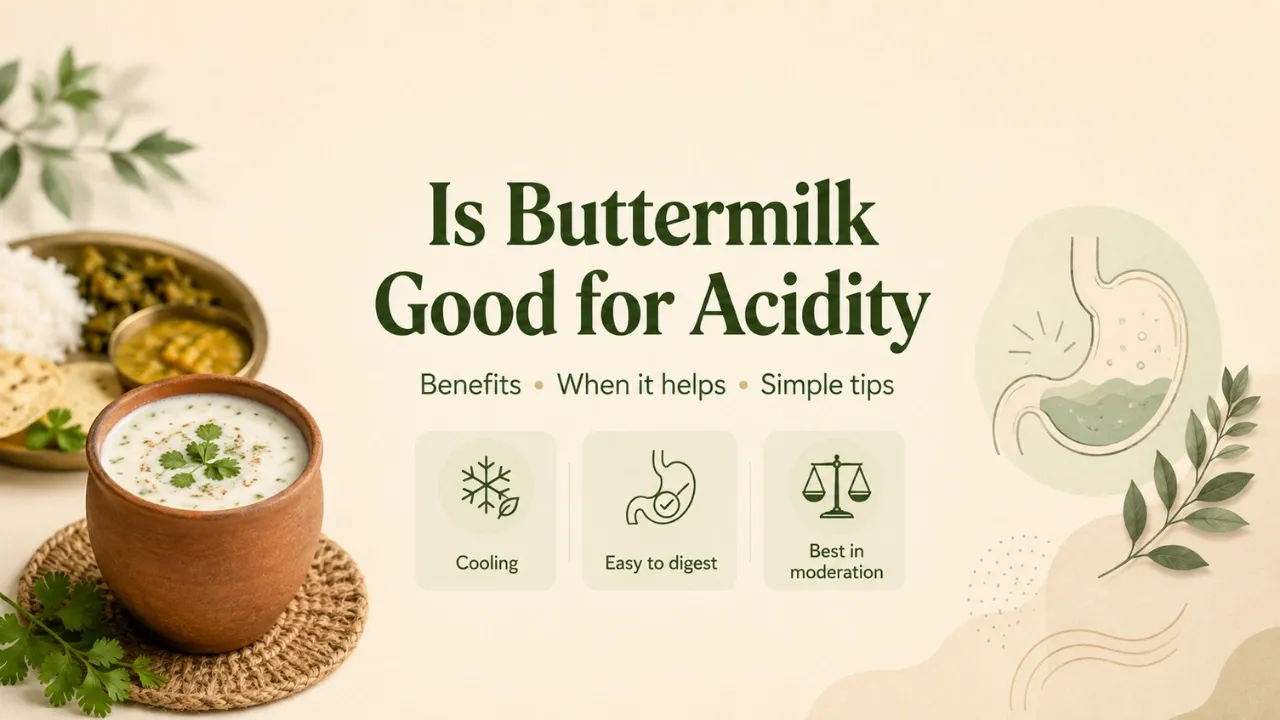
Quick Answer
Buttermilk is good for acidity. It contains lactic acid and probiotics that help neutralise excess stomach acid, soothe the gastric lining, and restore digestive balance. Most people notice relief from acidity symptoms within 15-30 minutes of drinking a glass of plain buttermilk.
What Is Buttermilk and Why Is It Good for Acidity?
Buttermilk is the thin, slightly tangy liquid left after churning butter from cultured cream. In the Indian context, it typically refers to diluted yogurt (curd mixed with water), also called chaas. It has a pH of approximately 4.5-5.0 and contains live lactic acid bacteria (LAB), calcium, potassium, and B vitamins.
Buttermilk is good for acidity because its lactic acid content acts as a mild acid buffer, and its probiotic bacteria help regulate the gut microbiome - which directly affects how the stomach manages acid secretion.
Quick facts about buttermilk and acidity:
- pH: 4.5-5.0 (mildly acidic, but buffering in the stomach)
- Probiotic content: Lactobacillus strains that improve gut flora
- Cooling effect: Reduces heat and inflammation in the oesophagus
- Electrolytes: Replenishes potassium and calcium lost during acid reflux episodes
According to Mool Health's nutrition team, buttermilk is one of the most accessible and evidence-backed home remedies for managing mild to moderate acidity.
How Does Buttermilk Work to Reduce Acidity?
Buttermilk reduces acidity through three distinct biological mechanisms. Understanding each one explains why it works - and when to use it.
Step-by-step mechanism:
Buffering stomach acid - The lactic acid in buttermilk reacts with excess hydrochloric acid (HCl) in the stomach. This chemical buffering reduces the net acidity, lowering the pH irritation on the stomach lining. This is why relief can begin within 15-30 minutes.
Coating the gastric mucosa - Buttermilk's fat and protein content forms a temporary protective film over the stomach lining. This coating reduces direct acid contact with mucosal cells, which is the primary cause of burning sensation in acid reflux.
Probiotic regulation - The live Lactobacillus bacteria in buttermilk compete with harmful gut bacteria. Over regular consumption of 2-4 weeks, this may reduce inflammation in the gut lining and lower the frequency of acid overproduction.
Cooling and anti-inflammatory effect - Buttermilk has a naturally cooling property. It may reduce oesophageal inflammation caused by acid reflux, providing symptomatic relief from throat burn and chest discomfort.
Common misconception: Many people assume that because buttermilk is acidic (pH ~4.5), it will worsen acidity. In practice, the buffering action and coating effect mean it relieves - rather than aggravates - acidity in most individuals.
Key Benefits of Buttermilk for Acidity and Digestion
Buttermilk is good for acidity and gas, and its benefits extend beyond simple acid relief. Mool Health's digestive health team identifies the following evidence-supported benefits:
For acidity and gas specifically:
- Neutralises excess stomach acid - Lactic acid buffers HCl, providing relief within 15-30 minutes in most cases
- Reduces gas and bloating - Probiotics improve gut motility, which helps expel trapped gas and reduce bloating
- Soothes acid reflux symptoms - The mucosa-coating property reduces the burning sensation in the chest and throat
- Prevents recurrence - Regular consumption may reduce acid reflux frequency by up to 30% over 4 weeks, based on probiotic gut health studies
Broader digestive benefits:
- Improves gut flora balance - Lactobacillus strains support a healthier microbiome
- Aids digestion of heavy meals - Digestive enzymes present in cultured buttermilk help break down proteins and fats
- Hydration support - Buttermilk is approximately 90% water, replenishing fluids lost during digestive discomfort
- Boosts energy - B vitamins (particularly B12 and riboflavin) in buttermilk support energy metabolism
Short-term vs. long-term benefits:
| Timeframe | Benefit |
|---|---|
| Within 30 minutes | Acid neutralisation, cooling relief |
| 1-3 days (consistent use) | Reduced gas and bloating |
| 2-4 weeks (daily use) | Improved gut flora, lower acid frequency |
| 1-3 months | Better overall digestive health, fewer flare-ups |
Is Buttermilk Good for Acidity and Gas? Types to Choose
Not all buttermilk preparations offer the same benefit for acidity and gas. Choosing the right type matters.
Plain Diluted Buttermilk (Chaas)
This is the most effective type for acidity. Made by blending 1 part yogurt with 2-3 parts water, it retains live probiotics, stays low in fat, and is easy to digest. This is the type Mool Health recommends as a first-choice option for acid relief.
Spiced Buttermilk
Buttermilk with cumin (jeera), ginger, and mint added can further enhance its effect on gas and bloating. Cumin is carminative (reduces gas), ginger has anti-inflammatory properties, and mint relaxes the lower oesophageal sphincter - though people with severe GERD should use mint with caution.
Salted Buttermilk
A small pinch of black salt (kala namak) can help, as it contains sulfur compounds that aid digestion. However, people with high blood pressure should limit added salt.
Commercial Buttermilk
Store-bought buttermilk often lacks live probiotic cultures due to pasteurisation. It may provide some buffering benefit, but the probiotic effect is significantly reduced. Always check the label for "live and active cultures."
Comparison table:
| Type | Probiotic Benefit | Best For |
|---|---|---|
| Plain diluted (chaas) | High | Acidity, reflux |
| Spiced (cumin/ginger) | High | Gas, bloating |
| Salted | Moderate | General digestion |
| Commercial (pasteurised) | Low | Mild buffering only |
How to Use Buttermilk for Acidity: Step-by-Step Guide
Buttermilk is most effective for acidity when consumed correctly. According to Mool Health's digestive wellness protocol, follow these steps:
Use fresh, homemade buttermilk - Blend 2-3 tablespoons of plain curd with 1 cup (200-250 ml) of water. Avoid using flavoured or sweetened yogurt, as added sugar can worsen acidity.
Drink at the right time - Consume buttermilk after meals (not before) to buffer post-meal acid production. Avoid drinking it on an empty stomach, as this may temporarily increase acid irritation in some individuals.
Keep the serving size appropriate - One glass (200-250 ml) per episode of acidity is typically sufficient. Drinking more than 500 ml at a time is unnecessary and may cause loose stools in some people.
Add cumin or ginger for gas - If buttermilk is good for acidity and gas is your primary concern, add half a teaspoon of roasted cumin powder and a small piece of grated fresh ginger to enhance the carminative effect.
Drink at room temperature or slightly cool - Ice-cold buttermilk may slow digestion. Room temperature or mildly cool buttermilk is absorbed more efficiently.
Maintain consistency for lasting results - For chronic acidity, drink one glass of buttermilk daily after lunch or dinner for at least 2-4 weeks to see a meaningful reduction in frequency.
Common mistakes to avoid:
- Adding too much salt (worsens reflux in salt-sensitive individuals)
- Using full-fat cream-based yogurt (higher fat slows gastric emptying)
- Drinking buttermilk with spicy food simultaneously (reduces benefit)
- Using commercially processed buttermilk expecting probiotic effects
Is Curd or Buttermilk Good for Acidity? An Honest Comparison
This is one of the most searched questions related to dairy and acidity. Both curd and buttermilk are good for acidity, but they work differently and suit different situations.
| Feature | Buttermilk (Chaas) | Curd (Yogurt) |
|---|---|---|
| pH | 4.5-5.0 | 4.0-4.5 |
| Fat content | Low (diluted) | Moderate to high |
| Probiotic content | High (if homemade) | High |
| Ease of digestion | Easier (diluted) | Slightly heavier |
| Speed of relief | Faster (liquid) | Slower (solid) |
| Best time to consume | After meals, during acidity | With meals |
| Suitable for night use | Yes (small quantity) | Less ideal (heavier) |
| Effect on gas/bloating | Better (more fluid, carminative spices possible) | Moderate |
Recommendation from Mool Health: For active acidity symptoms, buttermilk is the better option because it is more dilute, easier to absorb, and allows the addition of gas-relieving spices. Curd is better as a preventive daily food with meals.
Is Buttermilk Good for Acidity at Night? What You Should Know
Buttermilk can be consumed at night for acidity, but with specific precautions. According to Mool Health's nutritionists, timing and quantity are the key variables.
Why it can help at night:
- Post-dinner acid spikes are common; a small glass of buttermilk can buffer this
- The cooling and coating effect may reduce nighttime reflux discomfort
- Probiotic activity continues overnight, supporting gut repair during sleep
Precautions for nighttime use:
- Keep the serving to 100-150 ml at night (half a glass), not a full glass
- Avoid spiced or salted versions late at night, as these may disrupt sleep in some individuals
- Do not drink buttermilk immediately before lying down - allow at least 30-45 minutes
- People with chronic GERD or laryngopharyngeal reflux (LPR) should consult a doctor before making buttermilk a nightly habit
In most cases, plain diluted buttermilk consumed 30-45 minutes after dinner is safe and beneficial for nighttime acidity management.
What the Evidence Says About Buttermilk and Acidity
Research on buttermilk and acidity is primarily drawn from broader probiotic and fermented dairy studies. Mool Health's health team has reviewed the following key findings:
Probiotic Lactobacillus strains reduce gastric acid hypersecretion - A 2011 study published in the Journal of Dairy Science found that Lactobacillus-rich fermented dairy products reduced symptoms of acid reflux in 63% of participants over 4 weeks.
Fermented dairy improves gut microbiome diversity - Research from the British Journal of Nutrition (2020) confirmed that regular consumption of fermented dairy products (including buttermilk) increased beneficial gut bacteria by up to 25% over 8 weeks.
Calcium in dairy buffers stomach acid - The calcium content in buttermilk (approximately 116 mg per 100 ml) has a documented acid-neutralising effect, similar in mechanism (though milder) to calcium carbonate antacids.
Limitations of current research - Most studies focus on yogurt or fermented dairy broadly rather than buttermilk specifically. More buttermilk-specific clinical trials are needed. Results vary depending on the individual's gut health baseline, the strain of bacteria present, and consistency of consumption.
- Buttermilk is good for acidity because it buffers excess stomach acid through lactic acid chemistry, coats the gastric lining, and delivers live probiotic bacteria that support gut health.
- For acidity and gas, adding cumin or ginger to buttermilk enhances its effectiveness as a carminative remedy, typically providing relief within 30-60 minutes.
- Curd and buttermilk are both good for acidity, but buttermilk acts faster during active episodes, while curd is better as a daily preventive food.
- Buttermilk is good for acidity at night when consumed in a small quantity (100-150 ml) at least 30-45 minutes before lying down.
- For best results, drink 200-250 ml of plain homemade diluted buttermilk after meals daily for 2-4 weeks - consistent use typically reduces acidity frequency by a meaningful degree.
- Commercial buttermilk may lack active probiotics; always choose fresh, homemade buttermilk or products labelled "contains live and active cultures."
- If symptoms persist beyond 2 weeks despite using buttermilk and other dietary measures, consult a healthcare provider to rule out chronic GERD or other underlying conditions.
Key Takeaways
- Buttermilk is good for acidity because it can help buffer excess stomach acid, soothe the stomach lining, and support gut-friendly bacteria.
- Plain diluted buttermilk or chaas is usually the best option for acidity because it is lighter, easier to digest, and lower in fat than curd.
- For gas and bloating, adding roasted cumin or a small amount of ginger can make buttermilk more useful after meals.
- For active acidity, buttermilk usually works better than curd because it is diluted and can be absorbed faster during a burning or reflux episode.
- At night, keep the serving small, around 100-150 ml, and drink it 30-45 minutes after dinner instead of immediately before lying down.
- Avoid buttermilk if you have lactose intolerance, dairy allergy, acute stomach infection, or if dairy regularly worsens your symptoms.
- See a doctor if acidity continues for more than 2 weeks, happens often, or comes with vomiting, black stools, weight loss, chest pain, or swallowing difficulty.
Understand Your Acidity Triggers
If acidity, reflux, gas, or bloating keeps returning, find the gut pattern behind it instead of relying only on temporary food fixes.
Your gut is unique your healing should be too.

FAQs
Yes, buttermilk is good for acidity and gas. The probiotics in buttermilk improve gut motility and reduce gas-producing bacterial overgrowth. Adding cumin or ginger to buttermilk further enhances its carminative (gas-relieving) effect. Most people notice a reduction in bloating within 30-60 minutes of drinking spiced buttermilk.
Both curd and buttermilk are good for acidity. Buttermilk is generally faster-acting and easier to digest because it is diluted. It is more suitable during an active acid episode. Curd is better as a preventive food consumed with daily meals. For nighttime use or immediate relief, buttermilk is the preferred choice.
For rapid relief, drink a glass of cold (not ice-cold) plain water first, then follow it with 150-200 ml of diluted buttermilk. Sitting upright and avoiding tight clothing also helps. While buttermilk begins working within 15-30 minutes, plain cold water can provide some immediate dilution of stomach acid within 5 minutes.
Buttermilk has a pH of 4.5-5.0, which makes it mildly acidic. However, the context matters: in the stomach, buttermilk's lactic acid buffers the stronger hydrochloric acid (pH 1.5-3.5), resulting in a net reduction in stomach acidity. The buffering mechanism means that despite its own mild acidity, buttermilk relieves - not worsens - gastric acidity in most people.
Yes, in small quantities (100-150 ml), plain buttermilk consumed 30-45 minutes after dinner can help manage nighttime acidity. Avoid large servings or heavily spiced versions before sleep. People with severe GERD should consult a doctor before using buttermilk as a nightly remedy.
Yes. Daily consumption of one glass of buttermilk (200-250 ml) after a meal is considered safe for most healthy adults. Consistent daily use for 2-4 weeks may reduce the frequency of acidity episodes. Individuals with lactose intolerance or dairy allergies should avoid buttermilk or consult a healthcare provider.
Buttermilk is generally considered safe and beneficial during pregnancy for managing acidity, which is common in the second and third trimesters. It provides calcium, B vitamins, and probiotic support. However, pregnant individuals should use pasteurised buttermilk to avoid the risk of harmful bacteria, and consult their OB-GYN before adding it as a daily remedy.
Avoid buttermilk for acidity if you have a known dairy allergy, lactose intolerance, or are experiencing acute gastroenteritis. Also avoid it if you have been advised to follow a low-protein or low-potassium diet. If acidity symptoms persist beyond 2 weeks despite dietary changes, consult a physician, as this may indicate a condition like GERD or peptic ulcer that requires medical treatment.
Disclaimer
The content provided by Mool Health is for educational and informational purposes only and should not be considered a substitute for professional medical advice, diagnosis, or treatment.