
Malabsorption Syndrome: Causes, Symptoms & Home Remedies
Malabsorption Syndrome occurs when the body cannot properly absorb nutrients from food. Learn about its symptoms, causes, diagnosis, and how it affects digestion, nutrition, and overall health.
Ayurvedic Physician & Medical Operations Lead at Mool
Published on 2,September 2026
Updated on 2,September 2026
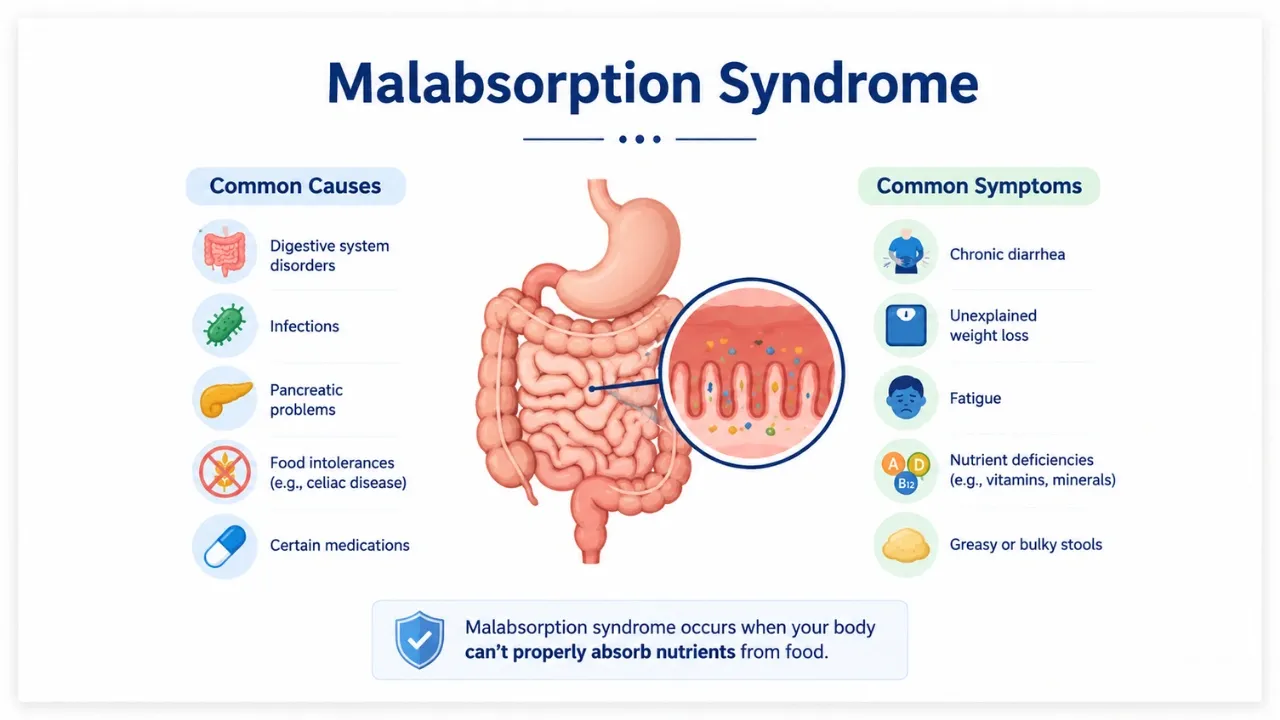
Quick Answer
Malabsorption syndrome occurs when your digestive system cannot properly absorb one or more nutrients from the food you eat. It is not a single disease, and the symptoms depend on which nutrients are affected and what is causing the problem. Common symptoms can include persistent diarrhoea, bloating, abdominal discomfort, changes in stools, fatigue, nutrient deficiencies and unintentional weight loss. Treatment depends on the underlying cause and may involve dietary changes, nutrient replacement, enzyme replacement or treatment of an underlying digestive condition.
Malabsorption syndrome occurs when your small intestine cannot properly absorb essential nutrients like vitamins and minerals from the food you eat. Malabsorption syndrome describes a problem with how the body absorbs nutrients; it does not point to one single disease.
If you have malabsorption, what you experience depends on which nutrients are affected, how much absorption is reduced, and what is causing the problem. Understanding this process can help you make sense of your symptoms without assuming that every digestive problem is caused by malabsorption.
What Happens When Your Body Cannot Absorb Enough Nutrients?
Your body needs to digest food properly and absorb nutrients from it to support energy, growth, tissue repair and normal body functions. When this process is disrupted, your body may not absorb nutrients properly.
How Does Your Body Normally Absorb Nutrients?
When you eat, your digestive system breaks food down into smaller components that your body can use. Proteins are broken down into amino acids, carbohydrates into simpler sugars, and fats into fatty acids and other substances such as glycerol, monoglycerides, diglycerides, cholesterol, and phospholipids.
Your small intestine does most of the work of absorbing nutrients. Its lining allows nutrients to pass into your blood or lymphatic system, where they can be transported and used by your body.
Your pancreas, liver and gallbladder also support this process. Digestive enzymes from your pancreas help break down food, while bile produced by your liver helps you digest and absorb fats.
What Happens When Nutrient Absorption Is Reduced?
If something interferes with digestion or absorption, some nutrients may not pass into your body as they normally should. Depending on the underlying problem, you may have difficulty absorbing one particular nutrient or several nutrients at the same time.
If you cannot absorb fats properly, you may also have difficulty absorbing the fat-soluble vitamins A, D, E and K. If the lining of your small intestine is affected, you may have problems absorbing several nutrients. The effects also depend on how long the problem continues. A temporary digestive disturbance does not automatically mean you have chronic malabsorption.
What Does Malabsorption Mean?
Malabsorption means that your digestive system is not absorbing one or more nutrients properly.
Malabsorption syndrome describes the symptoms, signs and nutritional consequences that can occur as a result. The symptoms can vary depending on the nutrients affected and the condition causing the problem. You may therefore experience digestive symptoms, nutrient deficiencies or both.
What Are the Symptoms of Malabsorption Syndrome?
Your symptoms can vary depending on the type of malabsorption you have and its underlying cause. Some symptoms develop because nutrients remain in your digestive tract, while others occur because your body doesn't receive enough of certain nutrients.
Digestive Symptoms
If you have significant fat malabsorption, your stools may become greasy, bulky, pale or difficult to flush. This is known as steatorrhoea. However, you do not need to have greasy stools to have malabsorption.
If you have carbohydrate malabsorption, you may instead notice more bloating, gas, abdominal discomfort or diarrhoea. Overall, you may notice:
- Persistent or recurrent diarrhoea
- Bloating or excessive gas
- Abdominal discomfort
- Loose or bulky stools
- Greasy or unusually foul-smelling stools
- Unintentional weight loss
Signs of Nutrient Deficiencies
If malabsorption continues, you may not receive enough of certain vitamins, minerals, protein or other nutrients. Nutrient deficiency symptoms are not specific to malabsorption. You can develop deficiencies for many other reasons, including inadequate dietary intake or increased nutritional needs.
Depending on the deficiency, you may experience:
- Fatigue or weakness
- Anaemia
- Muscle weakness or cramps
- Changes in bone health
- Changes in your skin
- Poor wound healing
- Numbness or tingling with certain deficiencies
Symptoms of Chronic Malabsorption Syndrome
If your malabsorption continues for a long time, you may develop persistent nutrient deficiencies or difficulty maintaining your weight.
In more significant cases, prolonged malabsorption can affect your nutritional status and overall health. If your child has ongoing malabsorption, it may also affect their growth and development.
However, having chronic digestive symptoms does not necessarily mean you have chronic malabsorption syndrome. A gastroenterologist can help assess your symptoms alongside your diet, medical history, examination, and test results.
What Causes Malabsorption Syndrome?
Malabsorption can develop for several reasons. Something may interfere with digestion, damage the lining of your small intestine, reduce the surface available for absorption or affect the movement of nutrients into your body.
Conditions Affecting the Small Intestine
Your small intestine plays a major role in nutrient absorption, so conditions that affect it can lead to malabsorption. These can include:
- Coeliac disease or Crohn's disease
- Small intestinal bacterial overgrowth (SIBO)
- Certain intestinal infections
- Short bowel syndrome or other conditions that affect the intestinal lining
Note: Coeliac disease can damage the lining of your small intestine, while Crohn's disease can affect parts of your digestive tract involved in nutrient absorption.
Pancreatic and Liver Disorders
Your pancreas produces enzymes that help you digest carbohydrates, proteins and fats. If your pancreas cannot produce enough digestive enzymes, you may have difficulty breaking down food properly.
Conditions such as chronic pancreatitis and exocrine pancreatic insufficiency can therefore contribute to malabsorption.
Your liver and gallbladder also play an important role in fat digestion. Your liver produces bile, while your gallbladder stores and releases it. Problems affecting bile production or flow can interfere with fat digestion and absorption.
Food Intolerances and Dietary Factors
Some conditions affect your ability to digest particular components of food. Lactose malabsorption is one example. If your small intestine produces insufficient lactase, the enzyme that breaks down lactose, you may not digest lactose completely. This can lead to bloating, gas and diarrhoea after consuming lactose-containing foods.
This differs from generalised malabsorption. A problem with one food component may cause specific digestive symptoms without affecting the absorption of all nutrients.
Other Causes of Malabsorption Syndrome
Malabsorption can also occur after certain gastrointestinal surgeries or because of specific infections, changes in intestinal movement and other conditions affecting digestion or nutrient transport.
Some medicines can also interfere with digestion or nutrient absorption in particular circumstances. Because there are many possible causes, finding the underlying reason for your symptoms is an important part of treatment.
What Are the Types of Malabsorption Syndrome?
You can classify malabsorption according to the nutrient or group of nutrients that your body has difficulty absorbing.
Carbohydrate Malabsorption
If you cannot properly digest or absorb certain carbohydrates, you may experience bloating, gas, abdominal discomfort or diarrhoea.
Fat Malabsorption
Fat malabsorption occurs when your body cannot properly digest or absorb dietary fats. Because vitamins A, D, E and K are fat-soluble, significant problems with fat absorption can also reduce your ability to absorb these vitamins.
Protein Malabsorption
If your digestive system cannot properly digest or absorb protein, you may have difficulty maintaining adequate protein stores.
Significant protein malabsorption can contribute to poor nutritional status and, depending on the underlying condition, weight loss or other signs of undernutrition.
Vitamin and Mineral Malabsorption
Your absorption of particular vitamins and minerals can also be affected. Problems with your small intestine or digestion may affect your ability to absorb iron, vitamin B12, folate, calcium, vitamin D or other nutrients.
Can Malabsorption Syndrome Cause Nutrient Deficiencies?
Yes. If your body cannot absorb nutrients properly over time, you may develop deficiencies. The specific nutrients affected will depend on the type and severity of your malabsorption. The table below shows how each nutrient deficiency may affect your body functions:
| Nutrient | What a deficiency may affect |
|---|---|
| Iron | Red blood cell production and energy. |
| Vitamin B12 | Blood formation and nervous system function. |
| Folate | Red blood cell production. |
| Vitamin D | Bone and muscle health. |
| Calcium | Bone and muscle function. |
| Zinc | Skin, immune function and wound healing. |
| Vitamins A, D, E and K | Various body functions, especially when fat absorption is impaired. |
However, there is an important distinction: Having a nutrient deficiency does not automatically mean you have malabsorption syndrome.
You can develop a deficiency because you are not getting enough of a nutrient from your diet, your body needs more of it, you are losing it through another process, or you have another health condition affecting its levels.
Malabsorption Syndrome in Children
Your child's nutritional needs are closely linked to growth and development. If your child has persistent malabsorption, inadequate nutrient absorption can therefore affect their nutritional status and, in some cases, growth.
What Causes Malabsorption in Children?
Your child can develop malabsorption because of conditions affecting the intestine, pancreas or digestion.
Possible causes include coeliac disease, certain infections, pancreatic disorders, inherited conditions and conditions that reduce the amount of functioning small intestine.
The cause will vary from child to child, so symptoms alone cannot tell you whether your child has malabsorption.
What Symptoms Should Parents Look For?
These symptoms can have many causes. If your child's symptoms persist or you are concerned about their weight or growth, it is best to have them assessed rather than trying to identify the cause yourself.
Your child may experience:
- Persistent diarrhoea, recurrent bloating, or abdominal discomfort.
- Poor weight gain or growth concerns.
- Unexplained weight loss or signs of nutrient deficiency.
How Is Malabsorption Diagnosed in Children?
Your child's doctor will usually begin by asking about their symptoms, diet, medical history and growth pattern. Depending on what they find, they may recommend blood tests, stool tests, imaging, endoscopy or other investigations.
Expert guidance from the European Consensus Guidelines on Malabsorption recommends a step-by-step approach based on the child's symptoms and suspected cause, rather than automatically performing every available test.
How Is Malabsorption Syndrome Diagnosed?
There is no single test that can diagnose every form of malabsorption. Your doctor will usually combine your symptoms and medical history with examination and laboratory tests. Further investigations may then be used to identify the underlying cause. The table below shows some of the most common diagnostic methods:
| Test | What it checks |
|---|---|
| Medical history | Symptoms, diet, bowel habits, weight, medicines and family history. |
| Blood tests | Anaemia, nutrient deficiencies and coeliac disease. |
| Stool tests | Fat malabsorption, infections and digestive problems. |
| Imaging & other tests | Endoscopy, scans, biopsies and breath tests. |
You will not necessarily need all of these tests. Current expert guidance: United European Gastroenterology (UEG) and the European Society for Clinical Nutrition and Metabolism (ESPEN) recommend choosing investigations based on your clinical history, examination and initial findings.
What Is the Treatment for Malabsorption Syndrome?
Your treatment will depend on what is causing the malabsorption. The main goals are to treat the underlying condition, improve your nutritional status, correct deficiencies and manage digestive symptoms.
The table below shows some treatment recommendations for malabsorption syndrome:
| Treatment | What it involves |
|---|---|
| Treat the underlying cause | Manage conditions such as coeliac disease, infections or pancreatic enzyme deficiency. |
| Dietary changes | Adjust your diet based on the cause and nutritional needs. |
| Replace deficiencies | Use diet or supplements to correct confirmed nutrient deficiencies. |
| Enzyme replacement | Pancreatic enzymes may help improve digestion and nutrient absorption. |
| Nutritional support | Oral, enteral or parenteral nutrition may be needed in complex cases. |
When Should You See a Doctor for Malabsorption?
You should speak with your doctor if you have persistent or recurrent digestive symptoms, particularly if they occur alongside:
- Unexplained weight loss
- Ongoing diarrhoea
- Greasy or unusually bulky stools
- Persistent fatigue or weakness
- Signs of a nutrient deficiency
- Difficulty maintaining your weight
- Poor weight gain or growth in your child
The more important consideration is whether your symptoms are persistent, unexplained or associated with signs that you may not be absorbing enough nutrients. Malabsorption syndrome is concerning because it prevents your body from getting essential nutrients, leading to malnutrition, severe weight loss, and organ damage if left untreated.
Your doctor can assess your symptoms and decide whether you need blood tests, stool tests or further investigations.
Understand Your Gut Health Better
Persistent digestive symptoms or concerns about nutrient deficiencies can have several possible causes. Take a simple next step towards understanding your gut health and identifying what may be contributing to your symptoms.
Mool Health’s Perspective on Malabsorption Syndrome
When you think about nutrition, you focus only on what you eat. But your body also needs to digest, absorb and use those nutrients effectively. Your diet may be one factor, but digestive conditions, absorption problems, medicines and other health factors can also influence your nutritional status.
The Mool Health Gut Test helps you understand why your gut issues or nutrient deficiency developed, rather than simply adding a supplement to your routine. We provide a kit customised to your gut health to address your root cause.
At Mool Health, we believe that you can support your health by maintaining a varied, balanced diet and addressing persistent digestive concerns rather than relying on supplements without understanding the reason for a deficiency.
References
European Consensus on Malabsorption-UEG & SIGE, LGA, SPG, SRGH, CGS, ESPCG, EAGEN, ESPEN, and ESPGHAN. Part 1: Definitions, Clinical Phenotypes, and Diagnostic Testing for Malabsorption. / Lenti, Marco Vincenzo; Hammer, Heinz Florian; Tacheci, Ilja et al. In: United European Gastroenterology Journal, Vol. 13, No. 4, 05.2025, p. 599-613. https://science.rsu.lv/en/publications/european-consensus-on-malabsorption-ueg-amp-sige-lga-spg-srgh-cgs/
Lenti MV, Hammer HF, Tacheci I, Burgos R, Schneider S, Foteini A, Derovs A, Keller J, Broekaert I, Arvanitakis M, Dumitrascu DL, Segarra-Cantón O, Krznarić Ž, Pokrotnieks J, Nunes G, Hammer J, Pironi L, Sonyi M, Sabo CM, Mendive J, Nicolau A, Dolinsek J, Kyselova D, Laterza L, Gasbarrini A, Surdea-Blaga T, Fonseca J, Lionis C, Corazza GR, Di Sabatino A. European Consensus on Malabsorption-UEG & SIGE, LGA, SPG, SRGH, CGS, ESPCG, EAGEN, ESPEN, and ESPGHAN: Part 2: Screening, Special Populations, Nutritional Goals, Supportive Care, Primary Care Perspective. United European Gastroenterol J. 2025 Jun;13(5):773-797. doi: 10.1002/ueg2.70011. Epub 2025 Mar 15. PMID: 40088199; PMCID: PMC12188380. https://pubmed.ncbi.nlm.nih.gov/40088199/
Overview of Malabsorption. MSD Manual Professional Edition. https://www.msdmanuals.com/professional/gastrointestinal-disorders/malabsorption-syndromes/overview-of-malabsorption
Ensari, A. (2014). The Malabsorption Syndrome and Its Causes and Consequences. Pathobiology of Human Disease, 1266. https://pmc.ncbi.nlm.nih.gov/articles/PMC7149679/
Key Takeaways
Malabsorption Syndrome occurs when the body cannot properly absorb nutrients from food. Learn about its symptoms, causes, diagnosis, and how it affects digestion, nutrition, and overall health.
Your gut is unique your healing should be too.

FAQs
Malabsorption syndrome describes the symptoms and nutritional problems that can occur when your digestive system does not absorb nutrients properly.
You may experience persistent diarrhoea, bloating, gas, abdominal discomfort, changes in your stools, unintentional weight loss or symptoms related to nutrient deficiencies.
Yes, it can contribute indirectly if it causes significant nutritional deficiencies that affect normal hair growth. Hair loss alone cannot diagnose malabsorption, as hair concerns have many possible causes.
Yes. Your treatment will depend on the underlying cause. You may need treatment for a digestive condition, dietary changes, nutrient replacement or enzyme replacement therapy.
Yes. Children can develop malabsorption because of intestinal, pancreatic, inherited or other conditions.
Disclaimer
The content provided by Mool Health is for educational and informational purposes only and should not be considered a substitute for professional medical advice, diagnosis, or treatment.