
Cold Milk for Acidity: Does It Help, When to Drink It & Key Limitations
This blog explains whether cold milk is good for acidity, when it may help or worsen symptoms, and the best way to consume it for digestive comfort.
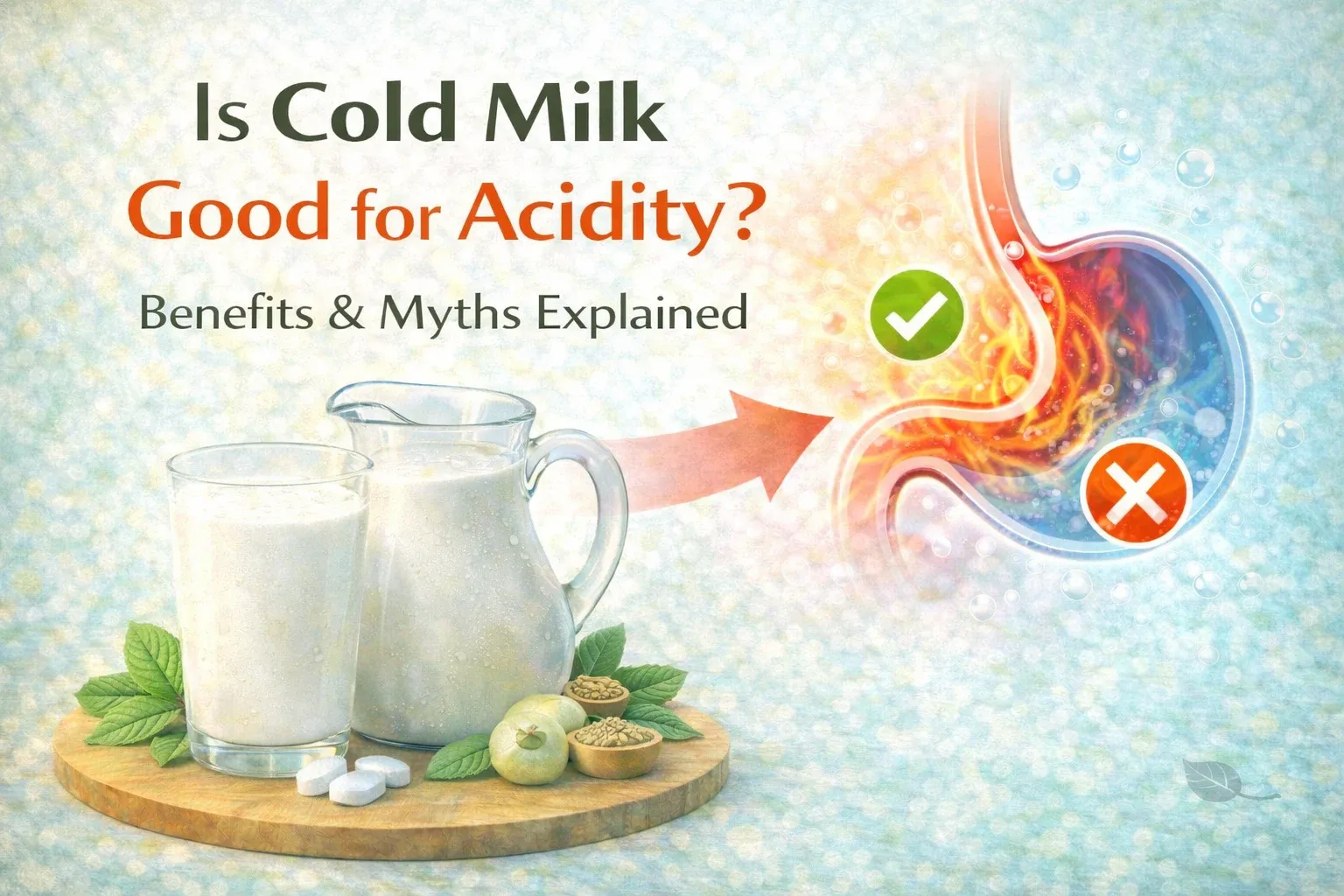
✏️ Quick Answer
Cold milk can provide temporary relief from acidity by diluting stomach acid and soothing the stomach lining. However it is not a permanent solution — milk may stimulate acid production later and can worsen symptoms in people with lactose sensitivity. Best used occasionally after spicy meals, not as a daily long-term remedy.
A burning sensation in the chest, sour burps, and stomach discomfort are common symptoms of acidity. Many people try simple home remedies to calm the stomach, and cold milk is often suggested as a quick solution. Some individuals feel temporary relief after drinking milk, but the effect can vary depending on digestion and the underlying cause of acidity.
Key Takeaways
- Cold milk may temporarily soothe stomach irritation caused by acidity
- Milk can dilute stomach acid and provide short-term relief
- Some individuals may experience gas or heaviness after drinking milk
- Drinking milk late at night may worsen symptoms in certain cases
- Digestive health and lifestyle habits influence acidity more than single remedies
- Persistent acidity may indicate deeper digestive imbalance
What Causes Acidity?
Acidity occurs when stomach acid irritates the lining of the stomach or flows upward into the esophagus. This often results in heartburn, chest discomfort, bloating, and digestive uneasiness.
Several lifestyle factors may increase the risk of acidity.
- Heavy or oily meals
- Irregular eating patterns
- High caffeine intake
- Stress and poor sleep
- slow digestion and gut imbalance
When digestion slows down, stomach acid may remain in contact with the stomach lining longer, increasing irritation. This is often linked with slow digestion symptoms.
Is Cold Milk Good for Acidity?
Cold milk is often considered a home remedy for acidity because it may temporarily dilute stomach acid and soothe irritation. The cooling sensation of milk may reduce the burning feeling in the chest or stomach.
Milk also contains calcium and proteins that may help neutralize acid for a short period. For some people, drinking cold milk provides quick relief from heartburn symptoms and instant relief from acidity.
However, the relief is usually temporary. In certain individuals, milk may stimulate stomach acid production later, which can cause acidity symptoms to return.
Why Cold Milk Is Good for Acidity
Cold milk may help relieve acidity symptoms through several mechanisms.
- It may dilute stomach acid temporarily
- The cooling effect may calm stomach irritation
- Calcium in milk may help regulate acid production
- Milk provides a coating effect on the stomach lining
These effects may explain why many people experience short-term relief after drinking milk, especially when combined with natural ways to reduce acidity.
Is Cold Milk Good for Acidity and Gas?
Cold milk may help reduce acidity in some individuals, but it may not work the same way for everyone.
Milk contains lactose, a natural sugar that some people find difficult to digest. Individuals with lactose sensitivity may experience:
- Bloating
- Gas formation
- Abdominal discomfort
For such individuals, drinking milk may worsen digestive discomfort instead of relieving it, especially in cases of lactose intolerance and milk-related bloating.
Cold Milk for Acidity at Night
Some people drink cold milk at night to reduce heartburn before sleeping. While this may provide temporary comfort, the timing of milk consumption can influence digestion.
The digestive system slows down at night due to circadian rhythm changes. Drinking milk late at night may sometimes lead to heaviness or reflux, similar to night-time acidity issues.
For individuals prone to acid reflux, lighter evening meals and proper meal timing may provide more consistent relief.
When to Drink Cold Milk for Acidity
If milk suits an individual's digestion, it may provide short-term relief when consumed in moderation.
Some situations where milk may be helpful include:
- After spicy meals
- During mild heartburn episodes
- Between meals rather than immediately after heavy food
However, relying only on milk may not address the root cause of frequent acidity, especially if underlying morning acidity causes are present.
Drinking Cold Milk for Acidity: Possible Limitations
Although milk may help temporarily, it is not always a long-term solution for acid reflux.
Possible limitations include:
- Temporary relief rather than long-term control
- Possible gas or bloating in lactose-sensitive individuals
- Increased acid production later in some cases
Understanding digestive triggers and improving diet patterns may help reduce recurring acidity, especially when combined with a GERD-friendly Indian diet plan.
Lifestyle Habits That Worsen Acidity
Acidity often develops due to lifestyle habits rather than a single food.
Late Night Eating
Eating close to bedtime may increase acid reflux.
Highly Processed Foods
Refined foods may disturb gut bacteria and digestion. Many of these foods are considered worst foods for gut health.
Chronic Stress
Stress can influence digestive enzymes and stomach acid balance, often contributing to anxiety and gas connection.
Poor Sleep Patterns
Irregular sleep may disrupt digestive rhythm.
Habits That May Help Reduce Acidity
Supporting digestive health often requires consistent lifestyle changes.
- Eating meals at regular times
- Avoiding very heavy late-night meals
- Maintaining hydration
- Managing stress through relaxation practices
These habits may help improve digestive balance over time, along with improving digestion naturally at home.
A Root-Cause Approach: Mool Health's Perspective
Occasional acidity may improve with simple dietary adjustments such as drinking milk or avoiding spicy foods. However, recurring heartburn and gas may indicate deeper digestive imbalance.
Mool Health focuses on identifying the root causes of digestive discomfort rather than only addressing symptoms.
The process often begins with a gut health assessment test that evaluates digestive health and microbiome balance. This may be combined with Prakruti analysis and lifestyle review to understand how diet patterns, stress levels, sleep cycles, and environmental factors influence digestion.
Based on these insights, individuals may receive guidance that includes:
- Personalized dietary adjustments
- Lifestyle changes supporting circadian rhythm
- Microbiome support strategies
- Nutritional guidance where appropriate
This approach focuses on improving digestive balance gradually through informed lifestyle and nutrition changes, supported by how Mool works.
Key Takeaways
This blog explains whether cold milk is good for acidity, when it may help or worsen symptoms, and the best way to consume it for digestive comfort.
Your gut is unique your healing should be too.

Disclaimer
The content provided by Mool Health is for educational and informational purposes only and should not be considered a substitute for professional medical advice, diagnosis, or treatment.