
Causes of Acidity: Why It Happens and How to Reduce It
Acidity is not always about one food or excess acid alone. Discover common reflux triggers, practical relief habits, and warning signs that need medical care.
Quick Answer
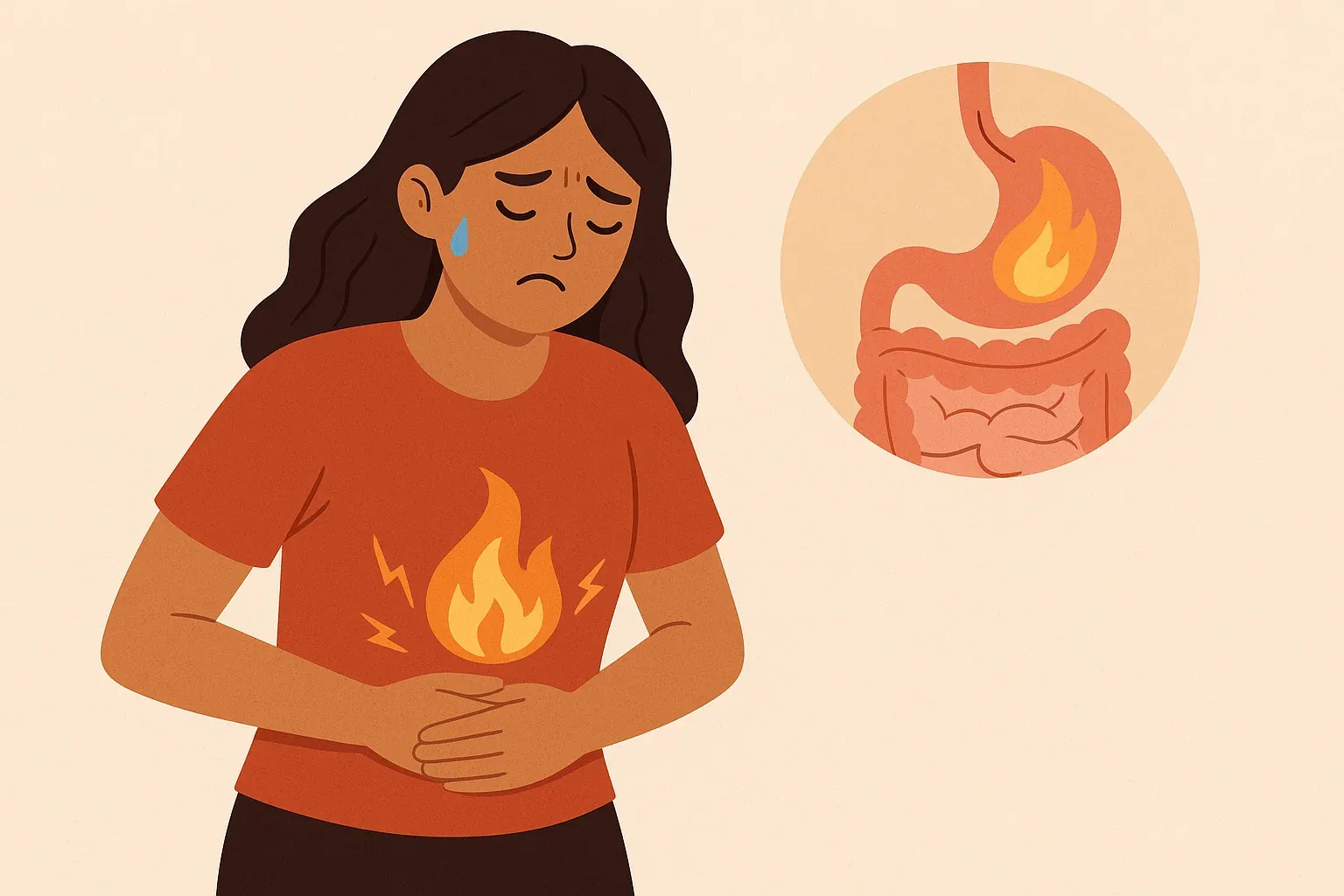
Acidity is a common term for heartburn, acid reflux, or upper digestive discomfort. It can be triggered by large or late meals, personal food triggers, lying down after eating, smoking, alcohol, some medicines, pregnancy, excess body weight, or a hiatal hernia. Repeated symptoms need assessment because reflux is usually about stomach contents moving upward, not simply producing too much acid.
- Heartburn and sour regurgitation are common reflux symptoms.
- High-fat foods, alcohol, caffeine, smoking, and late meals can worsen symptoms for some people.
- Pregnancy, overweight, and a hiatal hernia can raise the likelihood of reflux.
- Antacids can offer short-term relief, but frequent symptoms need a clinician or pharmacist review.
- Chest pain with breathlessness, sweating, fainting, bleeding, weight loss, or swallowing difficulty needs urgent care.
People use the word acidity for several upper-digestive symptoms, including burning in the chest, a sour taste, fullness, belching, or upper-abdominal discomfort. The exact cause can differ from one person to another, so a pattern of symptoms matters more than relying on a single food or remedy.
What Is Acidity?
Acidity is not a single medical diagnosis. In everyday use, it often describes heartburn, acid reflux, or indigestion. Acid reflux happens when stomach contents move back into the oesophagus, the food pipe. The oesophagus is more sensitive to stomach contents than the stomach itself, so reflux can create a burning sensation behind the breastbone or a sour taste in the mouth.
Occasional symptoms are common. Repeated troublesome symptoms, especially when they occur two or more times a week, may be consistent with gastroesophageal reflux disease, also called GERD. A diagnosis depends on the full symptom pattern, response to treatment, and sometimes further testing.
What Are the Common Causes of Acidity?
Acidity can develop because the barrier between the stomach and oesophagus relaxes too easily, because stomach irritation or indigestion is present, or because a personal food, habit, medicine, or health condition is worsening symptoms. Not every trigger affects every person.
- Large or high-fat meals: They can increase fullness and make reflux more likely for some people.
- Lying down after eating: Symptoms may worsen when stomach contents can move upward more easily.
- Late meals: Eating close to bedtime can be a problem when reflux occurs at night.
- Personal food and drink triggers: Coffee, alcohol, chocolate, mint, tomatoes, citrus, spicy foods, and carbonated drinks can worsen symptoms for some people.
- Smoking: Tobacco can increase reflux risk and irritate the upper digestive tract.
- Medicines: NSAID pain relievers such as ibuprofen and aspirin can irritate the stomach, while some other medicines may worsen reflux.
- Pregnancy, overweight, or a hiatal hernia: These can affect the pressure and barrier between the stomach and oesophagus.
- Stress and poor sleep: They can worsen the perception and pattern of reflux or indigestion symptoms, even though they are not the only explanation.
For a focused explanation of the typical reflux pattern, read acid reflux or GERD. Track when symptoms start, what you ate or drank, your body position, and any medicines taken that day.
How Does Acidity Happen in the Body?
Most recurring heartburn is related to reflux rather than an excess amount of acid alone. The lower oesophageal sphincter, a muscle at the bottom of the food pipe, and the diaphragm usually help keep stomach contents in the stomach. If this barrier relaxes or is under extra pressure, reflux can occur.
- The reflux barrier relaxes or weakens. High-fat meals, alcohol, smoking, pregnancy, certain medicines, extra abdominal pressure, and a hiatal hernia can contribute.
- Stomach contents move upward. Acid, food, or fluid reaches the oesophagus and can cause burning, regurgitation, or a bitter taste.
- The oesophagus becomes irritated. Repeated reflux can make symptoms more frequent and can sometimes lead to inflammation.
- Symptoms are reinforced by habits or triggers. Large meals, lying flat after food, and continuing a personal trigger can keep the pattern going.
This is why heartburn can feel different from one episode to another. Someone may have reflux after a late oily dinner, while another person may notice symptoms mainly with a particular medicine, pregnancy, or a hiatal hernia.
Why Does Acidity Keep Coming Back?
When symptoms return, look beyond the last meal. Recurrent acidity often reflects a combination of triggers and underlying factors rather than one universal root cause.
| Pattern | What May Be Contributing | Helpful Next Step |
|---|---|---|
| Burning after large meals | Meal volume, high-fat food, or eating quickly | Try smaller portions, slower eating, and a short upright period after meals |
| Symptoms at night | Eating too close to bedtime or lying flat | Finish meals at least 3 hours before bed and raise the head of the bed if advised |
| Burning with sour regurgitation | Acid reflux or GERD pattern | Review triggers and seek advice if symptoms are frequent or ongoing |
| Symptoms after medicines | NSAIDs, aspirin, or another medicine effect | Ask a pharmacist or doctor before stopping a prescribed medicine |
| Persistent upper-abdominal pain | Indigestion, gastritis, ulcer disease, or another condition | Arrange medical assessment rather than relying on repeated self-treatment |
| Symptoms during pregnancy | Hormonal changes and abdominal pressure | Use pregnancy-safe advice from your obstetrician, doctor, or pharmacist |
Causes of Acidity and Gas
Acidity and gas can occur at the same time, but they are not always caused by the same problem. Reflux usually involves stomach contents moving into the oesophagus. Gas and bloating can be related to swallowed air, carbonated drinks, constipation, food intolerances, or the way certain carbohydrates are digested.
When bloating and gas come with upper-abdominal burning after meals, smaller meals, slower eating, and a symptom diary can help identify a pattern. For gentle self-care ideas for occasional symptoms, see these home remedies for acidity and gas. Severe pain, repeated vomiting, or persistent bloating needs medical advice.
Causes of Acidity in the Chest
A burning sensation in the chest is often called heartburn. It usually happens when refluxed stomach contents irritate the oesophagus. It may worsen after a large meal, when bending forward, or while lying down.
- A weak or frequently relaxing lower oesophageal sphincter
- Eating close to sleep or lying flat after meals
- Overeating or increased pressure around the abdomen
- Pregnancy, overweight, or a hiatal hernia
- Smoking, alcohol, or a personal trigger food or drink
Heartburn can overlap with other causes of chest pain. Use this guide to what heartburn feels like to describe your symptoms, but do not assume new or severe chest pain is acidity.
Causes of Severe Acidity and Hyperacidity
Severe or persistent symptoms should not be managed as ordinary acidity at home. The term hyperacidity is sometimes used for strong or frequent acid-related symptoms, but it is not always a precise diagnosis. A clinician may need to consider reflux disease, inflammation of the oesophagus, stomach or duodenal ulcers, Helicobacter pylori infection, medicine-related irritation, a hiatal hernia, or less common conditions.
- H. pylori infection: This can contribute to gastritis or ulcer disease and needs a clinician-led testing and treatment plan.
- NSAID-related irritation: Frequent ibuprofen, aspirin, or similar pain medicines can damage the stomach lining.
- Hiatal hernia: This structural condition can increase the chance of reflux symptoms.
- Persistent vomiting or swallowing difficulty: These are warning signs and should not be treated as routine acidity.
- Rare acid-overproduction disorders: Conditions such as Zollinger-Ellison syndrome are uncommon but require specialist evaluation.
An Ayurvedic Perspective on Acidity
In Ayurveda, acidity is often discussed in relation to Pitta and digestive balance, while irregular routines and stress are also considered relevant. Some people find that a regular meal routine, lighter evening meals, slow eating, and calming practices support comfort.
These traditional ideas can be used as a lifestyle lens, but they do not replace evaluation for frequent reflux, ulcers, bleeding, swallowing problems, or severe pain. Herbal products can interact with medicines or may not suit pregnancy, liver disease, kidney disease, or other health conditions, so check with a qualified healthcare professional before using them regularly.
Antacids, Alginates, and Prescription Treatment
Different medicines have different roles. The best option depends on the symptom pattern, how often symptoms happen, and your medical history.
| Option | What It Does | Best Used For | Key Limitation |
|---|---|---|---|
| Antacids | Neutralise acid already in the stomach | Occasional short-term heartburn or indigestion | Short-lived relief and can interact with some medicines |
| Alginates | Form a barrier over stomach contents | Reflux symptoms, especially after meals or at night | Not a substitute for evaluation of frequent symptoms |
| H2 blockers or PPIs | Reduce stomach acid production | Clinician-directed treatment for frequent reflux or GERD | Need correct timing, appropriate duration, and medical review when symptoms persist |
| Lifestyle changes | Reduce personal triggers and reflux opportunities | All symptom patterns, alongside appropriate treatment | May not be enough when an underlying condition needs testing |
Do not keep increasing the dose or combining several medicines without advice. A pharmacist can explain safe spacing between antacids and other medicines. You can also learn about short-term acidity syrup options and their safe use.
How to Reduce Acidity Safely
- Keep a 7-day symptom diary. Note meal times, drinks, medicines, sleep, body position, and symptoms. This helps identify personal triggers.
- Stay upright after food. Avoid lying down for at least 3 hours after a meal when nighttime symptoms are a concern.
- Choose smaller portions. Large meals can make fullness and reflux more likely.
- Reduce only your personal triggers. Common triggers include high-fat food, alcohol, coffee, chocolate, mint, tomatoes, citrus, and spicy food, but tolerance varies.
- Review medicines with a professional. Do not stop prescribed medicines on your own, especially aspirin, blood-pressure medicine, or pain treatment.
- Address weight and smoking where relevant. Weight management and stopping smoking can improve reflux symptoms for some people.
- Get assessed when symptoms are frequent. Repeated need for over-the-counter treatment is a reason to speak with a doctor.
When Should You See a Doctor for Acidity?
Arrange a medical review if symptoms continue despite lifestyle changes or over-the-counter medicines, recur two or more times a week, or regularly disturb your sleep, food intake, or daily life.
Seek urgent medical help for:
- New, severe, or unexplained chest pain, especially with breathlessness, sweating, fainting, or pain spreading to the arm, jaw, back, or shoulder
- Vomiting blood, vomit that looks like coffee grounds, blood in stool, or black tarry stool
- Difficulty swallowing, pain on swallowing, or a feeling that food is sticking
- Persistent vomiting, severe upper-abdominal pain, unexplained weight loss, or loss of appetite
Medical Disclaimer
This article is for general health education only and does not replace medical advice, diagnosis, or treatment. Seek urgent medical help for new or severe chest pain, breathing difficulty, fainting, vomiting blood, black stool, swallowing difficulty, persistent vomiting, severe abdominal pain, or unexplained weight loss. Consult a qualified healthcare professional for frequent or worsening acidity, reflux, or indigestion symptoms.
Key Takeaways
- Acidity is a common label for reflux, heartburn, and upper digestive discomfort, not one single diagnosis.
- Recurring reflux is usually about stomach contents moving upward, not just making too much acid.
- Meal timing, late meals, body position, smoking, alcohol, certain medicines, pregnancy, overweight, and hiatal hernia can all matter.
- Antacids can relieve occasional symptoms, while frequent symptoms need a clearer treatment plan.
- Bleeding, swallowing difficulty, weight loss, persistent vomiting, or severe chest pain need prompt medical care.
Understand Your Recurring Acidity Pattern
Frequent burning, sour taste, or post-meal discomfort can be linked to food choices, routines, stress, and digestion patterns. Start by understanding what may be driving your symptoms.
Your gut is unique your healing should be too.

FAQs
Common contributors include acid reflux, large or high-fat meals, lying down soon after eating, late meals, personal food or drink triggers, smoking, alcohol, pregnancy, overweight, some medicines, and a hiatal hernia.
Some people notice upper-abdominal burning or nausea after long gaps without food, while others notice symptoms mainly after meals. Regular, comfortable meal timing may help, but persistent symptoms should be assessed rather than attributed to an empty stomach alone.
They can happen together because large meals, carbonated drinks, swallowed air, constipation, food intolerance, and digestive patterns may contribute to both. However, gas and reflux are not always caused by the same problem.
Finish meals at least 3 hours before bed, stay upright after food, avoid personal trigger foods or drinks in the evening, and ask a clinician or pharmacist whether raising the head of the bed or using a suitable medicine may help.
See a doctor if symptoms keep returning, do not improve with lifestyle changes or over-the-counter treatment, or occur two or more times a week. Seek urgent help for chest pain, swallowing difficulty, bleeding, black stool, persistent vomiting, severe pain, or unexplained weight loss.
Disclaimer
The content provided by Mool Health is for educational and informational purposes only and should not be considered a substitute for professional medical advice, diagnosis, or treatment.