
How to Improve Digestion Naturally at Home: Easy Daily Tips
Simple lifestyle and diet changes may help improve digestion naturally at home. This guide covers easy daily habits for better gut health and reduced bloating.
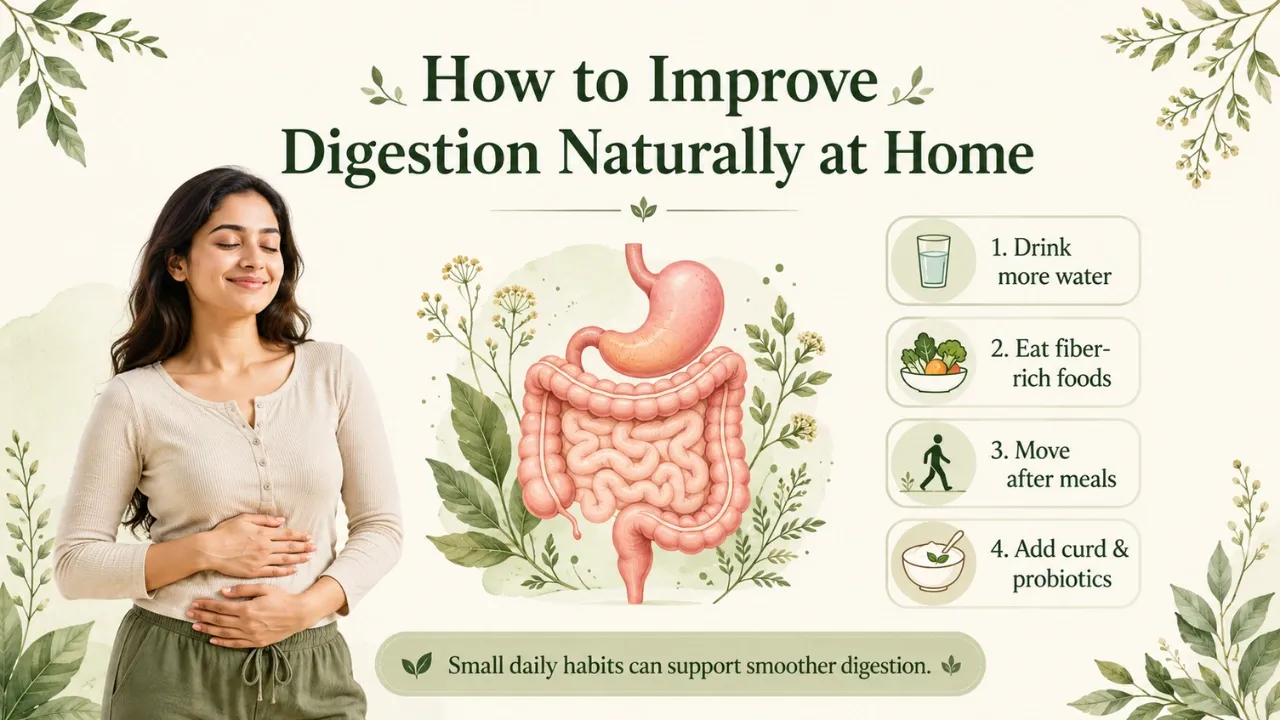
Quick Answer
To improve digestion naturally, eat meals at regular times, chew slowly, walk for 10–15 minutes after meals, add digestive spices such as ginger and cumin, and include fermented foods like curd or buttermilk. Many people notice meaningful relief within 5–14 days of consistent habits.
Not every digestion problem needs a medicine cabinet. Most people improve digestion naturally at home — and see results within 5–14 days — by fixing four things at once: when they eat, how they eat, what they eat, and how their gut recovers overnight.
Improving digestion naturally at home means using food choices, eating habits, physical movement, and traditional practices to help your digestive system break down food efficiently, absorb nutrients, and eliminate waste — without relying on antacids or laxatives.
What most people get wrong: they try one remedy in isolation. Digestion is a chain reaction across five stages. A single change at one stage rarely fixes a problem that spans three. This guide explains what actually works, why it works at each stage, and how quickly you can realistically expect relief.
At a glance — what consistently works:
- Eat meals at the same time each day — regulates gastric enzyme release
- Chew 20–30 times per bite — reduces the stomach's mechanical load
- Walk 10–15 minutes after meals — improves gastric emptying by ~15%
- Add digestive spices (ginger, cumin, fennel, ajwain) — stimulate enzyme activity
- Eat curd or buttermilk daily — replenishes gut microbiome bacteria
Most people with functional digestive discomfort notice meaningful relief within 5–7 days of consistently applying even three of these habits.
What Are the Signs Your Digestion Needs Help?
Most digestive symptoms are not random — each one points to a specific stage of the digestive process breaking down. Identifying your main symptom is the fastest way to find the right fix.
- Bloating after meals — usually caused by swallowing excess air (eating fast) or fermentation of undigested carbohydrates in the large intestine
- Gas and stomach discomfort — typically points to gut microbiome imbalance or incomplete protein digestion; see gas and bloating causes for a deeper breakdown
- Constipation or irregular bowel movements — most commonly linked to low fibre intake, dehydration, or sedentary habits slowing large intestine motility
- Acid reflux or acidity — typically results from irregular meal timing, large portions, or reduced lower oesophageal sphincter tone (often worsened by stress)
- Nausea after eating — can signal delayed gastric emptying or low stomach acid
- Feeling unusually full after small meals — often indicates slow gastric motility or reduced stomach acid production
- Low energy after eating — frequently linked to poor nutrient absorption, caused by gut microbiome imbalance or chronic gut inflammation
If more than two of these symptoms apply to you, the root cause is likely systemic — affecting multiple stages — rather than a single trigger.
What Happens When Food Is Not Digesting Properly?
When food is not digesting properly, it does not simply 'sit' in your stomach — it moves through each stage of the digestive tract in an unprocessed state, causing a cascade of downstream effects.
Here is what actually happens at each stage:
- Mouth stage skipped (eating too fast): Large, incompletely chewed particles reach the stomach. The stomach must work harder, extending the time food stays in the stomach and increasing the likelihood of heaviness, bloating, and acid production without clear benefit.
- Stomach acid too low or disrupted: Incompletely acidified food moves into the small intestine before proteins are fully broken down. The pancreas and liver compensate, but absorption efficiency drops. You may feel full for longer than expected, or notice nausea after eating.
- Small intestine overload: Undigested carbohydrates and fats enter the large intestine without being absorbed. Here, gut bacteria ferment this material — producing gas, bloating, and loose stools as byproducts.
- Large intestine dysbiosis: Persistent indigestion gradually shifts the balance of gut bacteria away from beneficial strains. This worsens gas, alters bowel movement frequency, and — over weeks to months — lowers immunity and energy levels.
- Elimination disrupted: Slow transit causes stools to become harder and drier. Faster-than-normal transit (from gut imbalance or stress) produces loose, unformed stools.
The good news: this cycle is reversible. Most people see meaningful improvement within 5–14 days of addressing even two or three of the root causes described in this guide.
How Digestion Actually Works, And Why It Gets Disrupted
The Digestive Chain: 5 Stages Where Things Go Wrong
- Mouth (Mechanical breakdown): Chewing breaks food into particles and mixes it with salivary amylase, an enzyme that begins breaking down carbohydrates. Eating fast skips this stage.
- Stomach (Chemical breakdown): The stomach produces hydrochloric acid (HCl) and pepsin to digest proteins. Irregular eating causes acid without food present, leading to acidity and irritation. Stress reduces stomach acid production.
- Small intestine (Nutrient absorption): The pancreas releases digestive enzymes and the liver releases bile to break down fats. Poor gut motility, from sedentary habits or dehydration, slows this stage, causing heaviness and bloating.
- Large intestine (Water absorption + microbiome activity): Gut microbiome bacteria ferment undigested fibre, producing short-chain fatty acids that nourish the gut lining. Dysbiosis leads to excessive gas, irregular bowel movements, and low immunity.
- Elimination: Bowel transit time is influenced by fibre intake, hydration, and physical movement. Slow transit leads to harder stools, constipation, and reabsorption of waste products.
10 Easy Ways to Improve Digestion Naturally at Home
How to Digest Food Faster After a Heavy Meal | Bhaari Khane Ke Baad Jaldi Digest Kaise Karein?
Sometimes you need digestion help right now — not as part of a long-term routine. Here is what actually works in the 30–60 minutes after a heavy or uncomfortable meal.
Immediate steps (within 30 minutes of eating):
- Walk slowly for 10–15 minutes. Do not lie down. A gentle walk — not intense exercise — accelerates gastric emptying by approximately 15% compared to sitting. It also reduces post-meal blood sugar spikes, which worsen heaviness.
- Sip warm water or jeera water. A small glass (150–200 ml) of warm water with a pinch of cumin supports gastric motility. Avoid cold water — it temporarily slows gastric enzyme activity.
- Chew a few fennel seeds (saunf). Anethole, the active compound in fennel, relaxes intestinal smooth muscle within 10–20 minutes of consumption. This is why fennel is traditionally offered after meals in Indian households — it has a real physiological basis.
- Sit upright for at least 30 minutes. Lying down after eating increases the risk of acid reflux by reducing lower oesophageal sphincter tone. Sitting or standing upright allows gravity to support gastric emptying.
- Eat a small piece of fresh ginger or drink ginger tea. Ginger stimulates gastrin release and accelerates gastric motility — effects measurable within 20–30 minutes of consumption in controlled studies.
What does NOT help after a heavy meal:
- Drinking large quantities of water with meals (dilutes digestive enzymes)
- Exercising intensely (diverts blood flow away from the GI tract)
- Taking an antacid immediately (suppresses stomach acid needed to digest the meal)
- Lying down to 'rest' (slows motility and increases reflux risk)
Realistic expectation: These steps reduce post-meal discomfort within 30–60 minutes for most people. They do not speed up total food transit time significantly — food still takes 24–72 hours to complete the full digestive journey. What these steps improve is gastric emptying (how quickly the stomach moves food to the small intestine), which is where most post-meal discomfort originates.
1. Eat Meals at Regular Times
The digestive system functions best when meals occur at consistent times each day. When meals are skipped or eaten very late, the stomach may produce acid without food present, leading to irritation or discomfort. Irregular eating patterns disrupt the body's internal clock (circadian rhythm), which controls when digestive enzymes are released. Within 3–5 days of eating at the same times daily, most people notice a reduction in acidity and post-meal heaviness.
2. Chew Food Slowly (20–30 Times Per Bite)
Digestion begins in the mouth. Chewing food thoroughly breaks it into smaller particles and allows digestive enzymes in saliva to begin the digestion process. Eating quickly leads to swallowing excess air, which contributes to bloating and gas. Taking time to chew slowly allows the stomach and intestines to process food more efficiently.
3. Add Digestive Spices to Your Meals
Traditional Indian cooking includes spices that support digestion through well-documented mechanisms:
- Ginger — stimulates gastrin release and accelerates gastric motility (see research section)
- Fennel seeds (saunf) — anethole compound relaxes intestinal smooth muscle, reduces gas
- Cumin (jeera) — contains thymol, which stimulates pancreatic enzyme secretion
- Ajwain — carminative; reduces intestinal spasms and flatulence
- Turmeric — anti-inflammatory; supports gut lining integrity
4. Drink Warm Water Between Meals
Warm water in the morning on an empty stomach stimulates the gastrocolic reflex, a natural signal that prompts bowel movement, and supports gastric motility. Sip water between meals, not in large quantities during meals, to avoid diluting digestive enzymes.
5. Increase Fibre Gradually
Dietary fibre plays an important role in maintaining healthy digestion. Fibre-rich foods include fruits, vegetables, whole grains, lentils, and nuts and seeds. Fibre supports regular bowel movements and feeds beneficial gut bacteria. Increase fibre gradually, adding one high-fibre food per week, to avoid the temporary gas increase that rapid fibre addition can cause.
6. Eat Fermented Foods Daily
Fermented foods naturally contain beneficial bacteria that support gut microbiome balance. Common options in Indian households: curd, buttermilk (chaas), idli and dosa batter, and pickled vegetables. Regular consumption of curd and buttermilk provides a meaningful probiotic benefit, backed by research (see section below).
7. Manage Stress for Better Digestion
The digestive system is closely connected to the brain through the gut-brain axis. Stress activates the sympathetic nervous system, which directly suppresses the vagus nerve, the primary channel of the gut-brain axis, leading to slower peristalsis, increased intestinal permeability, and worsening acid reflux. Know more about acidity home remedies that work alongside stress management. Simple practices: deep breathing exercises, gentle physical activity, meditation, and spending time outdoors.
8. Move Your Body Regularly, Especially After Meals
Physical movement supports digestion by helping food move through the digestive tract. A 2021 systematic review found that even 10–15 minutes of walking post-meal improved gastric emptying rate by approximately 15% compared to sitting after meals. Activities that help: walking after meals, yoga, light stretching, and regular exercise routines.
9. Prioritise 7–8 Hours of Sleep
Poor sleep can negatively affect digestion and gut health. The gut lining renews itself every 3–5 days, and most of this renewal happens during deep sleep. Sleep deprivation is directly linked to increased intestinal inflammation. Maintaining consistent sleep schedules and reducing late-night eating helps support digestive comfort.
10. Follow Traditional Home Practices
- Drinking jeera (cumin) water in the morning
- Consuming small amounts of ginger before meals
- Using fennel seeds after meals
- Drinking buttermilk with roasted cumin
These simple practices have been used in traditional diets for generations. Avoiding the worst foods for gut health alongside these habits makes a significant difference.
Which Method Works Best for Your Symptom?
| Your Main Symptom | Most Likely Root Cause | Best Natural Approaches | Expected Timeline |
|---|---|---|---|
| Bloating after meals | Eating too fast, excess air, gas from undigested carbohydrates | Chew more slowly, reduce gas-producing foods, add ajwain or fennel | 3–7 days |
| Acidity / acid reflux | Irregular meals, large portions, stress, lying down after eating | Regular meal timing, smaller portions, avoid late-night eating, manage stress | 1–2 weeks |
| Constipation / irregular stools | Low fibre, dehydration, sedentary habits, gut microbiome imbalance | Increase fibre gradually, warm water morning routine, post-meal walking, fermented foods. See causes of constipation | 1–3 weeks |
| Gas and stomach discomfort | Dysbiosis, lactose sensitivity, high-FODMAP foods | Fermented foods, digestive spices, reduce processed foods | 2–4 weeks |
| Heaviness after meals | Slow gastric emptying, low digestive enzyme activity | Post-meal walk, smaller portions, include ginger and cumin, chew thoroughly | 3–7 days |
| Low energy after eating | Poor nutrient absorption (gut lining health or dysbiosis) | Fibre + fermented foods daily, reduce ultra-processed foods, improve sleep quality | 3–6 weeks |
| Slow digestion (general) | Combination of low motility, low fibre, sedentary habits | Physical movement, regular meals, fibre, warm water, stress management | 2–4 weeks |
Ayurveda and Digestion: Traditional Practices and Modern Science
In Ayurveda, the concept of digestive health is Agni (अग्नि), literally 'digestive fire'. When Agni is strong, digestion is efficient, energy is high, and the body generates minimal toxins. When Agni is weak, the body produces Ama (undigested metabolic waste) that affects overall health.
| Ayurvedic Practice | Ayurvedic Reason | Modern Mechanism |
|---|---|---|
| Ginger before meals | Kindles Agni (digestive fire) | Stimulates gastrin release, accelerates gastric motility |
| Jeera (cumin) water | Balances Vata and Pitta, reduces Ama | Contains thymol, which stimulates pancreatic enzyme secretion |
| Fennel seeds after meals | Reduces Vata-driven gas and bloating | Anethole compound relaxes intestinal smooth muscle |
| Warm water in the morning | Flushes Ama from GI tract | Improves gut motility, stimulates gastrocolic reflex |
| Triphala at night | Deepana (digestive stimulant) + Rechana (gentle laxative) | Prebiotic effect; supports gut microbiome diversity |
| Buttermilk with cumin | Balances Pitta, improves absorption | Live probiotic bacteria + digestive spice synergy |
What the Research Says About Improving Digestion Naturally
The natural methods in this guide are not traditional folklore — each is supported by clinical evidence. Here is what the studies actually show.
Dietary Fibre and Bowel Regularity
A meta-analysis in the American Journal of Clinical Nutrition (2013) examining 22 randomised controlled trials found that increased dietary fibre significantly improved stool frequency and consistency in people with constipation. Adding 5–10g of additional dietary fibre per day produces measurable improvement in bowel regularity within 2–3 weeks.
Ginger and Gastric Emptying
A 2008 study in Gastroenterology found that 1.2g of oral ginger supplementation significantly accelerated gastric emptying compared to placebo. A 2011 review in the European Journal of Gastroenterology confirmed ginger reduces nausea and accelerates gastric motility. In practical terms: consuming half a teaspoon of fresh ginger before meals or as ginger tea meaningfully speeds up how quickly your stomach moves food forward.
Stress and the Gut-Brain Axis
A 2013 review in Gut (BMJ) confirmed that psychological stress activates the HPA (hypothalamic-pituitary-adrenal) axis, suppresses normal digestive function via the enteric nervous system, reduces colonic transit speed, and alters gut microbiome composition. This is why bloating and irregular stools reliably worsen during high-stress periods — even with no change in diet.
Fermented Foods and Microbiome Diversity
A randomised controlled trial published in Cell (Sonnenburg et al., 2021) found that a high-fermented-food diet significantly increased gut microbiome diversity and decreased inflammatory markers over 10 weeks. Measurable microbiome changes began within 2–4 weeks. The fermented-food group outperformed a high-fibre diet group on microbiome diversity — confirming that regular curd, buttermilk, and fermented foods are not a minor addition but a core intervention.
Physical Activity and Digestive Motility
A 2021 systematic review in the Journal of Gastroenterology and Hepatology found that regular moderate-intensity physical activity significantly reduced constipation and bloating. Even 10–15 minutes of post-meal walking improved gastric emptying rate by approximately 15% compared to sitting after eating.
When Should You See a Doctor?
⚠️ Consult a doctor if you experience:
- Severe or persistent stomach pain
- Unexplained weight loss
- Blood in stools or stool colour changes
- Frequent vomiting
- Symptoms persisting beyond 4–6 weeks of consistent lifestyle changes
- Symptoms that began suddenly with no obvious lifestyle trigger
When Natural Habits Are Not Enough: Structured Ayurvedic Support
For most people, the habits in this guide are enough. Within 4–8 weeks of consistent effort — regular meals, chewing properly, post-meal walks, fermented foods daily — functional digestive discomfort clears up significantly.
But some root causes do not respond to lifestyle changes alone:
- Severe constipation that has persisted for months often requires targeted gut motility support beyond dietary fibre
- Chronic bloating and gas linked to deep microbiome imbalance may need a prebiotic + probiotic + gut-lining repair approach, not just curd daily
- Sluggish metabolism and nutrient absorption — when fatigue and heaviness persist despite a clean diet — points to digestive fire (Agni) that needs stimulation beyond spices alone
- Post-illness or post-antibiotic gut recovery — the microbiome may need more structured replenishment than diet provides
In these cases, Ayurvedic formulations designed to address the specific root cause can complement lifestyle changes meaningfully — working on gut motility, toxin clearance, and microbiome balance from the inside, while your habits build the right environment.
If you have been consistent with natural methods for 6 weeks and symptoms remain, a structured root-cause assessment is the logical next step — not just adding more remedies.
What This Means for You
By consistently applying three to four of the natural methods in this guide — particularly regular meal timing, thorough chewing, post-meal walking, and fermented foods daily — most people with functional digestive discomfort notice meaningful relief within 5–14 days. Sustained improvement in gut microbiome health and bowel regularity typically develops over 4–8 weeks of consistent effort.
Your action plan, week by week:
- This week: Pick two non-negotiables — eat meals at the same time each day, and walk for 10 minutes after dinner. These alone shift gastric motility within 3–5 days.
- Week 2: Add one fermented food daily (curd or buttermilk) and make one meal per day screen-free to activate the parasympathetic nervous system during digestion.
- Week 3: Start a morning warm-water or jeera-water ritual, and gradually add one high-fibre food to your lunch — one new food, not three.
- Week 4: Audit your stress response. If bloating reliably worsens on your most stressful days, stress management is your highest-leverage next step — not adding more dietary changes.
- After 6 weeks of genuine consistency: If symptoms have not improved meaningfully, the root cause is likely deeper than lifestyle alone — microbiome imbalance, a hormonal trigger, or a structural issue. That is when a structured, root-cause assessment becomes more effective than continuing to add individual remedies.
A structured gut health assessment identifies your specific root causes and recommends a targeted approach — so you are not guessing which intervention to add next.
Natural Digestion Methods vs Digestive Supplements: An Honest Comparison
Natural lifestyle changes and digestive supplements are not competing options — they work at different levels of the digestive system. Understanding the difference helps you decide which approach fits your situation.
| Factor | Natural Lifestyle Methods | Digestive Enzyme Supplements | Probiotic Supplements | Antacids / OTC Medicines |
|---|---|---|---|---|
| What they do | Improve the environment your digestive system works in | Temporarily replace or boost specific enzymes | Deliver concentrated bacterial strains | Neutralise or suppress stomach acid |
| How quickly they work | 3–14 days for most symptoms | 30–60 minutes per dose | 2–4 weeks for microbiome shift | 15–30 minutes (symptom relief only) |
| Long-term benefit | Yes — improves root-cause function | No — stops when you stop taking them | Moderate — depends on diet and lifestyle | No — symptoms return; long-term use has risks |
| Addresses root cause | Yes | Partially | Partially | No |
| Risk of dependency | None | Low | Very low | Moderate (rebound acidity with antacids) |
| Best for | Functional bloating, gas, irregular stools, mild acidity, low energy | Diagnosed enzyme deficiency (e.g., lactase deficiency, pancreatic insufficiency) | Post-antibiotic recovery, IBS-D support | Occasional acute acidity only |
| Not suitable for | Structural GI conditions (IBD, GERD requiring acid suppression) | Most people with functional digestive discomfort | People with severely compromised immunity | Daily use for chronic digestive issues |
The honest answer: For most people with functional digestive discomfort — bloating, gas, irregular stools, mild acidity — natural lifestyle methods outperform supplements in the long run because they improve the underlying environment. Supplements work faster per dose but do not fix the environment.
When supplements make sense alongside natural methods:
- After a course of antibiotics (probiotic supplementation for 2–4 weeks supports microbiome recovery)
- If diagnosed with a specific enzyme deficiency (lactase, pancreatic enzymes)
- When symptoms are severe enough to interfere with daily life while lifestyle changes are taking effect
Is Natural Digestion Improvement Right for You? | Kiske Liye Kaam Karta Hai?
Natural digestion improvement works well for most people — but not equally for everyone. Here is an honest breakdown.
Ideal for natural home methods:
- Functional digestive discomfort: bloating, gas, irregular stools, mild acidity with no diagnosed structural cause
- People whose symptoms worsen during high-stress periods (gut-brain axis involvement)
- Anyone with sedentary habits, irregular meal timing, or a low-fibre diet — these are modifiable causes
- People who want to reduce dependence on antacids or laxatives
- Those managing early-stage weight gain or low energy linked to poor nutrient absorption
May need additional support beyond lifestyle changes:
- Constipation that has persisted for more than 3–6 months without clear dietary cause
- Bloating and gas that do not respond to 4–6 weeks of consistent dietary and lifestyle changes
- Women with PCOS, hypothyroidism, or hormonal imbalance — these affect gut motility systemically and may need targeted Ayurvedic or clinical support alongside lifestyle changes
- Anyone post-antibiotic (gut microbiome rebuilding may require structured probiotic support)
Not appropriate for natural-only management — see a doctor:
- IBD (Crohn's disease, ulcerative colitis)
- GERD requiring acid suppression for oesophageal protection
- Suspected intestinal obstruction or structural abnormality
- Unexplained weight loss, blood in stools, or persistent pain
Common Mistakes That Make Digestion Worse (And What to Do Instead)
Adding digestive habits is only half the equation. Most people undermine their progress by continuing the habits that created the problem. These are the most common mistakes — and the direct fix for each.
Mistake 1: Eating too fast and doing something else at the same time. Eating while scrolling, watching, or working activates the sympathetic nervous system ('fight or flight'), which directly suppresses digestive enzyme release. The fix is not just to chew more — it is to eat without screens for even 10 minutes. This is called 'mindful eating' and it has a measurable effect on gastric motility.
Mistake 2: Drinking cold water or cold drinks with meals. Cold liquids temporarily reduce gastric enzyme activity and slow gastric motility. The fix: sip warm or room-temperature water between meals, not large quantities during them.
Mistake 3: Lying down immediately after eating. This reduces lower oesophageal sphincter tone and dramatically increases reflux risk. Even a 30-minute gap before lying down reduces reflux episodes significantly. The fix: walk or sit upright after meals.
Mistake 4: Dramatically increasing fibre overnight. Fibre is essential — but adding large amounts suddenly feeds gut bacteria too rapidly, causing a temporary spike in gas and bloating. This discourages people from continuing. The fix: add one high-fibre food per week, not three at once.
Mistake 5: Relying on antacids for bloating (not just acidity). Antacids suppress stomach acid. Low stomach acid is already a common cause of incomplete protein digestion and bloating. Taking antacids for bloating worsens the root cause in many cases. The fix: first identify whether the bloating is from excess acid or insufficient acid — the timing of bloating after meals is a useful clue (immediate bloating often suggests low acid; delayed bloating 2–3 hours after eating often suggests gut fermentation).
Mistake 6: Treating digestion as a 'one remedy' problem. The most common pattern: someone adds jeera water for a week, sees partial improvement, then stops. Digestion is a five-stage system. Sustaining improvement requires addressing at least three to four stages simultaneously — diet, meal timing, physical movement, and stress management working together.
Key Takeaways
Simple lifestyle and diet changes may help improve digestion naturally at home. This guide covers easy daily habits for better gut health and reduced bloating.
Your gut is unique your healing should be too.

Disclaimer
The content provided by Mool Health is for educational and informational purposes only and should not be considered a substitute for professional medical advice, diagnosis, or treatment.