
Causes of Bloating and Gas: Complete Guide to Symptoms, Triggers & Relief
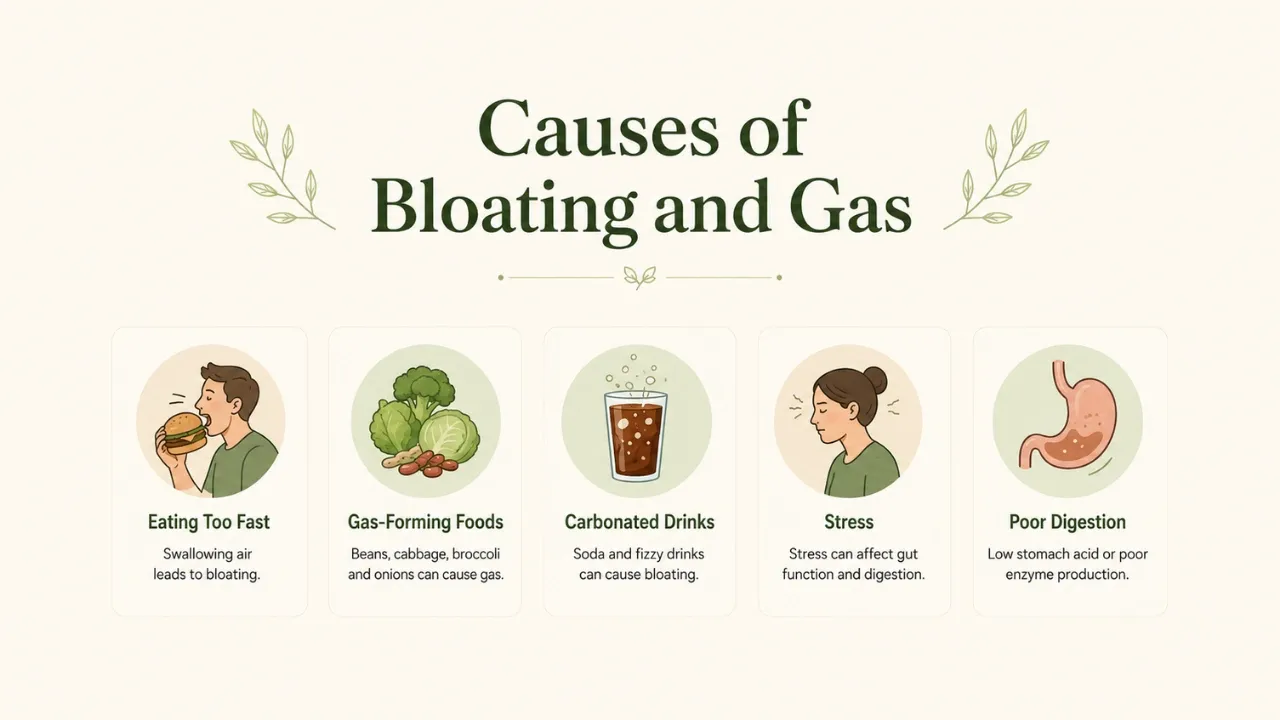
Causes of Bloating and Gas include common dietary, digestive, and lifestyle triggers. Learn what causes gas and bloating and simple ways to manage digestive discomfort.
✏️ Quick Answer
Constipation is a condition in which bowel movements become irregular, and stools are difficult to pass. It generally occurs when the large intestine absorbs all the water from the stool, making it dry and hard. Low-fibre foods, dehydration, and physical inactivity are the most common triggers of constipation. Occasional constipation is normal and may resolve in a few days. Certain home remedies and natural approaches, like acupressure, may support the digestive system and relieve constipation. But if it persists for a week or more and you experience severe symptoms, such as blood in your stool, you should consult a doctor. Addressing the root cause through a balanced diet and lifestyle changes will maintain your gut health.
Most people experience constipation at some point in their lives. It generally lasts for a few days. But as long as it stays, it causes several discomforts, such as bloating, gas, and stomachache. Now, if you are wondering why constipation happens, the simple answer is your poor daily lifestyle or dietary habits. This blog will explain what is constipation, its symptoms, causes, and provide holistic treatment, understanding the core reason.
What Is Constipation?
Constipation is a condition in which people face issues passing stool or bowel movements. Mild constipation can be managed within a day by making some dietary changes. Constipation is a common health issue, and hence, many people disregard it until it turns into a severe health problem. If your bowel movements happen fewer than three times a week, the condition needs to be addressed.
Symptoms of Constipation
When you eat food, your body absorbs all the essential nutrients present in the food and passes the waste to the large intestine. Constipation occurs when the large intestine absorbs all the water from the stool, making it dry and hard to pass. You might feel the urge to go, but still have trouble getting passing the stool.
Constipation can show up in different ways depending on its severity. Some common symptoms include:
- Passing hard or lumpy stools
- Straining during bowel movements
- Feeling of incomplete evacuation
- Building up gas and bloating
What Causes Constipation?
There are several reasons why someone can be constipated. Mainly, the condition is caused by a few internal dysfunctions, such as dehydration and a lack of fibre. However, check out the following list to know more causes of constipation:
- A lack of regular physical activity
- Consuming large amounts of dairy products
- Ignoring the urge to pass stool
- Side effects of medications
- Stress or anxiety
- Pregnancy
Management & Treatment of Constipation
You can manage occasional constipation at home by following some dietary changes. Here are some home remedies and treatments you can follow.
- Drink 3-4 litres of water a day
- Avoid caffeine
- Add high-fibre food to your diet
- Avoid sugary products
- Eat fruits and properly cooked vegetables
- Exercise regularly
- Listen to the urge to use the washroom
If the condition is severe, you can take over-the-counter medicine. Consult your doctor if the medicine doesn't work for your condition.
When Should You Consult the Doctor for Constipation?
These are the instances mentioned below when you should see a doctor immediately:
- You see the blood in your stool
- You haven't been able to pass stool for several days
- You have abdominal pain
- You are feeling dizzy and tired
- You feel dehydrated and weak
If constipation is not treated immediately in these conditions, you may face a severe health problem later.
Home Remedies for Constipation
The good news is that most cases of constipation can be managed through simple lifestyle changes.
Check the list to find simple, effective home remedies for constipation:
- Drink warm water in the morning
- Increase fibre intake
- Drink 3-4 litres of water
- Eat soaked raisins and figs
- Take frequent walks after meals
- Take a syrup for constipation
- Consume ripe bananas
If the symptoms of constipation persist, you will need to consult a doctor, who will examine the condition and prescribe medication.
What Are the Acupressure Points for Gas and Constipation?
When you are looking for an answer on what to do for constipation, you can try alternative methods like acupressure to relieve the symptoms. Check out some acupressure points for gas and constipation to improve gut health and the digestive system.
1. Abdominal Point
Put your two fingers on either side of your navel and gently press for 1-2 minutes, taking deep breaths. It will help relieve constipation, bloating, and abdominal discomfort.
2. Leg Point
Put your four fingers below the kneecap and massage in a circular motion for 4-5 minutes. It boosts digestion and reduces gas bloating.
3. Hand Point
Apply firm pressure between thumb and forefinger for 1-2 minutes on each side. It helps promote bowel movement and relieves constipation.
4. Lower Abdominal Point
Apply two fingers below the belly button and press gently for 1-2 minutes. Doing this will help reduce constipation and improve bowel movements.
5. Side Abdomen Point
Apply four fingers to either side of the navel and massage gently for 1-2 minutes. It will ease abdominal pain and relieve constipation.
What Are the Risk Factors for Constipation?
Since constipation is a common condition, it occurs in people of all ages. That condition is called occasional constipation. However, people who suffer from constipation every week and it stays for weeks or a month, the condition is known as chronic and requires immediate doctor's consultation. Here are some risk factors for constipation you must know:
Slower Metabolism
People over 60 usually have a slower metabolism, so food travels more slowly through the digestive tract. This process often causes constipation in the older age group, which may require a doctor's consultation.
Hormonal Changes
Hormonal changes happen during and after pregnancy among women, causing constipation. The growing fetus can compress the intestines, potentially slowing bowel movements.
Low-fibre Foods
Fibres are a crucial component of our digestive system, helping it function properly. A low-fibre diet can cause immediate constipation by reducing stool bulk and slowing transit through the digestive tract.
The usual question most women have is when constipation starts in pregnancy. The condition generally begins in the first trimester of pregnancy and, in rare cases, continues into the second or third trimesters.
How Mool Health Helps With Constipation?
Mool Health focuses on identifying the root cause of your health problem and creating a personalised kit to treat you more effectively. The Mool Health gut test asks you a few questions about your health problem and, based on that, creates a holistic treatment plan. Every kit is personalised for you based on your symptoms, lifestyle, and digestive issues.
Low-fibre foods, medication, dehydration, and health conditions cause constipation. You can treat constipation by following some home remedies mentioned above. In case you suffer from chronic constipation, you should consult your doctor or take the Mool Health Gut Test to identify the root cause. This way, you can relieve the symptoms by addressing the root cause.
Key Takeaways
Causes of Bloating and Gas include common dietary, digestive, and lifestyle triggers. Learn what causes gas and bloating and simple ways to manage digestive discomfort.
Your gut is unique your healing should be too.

Disclaimer
The content provided by Mool Health is for educational and informational purposes only and should not be considered a substitute for professional medical advice, diagnosis, or treatment.