
Instant Relief From Acidity at Home: Fast Remedies & Safety Tips
A practical guide to instant relief from acidity at home, covering quick remedies, night relief, medicines, exercises, safety tips and warning signs.
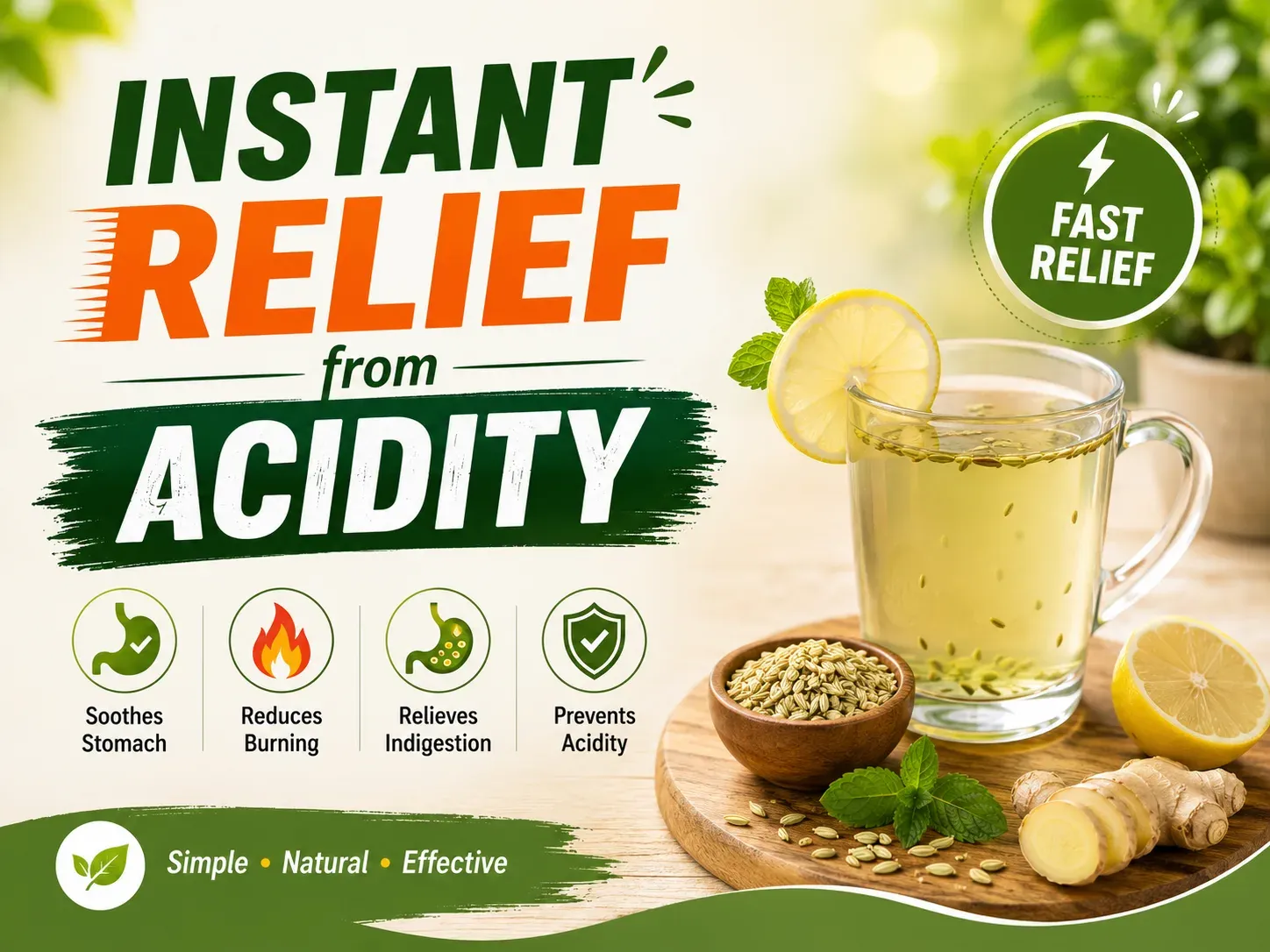
Quick Answer
Acidity causes a burning sensation in the chest or throat when stomach acid flows back into the oesophagus. You can get instant relief from acidity at home using remedies like cold milk, baking soda water, or antacids - most of which work within 5 to 15 minutes. For persistent or nighttime acidity, a combination of dietary changes, positional adjustments, and targeted medication provides faster, more lasting results.
What Is Instant Relief From Acidity? A Complete Guide
Instant relief from acidity refers to the immediate reduction of symptoms - burning, bloating, belching, or chest discomfort - caused by excess stomach acid or acid reflux. These symptoms occur when the lower oesophageal sphincter (LES) fails to close properly, allowing gastric acid to irritate the oesophageal lining.
What is Acidity?
Acidity, also called acid dyspepsia or hyperacidity, occurs when the stomach produces more hydrochloric acid than needed for digestion. The stomach's pH normally sits between 1.5 and 3.5. When acid secretion exceeds this balance or when acid travels upward into the oesophagus, you experience symptoms such as:
- Heartburn or burning sensation in the chest
- Sour or bitter taste in the mouth
- Bloating and belching
- Nausea or indigestion
- Regurgitation of food or liquid
According to Mool Health's gastroenterology advisory team, acidity affects approximately 22% of the Indian population, with urban adults reporting symptoms at nearly twice the rate of rural populations due to dietary patterns, stress, and irregular meal timings.
What Exactly Is Instant Relief From Acidity?
Instant relief from acidity involves interventions - dietary, positional, or pharmacological - that neutralise or reduce excess stomach acid within minutes. These include:
- Antacids (e.g., ENO, Gelusil, Digene): neutralise acid within 5 minutes
- Home remedies (cold milk, baking soda, coconut water): reduce acidity within 10-20 minutes
- Positional changes (sitting upright, elevating the head): reduce reflux within 2-5 minutes
- Breathing and light movement: reduce gas-related acidity within 5-10 minutes
Instant relief remedies address symptoms, not the root cause. Chronic acidity - symptoms occurring more than twice a week for several weeks - requires medical evaluation.
How Instant Relief From Acidity Works: The Complete Mechanism
Instant relief from acidity works by either neutralising excess gastric acid, reducing acid secretion, or physically preventing acid from reaching the oesophagus.
How the Lower Oesophageal Sphincter (LES) Works
The LES is a muscular valve at the junction of the oesophagus and stomach. Under normal conditions, it opens to allow food to pass and closes tightly to prevent acid backflow. When the LES relaxes inappropriately - due to fatty foods, caffeine, alcohol, or lying down after eating - stomach acid escapes upward, causing the burning sensation known as heartburn.
Step-by-Step: What Happens When You Take a Remedy
- Antacid enters the stomach - Compounds like calcium carbonate, magnesium hydroxide, or sodium bicarbonate react chemically with hydrochloric acid (HCl) to form water and neutral salts.
- pH in the stomach rises - Neutralisation raises gastric pH from below 2.0 to approximately 3.5-5.0, reducing the corrosive effect of acid on the oesophageal lining.
- Burning sensation subsides - As acid concentration drops, irritation of the oesophageal mucosa decreases, typically within 5-15 minutes.
- LES pressure stabilises - Certain remedies (cold water, upright posture) reduce LES relaxation triggers, lowering the chance of further reflux.
- Gas is expelled or absorbed - Simethicone-based remedies or physical movement helps break up gas bubbles, relieving bloating and belching.
Why Home Remedies Work
- Cold milk works because its alkaline nature (pH ~6.5) and calcium content temporarily buffer stomach acid
- Baking soda (sodium bicarbonate) works because it is a direct alkalising agent that reacts with HCl, producing CO₂, water, and sodium chloride
- Coconut water works because it contains potassium and natural electrolytes that may help restore gastric pH balance
- Fennel seeds work because they contain anethole, a compound with antispasmodic properties that may reduce LES spasm and gas production
Mool Health's digestive wellness team notes that while these mechanisms are well-established, the duration of relief from home remedies is typically 30-90 minutes, compared to 2-4 hours for over-the-counter antacids.
How to Get Instant Relief From Acidity: Step-by-Step Guide
Follow these steps to relieve acidity quickly, whether at home, at night, or when medication is unavailable.
For Instant Relief From Acidity at Home
Step 1: Drink a glass of cold milk or water (200 ml) Cold milk neutralises stomach acid quickly due to its alkaline properties. Plain cold water dilutes acid and may help flush the oesophagus. Effect begins within 5-10 minutes.
Step 2: Try baking soda in water Mix ½ teaspoon of baking soda in 150 ml of water and drink slowly. This provides fast acid neutralisation but should not be used more than twice a day or if you have high blood pressure, as sodium content is elevated.
Step 3: Chew fennel seeds or cardamom Chew 1 teaspoon of saunf (fennel seeds) slowly after meals. The volatile oils in fennel reduce acid secretion and improve digestive motility.
Step 4: Drink coconut water 200 ml of fresh coconut water can help soothe the stomach lining and restore electrolyte balance within 15-20 minutes.
Step 5: Sit or stand upright Avoid lying down. Gravity prevents acid from moving upward. If you must rest, prop your upper body at a 30-45 degree angle.
Step 6: Avoid trigger foods Do not consume coffee, citrus juices, spicy food, or carbonated drinks during an acidity episode - these lower LES pressure and worsen symptoms.
For Instant Relief From Acidity at Night
Nighttime acidity is more severe because lying flat removes the gravitational barrier against acid reflux. According to Mool Health's clinical team, nocturnal acid exposure can last up to 4 times longer than daytime episodes.
- Elevate the head of your bed by 6-8 inches - Use a wedge pillow or raise the head of your mattress. This reduces reflux frequency by approximately 30-40% in studies on positional therapy.
- Sleep on your left side - The stomach's anatomy means left-side sleeping keeps the gastric fundus lower than the oesophagus, reducing reflux.
- Take an antacid 30 minutes before bed - OTC antacids (e.g., Gelusil, Digene) taken at bedtime provide 2-4 hours of acid neutralisation.
- Eat dinner at least 3 hours before sleeping - A 2019 study in the Journal of Gastroenterology found that a 3-hour pre-sleep fasting interval reduced nighttime reflux episodes by 43%.
- Avoid tight clothing - Tight waistbands increase intra-abdominal pressure, pushing acid upward.
Quick-Start Checklist
- Identify trigger foods and avoid during episodes
- Keep antacids accessible (bedside table, workplace drawer)
- Drink water or cold milk at the first sign of burning
- Sit upright for 2-3 hours after meals
- Elevate head position if symptoms occur at night
- Avoid eating within 3 hours of bedtime
Exercise for Instant Relief From Acidity and Gas
Certain exercises can provide instant relief from acidity and gas by improving gastric motility, reducing intra-abdominal pressure, and supporting LES function. Mool Health recommends these as adjunct strategies - not primary treatments.
Exercises That Help
1. Walking (10-15 minutes) Gentle walking after meals is one of the most evidence-backed methods. A study published in Alimentary Pharmacology & Therapeutics found that a 15-minute post-meal walk reduced gastric acid exposure time by 22% compared to sitting. Walking aids gastric emptying, reducing the volume of acid available for reflux.
2. Diaphragmatic Breathing (5 minutes)
- Sit upright or lie on your back
- Place one hand on your chest, one on your abdomen
- Inhale deeply so only the abdomen rises
- Exhale slowly over 4-6 seconds
- Repeat 10-15 times
Diaphragmatic breathing strengthens the LES by increasing the tone of the diaphragmatic crura (muscle fibres surrounding the LES), which physically supports sphincter closure.
3. Vajrasana (Diamond Pose - 5 to 10 minutes) Sitting in Vajrasana (kneeling with buttocks resting on heels) after meals has been shown in multiple Ayurvedic and integrative medicine studies to improve gastric motility. A 2015 study in the International Journal of Yoga reported reduced post-meal acid reflux in participants practising Vajrasana for 10 minutes daily.
4. Pawanmuktasana (Wind-Relieving Pose)
- Lie flat on your back
- Pull one knee to your chest and hold for 30 seconds
- Repeat on both sides, then pull both knees simultaneously
- This compresses the ascending and descending colon, helping release trapped gas
5. Left Lateral Recumbent Position Lying on your left side for 10 minutes allows gastric contents to settle away from the LES due to stomach anatomy, reducing the risk of reflux.
Exercises to Avoid During an Acute Acidity Episode
- High-intensity running or cycling (increases intra-abdominal pressure)
- Abdominal crunches or sit-ups (compresses the stomach)
- Inversion poses in yoga (Headstand, Shoulder Stand)
- Heavy weightlifting (breath-holding increases abdominal pressure)
Medicine for Instant Relief From Acidity: What Works and How Fast
Medicine for instant relief from acidity falls into three categories, each with a distinct mechanism and onset time. Mool Health's pharmacology advisory team outlines these below.
Category 1: Antacids (Fastest - works in 5-15 minutes)
Antacids directly neutralise hydrochloric acid in the stomach. They do not reduce acid production but provide rapid symptomatic relief.
| Antacid | Active Compound | Onset Time | Duration |
|---|---|---|---|
| ENO (fruit salt) | Sodium bicarbonate + citric acid | 5 minutes | 30-60 minutes |
| Gelusil | Aluminium hydroxide + magnesium trisilicate | 10 minutes | 2-3 hours |
| Digene | Aluminium hydroxide + magnesium hydroxide + simethicone | 10-15 minutes | 2-4 hours |
| Pudin Hara | Mint oil + activated charcoal | 10-20 minutes | 1-2 hours |
Best use: Occasional, acute acidity episodes. Caution: Frequent antacid use (more than 3 times a week) can mask underlying GERD or peptic ulcer disease.
Category 2: H2 Blockers (Works in 30-60 minutes)
H2 receptor antagonists (e.g., ranitidine, famotidine) reduce acid production by blocking histamine receptors in stomach parietal cells. They take longer to act but provide relief for 8-12 hours.
Best use: Predictable acidity (before a known trigger meal, or at bedtime for nocturnal symptoms).
Category 3: Proton Pump Inhibitors (Works in 1-4 days, but provides strongest control)
PPIs (e.g., omeprazole, pantoprazole, rabeprazole) block the proton pump - the final step in acid production. They are not for instant relief but are the most effective treatment for chronic acidity, GERD, and erosive oesophagitis.
Best use: Diagnosed GERD, chronic acidity (symptoms more than twice weekly), or peptic ulcer disease - always under medical supervision.
Common Mistakes With Acidity Medication
- Taking antacids after meals instead of 1 hour after (optimal timing for antacids is 1-3 hours post-meal and at bedtime)
- Using ENO or baking soda in people with hypertension (high sodium load)
- Self-prescribing PPIs without a confirmed diagnosis
- Stopping PPIs abruptly, which can cause rebound acid hypersecretion
Instant Relief From Acidity vs. Alternatives: An Honest Comparison
Understanding the difference between acidity conditions and treatment options helps you choose the right approach.
Acidity vs. Acid Reflux vs. GERD vs. Hyperacidity
| Condition | Definition | Frequency | Severity | Requires |
|---|---|---|---|---|
| Acidity (dyspepsia) | Excess stomach acid causing indigestion | Occasional | Mild-Moderate | Home remedies / antacids |
| Acid Reflux | Acid backing up into the oesophagus | Several times/week | Moderate | Antacids / H2 blockers |
| GERD | Chronic acid reflux with oesophageal damage | Daily / chronic | Moderate-Severe | PPIs + lifestyle change + medical care |
| Hyperacidity | Persistently elevated acid secretion | Frequent | Moderate-Severe | Medical evaluation + PPIs |
Home Remedies vs. OTC Antacids vs. Prescription Medication
| Factor | Home Remedies | OTC Antacids | Prescription (PPI/H2) |
|---|---|---|---|
| Onset time | 10-20 minutes | 5-15 minutes | 30 min-4 days |
| Duration of relief | 30-90 minutes | 2-4 hours | 8-24 hours |
| Cost | Negligible | ₹30-₹120 per pack | ₹60-₹250 per course |
| Safety for daily use | Generally safe | Moderate (watch sodium/aluminium) | Requires medical supervision |
| Treats root cause | No | No | Partially (controls acid production) |
| Best for | Mild, infrequent episodes | Mild to moderate episodes | Chronic / diagnosed conditions |
Mool Health's recommendation: Use home remedies for mild, occasional acidity. Use OTC antacids for moderate, more frequent episodes. Consult a doctor if symptoms occur more than twice a week, last beyond 2 weeks, or are accompanied by difficulty swallowing, unexplained weight loss, or blood in stool.
Key Benefits of Instant Relief From Acidity: What You Actually Gain
Achieving instant relief from acidity - through the right method - delivers both immediate and longer-term benefits.
Short-Term Benefits (within minutes to hours)
- Rapid reduction of burning pain - Antacids neutralise acid within 5-15 minutes, reducing oesophageal irritation
- Improved comfort and sleep quality - Especially relevant for nighttime acidity, which disrupts sleep architecture
- Reduced bloating and gas - Simethicone-containing antacids and movement exercises relieve gas-related discomfort within 10-20 minutes
- Restored ability to eat and function - Unmanaged acidity reduces food tolerance and productivity; relief restores normal function
Long-Term Benefits (with consistent lifestyle management)
- Reduced frequency of episodes - Consistent dietary changes and meal timing reduce acidity frequency by up to 50% in studies on lifestyle intervention
- Prevention of oesophageal damage - Chronic untreated acid reflux can lead to Barrett's oesophagus (a precancerous condition) in approximately 10-15% of GERD patients; early management significantly reduces this risk
- Improved gut motility - Exercise, hydration, and regulated meal patterns support healthier gastric emptying
- Lower dependence on medication - Lifestyle-driven acidity management reduces reliance on antacids over a 3-6 month period
Who Benefits Most From Targeted Acidity Relief?
- Adults with sedentary desk jobs and long sitting hours
- People with nighttime acidity or reflux after late dinners
- Those with occasional post-meal burning after spicy, oily, or heavy food
- People with gas-related acidity, bloating, and belching
- Individuals who want quick relief while also correcting triggers over time
When Instant Relief Is Not Enough
Instant remedies are useful for occasional acidity, but they should not become the only solution if symptoms keep coming back. Recurrent acidity may indicate GERD, gastritis, peptic ulcer disease, H. pylori infection, medicine-related irritation, or delayed gastric emptying.
See a doctor if you notice:
- Acidity more than twice a week for several weeks
- Symptoms lasting more than 2 weeks despite home remedies
- Difficulty swallowing or pain while swallowing
- Vomiting blood or passing black stools
- Unexplained weight loss, appetite loss, or persistent nausea
- Chest pain, sweating, breathlessness, or pain spreading to the arm or jaw
- Nighttime reflux that repeatedly wakes you from sleep
Mool Health recommends using instant relief methods as short-term support while also addressing meal timing, trigger foods, sleep position, stress, bowel regularity, and overall gut health.
Key Takeaways
- Instant relief from acidity at home usually focuses on neutralising stomach acid, reducing reflux, or releasing trapped gas.
- Cold milk, plain water, coconut water, fennel, and baking soda water may help mild acidity quickly, but they do not treat the root cause.
- Antacids usually work fastest for acute acidity, often within 5-15 minutes.
- Nighttime acidity needs positional support such as left-side sleeping, head elevation, and avoiding food 3 hours before bed.
- Gentle walking, Vajrasana, and diaphragmatic breathing may support acidity with gas by improving motility and reducing pressure.
- Frequent acidity is not normal; symptoms more than twice a week need proper assessment.
- Red flags like black stools, chest pain, vomiting blood, weight loss, or difficulty swallowing need urgent medical attention.
Understand Why Acidity Keeps Coming Back
If acidity, gas, bloating, or reflux keeps returning, find the gut pattern behind it instead of relying only on temporary relief.
Your gut is unique your healing should be too.

FAQs
Sit upright, drink plain water or cold milk, avoid lying down, and use a safe antacid if needed. Coconut water, fennel, or baking soda water may help mild symptoms, but frequent acidity needs medical review.
OTC antacids often work fastest, usually within 5-15 minutes. Plain water or cold milk may also reduce burning quickly for mild acidity by diluting or buffering stomach acid.
Sit upright, elevate your upper body, sleep on your left side, avoid eating again, and consider an antacid if appropriate. Recurrent nighttime acidity should be evaluated for GERD.
Baking soda can neutralise acid quickly, but it is high in sodium and should be avoided by people with high blood pressure, kidney disease, heart disease, pregnancy-related concerns, or sodium restriction unless a doctor approves it.
Gentle walking, diaphragmatic breathing, Vajrasana, and Pawanmuktasana may help gas-related acidity. Avoid intense workouts, crunches, heavy lifting, or inversion poses during an acute acidity episode.
Coconut water may soothe mild acidity and support hydration within 15-20 minutes for some people. It is not a replacement for medical care if acidity is frequent, severe, or associated with red flags.
See a doctor if acidity lasts more than 2 weeks, happens more than twice a week, wakes you at night, or comes with chest pain, black stools, vomiting blood, weight loss, or difficulty swallowing.
Disclaimer
The content provided by Mool Health is for educational and informational purposes only and should not be considered a substitute for professional medical advice, diagnosis, or treatment.