
Worst Foods for Gut Health: What to Limit and Why It Matters
Worst Foods for Gut Health explains which foods may negatively affect digestion, contribute to bloating and discomfort, and disrupt gut health, along with healthier choices to consider.
Quick Answer
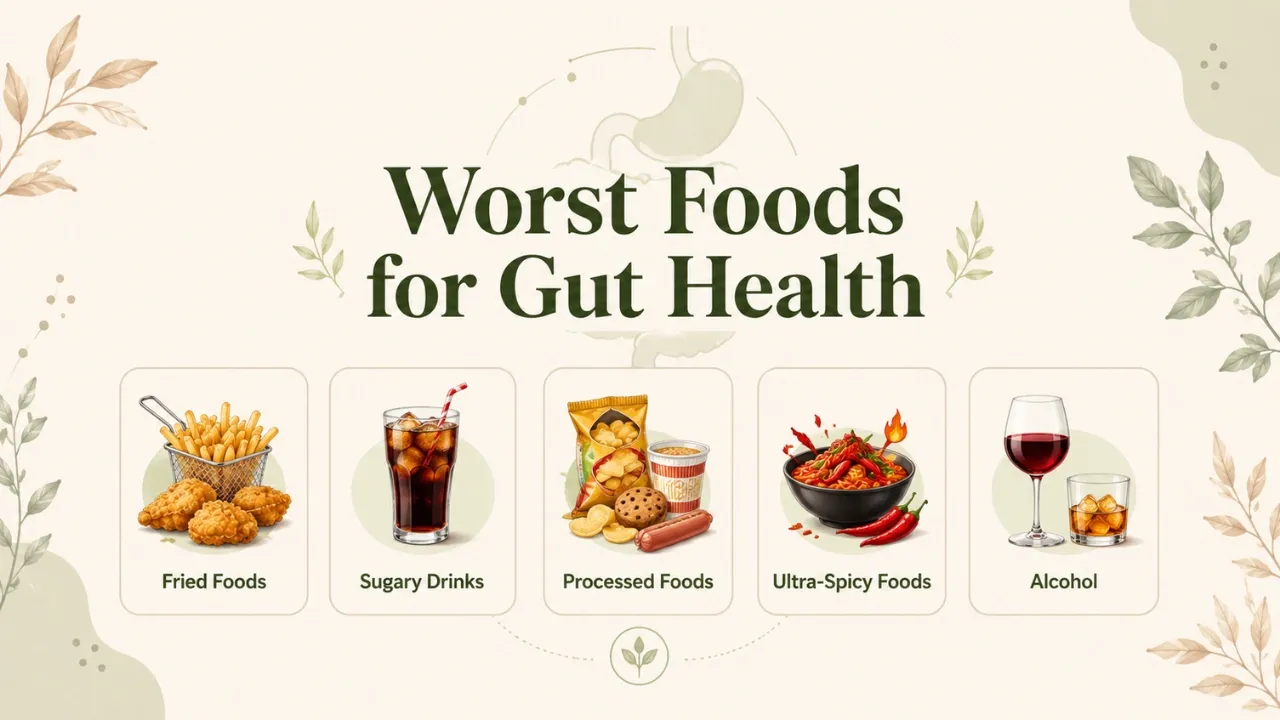
No single food ruins gut health overnight. The bigger issue is a regular eating pattern that is low in fibre-rich foods and high in ultra-processed foods, sugary drinks, alcohol, fried foods, and processed meat. Some foods also trigger symptoms only in people with conditions such as IBS or lactose intolerance.
- Limit ultra-processed foods that regularly replace vegetables, fruits, pulses, nuts, and whole grains.
- Cut back on sugary drinks and frequent high-sugar snacks.
- Keep processed meat occasional and choose less processed protein options more often.
- Reduce alcohol if it worsens reflux, diarrhoea, stomach upset, or bloating.
- Do not remove beans, fruit, dairy, or FODMAP foods for life without identifying your personal trigger first.
Gut health is shaped by your overall food pattern, stress, sleep, activity, medicines, and medical conditions. Foods are most likely to cause trouble when they crowd out fibre-rich meals, trigger symptoms repeatedly, or are eaten in large amounts over time. The aim is not to create a long list of forbidden foods. It is to make practical swaps that support comfortable digestion and a varied diet.
What Are the Worst Foods for Gut Health?
The foods most worth limiting are usually those that are highly processed, low in naturally occurring fibre, or closely linked with symptoms such as reflux, bloating, constipation, or diarrhoea. They may not cause the same problem for every person, but frequent intake can make a balanced gut-friendly eating pattern harder to maintain.
| Food Category | Why It May Be Worth Limiting | Simple Swap |
|---|---|---|
| Ultra-processed packaged foods | Often low in fibre and easy to overeat. They can displace minimally processed foods that support overall diet quality. | Choose roasted chana, fruit, curd, nuts, or a home-cooked snack more often. |
| Sugary drinks and frequent sweets | Add free sugars with little fibre or fullness, and may worsen bloating or reflux for some people. | Choose water, unsweetened beverages, or whole fruit. |
| Processed meat | Usually high in salt and preservatives. Regular intake is best kept low for overall health. | Choose pulses, eggs, fish, chicken, tofu, or fresh meat when suitable. |
| Alcohol | Can irritate the gastrointestinal tract and worsen reflux, loose stools, or stomach discomfort. | Have an alcohol-free option and do not use alcohol to manage stress. |
| Deep-fried and high-fat fast food | Can trigger indigestion or reflux in some people and may replace fibre-rich foods. | Choose grilled, baked, steamed, or home-cooked options more often. |
| Sugar-free products with polyols | Sorbitol, mannitol, xylitol, and similar sweeteners can cause gas or loose stools when consumed in larger amounts. | Use smaller portions and check whether symptoms improve. |
| Personal trigger foods | Lactose or high-FODMAP foods can worsen symptoms in people with intolerance or IBS, but are not automatically harmful. | Use a short, structured trial with clinical or dietitian support when needed. |
Why Can Food Affect Digestion and Gut Symptoms?
Dietary fibre provides fuel for many gut microbes and helps support regular bowel movements. In contrast, frequent meals built around highly processed foods may leave little room for fibre-rich foods such as vegetables, fruit, pulses, nuts, seeds, and whole grains. That does not mean every digestive symptom is caused by food. Common digestion problems can also be linked to medicines, infections, food intolerance, stress, constipation, reflux, or an underlying condition.
The most useful first question is not, “Which food is bad?” It is, “What pattern happens after I eat it?” Note the food, portion size, timing, symptoms, and whether the same issue happens repeatedly. This is more reliable than cutting out many foods at once.
The 7 Food Categories to Limit for Better Gut Health
1. Ultra-Processed Foods
Ultra-processed foods include many packaged snacks, instant noodles, sugary cereals, ready-to-eat desserts, and fast-food meals. Their effect depends on the product and the overall diet, but they are often low in fibre and may replace foods that provide a broader range of nutrients. Start by reducing the items you eat most frequently instead of trying to eliminate every packaged food at once.
2. Sugary Drinks and Frequent Added Sugar
Soft drinks, energy drinks, sweetened tea or coffee, and frequent desserts add free sugars without the fibre found in whole fruit. They may worsen reflux, gas, or loose stools in some people. A practical target is to make water your default drink and reserve sweet drinks for occasional use.
3. Processed Meat and Frequent Large Portions of Red Meat
Processed meats such as sausages, bacon, salami, and deli meats are best kept occasional. They are often high in salt and preservatives, and regular intake is linked with higher colorectal cancer risk. Fresh protein choices and plant proteins can make it easier to build a varied, fibre-containing meal.
4. Alcohol
Alcohol can irritate the stomach and intestinal lining and may worsen reflux, nausea, diarrhoea, and bloating. Symptoms are more likely when alcohol is taken on an empty stomach, in larger quantities, or with a heavy meal. Reducing alcohol is especially important when digestive symptoms are frequent or when you take medicines that interact with alcohol.
5. Fried and High-Fat Fast Foods
Deep-fried snacks, creamy takeaways, and high-fat fast foods do not affect everyone in the same way. However, they can trigger heartburn or slow digestion for some people, particularly when eaten late at night or in large portions. Home-cooked versions with less oil can be a realistic alternative.
6. Sugar-Free Sweets, Gum, and Drinks with Polyols
Some sugar-free products contain sugar alcohols such as sorbitol, mannitol, xylitol, maltitol, or erythritol. These ingredients can cause bloating, gas, abdominal cramping, or loose stools when the amount exceeds your personal tolerance. This is a symptom issue, not proof that all sugar-free products harm the gut.
7. Foods That Are Personal Triggers
Milk, beans, onions, garlic, wheat, apples, and certain fruits can cause symptoms in some people. This may relate to lactose intolerance, IBS, or another sensitivity. For example, recurrent bloating after drinking milk may point to lactose intolerance, but it does not mean every dairy product must be avoided. Yoghurt, lactose-free milk, or smaller portions may be better tolerated by some people.
Foods That Cause Symptoms Are Not Always Bad for the Gut
It is important to separate foods that cause temporary symptoms from foods that are generally worth limiting. Beans, lentils, broccoli, onions, and whole grains can increase gas because gut bacteria ferment carbohydrates and fibre. For many people, that does not mean the food is harmful. Portion size, cooking method, and gradual introduction make a difference.
| Food or Ingredient | Possible Response | What to Do First |
|---|---|---|
| Beans, lentils, broccoli, cauliflower | Temporary gas or bloating from fermentable carbohydrates | Start with a smaller portion, soak pulses, cook well, and build up slowly. |
| Milk and soft dairy | Gas, bloating, cramps, or loose stools in lactose intolerance | Try a smaller serving or a lactose-free option and discuss persistent symptoms with a clinician. |
| Whole fruit | Symptoms in people with fructose malabsorption or IBS | Keep fruit in the diet unless a clear, repeated pattern is identified. |
| Gluten-containing grains | Symptoms in coeliac disease, wheat allergy, or some IBS patterns | Do not start a gluten-free diet before discussing testing when coeliac disease is possible. |
| Artificial sweeteners | Effects can vary by sweetener and by person | Check for polyols and reduce the product only if symptoms recur. |
Important: A food that causes gas is not automatically a food that damages the gut. Long-term restriction of fibre-rich foods can make it harder to maintain a varied diet. Focus on tolerance, portions, and a gradual approach.
What Is the Low-FODMAP Diet and Who Should Try It?
A low-FODMAP diet is a short-term, structured plan sometimes used for people with IBS whose symptoms include bloating, pain, gas, or altered bowel habits. FODMAPs are fermentable carbohydrates that may be poorly absorbed in the small intestine. They can cause symptoms in some people, but they are not unhealthy for everyone.
| Step | Purpose | Typical Approach |
|---|---|---|
| Step 1: Low-FODMAP trial | Reduce symptoms and assess whether FODMAPs matter for you. | Use low-FODMAP substitutions for 2 to 6 weeks with dietitian guidance. |
| Step 2: Reintroduction | Identify which FODMAP groups and portions are tolerated. | Challenge one group at a time in a structured way. |
| Step 3: Personalisation | Return to the widest varied diet you can tolerate. | Keep only the limits that are genuinely useful for you. |
A low-FODMAP diet is not a lifelong detox or weight-loss plan. It is best used with a dietitian, especially if you are pregnant, have a history of disordered eating, are underweight, or have nutritional deficiencies.
Better Swaps for a More Gut-Supportive Food Pattern
Small swaps are easier to sustain than a strict reset. Build meals around familiar foods you tolerate, then make one or two improvements at a time.
- Replace a sugary drink with water, unsweetened buttermilk if tolerated, or plain coconut water.
- Choose fruit, curd, roasted chana, nuts, or homemade popcorn instead of daily packaged snacks.
- Add a serving of vegetables, dal, beans, oats, or another fibre source gradually.
- Use grilled, baked, steamed, or lightly sauteed options more often than deep-fried foods.
- Plan meals early enough that you do not rely on a large late-night takeaway.
When occasional discomfort still occurs, practical home remedies for indigestion may provide short-term comfort. Repeated or severe symptoms should not be managed by increasingly restrictive eating alone.
A Practical 7-Day Gut-Support Plan
Think of this as a gentle reset of routine rather than a cleanse. It does not promise to change your microbiome in a week. The goal is to reduce the foods that repeatedly bother you while making room for more varied, fibre-rich meals.
| Day | One Practical Focus |
|---|---|
| Day 1 | Notice your most frequent processed snack, sweet drink, or alcohol habit. Replace it once today. |
| Day 2 | Add one extra serving of a tolerated vegetable or fruit. |
| Day 3 | Swap one refined grain meal for a higher-fibre option that you tolerate. |
| Day 4 | Make a simple home-cooked meal with a protein source, vegetables, and a fibre-containing carbohydrate. |
| Day 5 | Read one food label and look for added sugar, alcohol, or polyols that may explain symptoms. |
| Day 6 | Eat without rushing and avoid lying down immediately after meals. |
| Day 7 | Review your symptom notes and keep the two changes that felt most useful. |
When Should You See a Doctor for Gut Symptoms?
Diet changes can help with mild symptoms, but they are not a substitute for medical assessment when warning signs are present. Seek prompt medical advice for blood in stool, black stools, persistent vomiting, fever, unexplained weight loss, severe or worsening abdominal pain, difficulty swallowing, symptoms that wake you from sleep, or a new persistent change in bowel habits.
Speak with a clinician or registered dietitian when symptoms keep returning, you are avoiding many foods, or bloating, pain, constipation, or diarrhoea affects daily life. A diagnosis can prevent unnecessary long-term restriction.
Understand Your Gut Symptoms Better
Get a clearer view of your digestive pattern and explore practical next steps for recurring bloating, gas, indigestion, or bowel changes.
Medical Disclaimer
This article is for general education and does not replace medical advice, diagnosis, or treatment. Food needs and digestive triggers vary between people. Consult a qualified healthcare professional for persistent symptoms, medical conditions, pregnancy, medication questions, or a highly restrictive diet.
Key Takeaways
Worst Foods for Gut Health explains which foods may negatively affect digestion, contribute to bloating and discomfort, and disrupt gut health, along with healthier choices to consider.
Your gut is unique your healing should be too.

FAQs
Not necessarily. Fried and high-fat foods can trigger reflux, fullness, nausea, or loose stools in some people, especially in larger portions. The key is whether a repeated pattern appears after eating them.
No. Beans and lentils can cause temporary gas because their carbohydrates are fermented by gut bacteria. Start with smaller portions, soak and cook them well, and increase gradually if you tolerate them.
Not everyone needs to avoid them. Effects vary by ingredient and by person. Sugar alcohols such as sorbitol and xylitol are more likely to cause gas or loose stools when consumed in larger amounts.
No. The strict first phase is short term. It is followed by structured reintroduction and a personal long-term diet that includes as many tolerated foods as possible.
Get medical advice for persistent or worsening symptoms, severe pain, blood or black stool, vomiting, fever, unexplained weight loss, or a significant change in bowel habits.
Disclaimer
The content provided by Mool Health is for educational and informational purposes only and should not be considered a substitute for professional medical advice, diagnosis, or treatment.