
GERD Diet Chart India: Best Indian Food for Acid Reflux
GERD Diet Chart India guide covers GERD-friendly foods, foods to avoid, meal timing, spice choices, a sample diet chart, and lifestyle tips for managing acid reflux.
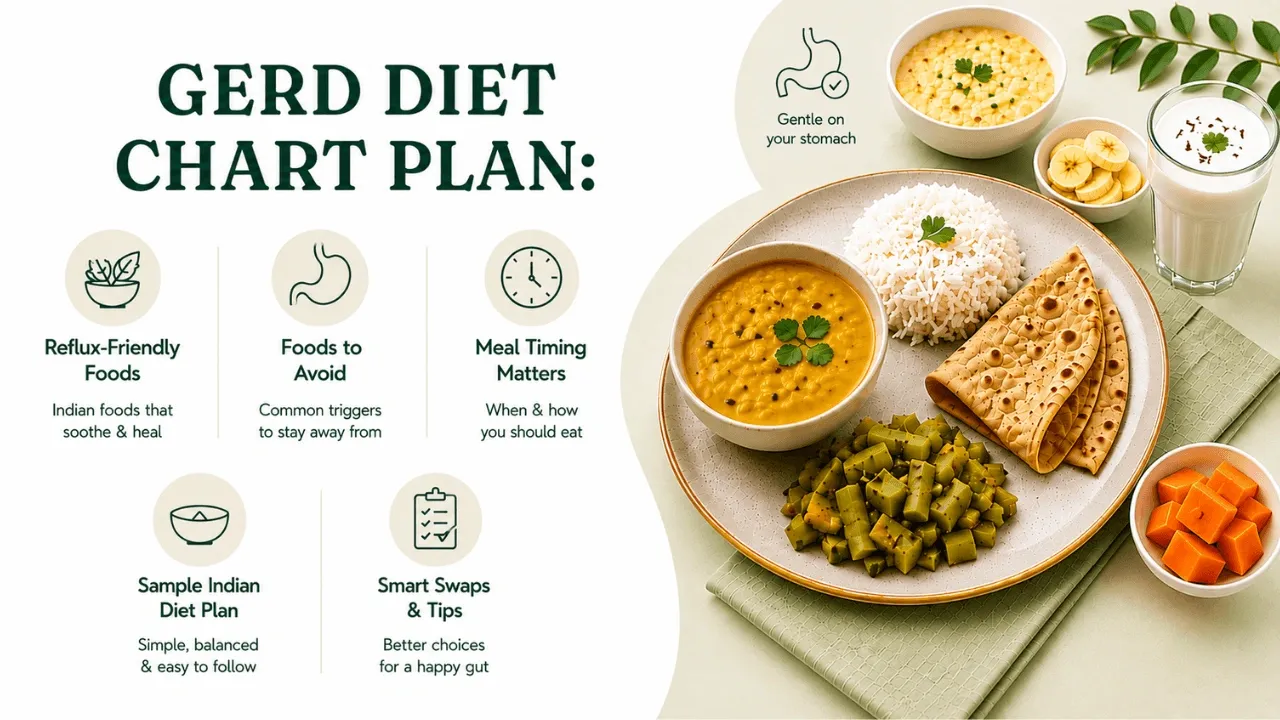
Quick Answer
A GERD diet chart India plan helps reduce acid reflux by choosing Indian foods that are gentle on the stomach, avoiding trigger foods, controlling portions, and keeping dinner earlier. The goal is not bland food. The goal is lighter cooking, better timing, and lower reflux pressure.
- Choose foods such as rice, soft chapati, moong dal, lauki, tori, pumpkin, idli, oats, banana, papaya, and diluted curd.
- Limit deep-fried foods, excess chilli, pickles, tamarind-heavy dishes, full-fat dairy, coffee, tea, and carbonated drinks if they trigger your symptoms.
- Prefer smaller meals every 3 to 4 hours instead of having 2 to 3 heavy meals.
- Finish dinner at least 2 to 3 hours before going to bed.
- If GERD symptoms do not improve within 4 to 6 weeks, consult a gastroenterologist for proper evaluation.
If you live with burning in the chest, sour belching, throat irritation, or heaviness after meals, Indian food can feel confusing. One day curd feels soothing, another day it burns. Advice from family, doctors, and the internet often feels conflicting.
A realistic GERD diet chart for India should respect Indian food habits, cooking styles, and meal timings while staying medically grounded. GERD is not just about stomach acid. It is linked to digestion strength, lower oesophageal sphincter function, gut bacteria, stress, posture, and routine.
What Is a GERD Diet Chart for India?
A GERD diet chart for India is a structured eating plan that identifies which traditional Indian foods calm acid reflux, which foods worsen it, and how to time meals so acid stays in the stomach instead of moving into the food pipe.
It works on three levels:
- It removes trigger foods that relax the lower oesophageal sphincter or increase stomach pressure.
- It supports digestion so food clears the stomach faster and does not sit and ferment.
- It uses Indian kitchen staples like rice, dal, lauki, curd, and idli that are naturally gentle when cooked simply.
For many people, burning, sour belching, and post-meal heaviness reduce within 3 to 4 weeks when diet and meal timing are followed consistently.
What Actually Causes GERD?
Many people think GERD happens only because the stomach produces excess acid. In reality, GERD is more about acid moving in the wrong direction.
- Poor digestion or delayed stomach emptying increases pressure.
- The lower oesophageal sphincter becomes weak or relaxed.
- Acid and partially digested food move upward.
- The food pipe lining gets irritated.
In Indian settings, common contributors include large late-night meals, fried and spicy foods, excess tea or coffee, stress, long sitting hours, poor sleep, and irregular meal timings. Understanding the acidity causes behind your symptoms helps build a smarter plan.
Is Indian Food Bad for Acid Reflux?
Indian food is not inherently bad for acid reflux. The cuisine itself is not the problem. Cooking method, portion size, meal timing, and spice intensity determine whether a meal triggers GERD or soothes it.
| Scenario | Why It Triggers GERD | GERD-Friendly Swap |
|---|---|---|
| Poori with aloo bhaji late at night | Deep-fried, large portion, close to bedtime | Soft phulka with mild aloo sabzi by 8 pm |
| Heavily spiced biryani with raita | Excess chilli, whole spices, large meal volume | Mild jeera rice with plain curd |
| Masala chai every 2 hours | Caffeine plus milk fat stimulates acid | One cup early, herbal tea later |
| Pickle with every meal | High acid and vinegar irritate lining | Fresh cucumber or carrot |
| Chole bhature for lunch | Gas from chickpeas plus deep-fried bhatura | Moong dal with soft chapati |
Traditional Indian food, when cooked simply, can be GERD-compatible. Rice, lentils, bottle gourd, buttermilk, and fermented foods like idli can be gentle options when portions and spice levels are controlled.
How an Indian GERD Diet Helps Control Symptoms
A GERD-friendly Indian diet works by reducing reflux triggers, improving digestion, and preventing bloating pressure on the stomach.
- It reduces foods that relax the LES or increase acid backflow.
- It supports digestion and gut microbiome balance.
- It prevents bloating and pressure on the stomach.
- It improves meal timing so the stomach is not full at bedtime.
- It reduces the need for frequent emergency antacid use in mild cases.
Acid Reflux Foods to Avoid in an Indian Diet
Certain foods trigger reflux more often. This does not mean everyone reacts the same way, but these are common problem foods in India.
| Food Category | Examples | Why They Trigger Reflux |
|---|---|---|
| Fried foods | Poori, pakora, samosa, bhatura | Slow digestion and increase stomach pressure |
| Spicy foods | Extra chilli, heavy gravies | Irritate the food pipe lining |
| Sour foods | Pickles, vinegar, tamarind dishes | Increase acid irritation |
| High-fat dairy | Full cream milk, butter, cream | May relax LES |
| Caffeinated drinks | Tea, coffee, energy drinks | Stimulate acid secretion |
| Carbonated drinks | Soda, cola | Cause bloating and pressure |
| Chocolate | Cocoa sweets | May relax LES |
Use a food-symptom diary instead of relying only on generic lists. GERD triggers are individual.
Which Indian Spices Are Safe for GERD?
Spice avoidance is often misunderstood. Not all spices trigger reflux. The problem is usually hot, pungent spices like red chilli, excess black pepper, and raw garlic.
| Spice | GERD Safety | Notes |
|---|---|---|
| Ginger | Safe / beneficial | Aids digestion and nausea in small amounts |
| Turmeric | Safe | Anti-inflammatory and gut-supportive |
| Cumin | Safe | May reduce gas and bloating |
| Coriander | Safe | Cooling and gentle |
| Cardamom | Safe | Aids digestion |
| Cinnamon | Safe in moderation | Avoid large quantities |
| Red chilli | Avoid or minimise | Common reflux trigger |
| Black pepper | Use sparingly | Small pinch may be fine |
| Garam masala | Use lightly | Heavy gravies are the issue |
| Raw garlic | Avoid | Strong LES relaxant for many people |
| Tamarind | Avoid or minimise | High acid content |
For practical relief with both gas and acidity, you can also check acidity and gas remedies.
GERD Friendly Indian Food: What You Can Eat Safely
Many traditional Indian foods are gentle on the stomach when cooked simply.
| Food Group | Indian Examples | How They Help |
|---|---|---|
| Grains | Rice, oats, daliya, idli | Easy to digest and low fat |
| Vegetables | Lauki, tori, pumpkin, carrot, beans | Low acid and fibre-rich |
| Fruits | Banana, papaya, peeled apple | Soothing and digestion-supportive |
| Proteins | Moong dal, masoor dal, tofu, egg whites | Light and filling |
| Dairy | Diluted curd, buttermilk | Supports gut bacteria if tolerated |
| Fats | Small amounts of mustard or rice bran oil | Less reflux than heavy fats |
Soft, thin chapatis made with whole wheat are generally safe for GERD. Avoid very dry chapatis, too many rotis at once, excess ghee, and spicy gravies.
If banana is well tolerated, banana for acidity can be a gentle mid-morning option. Coconut water may also help some people with mild reflux or dehydration-linked acidity, especially if it is tolerated well.
A Simple GERD Diet Chart India Plan
| Time | GERD-Friendly Indian Options |
|---|---|
| On waking | Lukewarm water; optional 2 to 3 peeled soaked almonds |
| Breakfast | Vegetable oats, less-oil poha, idli with mild coconut chutney, vegetable upma |
| Mid-morning | Papaya, banana, or coconut water if tolerated |
| Lunch | Plain rice or soft chapati, lauki or pumpkin sabzi, moong dal, diluted curd |
| Evening snack | Roasted makhana, murmura chaat without chutney, non-caffeinated herbal tea |
| Dinner | Vegetable khichdi, soft chapati with mild sabzi, clear vegetable soup |
| Before bed | Warm water if needed; avoid milk if it triggers symptoms |
How Long Does a GERD Diet Take to Work?
Most people want to know when they will actually feel better. Here is a realistic timeline.
| Timeline | What to Expect |
|---|---|
| Week 1 to 2 | Post-meal burning and overnight reflux may reduce after removing fried foods, excess chilli, and late dinners |
| Weeks 3 to 6 | Digestion stabilises, bloating reduces, and stomach emptying may improve |
| Months 2 to 3 | Reflux episodes may become less frequent and less intense |
| Month 4 to 6 | You understand your personal triggers and can personalise the diet chart |
If symptoms do not improve meaningfully within 4 to 6 weeks, or if you notice difficulty swallowing, unexplained weight loss, or persistent chest pain, consult a gastroenterologist.
What Are the GERD Complications If Left Untreated?
GERD that occurs frequently or remains untreated can cause ongoing irritation and damage to the oesophagus. While occasional acid reflux is common, persistent symptoms should not be ignored.
- Oesophagitis: Repeated exposure to stomach acid can inflame and irritate the oesophageal lining.
- Oesophageal stricture: Long-term inflammation can cause narrowing of the oesophagus, which may make swallowing difficult.
- Barrett’s oesophagus: Chronic acid exposure can cause changes in the cells lining the lower oesophagus. This condition can increase the risk of oesophageal cancer.
- Persistent swallowing difficulties: Ongoing inflammation or narrowing can make it uncomfortable or difficult to swallow food.
- Sleep disruption: Night-time reflux can interfere with sleep and affect daily quality of life.
If you experience frequent GERD symptoms, difficulty swallowing, unexplained weight loss, persistent chest pain, vomiting blood, or black stools, seek medical evaluation rather than relying on dietary changes alone.
Why Portion Size and Meal Timing Matter
Even GERD-friendly foods can cause discomfort if eaten in large amounts. Overfilling the stomach increases pressure and promotes reflux.
- Eat every 3 to 4 hours.
- Keep dinner at least 2 to 3 hours before sleep.
- Avoid lying down immediately after meals.
- Sit upright during and after eating.
- Keep dinner light and low-fat.
If symptoms worsen at night, read this guide on night-time acidity.
How Digestion, Microbiome, and Liver Health Connect to GERD
- Digestion: Weak digestion slows food movement and increases reflux risk.
- Gut microbiome: Imbalance can cause gas and bloating, pushing acid upward.
- Liver function: Poor fat metabolism can worsen reflux after oily meals.
- Stress: Stress can increase acid secretion and slow stomach emptying.
Supporting gut health with fibre-rich vegetables, fermented foods like buttermilk, and regular meal timings can improve symptoms over time. If you need a broader foundation, read about what is gut health.
Lifestyle Changes That Support a GERD Diet
Diet alone may not manage GERD fully. Lifestyle habits play a strong supporting role.
- Maintain a healthy body weight.
- Avoid tight clothing around the waist.
- Elevate the head while sleeping.
- Practice stress management through walking or breathing exercises.
- Reduce screen time after meals.
- Avoid heavy exercise immediately after eating.
Who Should Follow a Strict GERD Diet?
Not everyone with occasional heartburn needs a strict GERD plan. The diet is most useful when symptoms are frequent or disruptive.
| This Diet Is Most Suited For | You May Be More Flexible If |
|---|---|
| Frequent reflux 3 or more times per week | Reflux happens once a week or less and resolves quickly |
| Confirmed GERD diagnosis | Doctor has confirmed no structural damage |
| Night-time reflux disrupting sleep | Symptoms are linked to 1 to 2 specific triggers |
| Stress-related acidity worsening over time | Symptoms are well controlled with prescribed care |
| Consistent food-symptom links | You tolerate most simple meals well |
When to See a Doctor
| Situation | Why It Matters |
|---|---|
| Difficulty swallowing | May indicate narrowing or oesophageal irritation |
| Unexplained weight loss | Needs investigation |
| Chest pain | GERD and heart conditions can feel similar |
| Vomiting blood or black stools | Needs immediate medical attention |
| No improvement after 4 to 6 weeks | May need structured assessment |
Mool Health's Root-Cause Approach
If dietary changes alone are not giving lasting relief, the underlying cause may involve gut microbiome imbalance, digestive enzyme function, stress physiology, or delayed stomach emptying. These factors go beyond what a meal plan can address on its own.
Mool Health looks at digestion, gut balance, food triggers, stress, sleep, and Ayurvedic constitution together to identify what may be driving your GERD symptoms.
What This Means for You
By shifting to a GERD-friendly Indian diet with smaller meals, earlier dinners, gentler cooking methods, and better spice choices, many people see a clear reduction in heartburn, sour belching, and sleep disruption within 3 to 6 weeks.
Here is what you should do next:
- Identify your top two personal trigger foods and remove them for 14 days.
- Move dinner to at least 2 hours before sleep.
- Replace one cup of tea or coffee with herbal tea each day.
- Follow the sample diet chart for 30 days and track symptoms.
- Consult a gastroenterologist if symptoms do not improve in 4 to 6 weeks.
The traditional Indian kitchen already has many GERD-friendly options. The key is not to stop Indian food, but to adjust timing, portion size, fat load, and spice intensity.
Conclusion
GERD Diet Chart for India can help manage reflux by focusing on smaller meals, gentle cooking, moderate spices, and earlier dinners. Simple Indian foods such as rice, moong dal, lauki, idli, oats, and papaya can be included when tolerated.
The key is to identify personal triggers and maintain consistent meal timings and lifestyle habits. If symptoms persist despite dietary changes, consult a gastroenterologist. Seek medical attention for difficulty swallowing, unexplained weight loss, chest pain, vomiting blood, or black stools.
Key Takeaways
GERD Diet Chart India guide covers GERD-friendly foods, foods to avoid, meal timing, spice choices, a sample diet chart, and lifestyle tips for managing acid reflux.
Your gut is unique your healing should be too.

Disclaimer
The content provided by Mool Health is for educational and informational purposes only and should not be considered a substitute for professional medical advice, diagnosis, or treatment.