
How to Do Water Fasting: A Complete Guide
How to do water fasting involves drinking only water for a set period while preparing safely, understanding benefits, risks, and when to avoid it for better health.
Ayurvedic Physician & Medical Operations Lead at Mool
Published on 19,September 2026
Updated on 19,September 2026
Quick Answer
Water fasting is a form of fasting in which a person consumes only water for a defined period and avoids food and other calorie-containing drinks. While fasting may affect processes such as blood glucose regulation, insulin levels and body weight, longer water fasts are not suitable for everyone and may carry risks including dehydration, electrolyte imbalance, dizziness, weakness and low blood sugar.
If you are considering a water fast, the safest approach is to understand what it involves, choose an appropriate duration, prepare gradually, stay hydrated and know when to stop. Longer fasts should be undertaken only with appropriate medical supervision.
What Is Water Fasting?
Water fasting is a type of fasting where you consume water but avoid food and other calorie-containing beverages for a set period. Unlike intermittent fasting, which alternates between eating and fasting windows, water fasting involves complete food restriction during the fasting period.
Water fasting can last anywhere from around 24 hours to several days. The longer the fast, the greater the need for caution and appropriate supervision.
How Does Water Fasting Work?
When you stop eating, your body initially uses glucose and stored glycogen as sources of energy. As these stores become lower, the body increasingly relies on stored fat for fuel.
During longer periods without food, changes can occur in insulin, blood glucose and other metabolic processes. The extent of these changes depends on factors such as fasting duration, activity levels, hydration, previous diet and individual health.
Important: Fasting is not simply about going without food. Your body's response can vary significantly depending on your health, medications, nutritional status and the length of the fast.
Potential Benefits of Water Fasting
Research into fasting has explored several possible metabolic and health effects. However, evidence varies depending on the type and duration of fasting, and not every potential benefit has been established specifically for prolonged water fasting.
- Changes in blood glucose: Fasting reduces the intake of carbohydrates and calories, which can influence blood glucose levels.
- Changes in insulin: Insulin levels generally fall when food intake stops, allowing the body to mobilise stored energy.
- Weight loss: A prolonged calorie deficit can lead to weight loss, although some early weight loss may also reflect changes in glycogen and water stores.
- Metabolic changes: Longer fasting periods can shift the body towards greater use of stored fat and ketones for energy.
What Happens to Your Body During a Water Fast?
During the First 12–24 Hours
Your body continues to use available glucose and stored glycogen for energy. Hunger may be noticeable, particularly around your usual meal times.
After 24 Hours
As glycogen stores become depleted, the body increasingly turns to stored fat for energy. Ketone production may begin to increase as fat metabolism becomes more prominent.
After 48–72 Hours
Metabolic adaptations become more pronounced during longer fasts. At this stage, some people may experience increased weakness, headaches, dizziness, difficulty concentrating or other symptoms.
Beyond 72 Hours
Longer fasting periods place greater demands on the body and increase the importance of hydration, electrolyte balance and medical oversight. Prolonged fasting should not be treated as a simple extension of a short fast.
How to Prepare for a Water Fast
Preparation can make the transition into and out of fasting easier. Avoid abruptly moving from a highly processed or very large diet into a prolonged fast.
- Gradually reduce heavy meals in the days before the fast.
- Prioritise balanced meals containing vegetables, protein, healthy fats and minimally processed carbohydrates.
- Stay adequately hydrated before beginning the fast.
- Avoid excessive alcohol intake before fasting.
- Plan the fasting period so you can rest and avoid unusually demanding physical activity.
- Consider speaking with a healthcare professional if you have an underlying health condition or take regular medication.
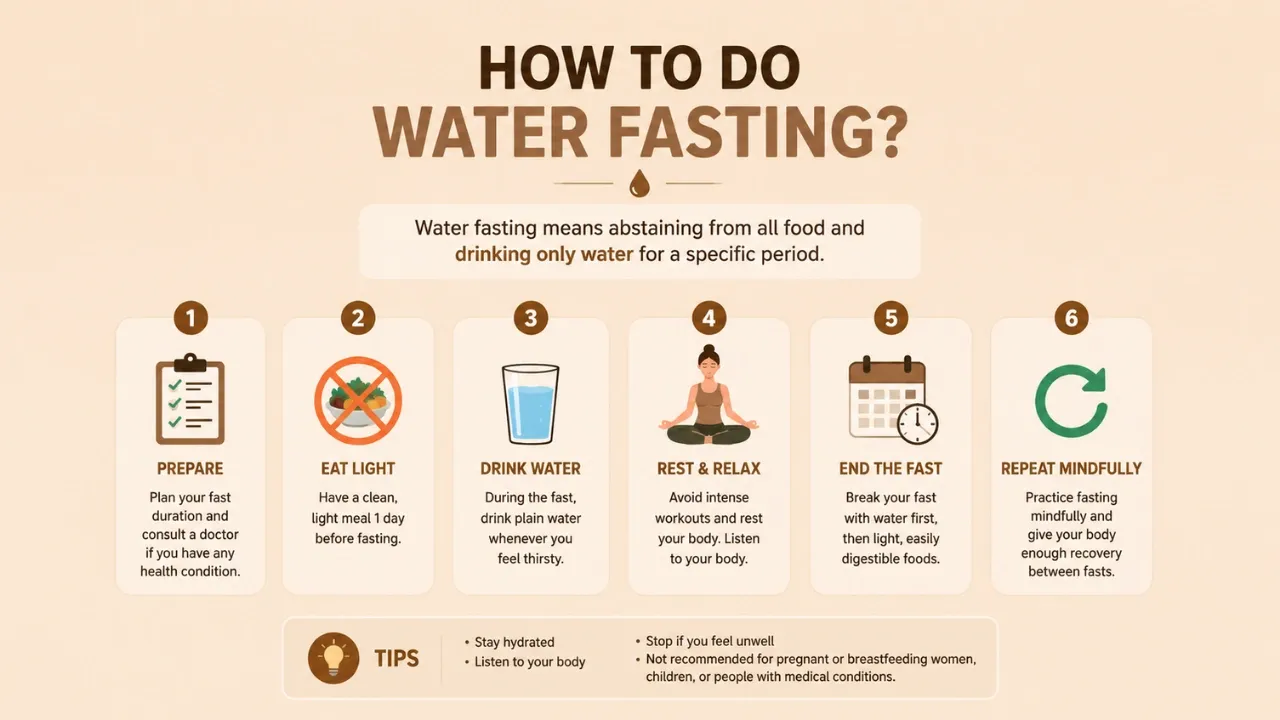
Step-by-Step Guide to Water Fasting
Step 1: Choose a Fasting Duration
Decide how long you intend to fast before beginning. If you are new to fasting, a shorter period may be more appropriate than immediately attempting a multi-day fast.
Step 2: Prepare Your Meals Beforehand
Eat balanced meals before the fast rather than using the final meal as an opportunity to overeat. Include nutrient-dense foods and maintain normal hydration.
Step 3: Begin the Fast
Once the fasting period begins, consume water and avoid food and calorie-containing beverages. Pay attention to how you feel rather than trying to push through severe symptoms.
Step 4: Stay Hydrated
Drink water regularly according to thirst and your individual needs. Excessive water consumption is not necessarily safer and can itself create problems with electrolyte balance.
Step 5: Keep Activity Light
During a water fast, especially a longer one, avoid strenuous exercise unless advised otherwise by a healthcare professional. Gentle movement may be more appropriate.
Step 6: Monitor How You Feel
Symptoms such as severe dizziness, fainting, confusion, persistent vomiting, extreme weakness or other concerning changes are reasons to stop fasting and seek appropriate medical attention.
Step 7: Break the Fast Gradually
When the fast ends, avoid immediately consuming a very large meal. Start with a modest portion and gradually return to your usual balanced meals.
What to Drink During a Water Fast
Strict water fasting means consuming water rather than food or calorie-containing drinks. However, individual fasting protocols can differ, and some medically supervised approaches may have specific guidance around electrolytes.
Remember: Drinking excessive amounts of plain water during prolonged fasting does not automatically prevent electrolyte problems. Longer fasts require particular caution because sodium and other electrolyte levels can be affected.
What to Eat After a Water Fast
Breaking a fast is an important part of the process. After going without food, your digestive system may respond differently to a large or heavy meal.
- Start with a moderate portion rather than a very large meal.
- Choose foods that are relatively easy to tolerate.
- Include protein and nutrient-dense whole foods as you return to normal eating.
- Eat slowly and pay attention to how your body responds.
- Gradually return to your usual meal pattern.
Who Should Avoid Water Fasting?
Water fasting is not appropriate for everyone. People who are pregnant or breastfeeding, children and adolescents, people with certain medical conditions, people with a history of eating disorders, and those taking medications affected by food intake or blood glucose may need to avoid fasting or undertake it only with medical guidance.
If you have diabetes, kidney disease, liver disease, low blood pressure or another chronic condition, speak with your healthcare professional before attempting a prolonged fast.
Possible Side Effects of Water Fasting
Fasting can produce symptoms ranging from mild hunger to more significant physical effects, particularly as the fasting period becomes longer.
- Hunger and food cravings
- Headache
- Dizziness or light-headedness
- Fatigue and weakness
- Irritability or mood changes
- Difficulty concentrating
- Low blood pressure
- Changes in blood glucose
- Electrolyte disturbances during prolonged fasting
- Dehydration
When Should You Stop a Water Fast?
A fast should not be treated as a test of willpower. If you develop severe or persistent symptoms, stop fasting and seek medical advice when appropriate.
- Fainting or near-fainting
- Severe or persistent dizziness
- Confusion or unusual changes in alertness
- Persistent vomiting
- Severe weakness
- Symptoms of significantly low blood sugar
- Symptoms that are rapidly worsening or concerning to you
Water Fasting vs Intermittent Fasting
| Feature | Water Fasting | Intermittent Fasting |
|---|---|---|
| Food during fasting period | No food | Food is consumed during defined eating windows |
| Typical duration | Can range from around 24 hours to several days | Usually involves daily or periodic fasting windows |
| Calorie intake | Generally zero calories during the fast | Calories are consumed during eating periods |
| Difficulty | Generally more demanding, especially for longer fasts | Often easier to incorporate into a routine |
| Need for supervision | Longer fasts may require medical supervision | Depends on the fasting pattern and individual health |
Research on Water Fasting
Study 1 — Blood Pressure and Water Fasting [2]
Research examining water fasting has reported changes in blood pressure and other metabolic measures during fasting. The effects can vary between individuals and depend on factors such as fasting duration and baseline health.
Study 2 — Metabolic Changes During Prolonged Fasting
Research on prolonged fasting has demonstrated that the body undergoes metabolic adaptations as food intake stops. These adaptations include greater reliance on stored fat and increased ketone production as the fast progresses.
Study 3 — Weight Loss During Fasting
Studies of fasting have found that body weight can decrease during periods of food restriction. However, early changes on the scale can include losses of glycogen and associated water, meaning that short-term weight loss should not automatically be interpreted as equivalent to long-term fat loss.
Research perspective: Evidence from fasting research should be interpreted according to the exact fasting protocol studied. Results from intermittent fasting, medically supervised fasting and prolonged water fasting are not automatically interchangeable.
How Often Can You Water Fast?
There is no single fasting schedule that is appropriate for everyone. The safety and suitability of repeating water fasts depend on fasting duration, nutritional intake between fasts, health status, medications and individual response.
Repeated prolonged fasting without adequate nutritional recovery can increase the risk of nutrient deficiencies and other complications. If you are considering regular multi-day fasting, professional guidance is especially important.
Can Water Fasting Help With Weight Loss?
Water fasting can cause weight loss because it creates a substantial calorie deficit. However, the initial reduction in body weight may include water and glycogen in addition to body fat.
For sustainable weight management, the overall quality and quantity of food intake, physical activity, sleep and long-term dietary habits generally matter more than relying on occasional prolonged fasts.
Common Mistakes to Avoid During Water Fasting
- Starting with an excessively long fast: Longer fasting periods can be considerably more demanding than shorter ones.
- Ignoring warning signs: Severe symptoms should not be dismissed as a normal part of fasting.
- Overexercising: Intense exercise can increase physical stress during a prolonged fast.
- Drinking excessive amounts of water: More water is not always better and can affect electrolyte balance.
- Breaking the fast with a very large meal: Returning gradually to normal eating can be easier to tolerate.
- Fasting despite medical contraindications: Certain conditions and medications can make fasting unsafe.
Mool Health's Perspective
At Mool Health, we believe that nutrition should be approached with context rather than one-size-fits-all rules. Fasting may be useful for some people, but a longer water fast is not automatically healthier simply because it lasts longer.
Your nutritional status, metabolic health, digestive health, lifestyle, medications and individual goals all matter when deciding whether a fasting approach is appropriate.
Rather than focusing only on how long you can go without food, it is worth understanding what your body may actually need and which sustainable habits support your health over time.
Want to Understand What Fasting May Mean for Your Body?
Explore your gut and metabolic health with Mool Health and discover personalised insights that can help you make more informed nutrition and fasting choices.
References
- Research literature on fasting, metabolic adaptation, blood pressure and weight loss.
- Research examining the physiological effects of water fasting and prolonged fasting.
Key Takeaways
How to do water fasting involves drinking only water for a set period while preparing safely, understanding benefits, risks, and when to avoid it for better health.
Your gut is unique your healing should be too.

FAQs
Strict water fasting means consuming only water. Coffee, tea, milk, sugar and other calorie-containing beverages would therefore not be part of a strict water-only fast.
It can. Some people may notice changes in sleep, particularly during longer fasting periods. Hunger, changes in energy levels or other fasting-related symptoms may affect sleep quality.
If fasting causes dizziness, weakness, confusion or reduced alertness, you should not drive or operate machinery. Safety should take priority over completing a planned fasting period.
It can. As the body increases its use of fat and produces more ketones, some people may notice a distinctive change in their breath.
Yes. Because food intake stops, bowel movements may become less frequent or change in consistency during a fast. Significant abdominal pain or other concerning symptoms should not be ignored.
Fasting can contribute to lower blood pressure in some people, particularly when fluid or electrolyte balance changes. People who already have low blood pressure or take blood-pressure medication should be particularly cautious.
There is no universal schedule that is safe for everyone. The appropriate frequency depends on fasting duration, nutritional status, medical history, medications and individual goals. Repeated prolonged fasting should not be undertaken routinely without appropriate guidance.
Some supplements may cause nausea when taken on an empty stomach, while others may be better absorbed with food. Whether a supplement should be taken during fasting depends on the specific supplement and your individual health needs.
Do not stop, skip or change prescription medication simply because you are fasting. Some medications need to be taken with food, while others can affect blood glucose, blood pressure, kidney function or electrolyte balance. Speak with your healthcare professional before fasting if you take regular medication.
No. Water fasting does not permanently increase metabolic rate. During prolonged calorie restriction, the body can adapt to reduced energy availability, and metabolic rate can change as body weight and energy intake change.
Disclaimer
The content provided by Mool Health is for educational and informational purposes only and should not be considered a substitute for professional medical advice, diagnosis, or treatment.