
The Human Digestive System: Parts, Functions & Step-by-Step Process
The digestive system breaks down food, absorbs nutrients, and removes waste. Learn about its organs, functions, and simple ways to support better digestion and gut health.
Quick Answer
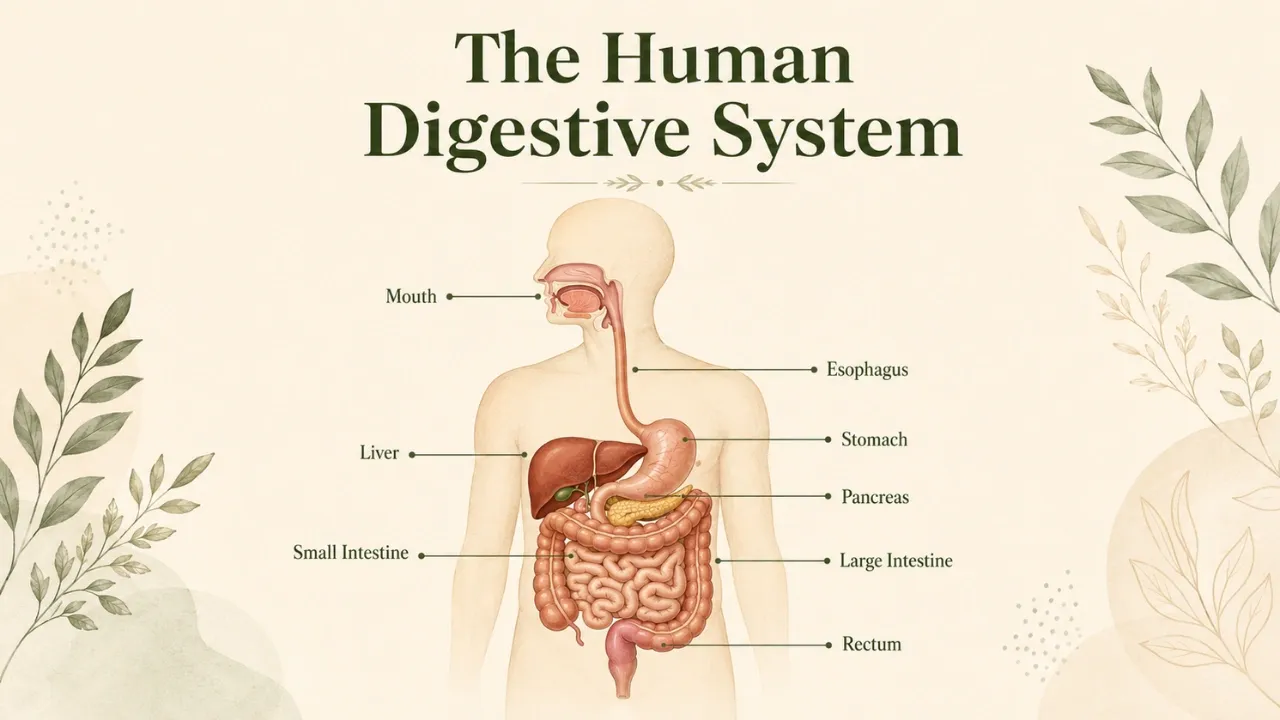
The human digestive system is a continuous tract of organs and accessory glands that break down food, absorb nutrients for energy, and eliminate waste. The digestive system consists of the mouth, salivary glands, oesophagus, stomach, large intestine, small intestine, appendix, rectum and anus. The liver, gallbladder, and pancreas are accessory organs that support digestion.
Every bite of food you eat travels through multiple organs, digestive juices, enzymes and billions of microscopic helpers, all working together to pull nutrients and energy out of the food.
What is the Digestive System?
The digestive system functions as your body's personal refinery. It converts complex proteins, fats, and carbohydrates into microscopic molecules that your bloodstream can easily transport for energy storage, muscle growth, and cellular repair.
The digestive system of the human body is one of the hardest-working systems. From the moment food enters your mouth to the moment waste leaves your body, the human digestive system performs countless tasks.
The human digestive system includes a long digestive tract along with several supporting organs and glands that help the digestive process run smoothly.
Parts of the Digestive System
The digestive tract forms a continuous pathway through the body, supported by accessory organs. It can be divided into the main digestive tract and accessory digestive organs.
| Digestive Organ | Key Role |
|---|---|
| Mouth | Food breakdown and carbohydrate digestion |
| Oesophagus | Food transport |
| Stomach | Protein digestion and food mixing |
| Small Intestine | Nutrient absorption |
| Large Intestine | Water absorption and waste formation |
| Rectum and Anus | Waste removal |
Beyond the primary tract, a network of accessory organs provides the essential fluids needed to complete digestion. Let us look at the key roles of the accessory digestive organs in the table below.
| Accessory Digestive Organs | Key Role |
|---|---|
| Liver | Bile production |
| Gallbladder | Bile storage |
| Pancreas | Enzyme production |
| Salivary Glands | Saliva production and early digestion |
Although food doesn't pass directly through these accessory organs, they produce substances that are essential for digestion.
Why is the Digestive System so Important?
Every cell in your body requires nutrients to function. The food doesn't arrive in a form your body can immediately use, and must first be broken down into smaller molecules that can enter the bloodstream.
That's where digestion comes in. The digestive system performs this task through a carefully coordinated process involving:
- Mechanical digestion (chewing and mixing)
- Chemical digestion (enzymes and digestive juices)
- Nutrient absorption
- Water absorption
- Waste elimination
The digestive system provides your body with a way of accessing the energy and nutrients contained in food. Within seconds of taking a bite, a network of organs, glands, enzymes and muscles springs into action, all working towards a single goal: turning food into something your body can actually use.
Function of the Digestive System
The digestive system does much more than simply breaking down food. The functions of the digestive system are ingestion, secretion, mixing and movement, digestion, absorption, and elimination.
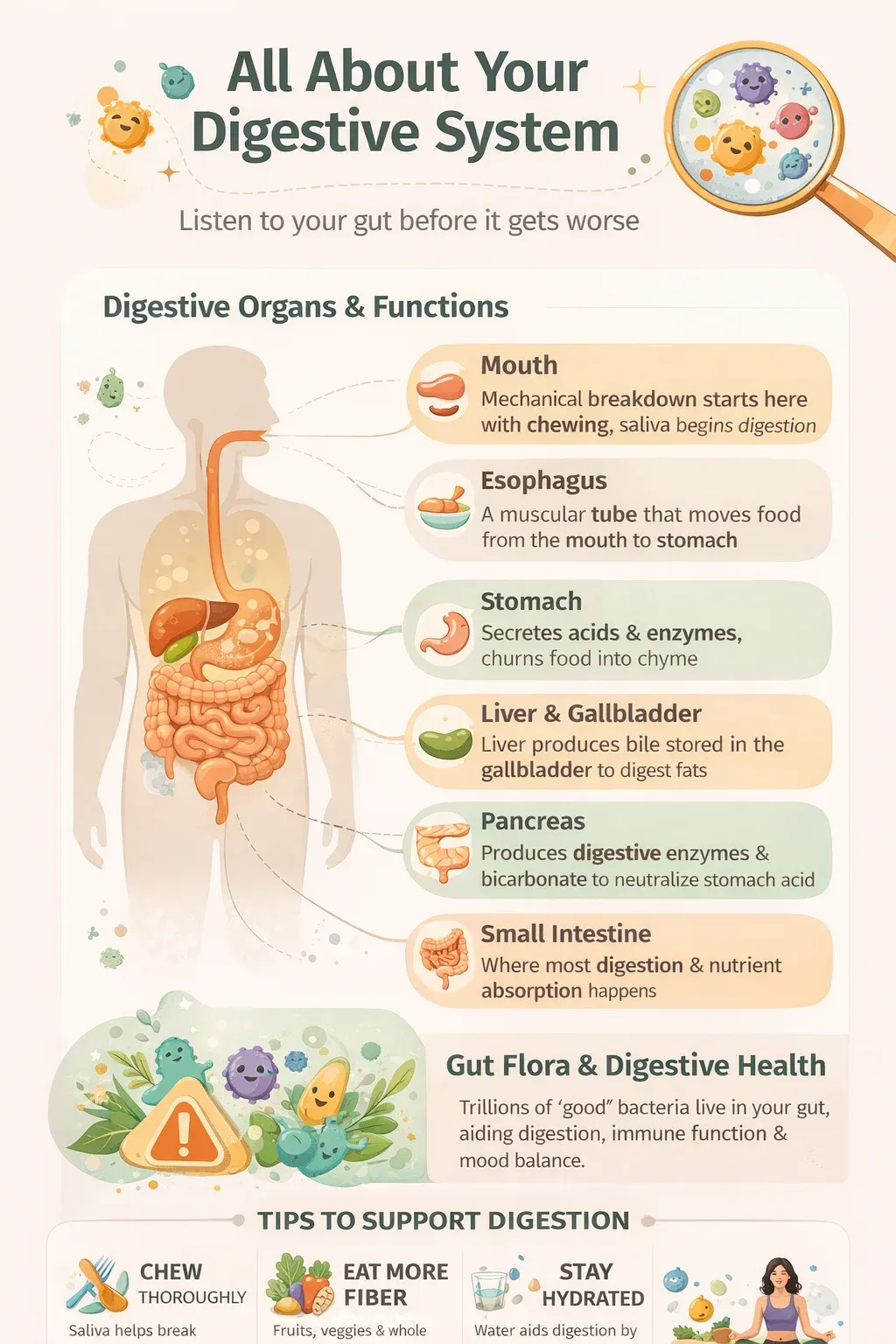
Digestion begins in the mouth. Chewing breaks food into smaller pieces, while saliva starts the chemical digestion of carbohydrates.
The salivary gland releases saliva containing enzymes that begin digesting food before it reaches the stomach.
The oesophagus is a muscular tube that transports food from the mouth to the stomach through coordinated muscle contractions.
The stomach mixes food with digestive acids and enzymes, converting it into a semi-liquid substance for further digestion.
The intestine is the primary site of digestion and nutrient absorption. Although called "small," it measures roughly 6-7 metres in an average adult.
The large intestine absorbs water and electrolytes from remaining food material and prepares waste for elimination. It stores and eliminates waste products from the body as the final stage of digestion.
The liver produces bile, which helps break down and digest fats in the digestive system.
The gallbladder stores and concentrates bile until it is required for fat digestion.
The pancreas produces digestive enzymes that help break down proteins, fats, and carbohydrates.
In short, the function of the digestive system is to convert food into usable nutrients for the body to absorb while safely removing anything the body does not need. This entire digestive system process happens continuously and efficiently, often without us noticing.
Liver Function in the Digestive System
The liver is the largest internal organ and plays a vital role in digestion. Many people associate the liver with only detoxification, but its digestive role is equally important. The primary function of the liver in the digestive system is the production of bile.
Bile helps:
- Break down fats
- Improve fat absorption
- Assist absorption of fat-soluble vitamins.
- Support efficient digestion
The liver also processes nutrients absorbed from the intestine before distributing them throughout the body.
Other important liver functions are:
- Regulating blood sugar
- Storing vitamins and minerals, including iron.
- Producing proteins
- Removing toxins
The liver makes the overall digestion process more efficient.
Pancreas Function in the Digestive System
The pancreas is an elongated gland located in the upper abdomen, sitting behind the stomach. It plays a crucial dual role in the body, acting as an exocrine gland to aid digestion, and as an endocrine gland to regulate blood sugar. The digestion would struggle without it.
The function of the pancreas in the digestive system is to produce enzymes that break down:
- Carbohydrates
- Proteins
- Fats
It also releases bicarbonate into the small intestine, which neutralises stomach acid as food arrives from
the stomach. This creates an ideal environment for digestion and nutrient absorption.
The pancreas matters in the digestive system because, without pancreatic enzymes:
- Nutrients cannot be absorbed effectively.
- Digestion becomes inefficient
- Nutritional deficiencies may develop.
The pancreas's function in the digestive system is therefore essential for turning food into usable energy.
How to Make the Digestive System Strong?
People often wonder how to improve the digestive system. Good digestion is built on daily habits, eating well, watching portions, and staying consistent, not one superfood or quick fix.
Strengthening your digestive system function can be achieved by a mix of dietary adjustments and lifestyle habits that maximise nutrient absorption and support healthy gut bacteria to build gut resilience and efficiency.
To support long-term digestive health:
- Eat a varied diet: A balanced diet rich in carbohydrates, protein, fat, fibre, vitamins, and minerals gives your body the fuel and building blocks it needs.
- Include plenty of fibre: Dietary fibre is essential for a healthy digestive system and helps smooth passage through your tract. Fibre supports healthy bowel movements and nourishes beneficial gut bacteria. Good sources of fibre include: Fruits, Vegetables, Beans, Lentils, and Whole grains.
- Limit highly processed foods: Processed foods are packed with additives, sugars, and unhealthy fats that strip off natural fibre and make digestion difficult.
- Stay hydrated: This is most critical for digestion, as water lubricates the entire digestive tract, helps break down food, and allows your body to efficiently absorb nutrients. It also softens stool, which prevents constipation and promotes regular bowel movements.
- Chew Properly: Digestion starts in the mouth. Chewing food properly helps in mixing it well with saliva. Eating slowly and chewing thoroughly can reduce digestive discomfort.
- Exercise regularly: Exercising regularly supports the digestive system by promoting intestinal motility, increasing blood flow to the gut, and reducing stress. Engaging in moderate physical activity can significantly reduce bloating, alleviate constipation, and help manage conditions like Irritable Bowel Syndrome (IBS).
- Get sufficient sleep: Good-quality sleep allows your body to regulate appetite hormones and helps your gut microbiome maintain a healthy, diverse balance of good bacteria.
- Avoid smoking: Nicotine and tobacco smoke can weaken the lower oesophageal sphincter, making acid reflux and heartburn more likely.
- Moderate alcohol intake: Drinking alcohol excessively can disturb the balance of stomach acids, causing inflammation in the stomach, disrupt good bacteria in your small intestine and cause long-term liver damage.
- Maintain a healthy weight: Being overweight, or having excessive fat layers in the abdominal region, can cause gastrointestinal issues, which may increase the risk of inflammation and acid reflux.
- Manage Stress: The gut and brain are closely connected. Stress can directly affect the gut through the gut-brain axis. Chronic stress often shows up as bloating, stomach cramps, or irregular bowel habits, all real, physical symptoms. So managing stress with yoga, meditation, or therapeutic wellness activities can be beneficial.
These small, healthy choices, repeated daily, often have a greater impact than occasional drastic changes.
Mool Health’s Perspective on the Digestive System
At Mool Health, we look at digestion as the foundation of overall well-being. The digestive system is essential for delivering nutrients to the body, supporting energy production, and helping maintain immune function.
The better you understand your digestive system, the easier it becomes to support it through healthy lifestyle choices. Mool Health Gut Test helps you understand your gut health based on your symptoms and supports maintaining a strong, balanced gut.
Key Takeaways
The digestive system breaks down food, absorbs nutrients, and removes waste. Learn about its organs, functions, and simple ways to support better digestion and gut health.
Your gut is unique your healing should be too.

FAQs
The human digestive system consists of 6 core steps: ingestion, mechanical digestion through chewing and mixing, chemical digestion through enzymes and acids, propulsion, in which food moves through the gastrointestinal tract, absorption of nutrients and water, and elimination of waste. Secretion, in which water, enzymes, mucus, and electrolytes help break down food, is a supporting process that runs alongside these steps.
The digestive system is a group of organs responsible for carrying out the functions necessary to digest food. It works to break down food, absorb essential nutrients, and eliminate undigested waste from the body.
There isn’t a single best tablet for digestion, as the right tablet varies from person to person based on symptoms. The most suitable tablets for digestion are often prescribed by doctors to relieve heaviness, bloating, gas, acidity, and heartburn, and to support overall gut health.
The stomach is the primary organ that kills bacteria, using the gastric acid it produces. This acid destroys most harmful bacteria and microorganisms in food.
The digestive system is a continuous tract that breaks down food into smaller pieces so that nutrients can be absorbed for energy, storage, growth, and cell repair.
Disclaimer
The content provided by Mool Health is for educational and informational purposes only and should not be considered a substitute for professional medical advice, diagnosis, or treatment.