
How Long Does Chicken Take to Digest? Time Estimates by Preparation
A guide to chicken digestion time by preparation, including boiled, grilled, fried chicken, biryani, heaviness causes and digestion tips.

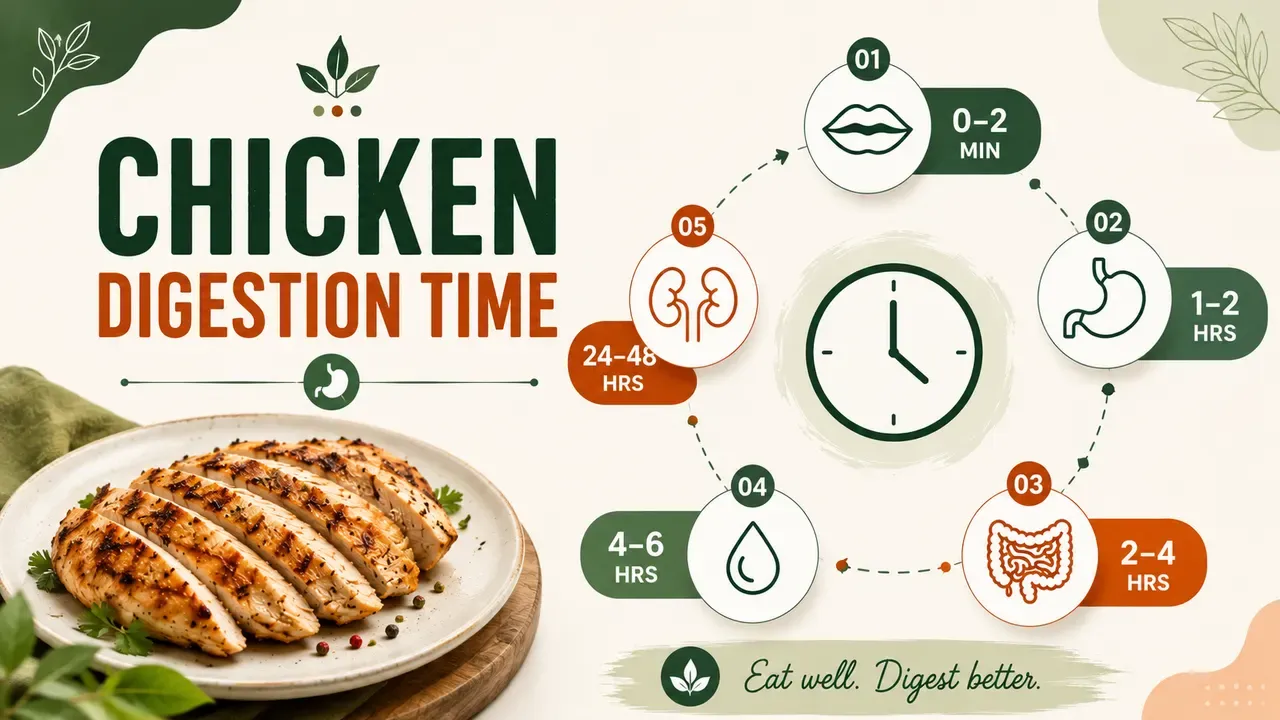
Quick Answer
Boiled or grilled chicken breast usually stays in the stomach for about 1.5 to 2.5 hours. Fried chicken, oily chicken curry, and chicken biryani can take 3 to 5 hours because fat, rice, spice load, and portion size slow stomach emptying. Full food transit from eating to elimination usually takes 24 to 48 hours in healthy adults.
Boiled chicken breast typically clears the stomach in 1.5 to 2 hours. Fried chicken takes 3 to 4 hours. Chicken biryani can take 4 to 5 hours or longer - not because of the chicken itself, but because of the fat, oil, rice, and spice load that comes with it. Full gastrointestinal transit from eating to elimination takes 24 to 48 hours for most healthy adults.
The three variables that matter most are fat content, portion size, and your individual gut health. A small grilled chicken meal moves through the stomach faster than a large restaurant biryani every single time.
Chicken Digestion Time at a Glance
| Chicken Preparation | Approx. Time in Stomach | Key Reason |
|---|---|---|
| Boiled chicken breast | 1.5 - 2 hours | No added fat, soft texture, small protein load |
| Grilled chicken breast | 1.5 - 2.5 hours | Minimal fat, lean protein |
| Grilled chicken thigh | 2 - 3 hours | Higher fat content than breast |
| Light chicken curry | 2.5 - 3.5 hours | Oil and spice load slow emptying |
| Fried chicken | 3 - 4 hours | High oil content significantly slows gastric emptying |
| Chicken biryani | 4 - 5 hours | Combined fat, carbohydrate, spice, and large portion load |
These are approximate ranges for healthy adults. Gut sensitivity, age, stress levels, and individual metabolism all affect actual digestion times.
What Is Chicken Digestion Time?
Chicken digestion time refers to the time your body takes to break chicken down into absorbable nutrients - primarily amino acids from protein, along with fat and other nutrients depending on the cut and cooking method.
Digestion begins in the stomach, where stomach acid and the enzyme pepsin begin breaking down protein. It continues in the small intestine, where pancreatic enzymes and intestinal enzymes complete the process and nutrients are absorbed into the bloodstream.
According to Mool Health's gut health team, chicken digestion time is not a single fixed number. It varies significantly based on how the chicken is cooked, how much you eat, what you eat it with, and the current state of your gut. Calling all chicken "easy to digest" - as many articles do - is an oversimplification that misses the biggest variable: preparation method.
Is Chicken Easy to Digest? The Honest Answer
Boiled and grilled chicken breast is genuinely one of the easier high-protein animal foods to digest. Fried chicken and biryani are a different story, and treating all chicken the same is the most common mistake in nutrition advice.
Chicken is easy to digest when:
- •It is boiled, steamed, or grilled without heavy oil or ghee
- •The portion is moderate - roughly 100 to 150 g cooked
- •You eat it earlier in the day and not close to sleep
- •You do not have active acidity, IBS, or significant gut sensitivity
Chicken feels hard to digest when:
- •It is deep-fried or cooked in large amounts of oil or ghee
- •The portion is very large - especially restaurant or celebration servings
- •You eat it late at night when digestive activity naturally slows
- •You have reflux, acidity, slow gut motility, or IBS-type sensitivity
- •You pair it with heavy carbohydrates and fried sides in the same meal
For most healthy adults without gut conditions, plain chicken is not hard to digest. The heaviness most people associate with chicken usually comes from how it was cooked - not from the chicken protein itself. Repeated heaviness can also overlap with slow digestion symptoms.
Key point from Mool Health: Chicken protein is not inherently difficult to digest. Preparation and portion size determine whether a chicken meal feels light or heavy.
How Chicken Digests Inside the Body - Stage by Stage
Chicken digestion happens in four stages. The better chicken is chewed and the lighter the preparation, the more comfortable the process typically feels.
Stage 1 - Mouth Chewing breaks chicken into smaller pieces. Protein digestion does not begin in the mouth, but thorough chewing reduces the mechanical work the stomach has to do and speeds up later stages.
Stage 2 - Stomach Stomach acid and pepsin begin breaking chicken protein into smaller fragments. The stomach churns the meal and slowly releases it into the small intestine through the pyloric valve. This is the phase that determines whether a meal feels heavy or light. Fat content is the primary factor that slows this phase - which is why fried chicken and oily curry sit in the stomach longer than boiled breast.
Stage 3 - Small Intestine Pancreatic enzymes - including trypsin and chymotrypsin - complete protein breakdown into individual amino acids and small peptides. These are absorbed through the intestinal lining into the bloodstream. This phase takes a further 4 to 6 hours and is largely silent - you do not feel it happening.
Stage 4 - Large Intestine and Elimination Any remaining material moves through the colon, where water is reabsorbed and waste is formed. Total transit from mouth to elimination typically spans 24 to 48 hours for a healthy adult, depending on gut motility, hydration, and fibre intake.
If total transit is consistently shorter than 12 hours - loose stools - or longer than 72 hours - no bowel movement - that is a digestion pattern worth paying attention to, not necessarily caused by chicken, but worth noting.
Full GI Transit Timeline for Chicken
| Phase | What Happens | Approx. Duration |
|---|---|---|
| Stomach emptying | Protein breakdown begins; meal is slowly released to small intestine | 1.5 - 5 hours |
| Small intestine | Enzyme breakdown and amino acid absorption | 4 - 6 hours |
| Large intestine and elimination | Water reabsorption, waste formed and excreted | 12 - 36 hours |
| Total - mouth to elimination | Full GI transit for a healthy adult | 24 - 48 hours |
When people ask how long chicken takes to digest, they usually mean one of two things: how long until the stomach feels comfortable again, or how long until the meal passes completely through the body. These are very different timeframes. The stomach phase - 1.5 to 5 hours depending on preparation - is the part you actually feel. Everything after that happens silently. For a broader comparison across meals, you can refer to a food digestion time chart.
Chicken Digestion Time by Preparation: Why Cooking Method Matters
Cooking method changes digestion comfort because it directly changes fat content, texture, and total meal load. Mool Health recommends using the table below as a practical guide rather than a precise medical timer.
| Chicken Preparation | How It Usually Feels | Why It May Digest Faster or Slower |
|---|---|---|
| Boiled chicken breast | Lightest | No added oil; soft texture makes it easier on the stomach |
| Grilled chicken breast | Light to moderate | Lean protein with little added fat |
| Grilled chicken thigh | Moderate | Higher fat content than breast |
| Light chicken curry | Moderate to heavy | Oil, spices, and gravy increase digestive load |
| Fried chicken | Heavy | High oil content and fried coating significantly slow stomach emptying |
| Chicken biryani | Heaviest | Combines chicken, rice, oil or ghee, spices, and a larger portion |
The mechanism behind these differences is well-established: fat activates cholecystokinin (CCK) receptors in the small intestine, which signal the stomach to slow its emptying rate. The more fat a meal contains, the longer it stays in the stomach - and the heavier it feels.
Why Chicken Biryani Takes Longer to Digest
Chicken biryani is usually the heaviest chicken meal to digest because it combines multiple digestive loads simultaneously: protein from chicken, carbohydrate from rice, fat from oil or ghee, and a significant spice load - all in a larger-than-average portion.
Why biryani slows digestion:
- •More fat: Oil and ghee in biryani can slow stomach emptying more than almost any other preparation variable
- •Mixed meal load: Rice, chicken, and fat require different digestive processes running at the same time
- •Large portion size: Restaurant and celebration portions of biryani are often two to three times larger than a standard home meal
- •Spice sensitivity: Heavy spices may trigger acidity, reflux, or gut discomfort in people with sensitive digestion
- •Late-night eating: Biryani eaten close to bedtime may feel heavier because digestive activity naturally slows during sleep
This does not mean biryani is harmful for everyone. It simply means it is not the easiest chicken preparation to digest - particularly for people who already experience acidity, bloating, slow digestion, or reflux.
According to Mool Health, the heaviness most people associate with chicken biryani is not caused by the chicken itself. It is caused by the cumulative fat, carbohydrate, and portion load that makes biryani what it is.
Chicken Curry Digestion Time: Why Curry Can Feel Heavy
Chicken curry can take longer to feel comfortable than grilled or boiled chicken because curry typically contains oil, masala, onion, garlic, tomato, and sometimes cream or butter - each of which adds to the digestive load.
| Curry Type | Digestive Load | Practical Tip |
|---|---|---|
| Light tomato-based curry | Moderate | Use less oil; eat earlier in the day |
| Home-style curry | Moderate to heavy | Keep portions controlled; avoid excess oil |
| Cream or butter-based curry | Heavy | Avoid close to bedtime if reflux is common |
| Spicy restaurant curry | Heavier for sensitive gut | Monitor for acidity, bloating, or bowel changes |
The key variable in curry digestion time is oil quantity. A home-cooked light curry with one tablespoon of oil is meaningfully different from a restaurant curry prepared with much larger oil volumes. Mool Health's gut health team notes that even the same curry recipe can feel different depending on how much oil was used during cooking.
Chicken Breast vs Chicken Thigh: Which Is Easier to Digest?
Chicken breast is usually easier to digest than chicken thigh because it is leaner. Chicken thigh has more fat, which makes it tastier for many people but also heavier - particularly for those with slow digestion, reflux, or acidity.
| Cut | Fat Level | Digestion Comfort | Best For |
|---|---|---|---|
| Chicken breast | Lower | Usually lighter | People wanting high-protein, easy meals |
| Chicken thigh | Higher | More filling and heavier | People who tolerate richer meals well |
| Chicken with skin | Higher fat | Can feel heavy | Use carefully if reflux or heaviness is common |
| Chicken liver | Rich and dense | Can suit some; heavy for others | Small portions; caution in gout or kidney conditions |
The fat difference between breast and thigh is the main reason for the difference in digestion comfort. Chicken thigh typically contains two to three times more fat than an equivalent portion of chicken breast. For people without gut sensitivity, this difference is usually minor. For people with slow gut motility, reflux, or IBS-like symptoms, the difference can be noticeable.
What Research Says About Chicken and Protein Digestion
Research on gastric emptying and protein digestion provides useful context for understanding why different chicken preparations feel so different.
Fat and gastric emptying Studies on gastric emptying consistently show that fat is the macronutrient that most significantly slows stomach emptying. Fat in a meal activates receptors in the small intestine - via cholecystokinin release - that signal the stomach to slow its emptying rate. This is the primary mechanism behind why fried chicken and ghee-heavy biryani stay in the stomach longer than boiled breast.
Lean protein and digestion speed Research on protein digestion rates classifies protein sources by their digestion speed. Lean proteins like chicken breast are digested at a moderate pace - slower than whey protein isolate but faster than red meat with high connective tissue and fat content. Protein source, muscle fibre density, and fat marbling all influence gastric emptying rate and amino acid absorption timing.
How cooking method affects digestibility Heat changes protein structure through denaturation, which generally makes muscle proteins more accessible to digestive enzymes. Boiling and grilling fully denature chicken muscle proteins. Deep-frying also denatures protein, but the surrounding oil coating slows gastric emptying independently - meaning the protein may be structurally easy to digest while the fat content delays the entire stomach-emptying process.
Key evidence points:
- •Fat is the primary macronutrient that slows gastric emptying - more than protein or carbohydrate alone
- •Lean chicken protein is digested at a moderate speed relative to other animal proteins
- •Cooking fully denatures chicken protein, making it more accessible to digestive enzymes than raw protein would be
- •Portion size independently affects gastric emptying - larger volumes empty more slowly regardless of food type
Mool Health's approach to chicken digestion is grounded in these established mechanisms rather than generalised claims about chicken being "easy" or "hard" to digest.
Chicken Protein Absorption: What Actually Happens After You Eat
Chicken protein is broken down into amino acids before it can be absorbed. These amino acids then support muscle repair, enzyme production, hormone synthesis, and other essential body functions.
Protein absorption is not instant. A chicken meal releases amino acids gradually, especially when eaten alongside rice, oil, curry, or other foods. This is a normal and expected process - it does not mean digestion is poor.
What Mool Health observes about chicken protein absorption:
- •Lean chicken generally provides steady, gradual protein digestion without significant spikes or crashes
- •A very large serving of even plain chicken may feel heavy simply because of portion volume
- •Fried or oily chicken slows digestive comfort more than plain chicken, even when the protein quantity is the same
- •Post-workout chicken is a practical protein source, but it does not absorb as rapidly as a liquid whey protein shake because of the digestion phases it must pass through
For most healthy adults, a moderate portion of chicken provides complete protein that is fully absorbed within several hours of eating.
Chicken vs Other Protein Foods: Digestion Comparison
Chicken typically sits in the moderate range of protein digestibility. It is often lighter than fatty red meat but heavier than many fish preparations.
For a closer comparison, you can also review egg digestion time and mutton digestion time alongside chicken.
| Protein Food | Usual Digestion Feel | Key Reason |
|---|---|---|
| Fish | Lighter | Softer muscle fibres; often lower fat content |
| Boiled egg | Light to moderate | Protein-rich; simple, well-tolerated preparation |
| Chicken breast (boiled or grilled) | Moderate | Lean protein; low fat |
| Chicken thigh | Moderate to heavy | Higher fat than breast |
| Mutton | Heavier | More fat and connective tissue than chicken |
| Fried chicken | Heavy | Oil and coating significantly slow stomach emptying |
The positioning of chicken in this comparison changes dramatically depending on preparation. Boiled chicken breast is closer to fish in digestibility. Fried chicken is closer to mutton in terms of gastric emptying time.
Why Chicken Can Cause Bloating, Heaviness, or Gas
Chicken itself may not be the primary cause of heaviness. In most cases, the preparation style, meal timing, or an underlying gut pattern creates the symptom. If symptoms repeat across multiple foods, it may help to understand common digestion problems rather than blaming one meal.
Common reasons chicken causes digestive discomfort:
- •Eating too much: Large protein portions increase the volume and time required for stomach emptying
- •Too much oil: Fried or oily curry slows gastric emptying through fat-triggered CCK signalling
- •Poor chewing: Larger, poorly chewed pieces require more mechanical and chemical work from the stomach
- •Late-night dinner: Eating close to sleep slows digestive activity and increases the risk of reflux and heaviness
- •Gut sensitivity: IBS-like gut sensitivity can make normal digestion feel uncomfortable even after moderate meals
- •Spice load: Heavy masala may trigger acidity, bloating, or loose motions in people with sensitive gut linings
Mool Health's gut health team notes that when people report bloating after chicken regularly, the first question to ask is not whether they should stop eating chicken - but whether the preparation, portion, and timing can be adjusted before drawing conclusions about the food itself.
How to Make Chicken Easier to Digest
You do not need to avoid chicken unless it clearly and consistently triggers symptoms. Most people can meaningfully improve digestive comfort by adjusting preparation method, portion size, and meal timing. These steps also support broader how to improve digestion habits.
Practical steps to improve chicken digestion:
- Choose boiled, steamed, or grilled chicken more often than fried or heavily oiled preparations - aim for at least 4 days out of 7
- Prefer chicken breast over thigh or skin if you regularly experience heaviness, reflux, or slow digestion
- Keep portions to roughly 100-150 g cooked chicken per meal rather than large restaurant-sized servings
- Chew slowly and thoroughly - 15 to 20 chews per mouthful reduces the mechanical load on the stomach significantly
- Avoid heavy chicken meals within 2 hours of bedtime
When Chicken Digestion Time May Signal a Gut Problem
Chicken feeling heavy once in a while is usually related to portion size, oil, spice, or late-night eating. But if even plain boiled or grilled chicken causes repeated discomfort, it may point to a broader digestion pattern rather than a chicken-specific issue.
Pay attention if chicken repeatedly causes:
- •Upper stomach heaviness for more than 4 to 5 hours after a moderate portion
- •Acidity, sour burps, or reflux after plain chicken meals
- •Bloating or gas after most protein-rich meals
- •Loose stools after chicken curry, biryani, or spicy preparations
- •Constipation or sluggish bowels after high-protein, low-fibre meals
- •Early fullness after very small portions
In these situations, the next step is usually not to remove chicken completely. Start by changing the preparation, reducing the portion, eating earlier, and tracking whether the same symptoms happen with other protein foods.
Best Time to Eat Chicken for Easier Digestion
For most people, chicken is easiest to digest when eaten at lunch or early dinner. The body has more active digestive energy earlier in the day, and staying upright after eating helps stomach emptying feel more comfortable.
| Timing | Digestive Comfort | Best Choice |
|---|---|---|
| Lunch | Usually best | Grilled, boiled, curry, or moderate biryani portion |
| Early dinner | Good if light | Boiled or grilled chicken with cooked vegetables |
| Late dinner | Can feel heavy | Small portion, low oil, avoid fried chicken |
| Before sleep | Not ideal | Avoid heavy chicken meals within 2 hours of bedtime |
If you commonly get reflux, sour burps, or night-time heaviness, keep chicken meals lighter at dinner and avoid oily curry, fried chicken, or biryani close to sleep.
Want to understand your digestion better?
If chicken, oily meals, or high-protein foods often feel heavy, start with a simple gut health check to understand your digestion pattern.
Take Free Gut Health TestExplore More Gut Health ArticlesConclusion
Chicken digestion time depends mainly on preparation, fat content, portion size, and your gut health. Boiled or grilled chicken breast is usually one of the lighter animal protein options, while fried chicken, oily curry, and biryani take longer because they add fat, spice, rice, and a larger meal load.
For easier digestion, choose lighter cooking methods, keep portions moderate, chew well, avoid heavy chicken meals close to sleep, and track whether symptoms are linked to chicken itself or to the way it is prepared.
Key Takeaways
A guide to chicken digestion time by preparation, including boiled, grilled, fried chicken, biryani, heaviness causes and digestion tips.
Your gut is unique your healing should be too.

Disclaimer
The content provided by Mool Health is for educational and informational purposes only and should not be considered a substitute for professional medical advice, diagnosis, or treatment.