
Egg Digestion Time: How Long Does Egg Take to Digest?
Egg Digestion time depends on how it is cooked, with boiled and poached eggs generally digesting faster than fried eggs.
Quick Answer
Egg digestion time depends mainly on cooking method and added fat. A boiled egg clears the stomach in about 45 to 60 minutes and is fully absorbed within 3 to 4 hours. Egg white digests faster than yolk, while omelette and fried eggs take longer because oil, butter, cheese, and fillings slow gastric emptying.
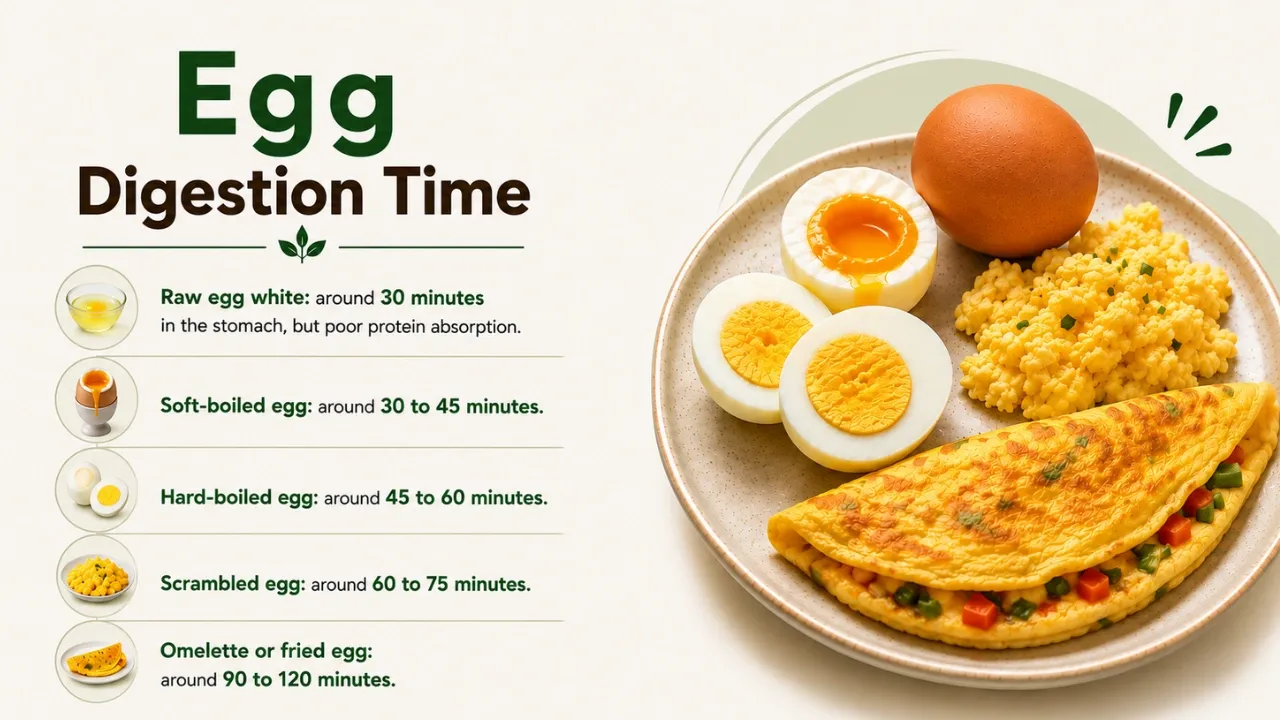
- Raw egg white: around 30 minutes in the stomach, but poor protein absorption.
- Soft-boiled egg: around 30 to 45 minutes.
- Hard-boiled egg: around 45 to 60 minutes.
- Scrambled egg: around 60 to 75 minutes.
- Omelette or fried egg: around 90 to 120 minutes, depending on oil and fillings.
Eggs are one of the most complete protein sources available. They are affordable, versatile, and common in Indian meals, whether boiled at breakfast, added to lunch, or eaten after a workout.
But egg digestion time is not one fixed number. It changes based on cooking method, added fat, what the egg is eaten with, meal timing, and the health of your digestive system.
How Long Does It Take to Digest an Egg?
A plain hard-boiled egg clears the stomach in about 45 to 60 minutes and is fully absorbed in the small intestine within 3 to 4 hours. Add oil, cheese, butter, vegetables, or heavy spices, and digestion can stretch to 5 to 6 hours.
There are two useful meanings of digestion time:
- Gastric emptying time: how long the egg stays in your stomach.
- Full gut transit: how long it takes for amino acids and fats to be processed and absorbed.
Most people asking how long eggs take to digest are asking about stomach clearance. That is where cooking method matters most.
Egg Digestion Time: Complete Reference Table
| Egg Preparation | Stomach Digestion | Full Gut Transit | Key Factor |
|---|---|---|---|
| Raw egg white | Around 30 minutes | 1.5 to 2 hours | No fat, but poor protein absorption |
| Soft-boiled egg | 30 to 45 minutes | 2 to 3 hours | Yolk partially liquid |
| Hard-boiled egg | 45 to 60 minutes | 3 to 4 hours | Solid yolk and dense protein |
| Poached egg | Around 45 minutes | Around 3 hours | No added fat |
| Scrambled egg, plain | 60 to 75 minutes | 3.5 to 4 hours | Butter or oil slows emptying |
| Plain omelette | 75 to 90 minutes | 4 to 5 hours | Oil plus whole egg structure |
| Masala omelette | 90 to 120 minutes | 5 to 6 hours | Spices, vegetables, oil |
| Fried egg | 90 to 120 minutes | 5 to 6 hours | High fat slows digestion |
Boiled Egg Digestion Time
Boiled egg digestion time is the benchmark most nutrition guides use because boiling changes the protein structure without adding any fat. This makes the proteins easier for digestive enzymes to access.
Soft-Boiled Egg Digestion Time
A soft-boiled egg, where the white is set but the yolk remains runny, digests in about 30 to 45 minutes in the stomach. The semi-liquid yolk needs less mechanical breakdown, so it exits the stomach faster.
Hard-Boiled Egg Digestion Time
A fully hard-boiled egg takes about 45 to 60 minutes in the stomach. The dense yolk takes longer to break down than the white. Still, hard-boiled eggs are considered easy-to-digest high-protein foods because they contain no added cooking fat.
How Boiling Improves Digestibility
Raw egg white contains avidin and trypsin inhibitors, which can interfere with biotin absorption and protein digestion. Cooking reduces these effects and improves protein digestibility.
| Factor | Raw Egg White | Boiled Egg White |
|---|---|---|
| Protein digestibility | Around 51% | Around 91% |
| Avidin activity | Active | Destroyed |
| Trypsin inhibitor | Active | Inactivated |
| Stomach time | Around 30 min | 45 to 60 min |
Egg White Digestion Time
Egg white digestion time is faster than yolk digestion because egg white is almost entirely protein with virtually no fat. Cooked egg white takes about 30 to 45 minutes in the stomach and 1.5 to 2.5 hours for full intestinal processing.
- Egg white has zero fat, so gastric emptying is faster.
- It has high water content, which aids movement.
- Its main protein, ovalbumin, is easier to cleave after cooking.
- It contains no cholesterol, unlike yolk.
Egg Yolk Digestion Time
Egg yolk digests slower than egg white because it contains fat, cholesterol, and fat-soluble vitamins. Fat digestion requires bile and pancreatic lipase, which adds time to the process.
Egg yolk alone may take around 45 to 60 minutes in the stomach, while full lipid processing can take up to 4 hours.
Egg Omelette Digestion Time
Egg omelette digestion time is longer than boiled egg digestion time mainly because of added oil, butter, cheese, vegetables, and spices.
| Preparation | Stomach Time | Fat Load | Best For |
|---|---|---|---|
| Soft-boiled | 30 to 45 min | Zero added fat | Morning meal, post-workout |
| Hard-boiled | 45 to 60 min | Zero added fat | Snacking, meal prep |
| Poached | Around 45 min | Zero added fat | Digestion-sensitive people |
| Scrambled | 60 to 75 min | Low to moderate | Breakfast |
| Plain omelette | 75 to 90 min | Moderate | Sustained energy |
| Masala omelette | 90 to 120 min | Moderate to high | Longer satiety |
| Fried egg | 90 to 120 min | High | Avoid if digestion is slow |
Scrambled Egg Digestion Time
A 2-egg scramble cooked in a small amount of butter may take about 60 to 75 minutes in the stomach. More butter or oil can stretch digestion to 75 to 90 minutes.
Masala or Vegetable Omelette
With onion, tomato, chilli, vegetables, and oil, omelette digestion can extend to 90 to 120 minutes in the stomach and 5 to 6 hours for full processing.
Cheese or Butter Omelette
Adding cheese or butter increases the fat load. These preparations can take up to 2 hours in the stomach and longer for complete absorption.
Egg Digestion Time in the Human Body
Understanding egg digestion time in the human body means following the egg through the mouth, stomach, small intestine, and large intestine.
| Stage | What Happens | Time Taken |
|---|---|---|
| Mouth | Chewing breaks the egg into smaller pieces | Around 1 minute |
| Stomach | Acid and pepsin break protein into peptides | 30 to 120 minutes by type |
| Small intestine | Pancreatic enzymes break protein and fat further | 1 to 4 hours |
| Large intestine | Minimal residue processing | 4 to 24 hours |
Minute-by-Minute Timeline for a Boiled Egg
- 0 to 1 minute: chewing breaks the egg into fragments.
- 1 to 10 minutes: the bolus enters the stomach and acid secretion begins.
- 10 to 45 minutes: pepsin starts protein breakdown and the yolk begins slow processing.
- 45 to 60 minutes: gastric emptying begins for a plain hard-boiled egg.
- 60 to 150 minutes: small intestine enzymes break peptides into amino acids.
- 150 to 240 minutes: most protein and fat from a boiled egg is absorbed.
- 4 to 24 hours: trace residue passes through the colon.
Factors That Affect Digestion Time of Egg
- Cooking method: boiled is fastest, fried in oil is slowest.
- Food pairing: cheese, butter, ghee, and heavy roti combinations slow digestion.
- Gut health: low stomach acid, enzyme insufficiency, or slow motility can delay egg digestion.
- Age: older adults may digest eggs more slowly due to lower enzyme output.
- Meal timing: eggs digest faster in the morning or midday than late at night.
- Stress: chronic stress can lower stomach acid and digestive enzyme output.
If eggs regularly feel heavy, the issue may be connected to broader gut health, not the egg itself.
Egg Digestion Time Compared to Other Foods
| Food | Stomach Digestion Time | Easy or Hard to Digest |
|---|---|---|
| Banana | 30 to 45 minutes | Very easy |
| White rice | 30 to 60 minutes | Very easy |
| Boiled egg | 45 to 60 minutes | Easy |
| Cooked egg white | 30 to 45 minutes | Very easy |
| Whole milk | 90 to 120 minutes | Moderate |
| Grilled chicken breast | 2 to 3 hours | Moderate |
| Masala omelette | 90 to 120 minutes | Moderate to slow |
| Fried egg | 2+ hours | Slow |
For comparison, you can also read about banana digestion time and chicken digestion time.
How to Improve Egg Digestion
- Choose boiled or poached eggs over fried eggs.
- Eat eggs in the morning or at midday.
- Chew thoroughly, especially scrambled eggs and omelettes.
- Avoid pairing eggs with high-fat dairy, cheese, or excess butter.
- Drink warm water or herbal tea after the meal.
- Walk for 10 minutes after eating.
- Limit egg count to 2 to 3 per sitting if digestion is sensitive.
If you often feel heaviness after protein-rich foods, learning how to improve digestion can help beyond just changing egg preparation.
Is Slow Egg Digestion a Sign of Something Deeper?
Occasional slow digestion after a large egg meal is normal. But if eggs, or most protein-rich foods, consistently leave you bloated for 3 or more hours, the pattern may need attention.
- Low stomach acid: pepsin needs an acidic environment to break egg protein.
- Low digestive enzymes: pancreatic proteases are needed for protein breakdown.
- Sluggish gallbladder function: yolk fat needs bile for digestion.
- Gut microbiome imbalance: undigested protein may ferment and create gas.
- Weak Agni: Ayurveda links slow digestion with weak digestive fire.
If bloating happens often after eggs and other foods, explore the causes of bloating and consider a structured gut assessment.
Mool Health's Root-Cause View
Mool Health looks at slow digestion beyond single foods. If eggs feel heavy even when boiled or poached, the issue may involve gastric acid, enzyme output, gallbladder function, microbiome balance, stress, or meal timing.
A root-cause gut health assessment can help identify whether your slow egg digestion is linked to low stomach acid, digestive enzyme insufficiency, microbiome imbalance, or lifestyle patterns.
What This Means for You
Eggs are usually not a digestive problem. The way they are cooked, the amount of fat added, and the state of your gut determine whether they digest in 45 minutes or closer to 2 hours.
Here is what you should do next:
- Replace one fried or omelette egg meal with boiled or poached egg this week.
- Choose soft-boiled eggs after workouts if you want slightly faster digestion.
- Eat eggs earlier in the day if bloating or heaviness happens at night.
- Avoid pairing eggs with cheese, butter, or heavy dairy if digestion is slow.
- If heaviness continues even with boiled eggs, check for deeper gut issues.
If eggs repeatedly cause bloating, the better question is not whether eggs are bad. The better question is whether your stomach acid, enzymes, bile flow, and microbiome are working efficiently.
Disclaimer
This article is for informational and educational purposes only. It does not replace medical advice, diagnosis, or treatment. Consult a qualified healthcare professional if eggs cause persistent bloating, pain, allergy-like symptoms, reflux, or digestive discomfort.
Key Takeaways
Egg Digestion time depends on how it is cooked, with boiled and poached eggs generally digesting faster than fried eggs.
Your gut is unique your healing should be too.

Disclaimer
The content provided by Mool Health is for educational and informational purposes only and should not be considered a substitute for professional medical advice, diagnosis, or treatment.