
Mutton Digestion Time: Why It Feels Heavy and How to Digest It Better
A practical guide that explains why mutton feels heavy, how curry and biryani affect digestion, what to drink after eating mutton and when symptoms need care.
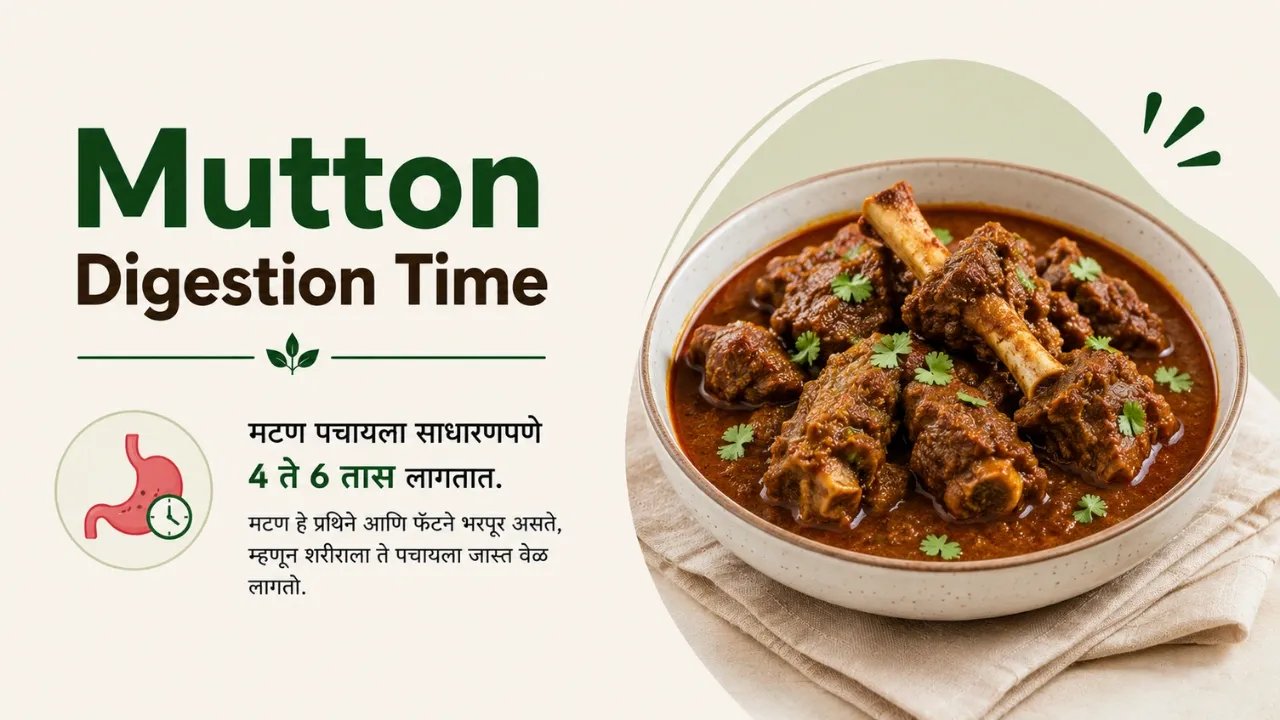
Quick Answer
Mutton usually feels heavier than chicken or fish because it has denser muscle fibres, more connective tissue and often more fat, especially in curry, biryani or nihari. Plain, well-cooked mutton is easier to tolerate than fried, oily or late-night mutton meals.
- •Plain boiled or pressure-cooked mutton is usually easier than mutton curry or biryani.
- •Mutton biryani often feels heaviest because it combines meat, rice, oil, spices and a larger portion size.
- •Mutton liver may feel lighter than fatty mutton cuts, but it is nutrient-dense and should be eaten in moderation.
- •Severe pain, vomiting, reflux, blood in stool, black stool or unexplained weight loss needs medical advice.
Mutton digestion time is not the same for every person or every preparation. A small portion of pressure-cooked mutton at lunch can feel manageable, while a large plate of oily mutton biryani at night can feel heavy for many hours.
The best way to understand mutton digestion is to look at three things together: the cut of meat, the cooking method and your gut pattern. People with slow digestion, acidity, constipation or bloating may feel mutton more heavily than others.
Mutton Digestion Time by Preparation
Mutton digestion changes significantly depending on oil, spice level, portion size and whether the meat is minced, pressure-cooked, fried or cooked with rice. Use this table as a practical guide, not an exact timer.
| Mutton Preparation | How It Usually Feels | Why It May Feel Heavy | Better Tip |
|---|---|---|---|
| Plain boiled mutton | Moderate | Dense protein but less added fat | Keep portion small and chew well |
| Pressure-cooked mutton | Easier than tough cuts | Collagen softens with pressure cooking | Best choice for easier digestion |
| Mutton curry | Moderate to heavy | Oil, spices and gravy increase digestive load | Use less oil and eat at lunch |
| Mutton biryani | Heavy | Mutton, rice, oil or ghee, spices and larger portion | Avoid late night and keep portion controlled |
| Mutton liver | Rich but often softer | Nutrient-dense organ meat | Eat small portions and avoid excess frequency |
| Mutton kebab or seekh | Moderate | Minced texture may be easier, but fat and spices matter | Choose grilled over fried |
| Nihari or rogan josh | Very heavy | Fat, marrow, slow-cooked gravy and spices | Eat occasionally, preferably earlier in the day |
Why Mutton Takes Longer to Digest
Mutton is a red meat and usually feels heavier than lean chicken or fish. This does not mean everyone must avoid it, but it does mean preparation and portion size matter more.
- •Dense muscle fibres: Mutton pieces need thorough chewing and stronger stomach work.
- •Connective tissue: Cuts such as shank, shoulder and neck can feel heavier if not cooked well.
- •Higher fat load: Fat slows stomach emptying and makes meals feel full for longer.
- •Oil and gravy: Curry, biryani and nihari add extra digestive load beyond meat alone.
- •Late-night timing: Heavy mutton meals at night can worsen reflux, heaviness and disturbed sleep.
How Mutton Is Digested in the Body
Mutton digestion happens in stages, starting with chewing and continuing through the stomach, small intestine and large intestine.
1. Mouth
Chewing is important for mutton because larger pieces take more work in the stomach. If you swallow mutton quickly, heaviness and bloating may be more likely.
2. Stomach
The stomach uses acid and enzymes to begin protein breakdown. Fatty mutton cuts, oily curry and biryani can slow stomach emptying, making the meal feel heavy for longer.
3. Small Intestine
The small intestine continues protein and fat digestion with pancreatic enzymes and bile. Nutrients such as protein, iron, zinc and vitamin B12 are absorbed here.
4. Large Intestine
If digestion is slow or the meal is very heavy, some residue can reach the large intestine and contribute to gas, bloating or stool changes in sensitive people.
Mutton Biryani Digestion Time: Why It Feels So Heavy
Mutton biryani often feels heavier than plain mutton because it is not just a meat dish. It combines mutton, rice, oil or ghee, fried onions, spices and usually a larger portion size.
- •Mutton protein: Dense meat requires more digestive effort.
- •Rice: Adds carbohydrate load to the meal.
- •Oil or ghee: Increases fat load and fullness.
- •Spices: Can trigger acidity or sensitivity in some people.
- •Late dinners: Biryani eaten at night may worsen heaviness and reflux.
If you frequently feel heavy after large meals, compare this with Mool Health’s food digestion time chart.
Mutton Liver Digestion Time: Is It Easier?
Mutton liver is softer than many muscle cuts and may feel easier for some people, but it is also very nutrient-dense. It contains iron, vitamin B12 and vitamin A, so portion size and frequency matter.
- •Why it may feel lighter: softer texture and less connective tissue than some meat cuts.
- •Why moderation matters: liver is rich in vitamin A and purines, so frequent large portions are not suitable for everyone.
- •Use caution: people with gout, high uric acid, kidney concerns or pregnancy should get medical advice before frequent organ meat intake.
Chicken vs Mutton Digestion Time
Chicken usually feels easier than mutton because it is leaner and has less connective tissue, especially when grilled, boiled or lightly cooked.
| Factor | Chicken | Mutton |
|---|---|---|
| Texture | Softer and leaner | Denser and more fibrous |
| Fat load | Lower in breast, moderate in thigh | Often higher, especially curry cuts |
| Cooking style impact | Usually lighter when grilled or boiled | Can become heavy with curry, biryani or nihari |
| Digestive comfort | Usually easier for slow digestion | Can feel heavy, especially at night |
| Best choice for sensitive gut | Boiled or grilled chicken | Small, pressure-cooked lean portion |
For a direct comparison, read Mool Health’s guide on chicken digestion time.
Mutton vs Other Protein Foods
Mutton is generally heavier than fish, eggs, dal, paneer and lean chicken. That is why people with weak digestion often do better with lighter proteins on most days.
| Food | How It Usually Feels | Why |
|---|---|---|
| Fish | Light | Soft texture and usually lower fat |
| Egg | Easy to moderate | Protein-rich but simple preparation helps |
| Moong dal | Moderate | Can be easier if cooked well, but may cause gas in some people |
| Paneer | Moderate | Protein plus dairy fat can feel heavy in some people |
| Chicken breast | Moderate | Lean animal protein |
| Mutton | Heavy | Dense meat, fat and connective tissue |
| Mutton biryani | Very heavy | Meat, rice, oil, spices and portion size together |
You can also compare with egg digestion time and paneer digestion time.
What Factors Affect Mutton Digestion Time
1. Cut of Meat
Lean cuts generally feel lighter than fatty or collagen-rich cuts. Shoulder, neck, ribs and shank can feel heavier if not cooked properly.
2. Cooking Method
- •Pressure-cooked: usually easier because meat becomes softer.
- •Slow-cooked: can be easier if excess oil is avoided.
- •Grilled: may feel lighter if not too spicy or fatty.
- •Fried or oily curry: often feels heavier.
- •Undercooked: harder to digest and unsafe.
3. Portion Size
A small serving is easier to digest than a large plate. Many people feel discomfort not because of mutton alone, but because of a large portion eaten with rice, roti, gravy and late-night timing.
4. Gut Health
People with bloating, acidity, constipation or slow digestion symptoms may find mutton harder to tolerate.
5. Meal Timing
Mutton at lunch is usually easier than mutton late at night. Heavy night meals can worsen reflux, disturbed sleep and next-morning heaviness.
What to Drink After Eating Mutton
A small, warm drink after mutton can support comfort, but do not drink a large amount immediately after eating. Give your stomach some time and sip slowly.
| Drink | Best For | How to Use |
|---|---|---|
| Warm water | General comfort | Small sips after the meal |
| Jeera water | Gas and bloating | Sip warm 20 to 30 minutes after eating |
| Ginger tea | Heaviness if acidity is not present | Use lightly, avoid if it causes burning |
| Fennel tea | Trapped gas or cramps | Sip warm after meals |
| Buttermilk | Lunch-time heaviness if dairy is tolerated | Room temperature, not with a very heavy late dinner |
For a full drink guide, read Mool Health’s article on what to drink after a meal.
What Not to Drink After Mutton
- •Cold soft drinks: can increase belching and stomach pressure.
- •Alcohol: may worsen reflux, gut irritation and next-day discomfort.
- •Milkshakes or heavy lassi: can add more fat to an already heavy meal.
- •Large liquid volumes: can increase fullness and discomfort.
- •Strong tea or coffee immediately after: may worsen acidity in sensitive people.
How to Digest Mutton Better
- Eat mutton at lunch instead of late dinner when possible.
- Choose pressure-cooked, slow-cooked or grilled mutton over fried preparations.
- Keep the portion moderate rather than eating a large serving.
- Chew every bite properly.
- Avoid combining mutton with too much oil, ghee, cream or fried sides.
- Take a short walk after the meal instead of lying down.
- Use warm water, jeera water or fennel tea if they suit you.
- Track whether mutton triggers acidity, constipation, bloating or loose stools.
When Mutton-Related Heaviness Needs Medical Advice
Occasional heaviness after a rich mutton meal is common. But repeated or severe symptoms should not be ignored.
- •Severe or worsening abdominal pain
- •Repeated vomiting
- •Blood in stool or black stool
- •Unexplained weight loss
- •Persistent diarrhoea or dehydration
- •Difficulty swallowing
- •Chest pain, breathlessness or sweating
- •Reflux or acidity after most meals
- •Symptoms that continue even after reducing portion size and oil
Mool Health’s Perspective on Mutton Digestion
At Mool Health, we do not label mutton as automatically good or bad for digestion. The real answer depends on preparation, timing, portion size, gut sensitivity, acidity pattern and bowel habits.
Mool Health’s Free Gut Test helps you review symptoms such as bloating, acidity, heaviness, constipation and food triggers so you can understand what may be affecting your digestion.
Does Mutton Leave You Heavy or Bloated?
Your reaction to mutton can reveal patterns around digestion speed, acidity, constipation and food tolerance. Take Mool Health’s free gut test to understand your gut better.
Medical Disclaimer
This content is for informational purposes only and does not replace professional medical advice, diagnosis or treatment. If you have severe abdominal pain, repeated vomiting, blood in stool, black stool, unexplained weight loss, chest pain, breathlessness, difficulty swallowing, persistent diarrhoea, gout, high uric acid, kidney disease or symptoms that are worsening, consult a qualified healthcare professional.
Key Takeaways
- •Mutton usually feels heavier than chicken or fish because it is denser and often fattier.
- •Pressure-cooked or plain mutton is easier than oily curry, nihari or biryani.
- •Mutton biryani feels heavy because it combines meat, rice, oil, spices and large portions.
- •Mutton liver may feel softer but should be eaten in moderation.
- •Eat mutton earlier in the day, chew well, keep portions small and avoid lying down after meals.
- •Red-flag symptoms need medical advice, not home management.
Your gut is unique your healing should be too.

Disclaimer
The content provided by Mool Health is for educational and informational purposes only and should not be considered a substitute for professional medical advice, diagnosis, or treatment.