
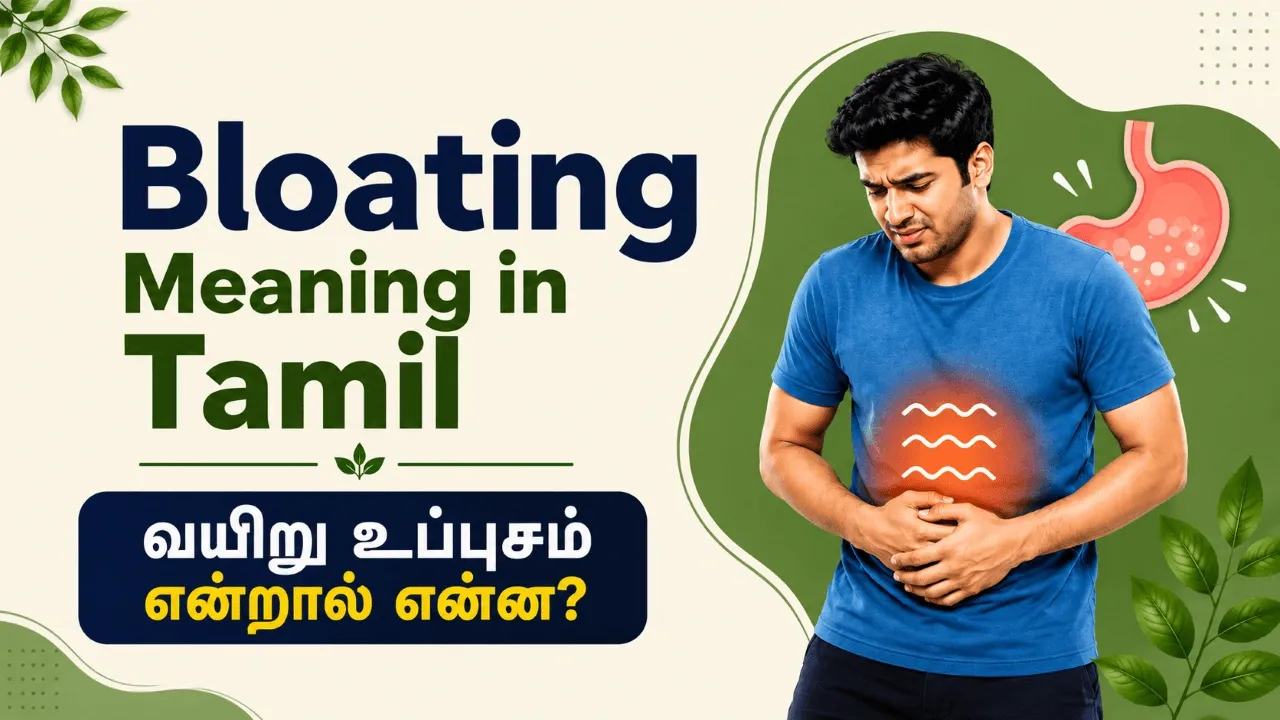
வயிறு உப்புசம் என்றால் என்ன? Bloating Meaning in Tamil - A Complete Guide
A Tamil-focused guide explaining bloating meaning, வயிறு உப்புசம் causes, types, pregnancy bloating, female bloating, warning signs and relief.
Quick Answer
Bloating (வயிறு உப்புசம்) refers to the feeling of fullness, tightness, or swelling in the abdomen caused by excess gas, fluid, or air trapped in the digestive tract. In Tamil, bloating is called "வயிறு உப்புசம்" (Vayiru Uppusam) or "வாயு தொல்லை" (Vaayu Thollai). It is one of the most common digestive complaints reported in India, affecting an estimated 16-31% of the general population at any given time.
- Tamil meaning: வயிறு உப்புசம் (Vayiru Uppusam)
- Common feeling: Fullness, tightness, pressure, swelling, gas or abdominal heaviness
- Common causes: Gas-producing foods, fast eating, lactose intolerance, constipation, stress, IBS and hormonal changes
- Pregnancy term: கர்ப்பகால வயிறு உப்புசம் (Karpakala Vayiru Uppusam)
- Doctor needed: Severe pain, blood in stool, fever, vomiting, weight loss or persistent bloating
Bloating (வயிறு உப்புசம்) refers to the feeling of fullness, tightness, or swelling in the abdomen caused by excess gas, fluid, or air trapped in the digestive tract. In Tamil, bloating is called "வயிறு உப்புசம்" (Vayiru Uppusam) or "வாயு தொல்லை" (Vaayu Thollai). It is one of the most common digestive complaints reported in India, affecting an estimated 16-31% of the general population at any given time.
What Is Bloating Meaning in Tamil? A Complete Definition
Bloating meaning in Tamil is "வயிறு உப்புசம்" - a condition where the abdomen feels swollen, distended, or uncomfortably full due to gas or fluid accumulation in the gut.
The Tamil term வயிறு உப்புசம் literally breaks down as:
- வயிறு (Vayiru) = Stomach / Abdomen
- உப்புசம் (Uppusam) = Swelling / Inflation
Related Tamil terms used in everyday speech:
| English Term | Tamil Term | Transliteration |
|---|---|---|
| Bloating | வயிறு உப்புசம் | Vayiru Uppusam |
| Gas trouble | வாயு தொல்லை | Vaayu Thollai |
| Flatulence | வாயு வெளியேற்றம் | Vaayu Veliyaetram |
| Stomach cramps | வயிற்று வலி | Vayitru Vali |
| Abdominal bloating | வயிற்று உப்புசம் | Vayitru Uppusam |
According to Mool Health's digestive health team, bloating is not a disease by itself - it is a symptom that signals an imbalance in the digestive process. Understanding bloating meaning in Tamil helps Tamil-speaking individuals identify and address the condition in their own language and cultural context.
How Does Bloating (வயிறு உப்புசம்) Work? The Mechanism Explained
Bloating (வயிறு உப்புசம்) occurs because the digestive system produces or traps more gas than it can expel comfortably.
Here is the step-by-step mechanism:
- Food enters the stomach. The stomach begins breaking it down using acid and digestive enzymes.
- Bacteria in the large intestine ferment undigested food. Carbohydrates - especially fibre, lactose, and fructose - are fermented by gut bacteria, producing gases like hydrogen (H₂), carbon dioxide (CO₂), and methane (CH₄).
- Gas accumulates faster than it can be expelled. When gas production exceeds the rate of expulsion (burping or passing wind), pressure builds inside the abdomen.
- The abdominal wall stretches. This stretching activates nerve receptors in the gut wall, creating the sensation of tightness, pressure, or pain.
- Visceral hypersensitivity amplifies the feeling. In some individuals, the gut's pain-sensing nerves are more reactive than normal, making even a small amount of gas feel extremely uncomfortable.
Mool Health's gut health advisors note that cramping and bloating meaning in Tamil (வயிற்று இறுக்கம் மற்றும் உப்புசம்) often occur together because gas pressure directly stimulates the intestinal smooth muscle, causing it to contract involuntarily - producing the cramping sensation alongside swelling.
What Causes Bloating (வயிறு உப்புசம்)?
Bloating (வயிறு உப்புசம்) has several well-documented causes, ranging from dietary habits to underlying health conditions.
Common dietary causes:
- Eating too fast, which causes swallowing of excess air (aerophagia)
- Consuming gas-producing foods: pulses (dal), cabbage, onions, beans, broccoli
- Drinking carbonated beverages
- High intake of spicy or oily foods - a common trigger in Tamil cuisine
- Lactose intolerance, affecting an estimated 60-70% of South Asian adults
- Eating large meal portions in one sitting
Lifestyle-related causes:
- Sedentary habits after meals
- Chronic stress, which slows gut motility
- Irregular meal timings
- Dehydration reducing intestinal movement
Medical causes:
- Irritable Bowel Syndrome (IBS) - affects roughly 10-15% of people globally
- Gastroesophageal Reflux Disease (GERD)
- Constipation, where stool buildup creates pressure and gas
- Small Intestinal Bacterial Overgrowth (SIBO)
- Food intolerances (gluten, lactose)
Female-specific causes: Female bloating meaning in Tamil - பெண்களுக்கு வயிறு உப்புசம் - often has hormonal triggers that differ from men. These include:
- Premenstrual syndrome (PMS): oestrogen and progesterone fluctuations cause water retention and slowed gut motility in the days before menstruation
- Ovulation: mid-cycle hormonal shifts can cause temporary abdominal distension
- Polycystic Ovary Syndrome (PCOS): hormonal imbalance affects gut flora and digestion
- Endometriosis: tissue growth outside the uterus can cause significant abdominal bloating and cramping
Types of Bloating (வயிறு உப்புசம்): Which Type Do You Have?
Stomach bloating meaning in Tamil (வயிற்று உப்புசம்) and abdominal bloating meaning in Tamil (வயிற்று வீக்கம்) are often used interchangeably, but clinically there are distinct types.
| Type | Tamil Term | Key Feature | Common Trigger |
|---|---|---|---|
| Gas bloating | வாயு உப்புசம் | Visible distension, frequent burping or flatulence | Fermentable foods, carbonated drinks |
| Water retention bloating | நீர் தேக்கம் | Puffiness, weight fluctuation by 1-2 kg | High sodium intake, hormonal changes |
| Constipation bloating | மலச்சிக்கல் உப்புசம் | Hard stools, infrequent bowel movements | Low fibre, low water intake |
| IBS bloating | IBS உப்புசம் | Alternating constipation and diarrhoea, cramping | Stress, certain foods |
| Hormonal bloating (women) | ஹார்மோன் உப்புசம் | Cyclical, worsens before periods | Oestrogen/progesterone changes |
| Pregnancy bloating | கர்ப்பகால உப்புசம் | Persistent fullness, worsens in second trimester | Progesterone slowing digestion |
Mool Health recommends identifying which type of bloating applies to your symptoms before choosing a treatment approach, as the underlying cause determines the most effective solution.
Bloating in Pregnancy: What Does It Mean in Tamil?
Bloating in pregnancy meaning in Tamil is "கர்ப்பகால வயிறு உப்புசம்" (Karpakala Vayiru Uppusam).
Bloating meaning in Tamil pregnancy context is extremely common - studies suggest up to 72% of pregnant women experience significant bloating during pregnancy, particularly in the first and second trimesters.
Why bloating occurs during pregnancy:
- Progesterone rise: From week 4 onwards, rising progesterone relaxes smooth muscle throughout the body, including the intestines. This slows bowel movement (gut motility), causing food to stay in the digestive tract longer and produce more gas.
- Growing uterus: From the second trimester, the expanding uterus presses against the intestines, reducing the space available for normal digestion and gas movement.
- Iron supplements: Prenatal iron supplements, commonly prescribed during pregnancy, can cause constipation and worsen bloating in many women.
- Dietary changes: Pregnancy cravings or aversions may lead to changes in diet that affect gut bacteria balance.
When to seek medical attention during pregnancy: Bloating in pregnancy meaning in Tamil becomes a concern when accompanied by:
- Severe abdominal pain or cramping and bloating meaning in Tamil that is worsening
- Vaginal bleeding
- Fever
- Persistent vomiting
- Sudden swelling of face, hands, or feet (possible preeclampsia)
Mool Health strongly advises pregnant women to consult a gynaecologist or healthcare provider before taking any medication or supplement for pregnancy-related bloating.
Female Bloating Meaning in Tamil: Hormonal and Menstrual Causes
Female bloating meaning in Tamil - பெண்களுக்கு வயிறு உப்புசம் - is a distinct category because women experience bloating triggers tied directly to the menstrual cycle and reproductive hormones.
Pattern by menstrual phase:
- Days 1-5 (Menstruation): Prostaglandins cause uterine contractions that spread to the bowel, producing cramping and bloating meaning in Tamil (வயிற்று இறுக்கம் மற்றும் உப்புசம்)
- Days 14-16 (Ovulation): Brief hormonal spike may cause mild abdominal distension in some women
- Days 21-28 (Luteal phase / PMS): Progesterone peaks, slowing gut transit; oestrogen promotes water retention - this is when bloating is most severe for most women
Research published in the American Journal of Gastroenterology found that 62% of women with IBS report their symptoms, including bloating, worsen significantly in the days before menstruation.
Key management strategies for female bloating meaning in Tamil:
- Reduce salt intake in the luteal phase to minimise water retention
- Increase magnesium-rich foods (spinach, pumpkin seeds) - studies suggest magnesium can reduce PMS-related bloating by up to 40%
- Avoid excess sugar and refined carbohydrates before menstruation
- Light exercise such as walking for 20-30 minutes daily supports bowel movement
How to Reduce Bloating (வயிறு உப்புசம்): Step-by-Step Guide
According to Mool Health's nutritional health team, most cases of bloating (வயிறு உப்புசம்) can be significantly reduced within 24-72 hours through targeted dietary and lifestyle adjustments.
Step 1: Identify and remove trigger foods for 1 week Common Tamil diet triggers include: urad dal-heavy foods, maida (refined flour), excess coconut milk, raw onions, and large portions of rice eaten quickly. Removing these for 7 days helps isolate the cause.
Step 2: Eat smaller meals, more frequently Instead of 3 large meals, switch to 4-5 smaller portions. This reduces the volume of food fermented at any one time, cutting gas production by an estimated 30-40%.
Step 3: Chew food slowly and thoroughly Aim for 20-30 chews per mouthful. Slower eating reduces air swallowing (aerophagia), one of the primary causes of upper-abdomen bloating.
Step 4: Drink warm water or herbal teas Warm water supports gut motility. Fennel seed tea (perunjeeragam tea / பெருஞ்சீரகம் டீ) has been used in Tamil traditional medicine for centuries and is supported by evidence showing fennel relaxes intestinal smooth muscle and reduces gas.
Step 5: Walk for 15-20 minutes after meals Physical movement stimulates peristalsis - the wave-like contraction of the intestines - helping gas and food move through the digestive tract faster.
Step 6: Try a low-FODMAP approach if bloating persists FODMAPs are fermentable carbohydrates found in many foods. A clinical low-FODMAP diet has been shown to reduce bloating in 75% of IBS patients within 4-6 weeks.
Step 7: Consult a doctor if bloating is severe or persistent If stomach bloating meaning in Tamil persists beyond 2 weeks, is accompanied by unexplained weight loss, blood in stools, or severe pain, medical evaluation is essential.
Common mistakes to avoid:
- Do not drink large amounts of water during meals - it dilutes digestive enzymes
- Do not lie down immediately after eating
- Avoid using over-the-counter antacids repeatedly without a diagnosis
What Are the Best Practices to Prevent Bloating (வயிறு உப்புசம்)?
Mool Health's health advisors recommend the following evidence-backed practices to prevent recurring bloating meaning in Tamil:
- Eat at consistent times each day. The gut follows a circadian rhythm. Irregular meal times disrupt digestive enzyme production and increase gas buildup.
- Include probiotic-rich foods. Curd (தயிர் / Thayir), buttermilk (மோர் / Mor), and fermented rice (பழைய சாதம் / Pazhaiya Saadham) contain beneficial bacteria that balance the gut microbiome and reduce fermentation-related gas.
- Limit carbonated drinks. Each serving of a carbonated beverage introduces approximately 600 ml of dissolved CO₂ directly into the digestive tract.
- Track your food and symptoms. Keeping a 2-week food diary helps identify personal bloating triggers - this is more effective than following generic advice.
- Manage stress actively. The gut-brain axis means that psychological stress directly slows gut motility via the vagus nerve. Studies show chronic stress increases bloating severity by up to 60% in IBS patients.
- Stay hydrated between meals. Aim for 2-2.5 litres of water daily. Dehydration thickens intestinal contents and slows transit, worsening constipation-related bloating.
- Exercise regularly. Even 30 minutes of moderate activity 5 days per week has been shown to reduce bloating frequency by approximately 25% in sedentary adults.
What Does the Research Say About Bloating?
Mool Health's research team has reviewed key clinical studies relevant to bloating (வயிறு உப்புசம்) in the Indian and South Asian population.
Key findings:
- A 2021 review in Neurogastroenterology & Motility found that gut microbiome imbalance (dysbiosis) is present in 78% of patients with chronic functional bloating, suggesting that probiotic interventions should be a first-line dietary approach.
- A randomised controlled trial published in the Journal of Clinical Gastroenterology found that a low-FODMAP diet reduced bloating severity scores by 47% over 6 weeks in IBS patients compared to a control diet.
- Research on fennel (perunjeeragam) showed significant antispasmodic and carminative properties - fennel reduced gas-related discomfort in 80% of participants within 30 minutes of consumption.
- A study on magnesium supplementation (250 mg/day) over 2 months reduced PMS-related bloating by 40% in women with cyclical bloating patterns.
- Indian dietary data from the National Family Health Survey (NFHS-5) indicates that lactose intolerance affects approximately 60-70% of South Asian adults, making dairy-triggered stomach bloating meaning in Tamil one of the most common and under-recognised causes in this population.
When Is Bloating (வயிறு உப்புசம்) a Warning Sign?
Bloating (வயிறு உப்புசம்) is usually harmless and temporary, but in certain situations it can signal a serious underlying condition.
Bloating alone is typically not dangerous when:
- It resolves within 24-48 hours
- It is clearly linked to a dietary trigger
- It comes and goes predictably with the menstrual cycle
Seek medical attention if bloating is accompanied by:
- Unexplained weight loss of more than 5% body weight
- Blood in stools or black, tarry stools
- Persistent vomiting
- Fever above 38°
- Severe or worsening abdominal pain
- Persistent diarrhoea or constipation
- Repeated bloating that lasts more than 2 weeks
- Vomiting that does not settle
- Sudden abdominal swelling during pregnancy
Mool Health’s Perspective on Bloating Meaning in Tamil
Mool Health sees வயிறு உப்புசம் as a digestive signal, not just a random stomach issue. It may come from food fermentation, swallowed air, constipation, lactose intolerance, stress, hormonal shifts, pregnancy, or a gut condition such as IBS or SIBO.
For Tamil-speaking individuals, understanding the correct meaning helps describe symptoms clearly and take the right next step. The best approach is to observe when bloating happens, what foods trigger it, whether bowel movements are regular, and whether any warning signs are present.
Key Takeaways
A Tamil-focused guide explaining bloating meaning, வயிறு உப்புசம் causes, types, pregnancy bloating, female bloating, warning signs and relief.
Your gut is unique your healing should be too.

Disclaimer
The content provided by Mool Health is for educational and informational purposes only and should not be considered a substitute for professional medical advice, diagnosis, or treatment.