
Does Walking Help Digestion? Best Time, Benefits and Mistakes
Walking after meals can support digestion by improving gut movement, reducing bloating, helping gas pass, and supporting blood sugar control. A gentle 10 to 20 minute walk after eating may improve digestive comfort.
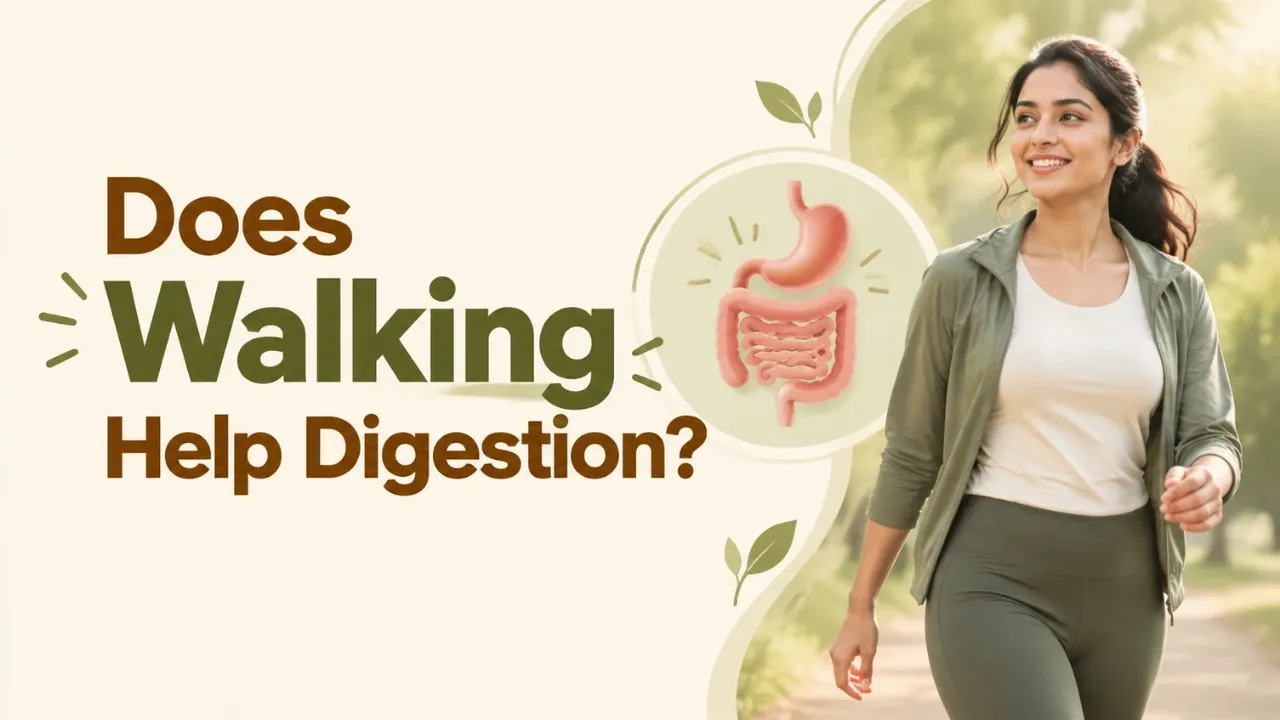
Quick Answer
Walking does help digestion, but not in the way most people expect.
A 10 to 20 minute post-meal walk may support gastric emptying, help post-meal blood sugar control, and move trapped gas through the intestines via peristalsis. The relief from bloating and heaviness usually comes from these practical mechanisms, not from burning more calories.
The best time to walk is 15 to 30 minutes after a meal, at a relaxed conversational pace of roughly 3 to 4 km/h. Running after eating diverts blood away from the gut and makes symptoms worse, not better.
The simple version: walking after meals supports gastric movement and blood sugar handling, two changes your gut may feel within 10 to 20 minutes.
Does Walking Help Digestion? Quick Answer
Yes, walking helps digestion when done gently after meals. A light 10 to 20 minute walk supports gut motility, helps trapped gas move, reduces post-meal bloating, and improves blood sugar control after eating.
| Parameter | Recommendation |
|---|---|
| Best time | 10 to 30 minutes after a meal |
| Best pace | Slow to moderate, conversational (3 to 4 km/h) |
| Best duration | 10 to 20 minutes |
| Best for | Bloating, heaviness, gas, blood sugar control, bowel regularity |
| For constipation | Daily walking over 2 to 4 weeks, not one-time |
| Avoid | Running, brisk exercise, or lying down immediately after meals |
What Is the Connection Between Walking and Digestion?
Walking helps digestion because physical movement directly activates the muscles of the gastrointestinal (GI) tract, a process called gastrointestinal motility. When you walk, the rhythmic movement of the body stimulates peristalsis, the wave-like muscle contractions that push food through the intestines.
The digestive system depends on muscular movement to process and transport food. Without physical activity, gastric emptying slows, which can cause bloating, heaviness, and constipation. Walking provides low-impact mechanical stimulation that supports this process without placing stress on the body.
According to Mool Health's gut health team, the connection between physical movement and gut function is one of the most underutilised tools in everyday digestive care.
Key terms defined:
- •Gastrointestinal motility: The rate at which food moves through the digestive tract
- •Peristalsis: Involuntary muscle contractions that propel food forward through the intestines
- •Gastric emptying: The time it takes for food to move from the stomach to the small intestine
- •Postprandial: After a meal; postprandial walking means walking after eating
If heaviness and delayed comfort keep repeating after meals, slow digestion symptoms may also be worth checking separately from meal timing alone.
How Does Walking Help Digestion? The Mechanism Explained
Walking helps digestion through five interconnected physiological steps. Each step builds on the last, creating a chain that moves food through the gut more efficiently.
1. Muscle activation stimulates the gut wall Walking engages core and abdominal muscles, which apply gentle pressure to the intestines. This pressure encourages the gut lining to contract and move food forward along the digestive tract.
2. Blood flow to digestive organs increases Moderate physical activity supports active tissues, including the stomach and intestines. This enhanced circulation supports enzyme secretion and nutrient absorption during and after a meal.
Studies suggest light-to-moderate walking may support gastric emptying compared with sitting after a meal. Faster emptying can reduce the time food sits heavily in the stomach, which may ease bloating and reflux-like discomfort in some people.
4. Blood sugar is better regulated Walking within 30 minutes of eating causes skeletal muscles to absorb glucose from the bloodstream. This lowers post-meal blood sugar spikes and reduces the inflammatory stress that can slow digestion over time.
5. The vagus nerve is engaged Walking may stimulate the vagus nerve, the primary nerve connecting the brain and gut, which helps regulate digestive secretions and gut contractions. This is the same mechanism that calms stress-related gut symptoms.
Mool Health's wellness team notes that the causal chain is direct: movement → mechanical stimulation → faster motility → reduced digestive discomfort.
Does Walking After Eating Help Digestion and Bloating?
Yes, walking after eating helps digestion and reduces bloating by encouraging trapped gas to move through and out of the intestines. This typically occurs within 10 to 20 minutes of starting a gentle post-meal walk.
Bloating most commonly results from gas that becomes trapped in the intestines after eating. Walking stimulates peristalsis, which pushes gas forward and out of the gut. The effect is more pronounced for gas-related bloating than for bloating caused by food intolerances or gut microbiome imbalance.
Walking after eating also helps by:
- •Reducing the sensation of post-meal heaviness and fullness
- •Lower post-meal blood sugar: A short walk after eating can help muscles use glucose from the bloodstream and reduce post-meal spikes in some people
- •Supporting faster gastric emptying so the stomach clears more efficiently
- •Activating the vagus nerve, which coordinates gut contractions
According to Mool Health, walking after dinner is particularly useful for people who feel heavy or bloated after their largest meal of the day, because evening digestion tends to be naturally slower.
If bloating happens after most meals, understanding the causes of gas and bloating can help identify food and lifestyle triggers beyond what walking alone can address.
Important caveats:
- •Walk at a relaxed, conversational pace of roughly 3 to 4 km/h
- •Wait 15 to 30 minutes after a heavy meal before walking
- •Avoid fast walking or high-intensity movement immediately after eating, which can cause nausea or cramping
Does Walking After Dinner Help Digestion?
Yes, walking after dinner can help digestion when done gently and at a slow pace. A light 10 to 20 minute walk after dinner may reduce bloating, heaviness, and reflux risk by helping food move through the stomach more efficiently.
Evening digestion tends to be slower because the body's metabolic rate naturally decreases later in the day. This makes post-dinner walking especially relevant for people who experience post-meal bloating, difficulty sleeping after eating, or mild acid reflux after their evening meal.
If the main symptom is chest or throat burning after meals, heartburn may be the more relevant issue than normal post-meal heaviness.
Tips for walking after dinner:
- Wait 15 to 30 minutes after finishing your meal before walking
- Keep the pace relaxed, you should be able to hold a conversation
- Walk on flat ground if you have acid reflux, as inclines can increase intra-abdominal pressure
- Aim for 10 to 15 minutes, you do not need a long walk to see digestive benefit
Mool Health advises that even a short walk around your neighbourhood or building after dinner can meaningfully reduce post-meal discomfort when practised consistently.
What Is a Digestive Walk? Definition and How It Works
A digestive walk is a purposeful, low-intensity walk taken specifically after a meal to support digestion. It is distinct from a general fitness walk in three key ways: timing, pace, and primary goal.
| Feature | Digestive Walk | Fitness Walk |
|---|---|---|
| Timing | 10 to 30 minutes after eating | Any time |
| Pace | Relaxed, conversational (3 to 4 km/h) | Moderate to brisk |
| Duration | 10 to 20 minutes | 30 to 60+ minutes |
| Primary goal | Support gastric motility | Cardiovascular fitness |
| Equipment needed | None | Supportive footwear recommended |
A digestive walk does not require a specific route, fitness level, or outdoor setting. It can be done indoors, on a treadmill, or around a building. The digestive benefit comes from the rhythmic movement that activates gut motility, not from the setting or speed.
According to Mool Health, most digestive benefits from post-meal walking are achieved at a pace slow enough to hold a conversation without effort. The label "digestive walk" is a useful framing that separates the intention, gut support, from general exercise.
Key Benefits of Walking for Digestion
Walking for digestion provides both immediate relief and long-term GI health improvements. Mool Health identifies the following as the most clinically supported outcomes.
Short-Term Benefits (Within Days to Weeks)
- •Reduced bloating: A 10 to 15 minute post-meal walk typically moves trapped gas through the intestines within 10 to 20 minutes
- •Faster gastric emptying: Light walking may help food move from the stomach into the small intestine more comfortably than sitting still
- •Lower post-meal blood sugar: A short walk after eating can help muscles use glucose from the bloodstream and reduce post-meal spikes in some people
- •Improved bowel regularity: Light daily walking helps prevent stool from hardening and sitting too long in the colon
- •Reduced post-meal heaviness: Faster gastric emptying reduces the full, uncomfortable feeling after eating
Long-Term Benefits (With Consistent Daily Practice)
- •Reduced chronic constipation: People who walk 30 minutes daily are significantly less likely to experience chronic constipation than sedentary individuals
- •Lower long-term bowel risk: Regular physical activity is associated with better bowel function and may support long-term colon health
- •Gallstone prevention: Moderate aerobic activity, including walking, may reduce gallstone risk by improving bile flow and cholesterol metabolism
- •Better gut microbiome diversity: Consistent aerobic exercise is linked to increased microbial diversity in the gut, which supports digestive and immune function
| Benefit | Timeframe | Mechanism |
|---|---|---|
| Reduced bloating | 10 to 20 minutes | Gas moves through intestines via peristalsis |
| Lower blood sugar | During/after walk | Skeletal muscle glucose uptake |
| Improved bowel regularity | 1 to 2 weeks | Increased colonic motility |
| Reduced constipation risk | 3 to 4 weeks | Consistent GI stimulation |
| Lower diverticular disease risk | Long-term | Reduced colonic pressure |
| Greater gut microbiome diversity | 2 to 3 months | Sustained aerobic exercise effect |
Does Walking Help Constipation?
Yes, walking can help constipation by stimulating colonic motility and helping stool move through the large intestine more efficiently. Daily walking works best for constipation when combined with adequate water intake, a fibre-rich diet, and regular meal timing.
A study published in the Scandinavian Journal of Gastroenterology found that sedentary adults with chronic constipation who walked for 30 minutes daily experienced significantly reduced gut transit time, with measurable improvements observed within 4 weeks.
Walking also reinforces the gastrocolic reflex, the body's natural mechanism that triggers the urge to defecate in response to stomach distension after eating. This reflex is strongest in the morning after waking and after the first meal of the day.
How walking helps constipation specifically:
- •Increases colonic motility, moving stool through the large intestine faster
- •Activates the gastrocolic reflex, particularly during morning fasted walks
- •Reduces stool hardening by shortening the time stool sits in the colon
- •Stimulates abdominal muscle engagement that applies gentle pressure to the gut wall
Mool Health notes that the constipation benefit of walking builds over 2 to 4 weeks of consistent practice, not from a single walk. Daily consistency matters more than distance or intensity.
Does Walking Speed Up Digestion?
Yes, but the speed-up is targeted at specific stages of digestion. Walking speeds up gastric emptying (food moving from the stomach to the small intestine) and colonic transit (stool moving through the large intestine). It does not meaningfully change the speed of small intestinal nutrient absorption, which is governed by enzyme activity and gut surface area rather than physical movement.
Walking speeds up the two stages that most directly affect everyday comfort:
- •The post-meal heaviness phase, governed by gastric emptying
- •The bowel regularity phase, governed by colonic transit time
Walking does not rush nutrient absorption or reduce how thoroughly the body absorbs food. According to Mool Health, this distinction is important: walking supports comfort and regularity without compromising nutritional uptake.
Walking vs. Running for Digestion: Which Is Better After Meals?
Walking is more effective than running for post-meal digestion. High-intensity exercise like running diverts blood flow away from digestive organs toward working muscles and the heart, the opposite of what digestion requires. Post-meal running can cause nausea, cramping, and exercise-induced gastrointestinal discomfort.
Walking works precisely because it is low intensity. It maintains or slightly increases blood flow to digestive organs rather than competing with them.
| Factor | Walking (post-meal) | Running (post-meal) |
|---|---|---|
| Blood flow to gut | Maintained or slightly increased | Reduced (diverted to muscles) |
| Gastric emptying | Speeds up 20 to 30% | May slow or cause nausea |
| Bloating relief | Effective within 10 to 20 minutes | Often worsens temporarily |
| Blood sugar control | Up to 22% reduction | Effective but risk of cramps |
| Recommended wait after meal | 10 to 30 minutes | 60 to 90 minutes minimum |
| Risk of GI discomfort | Low at conversational pace | Moderate to high |
| Best use case | Post-meal digestive support | General fitness, separate from meals |
If you want to run for fitness, Mool Health recommends waiting at least 60 to 90 minutes after a full meal. A light snack under 300 calories can typically be followed by easy running after 30 to 45 minutes for most people.
Types of Walking That Support Digestion
Not all walking provides the same digestive benefit. Mool Health recommends choosing the right type based on your goal and timing.
| Walking Type | Timing | Duration | Best For |
|---|---|---|---|
| Post-meal stroll | 15 to 30 min after eating | 10 to 20 minutes | Reducing bloating, blood sugar control |
| Morning fasted walk | Before breakfast | 20 to 30 minutes | Bowel regularity, metabolism |
| Sustained daily walk | Any time | 30+ minutes | Long-term GI health, microbiome diversity |
| Treadmill walk | Any time | 10 to 30 minutes | Indoor digestive support, same benefit as outdoor |
Research on post-meal movement suggests that even short, light activity after eating can support post-meal blood sugar control compared with staying seated.
Morning fasted walking tends to support regular bowel movements because the gastrocolic reflex, which triggers the urge to defecate, is strongest after waking and after eating. Combining both through a morning walk after breakfast can reinforce this natural cycle.
Treadmill walking is equally effective as outdoor walking. The digestive benefit comes from rhythmic physical movement, not terrain or fresh air. A flat, steady treadmill walk at 3 to 4 km/h after meals produces the same gastric emptying and blood sugar benefits as walking outdoors.
Best Time to Walk for Digestion: Ranked by Practical Benefit
The best walking window depends on the symptom you want to improve. For bloating and heaviness, post-meal walking is usually most relevant. For constipation, consistency across days matters more than one perfect timing window.
| Rank | Timing | Best For | How to Do It |
|---|---|---|---|
| 1 | 10 to 30 minutes after meals | Bloating, heaviness, post-meal glucose control | Walk gently for 10 to 20 minutes at conversation pace |
| 2 | After dinner | Night-time heaviness and mild reflux tendency | Keep it slow, flat and short, then stay upright |
| 3 | Morning after breakfast | Bowel regularity and constipation support | Walk 15 to 30 minutes after breakfast |
| 4 | Morning before breakfast | General movement routine | Keep it easy, hydrate, then eat normally |
| 5 | Long brisk walk after a heavy meal | Not ideal for digestion | Wait longer after a heavy meal before brisk exercise |
Best for post-meal bloating
Walk 10 to 20 minutes after eating, especially after lunch or dinner. Keep the pace slow enough that you can speak comfortably. This helps gas move without adding pressure or nausea.
Best for constipation
Walk daily, ideally in the morning or after breakfast. Constipation usually improves through repeated bowel stimulation, hydration and fibre, not from one single walk.
Best for acidity or reflux tendency
A gentle walk after dinner can help you stay upright and reduce heaviness. Avoid fast walking, bending, lying down soon after food, or walking up steep inclines if reflux worsens.
How Long Should You Walk After Eating?
You do not need a long walk to support digestion. For most people, 10 to 20 minutes is enough after a regular meal. Very short walks can still help blood sugar and movement, while longer walks are useful only if they stay gentle.
| Meal Size | When to Start | Suggested Duration | Pace |
|---|---|---|---|
| Small snack | 5 to 15 minutes later | 5 to 10 minutes | Very gentle |
| Regular meal | 10 to 30 minutes later | 10 to 20 minutes | Conversation pace |
| Heavy meal | 20 to 45 minutes later | 10 to 15 minutes | Slow and flat |
| Dinner with reflux tendency | 15 to 30 minutes later | 10 to 15 minutes | Slow, upright, no incline |
Who Should Be Careful With Walking After Meals?
Post-meal walking is gentle for most people, but some people need to modify timing and intensity. The goal is comfort, not performance.
- •People with diabetes who use insulin or medicines that can cause low blood sugar should follow clinician advice and monitor glucose response.
- •People with severe reflux should avoid fast walking, hill walking or bending immediately after dinner.
- •People with chest pain, breathlessness, dizziness or fainting should stop walking and seek medical care.
- •People with severe abdominal pain, vomiting, blood in stool or black stools should not use walking as a substitute for medical evaluation.
- •Pregnant people, elderly adults or people recovering from surgery should keep the walk gentle and follow medical advice.
Common Mistakes That Make Digestion Worse
- •Walking too fast after eating: brisk exercise can cause cramps, nausea or reflux in sensitive people.
- •Lying down right after the walk: staying upright matters, especially after dinner.
- •Using walking to ignore red flags: severe pain, vomiting blood, black stools, chest pain or fainting need urgent care.
- •Doing one walk and expecting constipation to resolve: bowel regularity needs daily routine, fluids and fibre.
- •Walking immediately after a very heavy meal: wait a little longer and keep the pace very slow.
Walking, Diet and Gut Health: What Works Better Together
Walking works best when it supports the rest of your gut routine. If meals are very heavy, low in fibre, too late at night or highly processed, walking can reduce discomfort but may not solve the root pattern.
- •Eat slower and avoid very large meals when bloating is frequent.
- •Use daily movement with basic habits that improve digestion over time.
- •Drink enough fluids, especially if constipation is also present.
- •Keep dinner lighter than lunch if night-time heaviness is common.
- •Track which meals cause bloating despite walking.
Mool Health’s Perspective on Walking for Digestion
Mool Health views walking as one of the simplest gut-support habits because it acts on motility, gas movement, blood sugar handling and routine. It is not a cure for all digestive symptoms, but it can be a powerful daily baseline.
If bloating, constipation, acidity or heaviness keep returning despite regular walking, the next step is to look at your full gut pattern: meal timing, stool routine, stress, sleep, food triggers and microbiome health.
Still Feeling Heavy After Meals?
Walking can help, but recurring bloating, acidity or constipation may need a clearer gut pattern. Take Mool Health’s free gut test.
Medical Disclaimer
This article is for general educational purposes only and does not diagnose, treat or cure any condition. Walking may support digestive comfort, but it is not a substitute for medical care. Seek urgent care for severe or sudden abdominal pain, chest pain, fainting, vomiting blood, black stools, severe dehydration, persistent vomiting, pain after injury, or symptoms that are worsening. People with diabetes, pregnancy, heart disease, recent surgery or mobility limitations should follow personalised medical advice.
Key Takeaways
Walking after meals can support digestion by improving gut movement, reducing bloating, helping gas pass, and supporting blood sugar control. A gentle 10 to 20 minute walk after eating may improve digestive comfort.
Your gut is unique your healing should be too.

Disclaimer
The content provided by Mool Health is for educational and informational purposes only and should not be considered a substitute for professional medical advice, diagnosis, or treatment.