
Home Remedies for Diarrhea: What Helps and When to Seek Care
Diarrhea can leave you drained fast. Learn the safest home steps for hydration, simple foods, symptom relief, and warning signs that need medical care.
Quick Answer
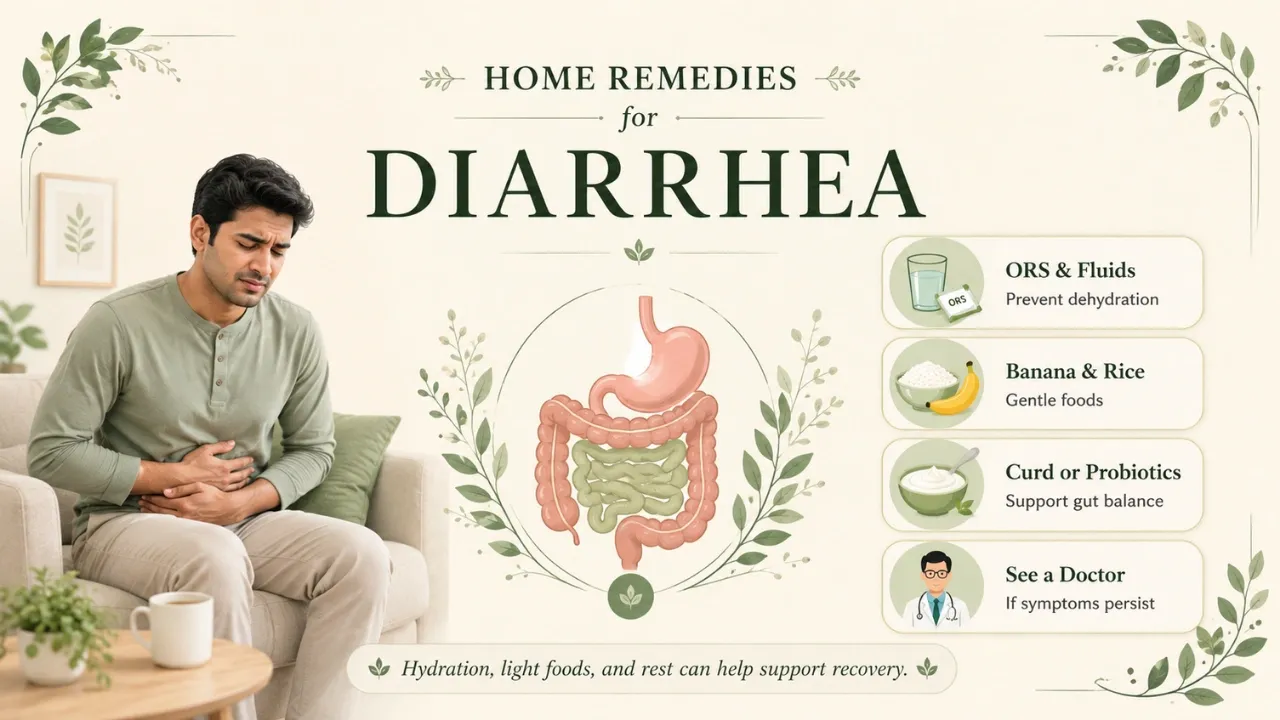
For mild diarrhea, prioritise ORS and frequent fluids to prevent dehydration. Eat simple foods when tolerated and avoid alcohol, very sugary drinks, and greasy meals. Seek medical care for blood or black stool, severe pain, repeated vomiting, dehydration, high fever, or persistent symptoms.
Diarrhea can make you feel weak, tired, and unsettled, especially when loose or watery stools come with cramps, nausea, or a sudden loss of appetite. Most short-lived episodes improve with careful hydration and rest, but the right approach depends on the cause, your age, existing health conditions, and the warning signs you have.
What Is Diarrhea and When Can Home Care Help?
Diarrhea means passing loose or watery stools three or more times a day, or more often than is normal for you. It can happen because of a viral illness, food poisoning, a medicine side effect, stress, food intolerance, or an underlying digestive condition.
Home care may be appropriate for a healthy adult with mild symptoms who can drink fluids and has no red flags. The aim is not to stop every bowel movement immediately. The priority is preventing dehydration while your gut recovers.
| Situation | Home Care May Be Reasonable | Get Medical Advice Promptly |
|---|---|---|
| Stool pattern | A few loose stools with mild cramps | Blood, pus, black tarry stool, or six or more loose stools in a day |
| Hydration | You can keep fluids down and are passing urine normally | Very little urine, dizziness, fainting, marked thirst, or dry mouth |
| Other symptoms | Mild nausea and no severe pain | High fever, repeated vomiting, severe abdominal pain, or confusion |
| Duration | Symptoms are starting to settle over a day or two | Symptoms persist beyond two days in adults or worsen at any time |
Start With Hydration and Oral Rehydration Solution
Diarrhea causes fluid and electrolyte losses, not just water loss. A ready-made oral rehydration solution, often called ORS, is usually the best first choice because it contains a balanced amount of glucose and electrolytes to support absorption.
Use ORS exactly as directed on the pack. Sip it slowly and often, rather than drinking a large amount quickly. Water, clear soups, and other fluids can support hydration too, but they should not replace ORS when dehydration is a concern.
Home ORS option: If a prepared ORS packet is unavailable, use 1 litre of clean water with 6 level teaspoons of sugar and ½ level teaspoon of salt. Mix thoroughly. An incorrect balance of sugar or salt can be unsafe, so packaged ORS is preferred whenever possible.
| Drink | How It May Help | Important Note |
|---|---|---|
| Prepared ORS | Replaces fluids and electrolytes in a balanced way | Best first option when diarrhea is frequent or dehydration is possible |
| Plain water | Supports day-to-day fluid intake | Does not replace electrolytes by itself |
| Clear soup or broth | May be easier to tolerate and adds some salt | Choose a mild option that is not very oily or spicy |
| Coconut water | Can be a refreshing additional fluid | Use alongside, not instead of, ORS when electrolyte replacement is needed |
What to Eat During Diarrhea
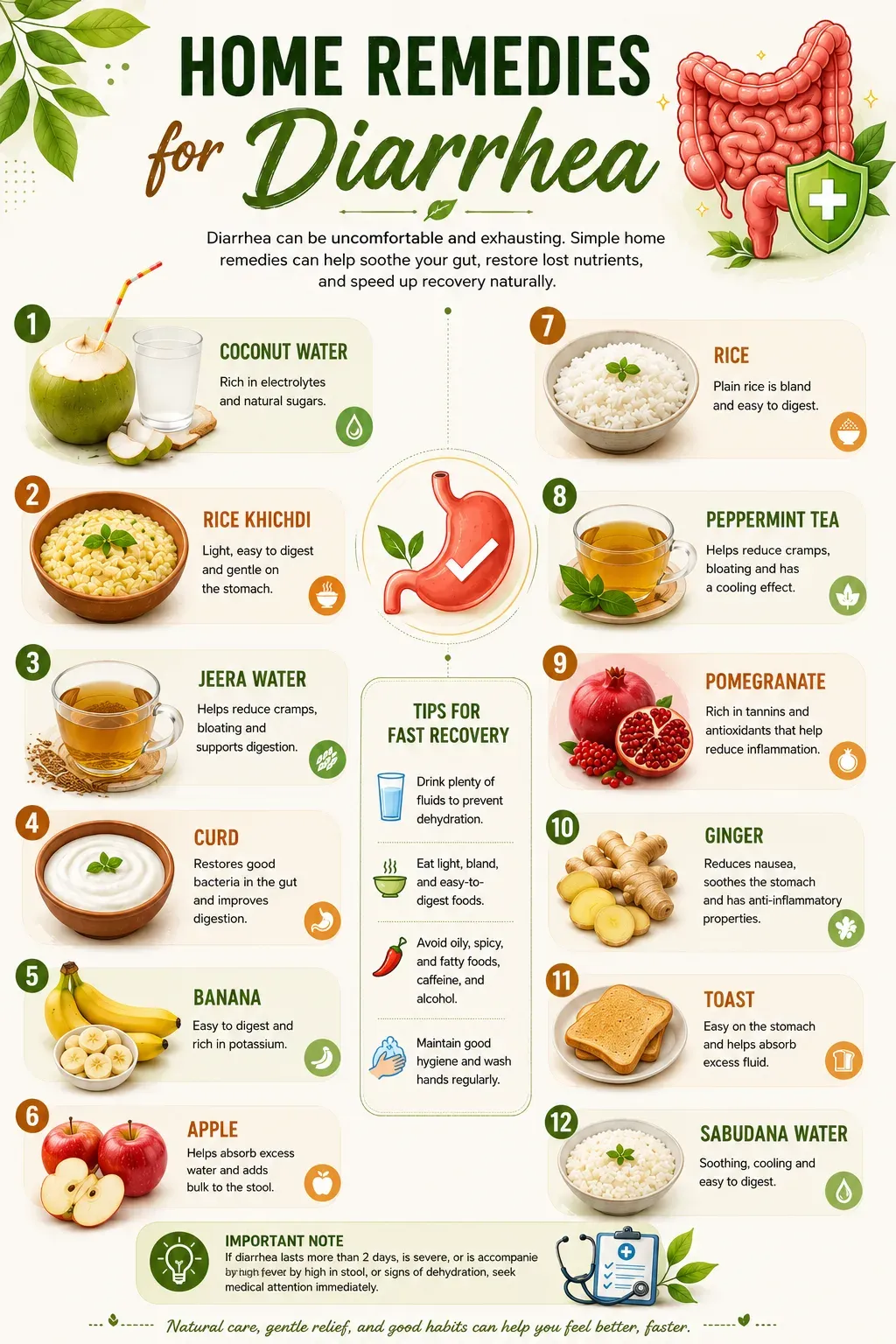
Do not force food while nausea is severe, but do not fast for long periods either. Once you can tolerate food, choose small portions of simple, familiar meals. Common options include plain rice, soft khichdi, toast, banana, boiled potato, crackers, or a simple soup.
Your appetite and tolerance may vary. This guide on what to eat during loose motion can help you plan gentle meals as symptoms begin to settle.
- Eat little and often: Smaller meals may feel easier than a large plate of food.
- Keep food plain: Reduce chilli, heavy masalas, and fried food until your stomach is comfortable again.
- Choose soft carbohydrates: Rice, toast, potatoes, and porridge may be easier to tolerate.
- Use curd carefully: Plain curd may suit some people, but skip it if dairy worsens your gas, cramps, or stools.
- Return to regular meals gradually: Add normal foods back as hydration and appetite improve.
Home Remedies for Diarrhea
For mild diarrhea, the safest home remedies focus on replacing lost fluids and electrolytes, choosing gentle foods when you can eat, resting, and avoiding things that can irritate the gut. Use these measures alongside prepared ORS, not instead of it.
- Prioritise ORS: Take small, frequent sips of a prepared oral rehydration solution to replace fluids and electrolytes.
- Choose simple foods: When you feel able to eat, start with small portions of rice, toast, banana, potato, khichdi, or clear soup.
- Keep meals light: Eat little and often rather than having a large meal while your stomach is unsettled.
- Rest and monitor symptoms: Give your body time to recover and watch for dehydration, fever, blood in stool, severe pain, or repeated vomiting.
- Avoid common irritants: Skip alcohol, very sugary drinks, greasy meals, and foods that clearly worsen your symptoms until you feel better.
Warm fluids for nausea or cramping
Warm water or a mild caffeine-free drink can feel soothing when your stomach is unsettled. Ginger tea may help some adults with nausea, but stop it if it worsens heartburn or discomfort.
Rest and light activity
Rest helps when you feel tired or dizzy. A short, gentle walk may be fine when you are well-hydrated and feel steady, but avoid exercise if you are weak, feverish, or dehydrated.
Pay attention to dairy tolerance
Some people temporarily find dairy harder to tolerate after an intestinal infection. If milk, curd, or other dairy consistently triggers bloating or loose stools, it may be worth understanding lactose intolerance and discussing persistent symptoms with a clinician.
Do not self-start antibiotics
Antibiotics do not treat viral diarrhea and are not needed for most mild episodes. A doctor may prescribe them in specific situations, such as certain bacterial infections, but self-treatment can cause side effects and make it harder to identify the real cause.
Foods and Drinks to Avoid While Symptoms Are Active
Temporary changes can reduce irritation and make it easier to maintain hydration. Avoiding a food does not mean it is permanently off limits. It simply gives your gut time to settle.
- Alcohol and excessive caffeine, which can worsen dehydration or urgency.
- Very sugary drinks, including many packaged juices and soft drinks.
- Greasy, fried, or very spicy meals that feel difficult to digest.
- Large amounts of milk or other dairy when they clearly worsen symptoms.
- Artificial sweeteners such as sorbitol or mannitol if they trigger loose stools.
Diarrhea After Antibiotics, Travel, or a Food Trigger
The trigger can change what you need next. If diarrhea begins while you are taking antibiotics, contact the prescribing clinician, especially if symptoms are severe or include fever, pain, or blood. Do not stop a prescribed medicine without guidance unless you have been told to do so.
After recent travel, contaminated food, or unsafe water exposure, the chance of an infection may be higher. Persistent symptoms, fever, blood in stool, or a delayed onset after travel may need testing rather than repeated home treatment. Recurrent bowel changes can also be linked with broader digestive problems that deserve an individual assessment.
When to See a Doctor
Seek urgent medical care for blood or black stool, severe or worsening abdominal pain, fainting, confusion, inability to keep fluids down, or clear signs of dehydration. Contact a doctor promptly for high fever, repeated vomiting, frequent loose stools, or diarrhea that does not improve within two days.
Ask for earlier advice for babies and young children, older adults, pregnant people, anyone with a weakened immune system, and people with kidney disease, heart disease, diabetes, or other long-term medical conditions.
Key Takeaways
Diarrhea can leave you drained fast. Learn the safest home steps for hydration, simple foods, symptom relief, and warning signs that need medical care.
Your gut is unique your healing should be too.

FAQs
Oral rehydration solution is the most important home measure because diarrhea can quickly cause fluid and electrolyte loss. Rest, small amounts of plain food when tolerated, and avoiding irritating foods may also help.
Use a prepared oral rehydration solution as directed, with small frequent sips. Water and clear soups can add to your fluid intake, but ORS is better for replacing electrolytes when dehydration is a concern.
Plain curd may suit some people once they can tolerate food, but dairy can worsen symptoms in others. Avoid it if it increases gas, cramps, or loose stools.
Do not self-treat with anti-diarrheal medicines if you have fever, blood in stool, severe pain, or possible infection. Children should only receive these medicines on clinical advice. A clinician or pharmacist can advise adults on suitable options.
Diarrhea needs urgent care when it causes dehydration, severe pain, repeated vomiting, high fever, blood or black stool, fainting, confusion, or worsening symptoms. Seek earlier medical advice for babies, older adults, pregnancy, and people with chronic medical conditions.
Disclaimer
The content provided by Mool Health is for educational and informational purposes only and should not be considered a substitute for professional medical advice, diagnosis, or treatment.