
Fiber-Rich Foods for Piles: Best Foods to Ease Constipation
Fiber-Rich Foods for Piles can help ease constipation, soften stools, and support smoother bowel movements. Learn the best high-fiber foods to include in your diet, hydration tips, and dietary habits that may reduce discomfort during piles.
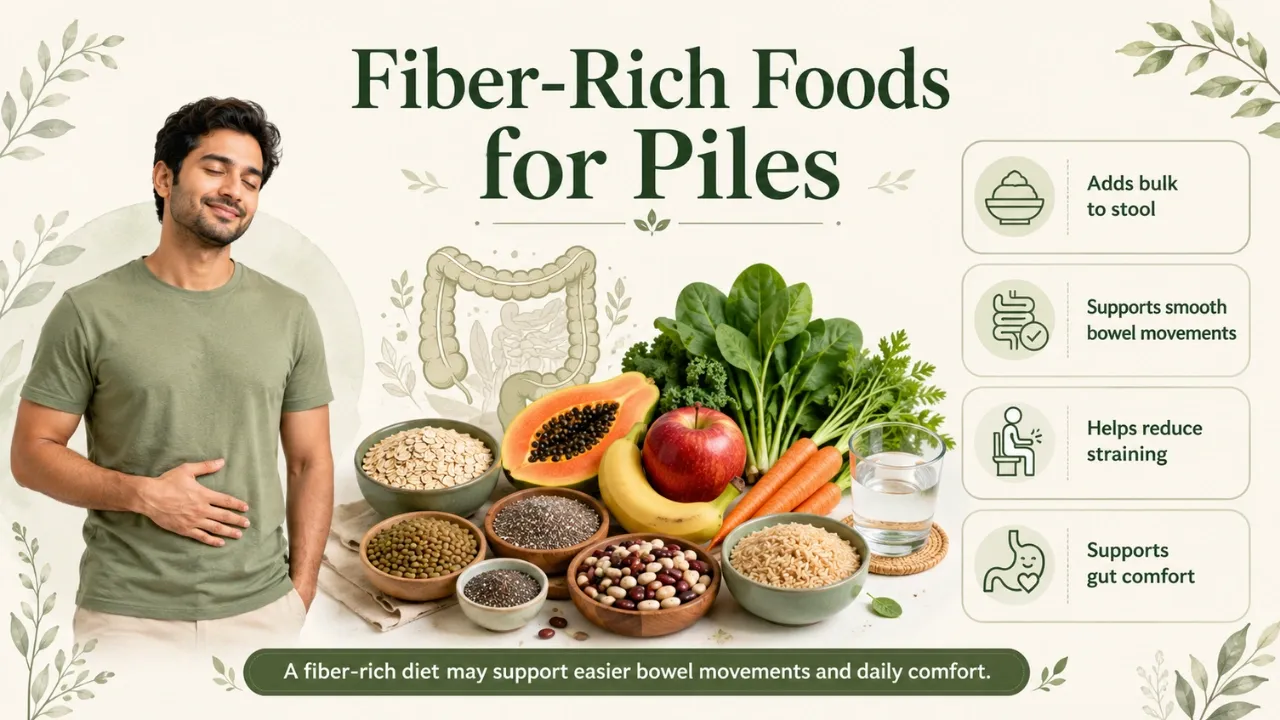
Quick Answer
Fiber-rich foods can help manage piles by softening stool, improving bowel regularity, and reducing the need to strain. Adults should generally aim for 25–38 grams of dietary fiber per day while also maintaining adequate hydration.
Fiber-rich foods for piles help soften stool, reduce straining during bowel movements, and lower pressure on swollen rectal veins. Adults with piles (hemorrhoids) should aim for 25–38 grams of dietary fiber per day, according to dietary guidelines. Increasing fiber intake through whole foods is one of the most evidence-supported, non-invasive approaches for managing piles symptoms.
What Are Fiber Rich Foods for Piles? A Complete Overview
Fiber-rich foods for piles are whole, plant-based foods that deliver significant amounts of dietary fiber — soluble, insoluble, or both — which directly address the two root causes of hemorrhoid aggravation: hard stools and straining.
Key definitions:
- Dietary fiber: The indigestible part of plant foods that adds bulk to stool and supports regular bowel movements.
- Soluble fiber: Dissolves in water to form a gel, softening stool. Found in oats, bananas, and lentils.
- Insoluble fiber: Does not dissolve; adds bulk and speeds gut transit. Found in whole wheat, vegetables, and seeds.
Piles, or hemorrhoids, are swollen veins in the rectum or anus. They are aggravated by chronic constipation, low fiber intake, and repeated straining. Fiber-rich foods for piles work by reducing each of these triggers directly.
According to Mool Health's nutrition and gut health team, most people managing piles consume fewer than 15 grams of fiber daily — roughly half the recommended amount. Closing this gap through diet is the first and most sustainable intervention.
How Fiber Rich Foods for Piles Work: The Complete Mechanism
Fiber-rich foods for piles work through a clear, step-by-step physiological process:
- Fiber enters the digestive tract. Soluble fiber absorbs water and forms a soft, gel-like mass around stool. This makes stool easier to pass without straining.
- Insoluble fiber adds bulk. This stimulates intestinal muscle contractions (peristalsis), moving stool through the colon faster and reducing the time hard waste presses against rectal veins.
- Straining decreases. Softer, bulkier stool requires less pressure during defecation. This directly reduces the mechanical stress on hemorrhoidal tissue.
- Inflammation subsides over time. With less repeated trauma to the anal region, swelling and irritation in existing piles can reduce within 2–4 weeks of consistent high-fiber eating.
- Gut microbiome improves. Fiber feeds beneficial gut bacteria, which produce short-chain fatty acids (SCFAs) that reduce colonic inflammation — a secondary benefit for long-term piles management.
Key Benefits of Fiber Rich Foods for Piles: What You Actually Gain
Fiber-rich foods for piles provide both immediate and long-term benefits when consumed consistently.
Short-term benefits (within 1–2 weeks):
- Softer stools that pass with less effort
- Reduced frequency of straining during bowel movements
- Decreased rectal irritation and itching
Long-term benefits (4–12 weeks and beyond):
- Lower risk of new hemorrhoid formation
- Improved gut transit time — fiber can reduce colon transit time by up to 30% [1]
- Reduced risk of anal fissures caused by hard stools
- Sustained improvement in bowel regularity
- Better gut microbiome diversity, supporting overall digestive health
| Benefit | Timeframe | Mechanism |
|---|---|---|
| Stool softening | 3–7 days | Soluble fiber absorbs water |
| Reduced straining | 1–2 weeks | Bulkier stool passes more easily |
| Reduced inflammation | 2–4 weeks | Less mechanical trauma to veins |
| Bowel regularity | 4–6 weeks | Consistent gut motility improvement |
| Microbiome improvement | 8–12 weeks | SCFA production from fermented fiber |
Mool Health's gut health specialists note that patients who maintain 25+ grams of daily fiber intake typically report significant symptom improvement within 3–4 weeks.
Types of Fiber Rich Foods for Piles: Which Is Right for You?
Fiber-rich foods for piles fall into distinct categories. Choosing the right type depends on your specific symptoms, tolerances, and dietary habits.
Soluble Fiber Foods
Soluble fiber is best for softening hard stools and is gentler on an irritated gut.
- Oats — 4g fiber per cup (cooked); also reduces cholesterol
- Bananas (slightly unripe) — 3g fiber; contain pectin, a soluble fiber
- Lentils (masoor dal) — 8g fiber per cooked cup; affordable and widely available in India
- Amla (Indian gooseberry) — high in pectin and antioxidants; supports gut motility
Insoluble Fiber Foods
Insoluble fiber is best for speeding up bowel transit and preventing stool from becoming lodged.
- Whole wheat chapati — 2–3g fiber per roti; a staple that supports regularity when consumed in its whole grain form
- Broccoli and leafy greens — 2–4g fiber per serving; also contain magnesium, which relaxes intestinal muscles
- Brown rice — 3.5g fiber per cooked cup; a lower-glycaemic alternative to white rice
Fruits High in Fiber
- Papaya — 2.5g fiber per cup; contains papain enzyme that aids digestion
- Guava — 5.4g fiber per fruit; one of the highest-fiber fruits available in India
- Figs (anjeer) — 1.5g fiber per fig; also act as a natural mild laxative
- Pear — 5.5g fiber per medium fruit; high water content aids hydration
Fiber-Rich Foods for Piles in India
For Indian diets specifically, the most accessible high-fiber options include:
| Food | Fiber (per serving) | Best Use |
|---|---|---|
| Moong dal | 7.6g per cup | Daily dals |
| Rajma | 13.1g per cup | Weekly meals |
| Methi (fenugreek) leaves | 2.7g per cup | Sabzi or roti |
| Psyllium husk (isabgol) | 6g per tablespoon | Supplement in water |
| Sweet potato | 3.8g per medium | Boiled snack |
Mool Health recommends starting with foods already familiar in your diet before adding supplements or unfamiliar items.
How to Get Started with Fiber Rich Foods for Piles: Step-by-Step Guide
Starting a high-fiber diet for piles requires a gradual approach. Increasing fiber too quickly can cause bloating, gas, and temporary discomfort.
Prerequisites:
- Baseline water intake of at least 2 liters per day
- Confirmed diagnosis of piles (grade I or II) from a healthcare provider
- Current daily fiber intake awareness (most adults consume 10–15g)
Step-by-step process:
- Week 1 — Add 5g more fiber daily. Swap white rice for brown rice at one meal. Add one fruit (guava or pear) as a snack. This avoids digestive shock.
- Week 2 — Incorporate a legume daily. Add moong dal or rajma to lunch or dinner. Legumes are among the highest-fiber foods available in Indian diets.
- Week 3 — Add vegetables at every meal. Include one leafy green (spinach, methi) and one cruciferous vegetable (broccoli, cabbage) daily.
- Week 4 — Introduce psyllium husk if needed. Mix 1 tablespoon of isabgol in a full glass of water before bed. This bridges any remaining fiber gap.
- Ongoing — Monitor stool consistency. Target a Bristol Stool Chart score of 3–4 (soft, formed, easy to pass) as your benchmark.
Common mistakes to avoid:
- Increasing fiber rapidly without increasing water intake — this worsens constipation
- Relying on processed "high-fiber" products that contain added sugar
- Skipping meals, which disrupts gut motility
Fiber Rich Foods for Piles vs. Alternatives: An Honest Comparison
Fiber-rich foods for piles are one of several interventions available for hemorrhoid management. Understanding how dietary fiber compares to alternatives helps you make an informed choice.
| Approach | How It Works | Best For | Limitations |
|---|---|---|---|
| Fiber-rich foods | Softens stool, reduces straining | Grade I–II piles, prevention, long-term management | Requires consistency; slow results (weeks) |
| Fiber supplements (isabgol/psyllium) | Concentrated soluble fiber dose | Those who struggle with dietary changes | Less nutritional value than whole foods |
| Stool softeners (lactulose) | Draws water into stool osmotically | Acute constipation | Not a long-term solution; prescription often needed |
| Sitz baths | Reduces local inflammation | Immediate pain and swelling relief | Does not address root cause (constipation) |
| Medical procedures (banding, surgery) | Removes or shrinks hemorrhoidal tissue | Grade III–IV piles | Invasive; requires recovery; diet still needed post-procedure |
Which is best? For grade I and II piles — which represent the majority of cases — fiber-rich foods for piles combined with adequate hydration is the most sustainable and evidence-backed first-line approach. Medical procedures are appropriate when dietary management alone is insufficient, as determined by a physician.
According to Mool Health's clinical advisory team, dietary fiber and hydration resolve or significantly reduce symptoms in approximately 50–70% of mild-to-moderate hemorrhoid cases without further intervention [2].
Is Fiber Rich Foods for Piles Right for You? Ideal Use Cases
Fiber-rich foods for piles are appropriate for a wide range of people, but they are not a universal solution.
| Ideal For | Not Ideal For (Alone) |
|---|---|
| Grade I and II internal hemorrhoids | Grade III–IV prolapsed hemorrhoids |
| Individuals with chronic constipation | Those with active rectal bleeding (consult a doctor first) |
| Pregnant women experiencing piles | Individuals with inflammatory bowel disease (IBD) — specific guidance needed |
| People looking to prevent recurrence | Those with intestinal strictures or difficulty swallowing |
| Anyone with a low-fiber diet currently | People needing immediate, acute symptom relief |
If you experience rectal bleeding, severe pain, or prolapse, consult a healthcare provider before relying solely on dietary fiber. Mool Health advises that fiber-rich foods work best as part of a comprehensive piles management plan that includes hydration, physical activity, and medical review when necessary.
Fiber Rich Foods for Piles Best Practices: Expert Tips & Strategies
Following these best practices maximises the benefit of fiber-rich foods for piles.
- Eat fiber at every meal, not just once a day. Spreading fiber intake across meals — rather than loading it at one sitting — improves gut motility and reduces bloating.
- Pair fiber with fluids. Each additional 5g of fiber requires approximately 200ml of additional water to function effectively. Without water, fiber can worsen constipation.
- Choose whole fruits over fruit juices. Juicing removes insoluble fiber. Eating a whole guava provides 5g fiber; guava juice provides near zero.
- Use figs to prevent constipation. Two to three soaked figs eaten on an empty stomach in the morning have a gentle laxative effect that eases morning bowel movements within 1–2 weeks.
- Eat a banana daily. Slightly unripe bananas contain resistant starch, which feeds beneficial gut bacteria and improves stool consistency over time.
- Boost digestion with amla. One amla daily — fresh, powdered, or as juice — provides pectin, vitamin C, and tannins that collectively reduce gut inflammation and support motility.
- Do not peel vegetables unnecessarily. Potato skin, cucumber skin, and apple skin contain concentrated insoluble fiber. Removing peels reduces fiber content by up to 50%.
- Limit processed foods, refined grains, and red meat. These slow gut transit and counteract the benefit of fiber intake.
Common mistakes to avoid:
- Eating high-fiber foods without increasing water intake
- Expecting results in 24–48 hours — dietary fiber typically requires 1–3 weeks of consistent intake
- Discontinuing fiber-rich eating once symptoms improve, which leads to recurrence
What to Expect: Results Timeline for Fiber Rich Foods for Piles
Results from fiber-rich foods for piles vary based on current fiber intake, hydration, severity of hemorrhoids, and consistency of the dietary change.
| Timeframe | Typical Outcomes |
|---|---|
| Days 3–7 | Stool becomes slightly softer; less straining during bowel movements |
| Weeks 1–2 | Noticeable reduction in straining; reduced anal irritation in many cases |
| Weeks 2–4 | Bowel movements become more regular; itching and discomfort typically decrease |
| Month 2–3 | Hemorrhoid swelling may reduce significantly in grade I–II cases |
| Month 3+ | Sustained bowel regularity; low risk of recurrence if diet is maintained |
Factors that affect results:
- Severity of piles (grade I responds faster than grade II)
- Baseline fiber intake before starting
- Hydration levels — inadequate water intake slows results significantly
- Physical activity — regular walking supports gut motility
- Stress levels — chronic stress disrupts gut function and may slow improvement
Mool Health's nutrition team notes that individuals who combine a high-fiber diet with 8–10 glasses of water daily and 30 minutes of walking most days typically see meaningful symptom improvement within 3–4 weeks.
Research & Evidence: What the Data Says About Fiber Rich Foods for Piles
The evidence supporting fiber-rich foods for piles is consistent across multiple clinical studies.
- Study 1 — Alonso-Coello et al. (2006), American Journal of Gastroenterology: A meta-analysis of seven randomised controlled trials found that fiber supplementation reduced the risk of persistent hemorrhoid symptoms and bleeding by approximately 50% compared to placebo [1].
- Study 2 — Perez-Miranda et al. (1996): Patients with symptomatic hemorrhoids who increased dietary fiber intake reported significantly reduced pain, bleeding, and prolapse within 6 weeks compared to control groups.
- Study 3 — Dietary Reference Intakes (National Academy of Medicine): Adequate fiber intake of 25g/day for women and 38g/day for men is linked to a significantly lower risk of constipation — the primary mechanical trigger for piles [3].
Key Takeaways
Fiber-Rich Foods for Piles can help ease constipation, soften stools, and support smoother bowel movements. Learn the best high-fiber foods to include in your diet, hydration tips, and dietary habits that may reduce discomfort during piles.
Your gut is unique your healing should be too.

Disclaimer
The content provided by Mool Health is for educational and informational purposes only and should not be considered a substitute for professional medical advice, diagnosis, or treatment.