Iron Deficiency Symptoms and Causes: Key Signs to Know
Iron deficiency occurs when the body lacks sufficient stored iron, causing symptoms such as fatigue, and brittle nails. Learn its causes, symptoms, risk factors, diagnosis, and connection with gut health.
Quick Answer
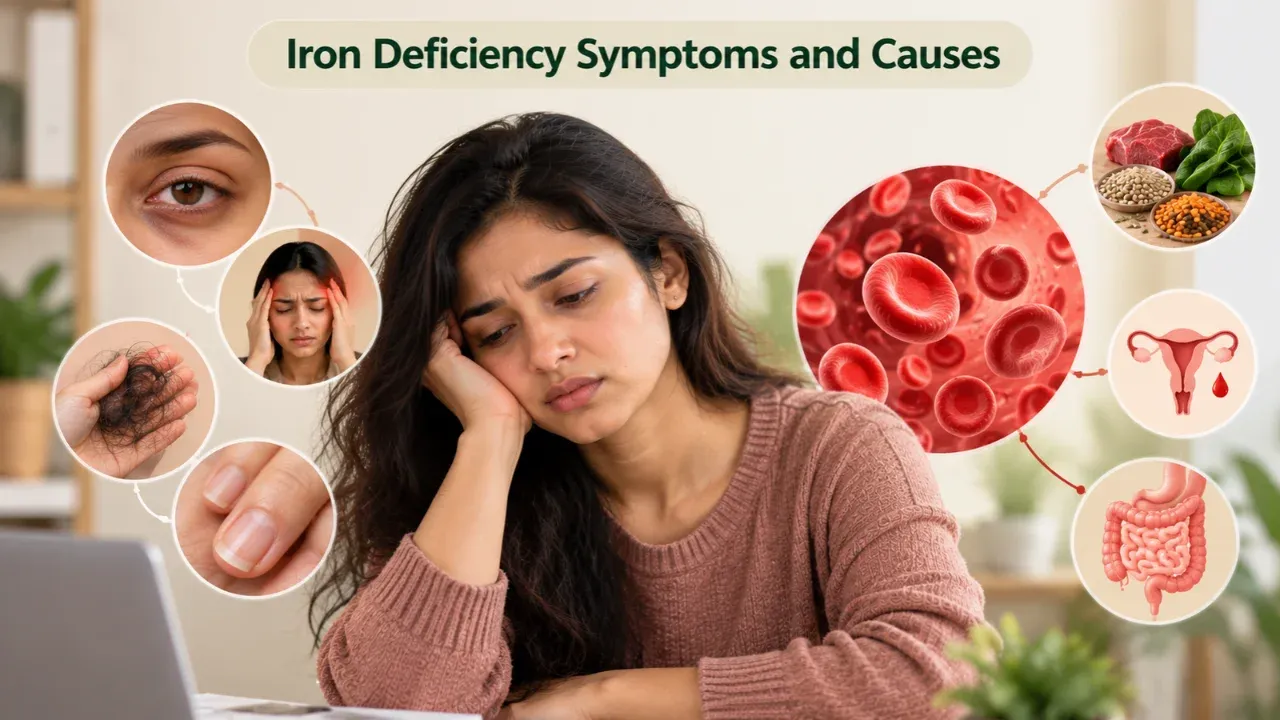
Iron deficiency occurs when the body does not have enough stored iron to meet its needs. Common symptoms include tiredness, weakness, dizziness, headaches, pale skin, shortness of breath and heart palpitations. Some people may also experience brittle nails, a sore tongue, restless legs or unusual cravings for ice and other non-food items. The main causes of iron deficiency include blood loss, insufficient dietary iron, poor iron absorption and increased iron requirements during pregnancy or periods of growth. Iron deficiency can occur before iron-deficiency anaemia develops.
What Is Iron Deficiency?
Iron deficiency is a condition in which the body's iron stores become lower than required for normal functioning. Iron is an essential mineral that helps produce haemoglobin, a protein in red blood cells responsible for carrying oxygen from the lungs to different parts of the body.
The body also needs iron for muscle function, energy metabolism, physical growth and neurological development.
When iron intake or absorption is insufficient, or when the body loses more iron than it can replace, its stored iron gradually decreases. If the deficiency continues, the body may not produce enough haemoglobin, eventually leading to iron-deficiency anaemia.
Iron deficiency and iron-deficiency anaemia are related but not identical. A person can have low iron stores while their haemoglobin levels are still within the normal range.
What Are the Symptoms of Iron Deficiency?
The symptoms of iron deficiency may develop gradually. Some people experience mild symptoms, while others may not notice any changes until the deficiency becomes more severe or progresses to anaemia.
Common symptoms of iron deficiency include:
1. Persistent Tiredness and Fatigue
Unusual tiredness is one of the most common symptoms associated with iron deficiency. Iron is needed to produce haemoglobin, which carries oxygen throughout the body.
When iron levels become too low, oxygen delivery may be affected, particularly when iron deficiency progresses to anaemia. This can contribute to fatigue, low energy and difficulty carrying out everyday activities.
2. Weakness and Reduced Physical Stamina
People with iron deficiency may experience general weakness and reduced exercise tolerance. Everyday activities such as walking, climbing stairs or exercising may feel more tiring than usual.
This can become more noticeable when iron deficiency leads to low haemoglobin levels.
3. Pale Skin
Pale skin can be a sign of iron-deficiency anaemia. It may be noticeable on the face, inner eyelids, gums or nail beds.
However, skin colour varies naturally, and paleness alone cannot confirm iron deficiency.
4. Shortness of Breath
Iron-deficiency anaemia can reduce the blood's ability to carry oxygen efficiently. As a result, a person may experience shortness of breath, particularly during physical activity.
Breathlessness can have several causes, so it should not automatically be attributed to low iron.
5. Dizziness and Headaches
Some people with iron-deficiency anaemia experience headaches, dizziness or lightheadedness. These symptoms may become more noticeable during physical activity or when standing up.
Persistent or severe dizziness and headaches need medical assessment because they can occur for many reasons.
6. Heart Palpitations
Heart palpitations refer to the sensation of a racing, pounding or irregular heartbeat. In iron-deficiency anaemia, the heart may beat faster to compensate for reduced oxygen delivery.
Frequent palpitations should be evaluated by a healthcare professional, particularly when accompanied by breathlessness, chest discomfort or fainting.
7. Brittle or Spoon-Shaped Nails
Iron deficiency may be associated with changes in nail health. Nails can become brittle, weak or more likely to break.
In more advanced cases, a condition called koilonychia may develop. It causes nails to become thin and spoon-shaped, with an indentation in the centre.
8. Sore or Swollen Tongue
Iron-deficiency anaemia can sometimes cause glossitis, a condition in which the tongue becomes sore, smooth or swollen.
Some people may also experience cracks or painful sores at the corners of their mouth.
9. Unusual Cravings for Non-Food Items
Pica is a condition involving persistent cravings for substances that are not food. People with iron deficiency may develop cravings for ice, soil, clay, paper or other non-food materials.
A specific craving for ice is known as pagophagia. These cravings may be associated with iron deficiency, although they do not confirm it on their own.
10. Restless Legs
Restless legs syndrome is associated with an uncomfortable urge to move the legs, particularly during periods of rest or at night.
Iron deficiency has been linked to restless legs syndrome, although not everyone with the condition has low iron levels.
11. Difficulty Concentrating
Iron plays a role in normal brain function and neurological development. Low iron levels, particularly when accompanied by anaemia, may be associated with difficulty concentrating, reduced attention and mental fatigue.
In children, prolonged iron-deficiency anaemia can also affect cognitive and developmental outcomes.
What Causes Iron Deficiency?
Iron deficiency develops when the amount of iron entering the body is insufficient to replace what is lost or used. The main causes can be grouped into four categories: blood loss, inadequate iron intake, poor iron absorption and increased iron requirements.
1. Blood Loss
Blood loss is an important cause of iron deficiency because the body loses iron along with red blood cells. If blood loss continues over time, the body's iron stores may become depleted.
Common sources of blood loss include:
- Heavy Menstrual Bleeding: Heavy or prolonged menstrual periods can cause significant iron loss, particularly when the body cannot replace the lost iron through food and absorption.
- Gastrointestinal Bleeding: Bleeding from the stomach or intestines may occur due to ulcers, inflammatory bowel disease, haemorrhoids or other gastrointestinal conditions. Some stomach ulcers can be associated with H. pylori infection.
- Frequent Blood Donation: Donating blood regularly can reduce iron stores, especially when there is not enough time between donations for the body to replenish them.
- Injury or Surgery: Significant blood loss following an injury or surgical procedure can lower the body's iron levels.
- Intestinal Parasites: Certain intestinal parasites, including hookworms, can contribute to chronic intestinal blood loss.
Unexplained or persistent blood loss should always be medically evaluated to identify its underlying cause.
2. Insufficient Iron in the Diet
The body obtains iron primarily through food. If the diet does not provide enough iron over time, the body's stored iron may gradually decrease.
Iron is present in two main dietary forms:
- Heme Iron: Found in animal-based foods such as meat, poultry and seafood. It is generally absorbed more efficiently.
- Non-Heme Iron: Found in plant-based foods such as lentils, beans, spinach, nuts, seeds and iron-fortified cereals. Its absorption can vary depending on the overall meal composition.
People who follow vegetarian or vegan diets may need to pay particular attention to their iron intake because plant-based iron is generally less readily absorbed than heme iron. However, following a vegetarian diet does not automatically mean a person will develop iron deficiency.
Also Read: Sattu Nutrition
3. Poor Iron Absorption
Even when a person consumes enough iron, certain digestive conditions can make it difficult for the body to absorb it properly.
Iron is primarily absorbed in the upper part of the small intestine. Conditions that affect the intestinal lining or digestive tract may interfere with this process. The small intestine's wider role in nutrient absorption is explained in Mool Health's guide to digestion.
Examples include:
- Coeliac Disease: This autoimmune condition damages the small intestine when a person consumes gluten. The resulting intestinal damage can interfere with nutrient absorption, including iron.
- Crohn's Disease: This inflammatory bowel disease can affect different parts of the digestive tract and may contribute to reduced iron absorption, intestinal bleeding or both.
- Ulcerative Colitis: Inflammation and bleeding in the colon can contribute to iron deficiency.
- Gastrointestinal Surgery: Procedures such as gastric bypass or removal of parts of the stomach or intestine can affect iron absorption.
- Other Digestive Conditions: Certain gastrointestinal disorders may cause chronic inflammation, bleeding or changes in the areas responsible for nutrient absorption.
Poor absorption can therefore contribute to iron deficiency even when dietary iron intake appears adequate. Conditions such as Crohn's disease and ulcerative colitis are forms of inflammatory bowel disease that may also contribute to anaemia through blood loss or inflammation.
Also Read: Digestive Problems
4. Increased Iron Requirements
The body needs different amounts of iron at different stages of life. During certain periods, iron requirements increase, and a person's usual intake may not be sufficient to meet those needs.
Common situations include:
- Pregnancy: Iron requirements increase during pregnancy to support the expansion of maternal blood volume and the growth and development of the baby.
- Infancy and Childhood: Growing children need iron to support rapid physical and brain development.
- Adolescence: Growth spurts increase iron requirements. Menstruating adolescents may have additional iron needs because of menstrual blood loss.
- Breastfeeding and Postpartum Period: Iron requirements and iron stores may be affected by pregnancy-related demands and blood loss during childbirth.
Who Is More Likely to Develop Iron Deficiency?
Although iron deficiency can affect anyone, certain groups have a higher likelihood of developing it.
- Women With Heavy Periods: Regular menstrual blood loss can gradually reduce iron stores.
- Pregnant Women: Increased iron requirements during pregnancy raise the risk of deficiency.
- Infants, Children and Adolescents: Rapid growth increases the body's need for iron.
- People Following Restrictive Diets: Diets that do not include enough iron-rich foods may increase the risk.
- People With Digestive Disorders: Conditions that affect nutrient absorption or cause gastrointestinal bleeding can contribute to low iron.
- Frequent Blood Donors: Repeated blood donation can reduce iron stores.
- Older Adults: Dietary limitations, chronic conditions and gastrointestinal blood loss may increase the risk.
Iron Deficiency and Gut Health: What Is the Connection?
The digestive system plays an important role in maintaining the body's iron levels because dietary iron is absorbed mainly in the small intestine.
The health of the gastrointestinal tract can therefore influence how much iron the body absorbs from food.
Conditions such as coeliac disease and Crohn's disease can affect the intestinal lining and interfere with nutrient absorption. Inflammatory bowel diseases may also cause gastrointestinal bleeding, which can increase iron loss.
The gut microbiome, which refers to the community of microorganisms living in the digestive tract, is also being studied for its role in nutrient metabolism and intestinal health. However, the relationship between the gut microbiome and iron deficiency is complex. There is not enough evidence to identify gut microbiome imbalance as a direct cause of iron deficiency in general.
Maintaining digestive health is important for overall nutrient absorption, but persistent low iron levels require medical evaluation to identify the specific cause.
Also Read: Gut-Healthy Foods
How Is Iron Deficiency Diagnosed?
Iron deficiency cannot be confirmed through symptoms alone because fatigue, dizziness, headaches and weakness can occur in many other conditions.
A healthcare professional may recommend blood tests based on a person's symptoms, medical history and risk factors.
Common tests include:
- Complete Blood Count (CBC): Measures haemoglobin, red blood cells and other blood components. It can help identify anaemia.
- Serum Ferritin: Measures the body's stored iron and is commonly used to assess iron deficiency.
- Serum Iron: Measures the amount of iron circulating in the blood.
- Total Iron-Binding Capacity (TIBC): Helps assess the blood's capacity to transport iron.
- Transferrin Saturation: Measures the proportion of transferrin carrying iron.
Depending on the findings, further investigations may be needed to identify blood loss, digestive conditions or other underlying causes.
A normal haemoglobin result does not always rule out early iron deficiency. Ferritin and other iron measurements may help identify depleted iron stores before anaemia develops.
When Should You See a Doctor?
Consult a healthcare professional if you experience persistent fatigue, unexplained weakness, dizziness, breathlessness, frequent headaches or other symptoms associated with low iron.
Medical assessment is particularly important if you have heavy menstrual bleeding, visible blood in your stool, black tarry stools, unexplained weight loss or persistent digestive symptoms.
Avoid starting iron supplements without appropriate medical advice. Excess iron can be harmful, and supplementation without identifying the underlying cause may delay the diagnosis of another condition.
Key Takeaways
- Iron deficiency occurs when the body's iron stores become too low to meet its needs.
- Iron is essential for haemoglobin production, oxygen transport, muscle function, energy metabolism and normal development.
- Iron deficiency can exist before iron-deficiency anaemia develops, so a normal haemoglobin result does not always rule it out.
- Common symptoms include fatigue, weakness, pale skin, shortness of breath, dizziness, headaches and heart palpitations.
- Other possible signs include brittle or spoon-shaped nails, a sore tongue, unusual cravings for non-food items, restless legs and difficulty concentrating.
- The four main causes of iron deficiency are blood loss, insufficient dietary iron, poor absorption and increased iron requirements.
- Heavy menstrual bleeding and gastrointestinal blood loss are important possible causes that may require medical investigation.
- Iron from animal-based foods is generally absorbed more efficiently than iron from plant-based foods, but a well-planned vegetarian diet can provide dietary iron.
- Digestive conditions such as coeliac disease and inflammatory bowel disease can contribute to iron deficiency through impaired absorption or blood loss.
- Pregnant women, growing children, people with heavy periods, frequent blood donors and individuals with certain digestive disorders may have a higher risk.
- Blood tests such as CBC, serum ferritin and other iron studies help evaluate iron deficiency and distinguish it from other conditions.
- Iron supplements should be used with appropriate medical guidance, and the underlying cause of persistent iron deficiency should be investigated.
Your gut is unique your healing should be too.

FAQs
Early iron deficiency may not cause noticeable symptoms. As it progresses, a person may experience tiredness, weakness, headaches, dizziness and reduced physical stamina. These symptoms are not specific to iron deficiency and need appropriate evaluation.
The common causes include inadequate dietary iron, blood loss, poor iron absorption and increased iron requirements. Heavy menstrual bleeding, pregnancy, gastrointestinal bleeding and digestive conditions such as coeliac disease can contribute to low iron levels.
Yes. Iron stores can become depleted before haemoglobin levels fall below the normal range. This is known as iron deficiency without anaemia.
Yes. Digestive conditions such as coeliac disease and Crohn's disease can interfere with iron absorption. Gastrointestinal bleeding and inflammation can also contribute to iron deficiency.
Iron deficiency may be associated with hair loss in some people. However, hair loss has several possible causes, including hormonal changes, nutritional deficiencies and other medical conditions. Low iron should be confirmed through appropriate testing.
A vegetarian diet does not automatically cause iron deficiency. However, plant-based foods contain non-heme iron, which is generally absorbed less efficiently than heme iron from animal-based foods. A poorly planned diet with insufficient iron sources may increase the risk of deficiency.
Iron deficiency means the body's iron stores are low. Iron-deficiency anaemia develops when the deficiency becomes severe enough to reduce haemoglobin production and affect the blood's ability to carry oxygen. Iron deficiency can exist before anaemia develops.
Disclaimer
The content provided by Mool Health is for educational and informational purposes only and should not be considered a substitute for professional medical advice, diagnosis, or treatment.