
H. Pylori Infection: Symptoms, Tests, Treatment and Prevention
A clear guide to H. pylori infection symptoms, causes, tests, treatment options, severe red flags, prevention and stomach health support.
Quick Answer
You can recognise a Helicobacter pylori (H. pylori) infection by symptoms such as gnawing abdominal pain, bloating, nausea, and unexplained weight loss. Diagnosis is confirmed by your doctor using non-invasive tests such as a urea breath test or a stool antigen test, or, in some cases, endoscopy (by a gastroenterologist) with biopsy.
The recommended treatment options are:
- •Triple Therapy: Typically includes a proton pump inhibitor (PPI) and two antibiotics, such as clarithromycin and amoxicillin.
- •Quadruple Therapy: Combines a PPI with bismuth subsalicylate and two antibiotics (typically metronidazole and tetracycline).
Both approaches are used to eliminate H. pylori and heal the stomach lining.
Medical Note
- It is crucial to complete the full 10 to 14 day course of medication, even if you feel better early. Stopping treatment too soon can cause the infection to return and increase the risk of antibiotic resistance.
- For accurate urea breath or stool antigen tests, you should stop PPIs for at least 2 weeks and antibiotics for 4 weeks before testing, as advised by your doctor. This helps prevent false negatives.
What Is H. Pylori Infection?
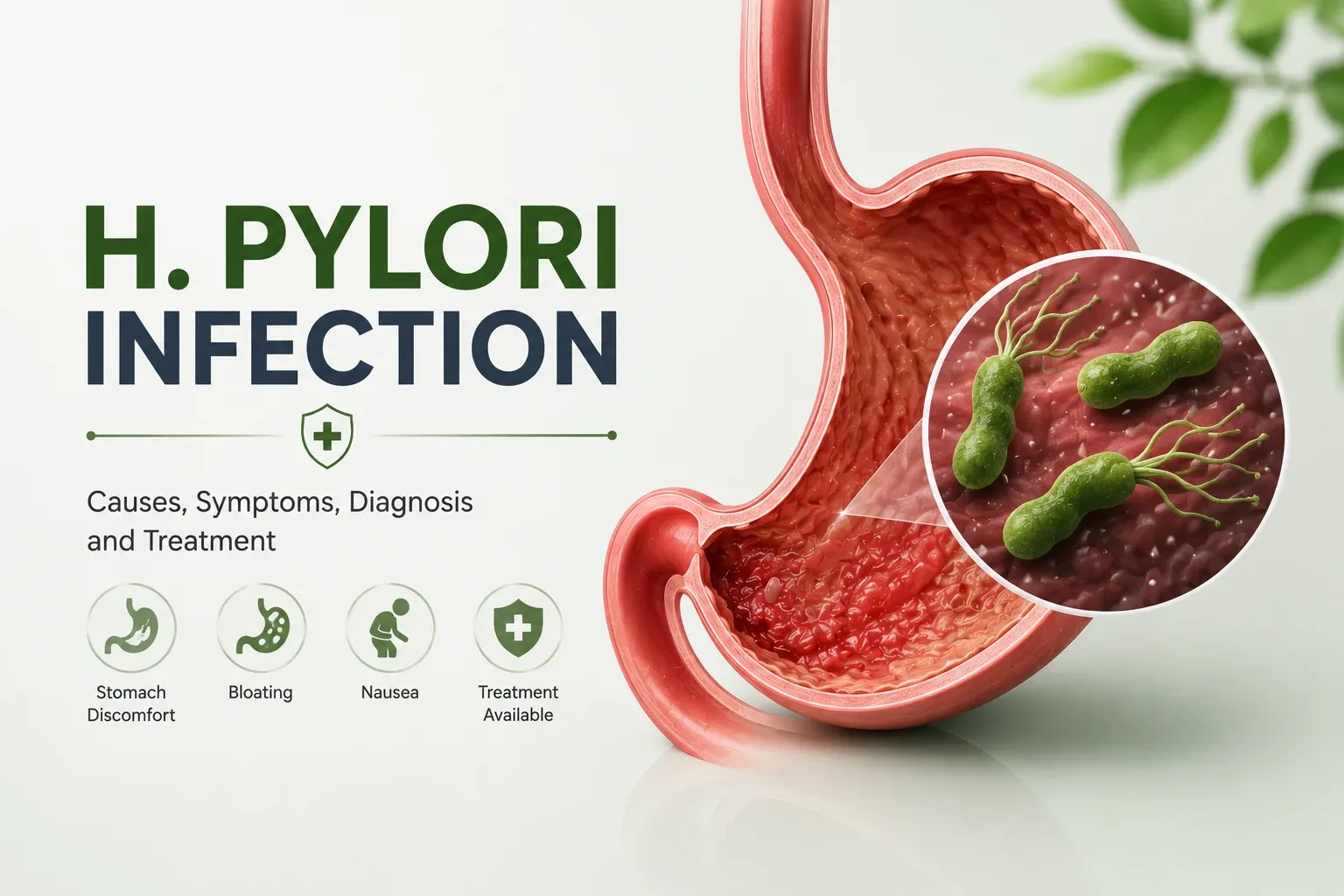
Helicobacter pylori (H. pylori) is a spiral-shaped bacterium that survives in the stomach by producing urease, an enzyme that neutralises stomach acid. It burrows into the protective mucus lining, causing inflammation that can lead to gastritis, peptic ulcers, and, in chronic cases, stomach cancer.
Note: The World Health Organization’s International Agency for Research on Cancer (IARC) classifies H. pylori as a Group 1 carcinogen. The National Institutes of Health also identifies it as the leading cause of chronic gastritis and peptic ulcers.
What Causes H. Pylori Infection?
H. pylori infection is caused by the bacterium Helicobacter pylori, which is specially adapted to survive in the stomach. Here’s how it works:
- •Neutralises stomach acid by producing urease, creating a safer environment for itself.
- •Burrows through the mucus lining using flagella to reach and attach to stomach cells.
- •Damages the protective layer by triggering inflammation, exposing stomach tissue to acid, and leading to irritation or ulcers.
How Do You Get H. Pylori Infection?
You usually get H. pylori infection through direct contact with bodily fluids or by consuming contaminated food and water. Common transmission routes include:
- •Person-to-person contact: The bacteria spread through saliva, such as kissing or sharing utensils, or close household contact.
- •Fecal-oral route: Poor hand hygiene after using the toilet can transfer bacteria from stool to food, water, or surfaces.
- •Contaminated food and water: Eating or drinking food or water contaminated with H. pylori can lead to infection.
- •Childhood exposure: Most infections occur in childhood, especially in crowded living conditions or areas with poor sanitation.
Why Does H. Pylori Infection Occur?
H. pylori infection occurs when the bacteria enter the body, usually in childhood, and settle in the stomach lining. Here’s how it takes hold:
- •Urea/Ammonia Defense: H. pylori produces the enzyme urease, which breaks down urea in the stomach, producing ammonia. This ammonia neutralises stomach acid right around the bacteria (creating a protective microenvironment) and is directly toxic to the stomach’s epithelial cells.
- •Flagella Navigation: H. pylori uses flagella (tail-like structures) to actively navigate through the thick, viscous mucus layer of the stomach to reach the protective epithelial layer.
- •Toxins: The primary virulence factors, CagA (cytotoxin-associated gene A) and VacA (vacuolating cytotoxin A), disrupt cell junctions, cause the stomach lining to vacuolate (form holes), and aggressively drive chronic inflammation (gastritis).
What Are the Signs of H. Pylori Infection?
Most people with H. pylori infection have no signs. When signs do occur, usually due to gastritis or peptic ulcers, they often include upper abdominal pain or burning, bloating, frequent burping, nausea, loss of appetite, and unexplained weight loss. See the table below for common signs of H. pylori infection:
| Signs | How It Presents |
|---|---|
| Abdominal pain | Feel a dull or burning ache in the upper abdomen, often worse when the stomach is empty |
| Indigestion and bloating | Notice early fullness after small meals or experience uncomfortable stomach swelling |
| Gastrointestinal distress | Experience persistent nausea, frequent burping, or occasional vomiting |
| Appetite and weight loss | Lose interest in food and see unintended weight loss |
| Fatigue from anaemia | Feel unusually tired or dizzy due to iron-deficiency anaemia caused by chronic low-level bleeding |
What Are the Severe Symptoms of H. Pylori Infection?
Recognise these severe symptoms of H. pylori infection, as they may signal serious complications and require urgent medical attention:
| Symptom | What to Look For | Why It's Critical |
|---|---|---|
| Internal bleeding (melena, haematemesis) | Bloody or coffee-ground vomit, black or tarry stools | The ulcer has eroded a blood vessel; risk of major blood loss |
| Perforation | Sudden, sharp abdominal pain | Ulcer has created a hole (perforation); surgical emergency |
| Severe gastritis or ulcers | Intense, persistent pain, pain at night, no relief | Suggests deep inflammation or an untreated ulcer |
| Systemic symptoms (anaemia) | Extreme fatigue, dizziness, pale skin | Indicates anaemia from ongoing blood loss |
| Unexplained weight loss/dysphagia | Losing weight, trouble swallowing (dysphagia) | Major warning signs that need urgent evaluation |
Warning: If you vomit blood or notice black, tarry stools, seek emergency medical care immediately. Do not self-medicate with antacids or proton pump inhibitors (PPIs), as this can mask critical warning signs.
How Can You Prevent H. Pylori Infection?
Prevent H. pylori infection by practising strict hygiene and safe food habits. To lower your risk of H. pylori infection, follow these medically accurate steps:
- •Wash your hands with soap and water after using the restroom and before handling food.
- •Drink boiled or bottled water if the safety of local tap water is uncertain, and wash all raw fruits and vegetables before eating.
- •Avoid sharing toothbrushes, cups, food, drinks, or eating utensils with others to prevent oral-to-oral transmission.
- •Test and treat all household members if someone is diagnosed with H. pylori to help prevent reinfection.
What Are the Treatment Options for H. Pylori Infection?
The main treatments for H. pylori infection combine antibiotics and acid-reducing medicines, usually for 10 to 14 days. See the table below for common options and key advice:
| Treatment Option | What It Involves |
|---|---|
| Bismuth quadruple therapy | Take a PPI (e.g., omeprazole), bismuth subsalicylate, metronidazole, and tetracycline for 14 days; now the preferred first choice. |
| Triple therapy | Take a PPI plus two antibiotics (usually clarithromycin and amoxicillin or metronidazole) for 10 to 14 days. |
| Alternative/rescue therapies | Use options like rifabutin-based or levofloxacin-based triple therapy if standard treatments fail. |
Note: Finish all prescribed medication, even if you feel better, to fully eradicate H. pylori and prevent resistance. Avoid NSAIDs like ibuprofen or aspirin, as they can worsen stomach lining damage during treatment.
What Happens If H. Pylori Infection Is Left Untreated?
If H. pylori infection remains untreated, the bacteria erode the stomach’s protective mucus layer, causing chronic inflammation. Over time, this can lead to serious complications such as bleeding peptic ulcers, stomach perforation, and a much higher risk of gastric cancers like adenocarcinoma and MALT lymphoma. If symptoms resemble recurring acidity or reflux, understanding GERD symptoms may also help you separate common reflux from red flags.
Mool Health’s Perspective on H. Pylori Infection
At Mool Health, we understand that managing H. pylori infection requires more than temporary remedies or dietary changes. We believe it’s important to get to the root of your symptoms. You can also explore what gut health means for long-term digestion.
The Mool Health Gut Test helps identify if H. pylori or other imbalances are affecting your digestion. H. pylori is a transmitted bacterial infection; stress and habits don’t determine whether you catch it, but they can shape how H. pylori affects you, including the severity of gastritis and your symptoms.
Recurring Acidity, Bloating or Stomach Pain?
Persistent digestive symptoms need the right evaluation, not repeated guesswork. Take Mool Health’s free gut test to understand your gut pattern better.
Medical Disclaimer
This blog is for informational purposes only and does not replace professional medical advice, diagnosis, or treatment. Always consult a qualified healthcare provider with questions about your health or medical conditions. Seek immediate medical attention if you experience severe symptoms or emergencies.
Key Takeaways
A clear guide to H. pylori infection symptoms, causes, tests, treatment options, severe red flags, prevention and stomach health support.
Your gut is unique your healing should be too.

Disclaimer
The content provided by Mool Health is for educational and informational purposes only and should not be considered a substitute for professional medical advice, diagnosis, or treatment.