Types of Allergies: A Comprehensive Guide
Types of allergies include food, respiratory, skin, drug and insect allergies, sun and nickel allergies. Learn their common triggers, related conditions, and possible gut health connection.
Ayurvedic Physician & Medical Operations Lead at Mool
Published on 10,November 2026
Updated on 30,October 2026
Quick Answer
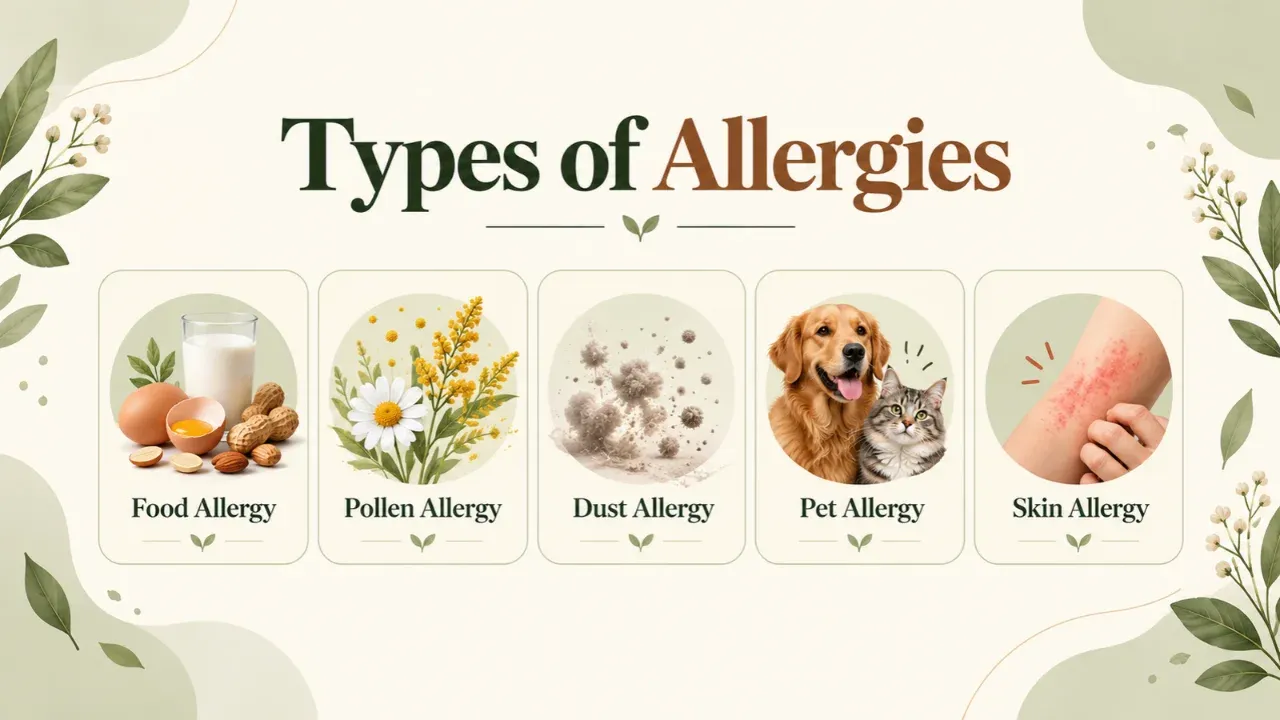
Allergies are broadly classified according to the substances that trigger an immune response and the way the body encounters them. The five common types of allergies are food allergies, respiratory allergies, skin allergies, drug allergies and insect allergies. Other allergic conditions include latex allergy and eye allergies. Each category includes different conditions and triggers, ranging from food proteins and airborne particles to medicines, insect venom and substances that come into contact with the skin.
What Are Allergies?
Allergies occur when the immune system reacts to a substance that is generally harmless to most people. These substances are called allergens and may include certain foods, pollen, dust mites, animal dander, medicines and insect venom.
Allergies can affect different parts of the body, depending on the allergen and how a person comes into contact with it. They are commonly grouped into categories such as food, respiratory, skin, drug and insect allergies. Understanding the causes and symptoms of allergies can provide additional context about how the immune system responds to different allergens.
What Are the Different Types of Allergies?
The different types of allergies can be classified based on their triggers and the way the body is exposed to them.
1. Food Allergies
Food allergies occur when the immune system reacts to specific proteins present in certain foods. They can develop during childhood or adulthood and may involve different food groups.
Common food allergens include:
- Milk allergy: An allergic reaction to proteins found in cow's milk and dairy products.
- Egg allergy: A reaction to proteins present in egg white or egg yolk.
- Peanut allergy: An allergy triggered by proteins in peanuts.
- Tree nut allergy: Reactions to nuts such as almonds, cashews, walnuts, pistachios and hazelnuts.
- Wheat allergy: An immune reaction to proteins found in wheat.
- Soy allergy: An allergic reaction to proteins present in soybeans and soy-based foods.
- Fish allergy: An allergy to proteins found in different fish species.
- Shellfish allergy: Reactions to crustaceans such as prawns, crabs and lobsters, or molluscs such as mussels and oysters.
- Sesame allergy: An allergic reaction to sesame seeds and products containing sesame.
Also Read: Lactose Intolerance
2. Respiratory Allergies
Respiratory allergies develop when a person comes into contact with airborne allergens. These allergens are commonly inhaled and may affect the nose, eyes and airways.
Common respiratory allergy conditions include:
- Allergic Rhinitis: Also known as hay fever, this condition is associated with allergens such as pollen, dust mites and animal dander.
- Allergic Asthma: A form of asthma in which exposure to certain allergens can trigger airway inflammation and asthma symptoms.
- Allergic Conjunctivitis: An allergic condition affecting the conjunctiva, the thin membrane covering the white of the eye and lining the inside of the eyelids.
- Mould Allergy: An allergic reaction associated with exposure to mould spores present in indoor or outdoor environments.
- Dust Mite Allergy: An allergy to proteins associated with microscopic dust mites commonly found in bedding, carpets and upholstered furniture.
- Pet Allergy: An allergic reaction to proteins found in animal skin flakes, saliva or urine.
3. Skin Allergies
Skin allergies involve allergic reactions that affect the skin. They may be associated with substances that come into direct contact with the skin or other allergens that trigger an immune response.
Common skin-related allergic conditions include:
- Contact Dermatitis: An allergic skin reaction that develops after contact with a substance such as nickel, fragrances, preservatives or certain cosmetic ingredients.
- Atopic Dermatitis (Eczema): A chronic inflammatory skin condition associated with an impaired skin barrier and immune-system activity.
- Urticaria (Hives): A condition characterised by raised, itchy welts that may occur in response to certain allergens or other triggers.
- Angioedema: Swelling that occurs deeper beneath the skin, commonly affecting areas such as the lips, eyelids, face or tongue. It can occur alongside hives or as part of an allergic reaction.
Not every skin condition is an allergy. For example, irritant contact dermatitis is caused by direct skin irritation rather than an allergic immune response.
4. Drug Allergies
Drug allergies occur when the immune system reacts to a particular medication. They can involve prescription medicines, over-the-counter medicines or certain medicines used during medical procedures.
Common medication groups associated with allergic reactions include:
- Antibiotics: Medicines such as penicillin and certain other antibiotics.
- Pain Relievers: Some non-steroidal anti-inflammatory drugs (NSAIDs), such as aspirin and ibuprofen, can cause allergic or hypersensitivity reactions.
- Anti-Seizure Medicines: Certain medications used to manage seizures can cause allergic reactions.
- Chemotherapy Medicines: Some medicines used in cancer treatment may trigger hypersensitivity reactions.
A drug allergy is different from a medication side effect. Not every unwanted reaction to a medicine involves the immune system.
5. Insect Allergies
Insect allergies occur when the immune system reacts to substances introduced through an insect bite or sting. Reactions may be associated with insect venom or proteins from insect bites.
Common insect-related allergies include:
- Bee Sting Allergy: An allergic reaction to venom introduced through a bee sting.
- Wasp Sting Allergy: A reaction to venom from a wasp sting.
- Hornet Sting Allergy: An allergic reaction associated with hornet venom.
- Fire Ant Allergy: A reaction to substances introduced through a fire ant sting.
- Mosquito Bite Allergy: Some people experience unusually strong local reactions to proteins in mosquito saliva.
A local reaction to an insect bite or sting does not always indicate a true allergy. Insect venom allergies, particularly those involving bees, wasps and hornets, are an important category of allergic conditions.
Also Read: एलर्जी क्या है?
Other Types of Allergies
Apart from the five broad categories, some allergies are associated with specific substances or exposure routes.
1. Latex Allergy
Latex allergy occurs when the immune system reacts to proteins found in natural rubber latex. Latex may be present in products such as certain medical gloves, balloons and other rubber items.
2. Eye Allergies
Eye allergies occur when allergens trigger inflammation of the conjunctiva. Allergic conjunctivitis is a common example and may be associated with pollen, dust mites, mould and pet dander.
3. Sun Allergy
Sun allergy is a general term used for several skin conditions that cause reactions after exposure to sunlight. These conditions include polymorphic light eruption and other forms of photosensitivity. Not all sun-related skin reactions are true allergies.
4. Nickel Allergy
Nickel allergy is a type of allergic contact dermatitis caused by skin contact with nickel-containing materials. Common sources include jewellery, watch straps, buttons and certain metal accessories.
Allergies and Gut Health
The gut microbiome refers to the community of microorganisms living in the digestive tract. Researchers are studying how these microorganisms interact with the immune system and whether they influence the development of allergic conditions.
Research has explored possible associations between the gut microbiome and food allergies, respiratory allergies and skin conditions such as atopic dermatitis. However, these relationships are still being investigated, and gut imbalance is not established as the direct cause of every type of allergy.
Also Read: Gut-Healthy Foods
Key Takeaways
- Allergies occur when the immune system reacts to substances that are generally harmless to most people.
- The five common allergy categories are food allergies, respiratory allergies, skin allergies, drug allergies and insect allergies.
- Food allergies can be triggered by proteins in milk, eggs, peanuts, tree nuts, wheat, soy, fish, shellfish and sesame.
- Respiratory allergies are commonly associated with airborne allergens such as pollen, dust mites, mould spores and pet dander.
- Skin-related allergic conditions include allergic contact dermatitis, urticaria and angioedema, while eczema may involve several contributing factors.
- Drug allergies involve immune reactions to certain medicines and should not be confused with ordinary medication side effects.
- Insect venom allergies can occur after stings from bees, wasps, hornets or fire ants.
- Other allergic and allergy-related conditions include latex allergy, eye allergies and nickel allergy. Not every reaction to sunlight is a true allergy.
- A person can have more than one type of allergy, and symptoms may differ depending on the trigger and route of exposure.
- The gut microbiome may be associated with immune regulation and allergic conditions, but gut imbalance has not been established as the direct cause of every allergy.
Your gut is unique your healing should be too.

FAQs
The five broad categories are food allergies, respiratory allergies, skin allergies, drug allergies and insect allergies.
Common food allergies include milk, egg, peanut, tree nut, wheat, soy, fish, shellfish and sesame allergies.
Common respiratory allergies include allergic rhinitis, allergic asthma, dust mite allergy, mould allergy, pet allergy and pollen allergy.
Skin-related allergic conditions include allergic contact dermatitis, atopic dermatitis, urticaria and angioedema. Some conditions that look similar may have non-allergic causes.
No. A drug allergy involves an immune-system reaction to a medicine, whereas a medication side effect is an unwanted effect that does not necessarily involve the immune system.
Yes. A person may have more than one allergy, such as a food allergy along with allergic rhinitis or an allergy to insect venom.
Disclaimer
The content provided by Mool Health is for educational and informational purposes only and should not be considered a substitute for professional medical advice, diagnosis, or treatment.