How Long Does Rice Take to Digest? A Complete Guide

rice digestion time

Published on Mon Mar 30 2026

✏️ Quick Answer:

Plain white rice takes 30–45 minutes to digest in the stomach and achieves full digestion (stomach + small intestine) within 1.5–2 hours — making it one of the fastest-digesting staple foods. Digestion time of rice varies significantly based on rice type, what it is combined with, and individual gut strength.

Quick breakdown by type:

  • ·White rice (plain, boiled) — 30–45 min (stomach) · 1.5–2 hrs (full)
  • ·Brown rice — 1–1.5 hrs (stomach) · 3–4 hrs (full)
  • ·Curd rice — 1.5–2 hrs (stomach) · 3–3.5 hrs (full)
  • ·Dal rice — 1.5–2 hrs (stomach) · 3–4 hrs (full)
  • ·Roti (wheat chapati) — 1–1.5 hrs (stomach) · 2.5–3 hrs (full)
  • ·Best time to eat rice — Lunch (12pm–2pm); avoid at night for optimal digestion

Why Rice Digestion Time Matters for Your Gut

Rice is the single most consumed staple food in India — eaten at almost every meal across every region, age group, and dietary preference. Yet the question of how long rice takes to digest, and how that changes based on rice type, meal combination, and timing, is something most people have never thought through. Understanding rice digestion time in the human body is directly relevant to managing bloating after meals, energy levels post-lunch, and long-term gut health.

Digestion time for rice is especially important for people managing IBS symptoms, those trying to lose weight, athletes timing carbohydrate intake, and anyone following an Ayurvedic diet where the timing and combination of food are as important as the food itself. At Mool Health, we combine clinical nutrition and Ayurvedic principles to give you the most practical, evidence-backed guide to rice and digestion.

💡 Did You Know? In Ayurveda, freshly cooked white rice (Shashtika rice) is considered one of the most easily digestible, nourishing, and gut-friendly foods available — specifically recommended for people recovering from illness, digestive disorders, and weak digestion (Mandagni).

Rice Digestion Time in the Human Body: Stage by Stage

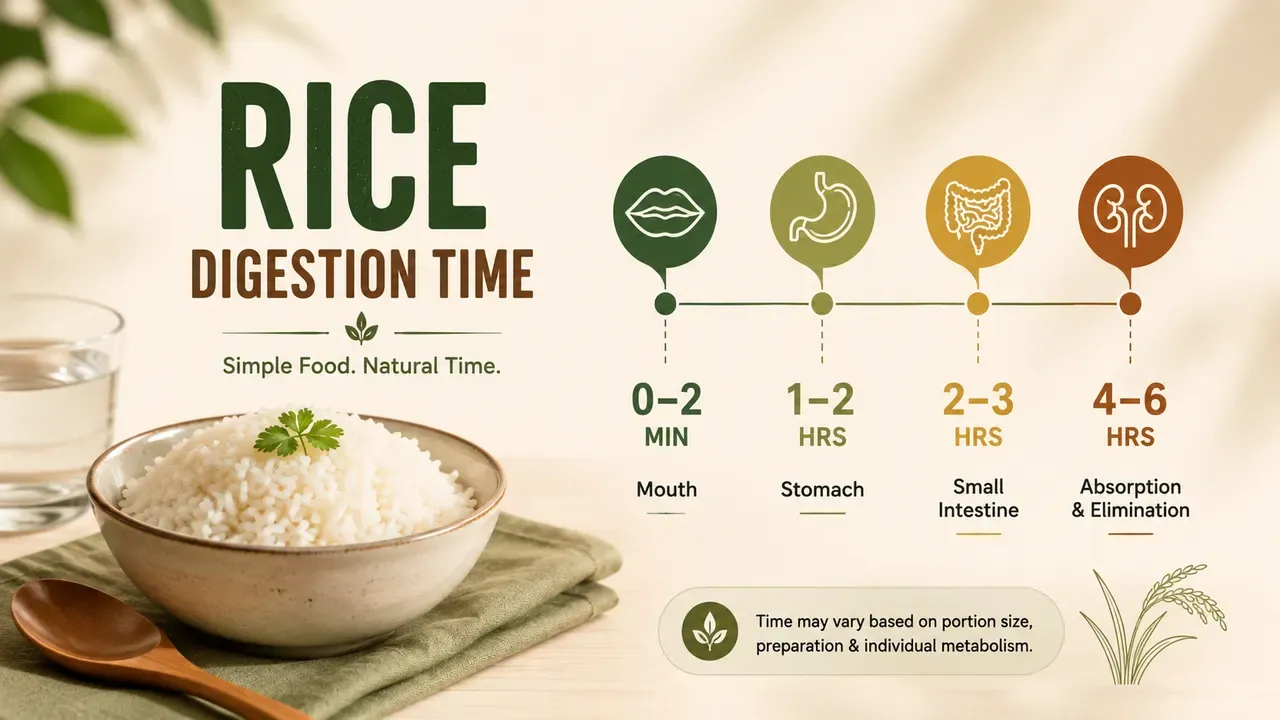
Rice digestion time in the stomach and beyond depends on the rice type, cooking method, and what accompanies it. The digestion and absorption of carbohydrates in rice follows a well-defined pathway through the digestive tract:

  1. Mouth (0–2 minutes) — Chewing breaks rice into smaller particles and salivary amylase immediately begins converting rice starch into simpler sugars (maltose). Thorough chewing significantly reduces the digestive burden on the stomach — a fact Ayurveda emphasises with the principle of chewing each bite 32 times.
  2. Stomach (30–90 minutes) — The stomach churns rice with gastric acid and pepsin. Plain white rice empties from the stomach in as little as 30–45 minutes due to its low fat, low fibre composition. Brown rice, being denser and higher in fibre, takes 60–90 minutes in the stomach. Combination meals (curd rice, dal rice) extend stomach time significantly.
  3. Small intestine (1–2 hours) — Pancreatic amylase completes starch breakdown into glucose. The glucose is absorbed through the intestinal wall into the bloodstream, producing the characteristic energy surge after a rice meal. High-GI white rice produces this energy spike faster than low-GI brown rice.
  4. Large intestine (1–2 hours) — Any resistant starch (higher in cooled or reheated rice) reaches the colon where gut bacteria ferment it, producing short-chain fatty acids (SCFAs) that nourish the gut lining. This is the prebiotic benefit of rice — particularly relevant for brown rice and cooled white rice.

The total rice digestion time in the human body from mouth to full nutrient absorption is 1.5–2 hours for plain white rice and 3–4 hours for brown rice or complex rice-based meals. Compared to chicken digestion time (3–4 hours) and milk digestion time (2–3 hours), plain rice digests considerably faster.

Digestion Time of Rice: Complete Reference by Type

Rice / Meal TypeStomach TimeFull DigestionDigestibilityBest TimeKey Note
White rice (plain, boiled)30–45 min1.5–2 hoursVery easyLunchFastest digesting staple; low fibre; high GI
Basmati rice45–60 min2–2.5 hoursEasyLunchLower GI than regular white rice; aromatic; slightly slower
Brown rice60–90 min3–4 hoursModerateLunchHigh fibre slows digestion; better for blood sugar; harder on weak digestion
Cooled / reheated rice45–60 min2–3 hoursEasy–ModerateLunchHigher resistant starch than freshly cooked; prebiotic benefit
Curd rice1.5–2 hours3–3.5 hoursModerateLunch onlyCurd adds protein and probiotics; heavier than plain rice; avoid at night
Dal rice1.5–2 hours3–4 hoursModerateLunchComplete protein combination; dal fibre extends digestion significantly
Khichdi (moong dal + rice)45–60 min2–2.5 hoursEasyAny mealTridoshic; Ayurveda's most digestible complete meal; ideal for weak digestion
Roti (wheat chapati)60–90 min2.5–3 hoursModerateAny mealHigher fibre and gluten than white rice; slower but more sustained energy

How Rice Type Affects Digestion Time

Not all rice is digested the same way. The processing level, starch composition, fibre content, and grain size all determine how long rice takes to digest in the stomach and small intestine.

White Rice

White rice is polished — the bran and germ are removed during milling, leaving primarily starch (amylopectin). This makes it the easiest and fastest form of rice to digest, with a stomach emptying time of just 30–45 minutes. It is Ayurveda's recommended rice for recovery from illness, diarrhea, and weak digestion precisely because of this rapid digestibility.

Brown Rice

Brown rice retains its bran layer, which is rich in insoluble fibre. This fibre slows gastric emptying significantly, extending stomach digestion time to 60–90 minutes and full digestion to 3–4 hours. While nutritionally superior to white rice, brown rice can cause causes of gas and bloating in people with sensitive digestion or irritable bowel syndrome.

Basmati Rice

Basmati has a lower glycaemic index (GI ~50) than regular white rice (GI ~72) due to its higher amylose content and longer grain structure. It digests slightly more slowly than regular white rice (45–60 minutes in stomach, 2–2.5 hours full), producing a more gradual energy release. Ayurveda considers basmati particularly sattvic and digestively harmonious.

Cooled and Reheated Rice

When cooked rice is cooled and then reheated, a portion of its digestible starch converts to resistant starch — a prebiotic fibre that feeds beneficial gut bacteria. This increases the rice digestion time slightly (45–60 min stomach) but adds significant gut health benefit. Day-old rice reheated the next morning is a well-validated gut health practice in both Ayurveda and clinical nutrition.

Curd Rice Digestion Time: Why It Takes Longer Than Plain Rice

Curd rice digestion time is 3–3.5 hours for full digestion — significantly longer than the 1.5–2 hours for plain white rice. Three factors extend the digestion time:

  • Curd adds protein and fat — The protein and fat in curd slow gastric emptying considerably, extending stomach residence time from 30–45 minutes (plain rice) to 1.5–2 hours for the combined meal. This is the same mechanism that slows digestion in dairy-based meals like milk-based preparations.
  • Probiotic benefit balances the load — While curd rice takes longer to digest, the live Lactobacillus cultures in curd actively support gut flora, reduce intestinal inflammation, and aid in breakdown of the rice starch. This is why curd rice is considered one of the most gut-beneficial South Indian meals despite the longer digestion time.
  • Timing matters critically — Curd rice is best eaten at lunch when digestive fire (Agni) is at peak strength. Ayurveda strongly advises against curd rice at night — the heavy, cooling nature of curd combined with reduced evening Agni leads to incomplete digestion, mucus formation, and sluggish gut motility overnight.
Mool Health Tip: Add a pinch of rock salt, roasted cumin powder, and a few curry leaves to curd rice. These Ayurvedic additions are carminative — they reduce the digestive load of curd, prevent gas formation, and support faster curd rice digestion time.

Dal Rice Digestion Time: A Complete Protein With a Longer Gut Journey

Dal rice digestion time is 3–4 hours for full digestion. The combination of rice starch with dal's protein, complex carbohydrates, and fibre creates a more nutritionally complete but digestively heavier meal than plain rice alone.

  • Dal fibre slows gastric emptying — Most dals (toor, moong, masoor) contain 5–8g of fibre per 100g cooked. This fibre significantly extends the time rice-dal mixture spends in the stomach, producing more sustained energy release and better satiety — but extending full digestion time to 3–4 hours.
  • Protein requires longer processing — Dal's protein content requires pepsin and gastric acid in the stomach plus pancreatic proteases in the small intestine for full breakdown. This adds 45–60 minutes to the overall digestion time compared to plain rice.
  • Moong dal + rice (khichdi) is the exception — Split moong dal is uniquely easy to digest among all pulses. Khichdi (moong dal + white rice) has a stomach digestion time of just 45–60 minutes and full digestion of 2–2.5 hours — significantly faster than any other dal-rice combination — which is why Ayurveda prescribes khichdi as a digestive reset and therapeutic meal.
  • Hing and cumin are essential — Adding asafoetida (hing) and cumin to dal before combining with rice is not just flavour — both are clinically documented carminatives that reduce gas, cramping, and digestive load, effectively reducing dal rice digestion time and preventing the post-meal bloating associated with legume consumption.

Roti vs Rice Digestion Time: Which Is Easier on Your Gut?

The roti vs rice digestion time debate is one of the most common questions in Indian nutrition. The answer depends on what outcome matters most — speed of digestion, blood sugar impact, or gut health benefit.

Digestion Speed

Plain white rice digests faster than roti — 1.5–2 hours for white rice vs 2.5–3 hours for roti. Rice's low fibre, low gluten, and soft starch structure means the stomach processes it rapidly. Roti contains gluten (a protein that requires additional enzymatic breakdown) and more fibre (from whole wheat), both of which extend digestion time.

Blood Sugar Response

Roti produces a slower, more gradual blood glucose rise than white rice due to its higher fibre and gluten content. White rice has a glycaemic index of approximately 72 vs roti's ~62. For diabetics and blood sugar-conscious individuals, roti's slower digestion time is an advantage. For athletes needing rapid energy, rice's faster digestion time is preferred.

Gut Comfort

White rice is significantly gentler on the gut than roti for people with slow digestion symptoms, weak digestion (Mandagni), or recovering from gastroenteritis. Roti's gluten content can cause digestive discomfort in people with gluten sensitivity — a condition distinct from celiac disease but increasingly common. Rice is inherently gluten-free and the Ayurvedic go-to food for digestive recovery.

Ayurvedic View

Ayurveda does not declare one superior to the other — it contextualises based on season, constitution (Prakriti), and digestive strength. White rice is recommended for Pitta and Vata types, and during summer. Roti is recommended for Kapha types and during winter. For Pitta-dominant individuals prone to acidity home remedies and heartburn, white rice is easier on the gut than wheat-based roti.

Factors That Affect Your Personal Rice Digestion Time

Reference digestion times are population averages. Your actual digestion time for rice may vary based on:

  • Cooking method — Pressure-cooked rice is softer and digests faster than open-boiled rice. Undercooked rice takes significantly longer and can cause bloating and discomfort in people with sensitive digestion.
  • Meal composition — Plain rice digests in 1.5–2 hours; rice combined with dal, curd, sabzi, or meat takes 3–5 hours depending on the accompaniment's fat and protein content.
  • Portion size — A small portion of rice (100g cooked) digests faster than a large serving (300g cooked) because larger quantities require more gastric acid and enzyme secretion to process completely.
  • Gut motility — People with fast gut motility process rice in under 1.5 hours; those with what is bloating and slow gut motility may take 3+ hours even for plain white rice.
  • Stomach acid levels — Adequate gastric acid is essential for efficient starch digestion. Low stomach acid (common in those over 50) slows rice digestion and leads to fermentation, gas, and post-meal heaviness.
  • Stress and eating speed — Eating rice quickly without thorough chewing significantly increases digestion time. Stress activates the sympathetic nervous system, slowing digestive enzyme secretion and gut motility — a major contributor to post-meal bloating after rice-based meals.
  • Gut microbiome health — A diverse, healthy gut microbiome efficiently ferments resistant starch in rice, producing beneficial SCFAs. Poor microbiome diversity leads to inefficient fermentation, excessive gas, and causes of gas and bloating after rice meals.

Ayurvedic Perspective on Rice Digestion

Rice (Oryza sativa, called Shashtika or Shali in Ayurveda) holds a uniquely revered position in classical Ayurvedic medicine. It is classified as Laghu (light), Madhura (sweet), and Sheeta (cooling) — properties that make it the most universally digestible grain across all three doshas when prepared correctly.

Ayurvedic Rules for Rice Consumption

  • Freshly cooked rice is always preferred — Ayurveda considers stale rice (more than 4–6 hours after cooking) difficult to digest and Kapha-aggravating. Always eat rice freshly prepared where possible.
  • White rice is therapeutic; brown rice is not always better — Ayurveda explicitly prescribes white rice for weak digestion, post-illness recovery, and digestive disorders. Brown rice, despite its nutritional advantages, is considered heavy and harder to digest — not appropriate for all constitutions.
  • Rice with ghee enhances digestibility — A small amount of ghee mixed into hot rice is a classical Ayurvedic practice. Ghee lubricates the intestinal tract, provides butyrate (which nourishes gut lining cells), and improves the absorption of fat-soluble vitamins from the meal.
  • Avoid rice at night for Kapha types — Those with Kapha constitution or sluggish digestion should limit rice at night, as its cooling and slightly heavy nature combined with reduced evening Agni can lead to mucus accumulation and what is constipation if consumed regularly at dinner.
  • Khichdi is the ultimate digestive reset — Moong dal khichdi is the most complete Ayurvedic meal for supporting gut recovery, managing IBS, post-diarrhea recovery, and anyone experiencing digestive weakness. It is tridoshic, easily digestible, and nutritionally complete.
  • Rice water (kanji) is a gut healer — The starchy water from boiling rice contains easily absorbed carbohydrates, minerals, and a soothing quality for an inflamed gut lining. Ayurveda has prescribed rice water (Peya) for diarrhea, dehydration, and post-illness gut recovery for thousands of years.

Best Time to Eat Rice for Digestion

The best time to eat rice for digestion is when your digestive fire (Agni) is strongest and your body can efficiently process a predominantly starch-based meal.

Lunch (12pm – 2pm) — Best Time

Digestive fire peaks at midday in both Ayurveda and circadian nutrition research. Rice eaten at lunch is processed most efficiently — blood sugar spikes are modulated, energy is available for afternoon activity, and full digestion is complete well before dinner. This is the ideal window for dal rice, curd rice, or any rice-based complete meal.

Morning (7am – 10am) — Acceptable with Caution

Plain rice or khichdi in the morning is acceptable for people with strong digestion. However, heavy rice-based meals (biryani, curd rice with large portions) in the morning can lead to sluggishness as digestive capacity is still building. Stick to light rice preparations like poha, idli, or small portions of plain rice if eating in the morning.

Night (After 7pm) — Avoid or Minimise

Rice at night is one of the most common contributors to digestive discomfort in India. Reduced digestive fire (Agni) at night combined with rice's moderate-to-high glycaemic load leads to incomplete digestion, overnight fermentation, bloating, and disrupted sleep. If rice at dinner is unavoidable, choose a small portion of white rice over brown rice, pair it with easily digestible accompaniments, and eat at least 2–3 hours before sleep. How to improve digestion naturally at home becomes especially important if rice-heavy dinners are part of your routine.

Rice Digestion Time for Specific Groups

Rice digestion time and suitability varies significantly across different health profiles and conditions.

People with IBS or Sensitive Digestion

Plain white rice is one of the safest foods for people with IBS — it is low FODMAP, gluten-free, and digests rapidly without producing excessive fermentation. Brown rice, however, can trigger IBS flares due to its higher fibre and FODMAP content. Khichdi (white rice + moong dal) is the optimal meal for IBS management. Avoid brown rice, cold rice, and large rice-based meals during IBS episodes.

Diabetics and Blood Sugar-Conscious Individuals

For diabetics, the speed of rice digestion time directly impacts blood glucose management. Strategies to slow white rice digestion and reduce glycaemic impact include: adding dal, curd, or sabzi to every rice meal; choosing basmati over regular white rice; cooling cooked rice before eating (increases resistant starch); and never eating plain rice alone. These interventions can reduce the glycaemic index of a rice meal by 20–35%.

Athletes and Active Individuals

White rice is one of the most effective pre- and post-workout carbohydrate sources due to its rapid digestion time. Pre-workout (2–3 hours before): a moderate serving of rice with light protein provides sustained energy without digestive distress. Post-workout: white rice rapidly replenishes muscle glycogen — its fast digestion time makes it the preferred recovery carbohydrate over slower-digesting options like brown rice or roti.

Elderly and Post-Illness Recovery

Both groups benefit most from plain white rice, khichdi, and rice water (kanji). As digestive enzyme production declines with age, white rice's minimal digestive demand makes it ideal for elderly individuals. For post-illness recovery, rice-based meals provide easily absorbed energy without taxing a compromised digestive system. Yoga for digestion alongside a rice-based diet can further support gut motility and enzyme production in elderly individuals. Gut health supplements formulated with digestive enzymes are also beneficial for those with significantly reduced digestive capacity.

Frequently Asked Questions

Q What is rice digestion time in stomach?

Plain white rice takes 30–45 minutes to digest in the stomach, making it one of the fastest-digesting staple foods. Brown rice takes 60–90 minutes due to its higher fibre content. Combined meals like curd rice and dal rice extend stomach residence time to 1.5–2 hours. Full digestion including small intestine absorption takes 1.5–2 hours for plain white rice and 3–4 hours for complex rice-based meals.

Q What is curd rice digestion time?

Curd rice digestion time is 3–3.5 hours for full digestion. Curd's protein and fat slow gastric emptying significantly compared to plain rice. Despite the longer digestion time, curd rice is considered highly gut-beneficial due to the probiotic effect of live Lactobacillus cultures in curd. It should only be eaten at lunch — never at night, as Ayurveda identifies this combination as Kapha-aggravating when consumed with reduced digestive fire.

Q What is dal rice digestion time?

Dal rice digestion time is 3–4 hours for full digestion, depending on the type of dal used. Moong dal rice (khichdi) is the fastest at 2–2.5 hours, while heavier dals like chana or rajma with rice can take 4–5 hours. The combination is nutritionally complete (providing all essential amino acids) but requires adequate digestive strength. Adding hing, cumin, and ginger to dal before combining with rice significantly reduces digestion time and gas production.

Q What is the difference in roti vs rice digestion time?

Plain white rice digests faster (1.5–2 hours full) than roti (2.5–3 hours full). Rice has lower fibre and no gluten, making it easier on the stomach. Roti produces a slower blood sugar rise due to its higher fibre and gluten content, which is beneficial for diabetics and weight management. For people with weak digestion, gluten sensitivity, or recovering from illness, rice is the clearly better choice. For sustained energy and blood sugar management, roti has an advantage.

Q Is white rice or brown rice easier to digest?

White rice is significantly easier to digest than brown rice. White rice digests in 1.5–2 hours; brown rice takes 3–4 hours. Brown rice's bran layer contains insoluble fibre and phytic acid, both of which slow digestion and can irritate the gut in people with sensitive digestion. Brown rice is nutritionally superior but not appropriate for everyone — particularly those with IBS, weak digestion, or recovering from illness. Ayurveda specifically recommends white rice for these cases.

Q Does rice cause bloating?

Plain white rice rarely causes bloating on its own due to its low fibre content and simple starch composition. Bloating after rice meals is usually caused by: large portions, eating too quickly without chewing, combining rice with high-fibre or gas-producing accompaniments (like certain vegetables or legumes), drinking large amounts of water immediately after the meal, or pre-existing gut issues like IBS or low stomach acid. Brown rice is more likely to cause bloating than white rice due to its higher fibre and fermentable carbohydrate content.

Q What is the best time to eat rice for digestion?

Lunch (12pm–2pm) is the best time to eat rice for digestion when digestive fire peaks. Morning is acceptable for light rice preparations like poha or small portions of khichdi. Rice at night should be minimised or avoided — reduced digestive activity combined with rice's moderate glycaemic load leads to incomplete digestion, fermentation, bloating, and disrupted sleep. If eating rice at dinner, choose a small portion, pair with easily digestible accompaniments, and eat at least 2–3 hours before sleep.

Q Is rice good for people with IBS?

Yes — plain white rice is one of the best foods for people with IBS. It is low FODMAP, gluten-free, easy to digest, and produces minimal fermentation in the colon. Brown rice, on the other hand, is high in fibre and FODMAPs and frequently triggers IBS flares. During active IBS episodes, white rice-based meals (plain rice, khichdi, rice water) are strongly recommended. As symptoms resolve, small amounts of cooled white rice with resistant starch can help restore beneficial gut bacteria.

📋 Key Takeaways

  • Plain white rice digestion time in stomach is 30–45 minutes; full digestion takes 1.5–2 hours — one of the fastest-digesting staples
  • Brown rice takes 3–4 hours to fully digest due to its bran fibre — nutritionally superior but not suitable for all digestive types
  • Curd rice digestion time is 3–3.5 hours; eat only at lunch, never at night per Ayurveda
  • Dal rice digestion time is 3–4 hours; khichdi (moong dal + rice) is the fastest and most gut-friendly combination at 2–2.5 hours
  • Roti vs rice digestion time: rice digests faster (1.5–2 hrs) but roti provides slower, steadier blood sugar — choose based on your health goal
  • Lunch is the best time to eat rice for digestion; rice at night is a major contributor to bloating and incomplete overnight digestion
  • Adding ghee, hing, and cumin to rice-based meals significantly improves digestibility and reduces gas formation
  • White rice is Ayurveda's therapeutic food for IBS, weak digestion, post-illness recovery, and diarrhea
  • Cooled and reheated rice has higher resistant starch — a prebiotic benefit that supports gut microbiome diversity
  • Poor chewing, large portions, stress, and low stomach acid all significantly extend your personal rice digestion time in the human body

Why Mool Health for Your Gut Recovery

Mool Health integrates Ayurvedic dietary wisdom with contemporary clinical nutrition to deliver superior gut health outcomes. Our approach to digestive conditions — bloating, IBS, slow digestion, constipation, and post-infection recovery — addresses root causes, not just symptoms.

If you are dealing with post-meal bloating after rice-based meals, sluggish digestion, or want a personalised Ayurvedic gut health protocol built around your diet and constitution, our specialists can help.

⚠️ Medical Disclaimer

This information is published by Mool Health for educational purposes only and does not substitute professional medical advice. Digestion times provided are general averages and vary significantly between individuals based on gut health, age, stress, cooking method, and medical conditions. If you experience chronic digestive discomfort, persistent bloating, or abnormal digestion patterns after rice-based meals, consult a qualified physician, gastroenterologist, or Ayurvedic practitioner. Do not self-diagnose or significantly change your diet without professional guidance.

Back to digestion articles