
IBS vs IBD: Symptoms, Causes, and Diagnosis
IBS vs IBD explains the key differences between these digestive conditions, including symptoms, causes, diagnosis, treatment options, and when to seek medical advice for better gut health.
Ayurvedic Physician & Medical Operations Lead at Mool
Published on 2,September 2026
Updated on 2,September 2026
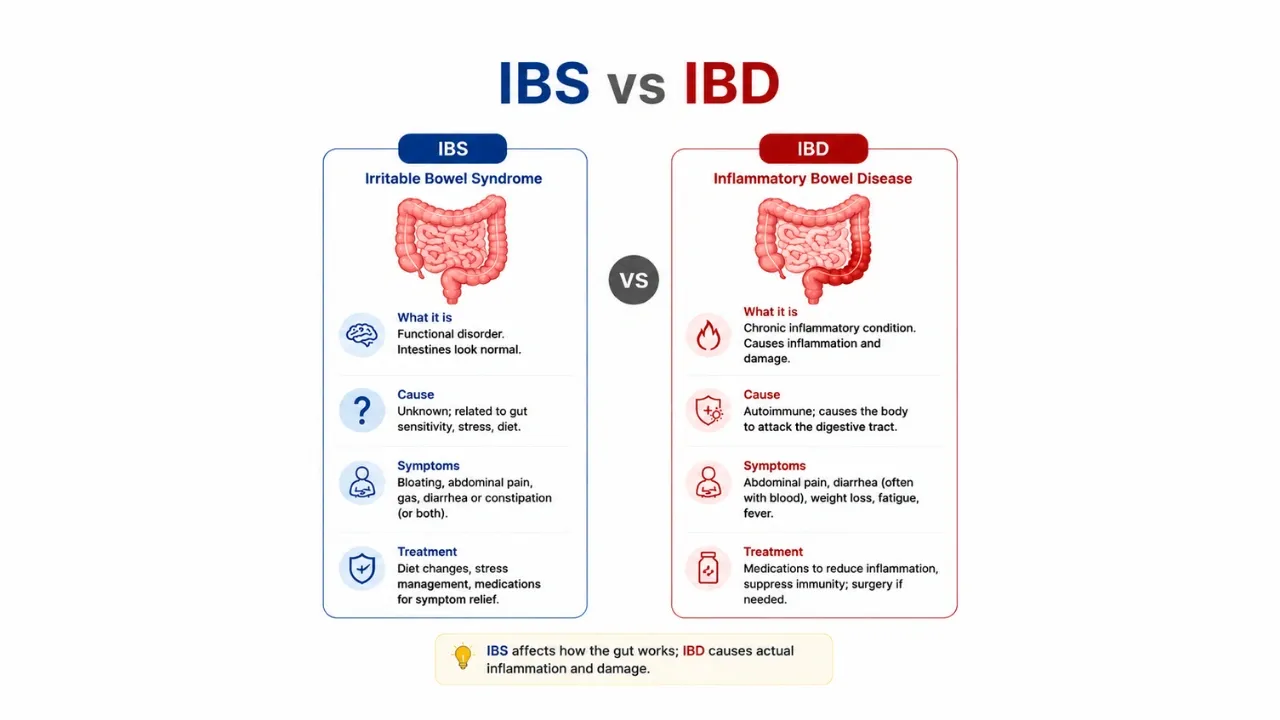
Quick Answer
IBS is a disorder of gut-brain interaction that affects how your digestive system functions, while IBD involves chronic inflammation in the digestive tract. IBS does not typically damage the digestive tract, whereas IBD can cause inflammation and tissue changes that need ongoing medical care.
What Is IBS?
Irritable bowel syndrome (IBS) is a long-term digestive condition in which you may experience recurring abdominal pain along with changes in your bowel movements. These changes can include diarrhoea, constipation or alternating between the two. Bloating and a feeling of incomplete bowel movements can also occur.
IBS is considered a disorder of gut-brain interaction. This means that the communication between your digestive system and brain can affect how your gut senses and processes normal digestive activity. Your bowel may become more sensitive, or the muscles that move food through your digestive tract may function differently.
Importantly, IBS does not typically cause visible damage or inflammation in your digestive tract. Your symptoms can still be uncomfortable and affect your daily routine, but that does not mean your intestines are being damaged.
What Is IBD?
Inflammatory bowel disease (IBD) is a group of chronic conditions that involve inflammation in your digestive tract. The two main types are Crohn's disease and ulcerative colitis.
Crohn's disease can affect different parts of your digestive tract, while ulcerative colitis primarily affects your large intestine and causes inflammation in its inner lining.
IBD tends to follow a pattern of flares and remission (the period when illness improves and you recover). During a flare, your symptoms may become more noticeable. During remission, symptoms may improve or disappear for a short period. Treatment focuses on controlling inflammation, reducing flares and helping you maintain remission.
Is IBS the Same as IBD?
No. IBS and IBD are not the same condition, even though both can cause abdominal pain and changes in bowel movements.
- IBS mainly affects how your gut functions and how you experience digestive symptoms.
- IBD involves inflammation in the digestive tract.
- IBS does not typically cause intestinal damage, while IBD can cause inflammation and, in some people, complications affecting the digestive tract.
IBS vs IBD Symptoms: How Are They Different?
The symptoms of IBS and IBD can overlap, which is why it is not always possible to distinguish between them based only on how you feel.
What Are the Symptoms of IBS?
Your symptoms may come and go, and their intensity can vary over time. With IBS, you may experience:
- Recurrent abdominal pain
- Diarrhoea
- Constipation
- Alternating diarrhoea and constipation.
- Bloating
- Changes in stool frequency or appearance.
- A feeling that you have not completely emptied your bowel.
- Mucus in your stool.
IBS can be frustrating, but having significant symptoms does not necessarily mean that something is being damaged inside your digestive tract. Your symptoms are real and deserve attention even when routine tests do not show a structural disease.
What Are the Symptoms of IBD?
IBD symptoms can vary depending on whether you have Crohn's disease or ulcerative colitis, where inflammation occurs and how active it is. You may experience:
- Diarrhoea
- Abdominal pain or cramping.
- An urgent need to pass stool.
- Blood in your stool, particularly with ulcerative colitis.
- Fatigue
- Reduced appetite
- Weight loss
- Fever in some cases
- Symptoms outside the digestive system, such as joint, skin or eye symptoms.
Crohn's disease commonly causes diarrhoea, abdominal pain and weight loss, while ulcerative colitis may cause diarrhoea, rectal bleeding, abdominal cramping and urgency.
Can IBS Cause Blood in Your Stool?
Blood in your stool should not simply be attributed to IBS. IBS itself does not typically cause intestinal bleeding. If you notice blood in your stool, speak with a healthcare professional so they can determine the cause rather than assuming that it is part of your IBS symptoms.
This does not mean that seeing blood automatically means you have IBD. Several conditions can cause rectal bleeding, so appropriate evaluation helps you understand what is actually happening.
Can IBS or IBD Cause Weight Loss?
Weight loss is not a standard symptom of IBS; you might experience indirect weight changes. Unintentional weight loss can occur with IBD, particularly when inflammation affects your appetite, digestion or nutrient absorption.
If you are losing weight without trying, particularly alongside persistent digestive symptoms, discussing it with your doctor can help you identify the cause and get appropriate support.
IBS vs IBD Causes: What Causes Each Condition?
The causes of IBS and IBD are not completely understood, and neither condition can be reduced to one simple cause.
What Causes IBS?
Doctors do not have one confirmed cause of IBS. Changes in gut sensitivity, bowel movement patterns, gut-brain axis communication and other factors may contribute.
Your symptoms may also be influenced by food, stress, sleep and other lifestyle factors. This does not mean that IBS is just stress. Instead, stress can interact with your gut-brain system and influence how strongly you experience digestive symptoms.
What Causes IBD?
IBD is also thought to result from several interacting factors. Genetics, immune-system responses, the gut microbiome and environmental factors may all contribute.
Crohn's disease and ulcerative colitis involve abnormal immune responses that lead to inflammation in the digestive tract. Researchers continue to study how genes, immunity, microbiome changes and environmental factors interact.
You therefore should not blame yourself for developing IBD. It is not simply the result of eating one particular food or experiencing stress.
Do Stress and Diet Affect IBS and IBD?
Both diet and stress can influence digestive symptoms, but their roles are different.
With IBS, certain foods, irregular meals, stress and poor sleep may worsen your symptoms. Your doctor or dietitian may suggest dietary adjustments based on your symptoms, including approaches such as a low-FODMAP diet when appropriate.
With IBD, your diet requires changes depending on your symptoms, nutritional needs and whether you are experiencing a flare. However, diet alone does not replace treatment to control intestinal inflammation.
IBS vs IBD Diagnosis: How Are They Diagnosed?
One of the most important things to remember is that you cannot reliably diagnose IBS or IBD from symptoms alone. Your doctor will look at your symptom pattern, medical history and examination findings before deciding whether further tests are needed.
How Is IBS Diagnosed?
There is no single blood test or scan that proves you have IBS. Doctors generally look for a characteristic pattern of recurring abdominal pain associated with bowel movements or changes in stool frequency or form. The Rome diagnostic criteria are one framework used worldwide to define IBS.
Your doctor may also use blood or stool tests when needed to rule out other conditions. If you have warning signs such as rectal bleeding, unexplained weight loss, low iron levels or a relevant family history, your doctor may recommend additional evaluation.
How Is IBD Diagnosed?
Diagnosing IBD usually requires a more detailed evaluation because your doctor needs to establish whether inflammation is present and determine its location and severity. Your doctor may consider:
- Your medical and family history.
- A physical examination
- Blood tests
- Stool tests
- Endoscopy and biopsy
- Imaging tests when appropriate.
For Crohn's disease, your doctors may use blood and stool tests, endoscopy and imaging to identify inflammation and rule out conditions with similar symptoms.
For ulcerative colitis, your doctors may use blood and stool tests and endoscopy with biopsies to examine the large intestine and confirm the diagnosis.
What Tests Are Used to Diagnose IBD?
Your doctor may recommend blood tests to look for signs such as anaemia or inflammation. Getting stool tests can help identify intestinal inflammation and rule out infections.
Depending on your symptoms and initial results, your doctor may recommend colonoscopy, flexible sigmoidoscopy, other forms of endoscopy or imaging. You may not need every test. Your doctor chooses investigations based on your symptoms and what they need to clarify.
Can IBS and IBD Be Diagnosed at the Same Time?
Yes, it is possible for you to also experience IBS-type symptoms with IBD. Having abdominal pain, bloating, or bowel changes does not automatically mean that your existing IBD is becoming more active.
If you have already been diagnosed with IBD but notice new or changing symptoms, let your doctor assess them rather than trying to determine the cause yourself.
IBS vs IBD Treatment: How Are They Treated?
The goal of treatment is different for each condition because IBS and IBD work differently. Irritable Bowel Syndrome (IBS) treatment focuses on managing daily symptoms and lifestyle triggers, while Inflammatory Bowel Disease (IBD) treatment targets severe immune-driven gut inflammation to achieve remission.
How Is IBS Treated?
IBS treatment focuses on improving your symptoms and quality of life. Depending on your symptoms, your doctor may recommend:
- Dietary changes
- Regular physical activity
- Better sleep habits
- Stress-management strategies
- Fibre adjustments
- Medicines for diarrhoea, constipation or abdominal pain.
- Selected psychological therapies
- Other treatments based on your individual symptoms.
A low-FODMAP diet may be considered with appropriate guidance, particularly when basic dietary changes have not provided enough relief.
You may need to try more than one approach before finding what works best for you. That is normal with IBS and does not mean your symptoms cannot be managed.
How Is IBD Treated?
IBD treatment aims to reduce your inflammation, control symptoms and maintain remission. Depending on your condition and its severity, your doctor may use medicines such as aminosalicylates, corticosteroids for appropriate short-term use, immunosuppressants, biologic medicines or other targeted treatments.
Some people may also need surgery, particularly when complications occur, or medicines do not adequately control the disease. Your treatment plan can change over time. The aim is not simply to make you feel better temporarily but to control the underlying inflammation and help you maintain remission.
Can Diet Help Manage IBS and IBD?
Yes, but you should approach diet differently depending on your diagnosis.
For IBS, identifying individual food triggers and making structured dietary changes may help reduce symptoms. Your doctor or dietitian can help you avoid unnecessarily restrictive eating.
For IBD, your nutritional needs can change during periods of active disease. Do not eliminate foods based on random internet advice. Instead, make sure your diet continues to provide adequate energy, protein, vitamins and minerals.
Do IBS and IBD Need Long-Term Treatment?
IBS can be a long-term condition, but your symptoms can often be managed through a combination of lifestyle changes, dietary adjustments and symptom-directed treatment.
IBD is also a chronic condition. Treatment is generally aimed at controlling inflammation and maintaining remission over the long term.
A long-term diagnosis does not mean you will feel unwell all the time. IBD can have periods of remission, and IBS symptoms can also fluctuate considerably.
IBS vs IBD: Which Is Worse?
Your focus should be on understanding what your symptoms are telling you, getting the right diagnosis, and effective treatment.
IBS can significantly affect your quality of life, even though it does not typically cause intestinal damage. IBD involves inflammation and can cause complications, so it generally requires closer medical monitoring and treatment.
Can IBS Turn Into IBD?
No, IBS does not turn into IBD. They are different conditions with different underlying mechanisms. However, you can have IBS symptoms alongside IBD, which is why a change in symptoms may sometimes need medical assessment.
Is IBD More Serious Than IBS?
IBD is generally the more serious of the two, since long-term inflammation in the gut can lead to complications down the road. But having IBD doesn't automatically mean you're in for severe symptoms; plenty of people manage it well and go long stretches in remission with the right treatment and regular follow-up care.
When Should You See a Doctor for IBS or IBD Symptoms?
You don't need to panic every time your digestion feels a bit off. Bloating, discomfort, and changes in bowel habits happen for all sorts of reasons. See a doctor if symptoms stick around, keep coming back, or start getting in the way of daily life.
You need to get diagnosed by a doctor if you notice things like:
- Blood in your stool.
- Losing weight without trying.
- Diarrhoea that's persistent or getting worse.
- Ongoing or significant abdominal pain.
- Fatigue you can't explain, or signs of anaemia.
- Any new bowel symptoms that just don't feel right to you.
- A family history that puts you at higher risk for digestive disease.
Understand Your Gut Health Better
Persistent digestive symptoms can have several possible causes. Take a simple next step towards understanding your gut health and identifying what may be contributing to your symptoms.
Mool Health’s Perspective on IBS vs IBD
If your symptoms mainly involve abdominal pain, bloating and changes in bowel habits without signs of intestinal inflammation, IBS may be considered. If your symptoms suggest inflammation, particularly when accompanied by features such as blood in the stool, unexplained weight loss or persistent diarrhoea, your doctor may investigate for IBD and other possible causes.
If you have ongoing digestive symptoms, getting professional advice can help you move from uncertainty to an appropriate treatment plan. Whether the final diagnosis is IBS, IBD or another digestive condition, understanding the cause is the first step towards managing it.
Mool Health believes you don't need to diagnose yourself. The right tests, when needed, can provide clarity. The Mool Health Gut Test offers customised kits for your gut health needs. It assesses all your symptoms and conditions rather than providing generalised solutions.
References
National Institute of Diabetes and Digestive and Kidney Diseases (NIDDK). Definition & Facts for Irritable Bowel Syndrome. https://www.niddk.nih.gov/health-information/digestive-diseases/irritable-bowel-syndrome/definition-facts
NIDDK. Symptoms & Causes of Irritable Bowel Syndrome. https://www.niddk.nih.gov/health-information/digestive-diseases/irritable-bowel-syndrome/symptoms-causes
NIDDK. Treatment for Irritable Bowel Syndrome. https://www.niddk.nih.gov/health-information/digestive-diseases/irritable-bowel-syndrome/treatment
NIDDK. Definition & Facts for Crohn’s Disease. https://www.niddk.nih.gov/health-information/digestive-diseases/crohns-disease/definition-facts
NIDDK. Symptoms & Causes of Crohn’s Disease. https://www.niddk.nih.gov/health-information/digestive-diseases/crohns-disease/symptoms-causes
NIDDK. Diagnosis of Crohn’s Disease. https://www.niddk.nih.gov/health-information/digestive-diseases/crohns-disease/diagnosis
MedlinePlus. (2026). Ulcerative colitis. U.S. National Library of Medicine. https://medlineplus.gov/ency/article/000250.htm
NIDDK. Definition & Facts of Ulcerative Colitis. https://www.niddk.nih.gov/health-information/digestive-diseases/ulcerative-colitis/definition-facts
NIDDK. Symptoms & Causes of Ulcerative Colitis. https://www.niddk.nih.gov/health-information/digestive-diseases/ulcerative-colitis/symptoms-causes
NIDDK. Diagnosis of Ulcerative Colitis. https://www.niddk.nih.gov/health-information/digestive-diseases/ulcerative-colitis/diagnosis
NICE. Irritable bowel syndrome in adults: diagnosis and management. https://www.nice.org.uk/guidance/CG61
Rome Foundation. Rome IV Diagnostic Criteria. https://pmc.ncbi.nlm.nih.gov/articles/PMC5383110/ https://theromefoundation.org/rome-iv/rome-iv-criteria/
American College of Gastroenterology. Irritable Bowel Syndrome (IBS). https://gi.org/topics/irritable-bowel-syndrome/
Key Takeaways
IBS vs IBD explains the key differences between these digestive conditions, including symptoms, causes, diagnosis, treatment options, and when to seek medical advice for better gut health.
Your gut is unique your healing should be too.

FAQs
The main difference is that IBS is a disorder of gut-brain interaction without typical visible intestinal damage, while IBD involves inflammation in the digestive tract.
No. IBS does not turn into IBD. They are separate conditions, although a person can experience IBS-type symptoms alongside IBD.
Yes. Some people with IBD may also experience IBS-type symptoms. If your symptoms change after an IBD diagnosis, your doctor can help determine whether they relate to inflammation or another digestive issue.
IBS does not typically cause the visible intestinal inflammation associated with IBD. It primarily involves changes in gut function and gut-brain interaction.
IBD involves intestinal inflammation and can lead to complications, so it generally requires medical monitoring and treatment. However, the severity of IBD varies from person to person, and effective treatment can help many people maintain remission.
Weight loss can occur with IBD, particularly when the disease is active. It is not a typical feature of IBS. Discuss unintentional weight loss with your doctor so they can assess the underlying cause.
There is currently no single cure for IBS, but symptoms can often be managed with personalised dietary, lifestyle and medical approaches.
IBD is a chronic condition, so treatment generally focuses on controlling inflammation and maintaining remission. Some people with ulcerative colitis may undergo surgery that removes the colon and rectum, but treatment decisions depend on the individual condition and circumstances.
Disclaimer
The content provided by Mool Health is for educational and informational purposes only and should not be considered a substitute for professional medical advice, diagnosis, or treatment.