
What Are Digestive Enzymes? Your Guide to Better Gut Support
A complete guide to digestive enzymes, including their function, types, deficiency symptoms, testing, supplements, safety and FAQs.
Quick Answer
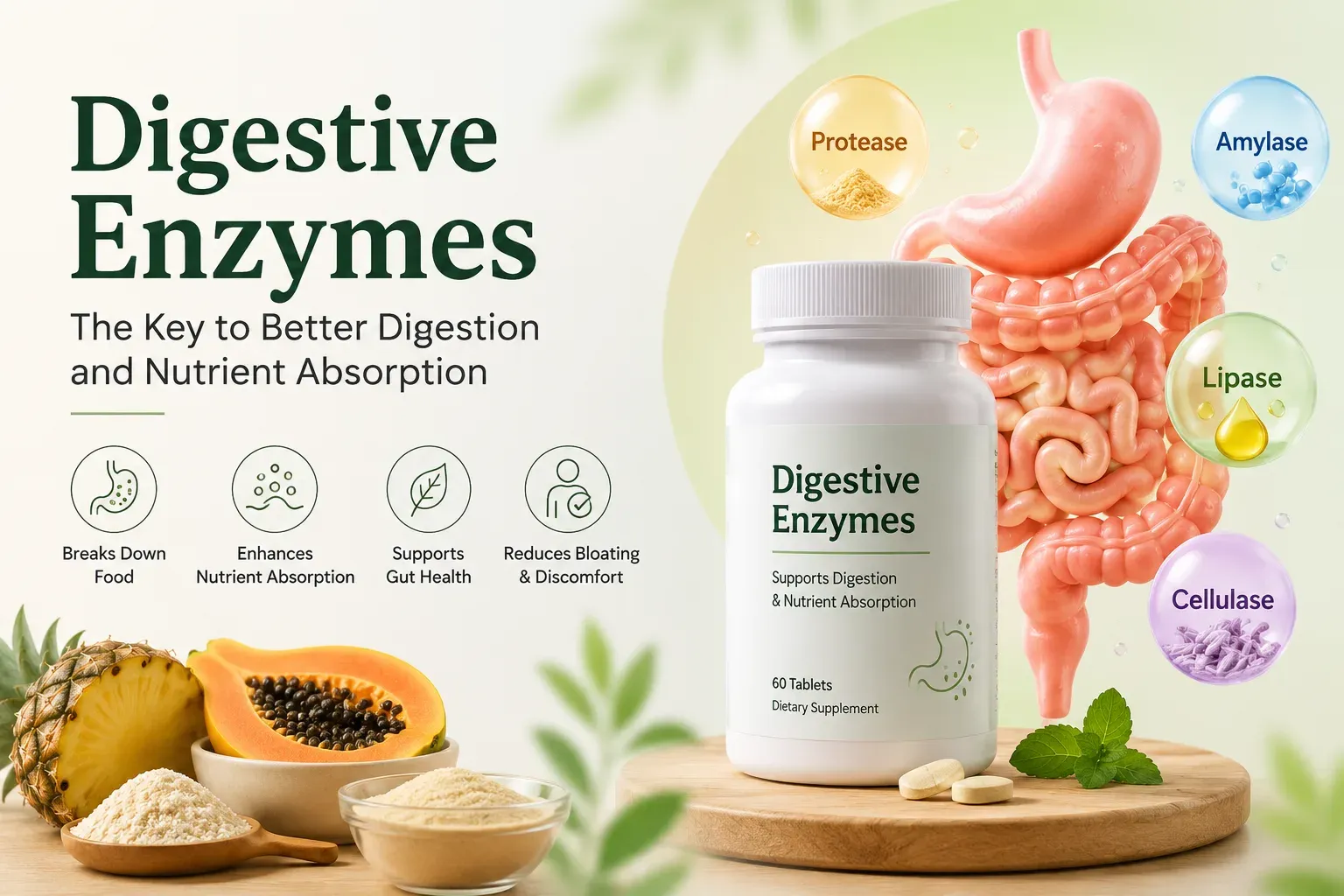
Digestive enzymes help your body convert food into absorbable nutrients. Their main function is to break carbohydrates, proteins, fats, and nucleic acids into smaller building blocks so your body can use them for energy, growth, repair, and daily function.
- Amylase helps break carbohydrates into simpler sugars.
- Proteases help break proteins into amino acids.
- Lipase helps break fats into fatty acids and glycerol.
- Lactase helps break lactose from dairy products.
- Persistent bloating, greasy stools, unexplained weight loss, or ongoing discomfort should be checked by a healthcare professional.
What Are Digestive Enzymes?
Digestive enzymes are proteins that help break down the food you eat into smaller, absorbable nutrients. Without these enzymes, your body cannot absorb the energy, vitamins, and minerals it needs to function, no matter how healthy your diet is. These specialised proteins speed up chemical reactions in your digestive system, breaking down complex foods into forms your body can use for energy, growth, and repair.
A Quick Science Analogy:
Think of digestive enzymes as tiny scissors or keys. Just as scissors cut paper into smaller pieces or keys unlock doors, enzymes cut large food molecules into smaller parts so your body can absorb them. Without these 'molecular scissors', essential nutrients would remain locked away, no matter how nutritious your meal.
What Is the Function of Digestive Enzymes?
Digestive enzymes work by accelerating chemical reactions and breaking down large, complex molecules, such as carbohydrates, proteins, and fats, into simpler forms, such as sugars, amino acids, and fatty acids. These smaller building blocks are then absorbed and used for energy, growth, and cell repair.
Digestive enzymes act at different stages in your digestive tract. Here’s what happens at each phase:
- In your mouth, salivary amylase starts breaking down carbohydrates into shorter starch chains and maltose, not simple sugars. Simple sugars are produced later in the small intestine.
- In your stomach, the protease pepsin breaks down proteins into shorter chains of amino acids.
- In your small intestine:
- Pancreatic amylase finishes breaking starches into maltose, which brush-border enzymes (maltase, lactase, sucrase) in the intestinal lining then split into simple, absorbable sugars like glucose.
- Proteases (trypsin, chymotrypsin, carboxypeptidase) reduce protein chains completely into individual amino acids.
- Lipase, heavily aided by bile from the liver, breaks fats down into fatty acids and glycerol.
What Are the Types of Digestive Enzymes?
There are three main types: amylases, proteases, and lipases, each with a specific function. Digestive enzymes are grouped by the nutrient they target. This table summarises each group, key enzymes, where they work, what they break down, and the end products your body absorbs.
| Key Enzyme(s) | Site of Action | What They Break Down | End Products |
|---|---|---|---|
| Carbohydrases (Amylase, maltase, lactase, sucrase) | Mouth, small intestine | Carbohydrates (starches, sugars) | Simple sugars (glucose, etc.) |
| Proteases (Pepsin, trypsin, chymotrypsin, carboxypeptidase) | Stomach, small intestine | Proteins | Amino acids |
| Lipases (Lipase) | Small intestine (main site in adults) | Fats (lipids) | Fatty acids, glycerol |
| Nucleases (Nuclease) | Small intestine | Nucleic acids (DNA, RNA) | Nucleotides |
Notes:
- Each group of enzymes targets a different nutrient, ensuring your body absorbs essential energy and building blocks from food.
- In adults, most fat digestion takes place in the small intestine via pancreatic lipase; lingual and gastric lipases play only a minor role.
- The pancreas produces enzymes but is not a site of digestion; enzymes act mainly in the small intestine.
What Causes Digestive Enzyme Deficiency?
Digestive enzyme deficiency occurs when your body does not produce enough enzymes to properly break down food. Common causes include pancreatitis, cystic fibrosis, coeliac disease, intestinal damage, lactose intolerance, chronic stress, and ageing.
Digestive enzyme deficiency can have several underlying causes. The table below summarises the main categories, examples, and how each issue reduces enzyme production:
| Cause | Conditions/Factors | How It Reduces Enzyme Production |
|---|---|---|
| Pancreatic Issues | Chronic pancreatitis, cystic fibrosis, pancreatic cancer, or gastrointestinal surgery (such as gastric bypass) can damage the pancreas and lead to exocrine pancreatic insufficiency (EPI). | Damages pancreatic cells or blocks enzyme flow from the pancreas to the intestine |
| Intestinal Damage | Coeliac disease, Crohn’s disease, small intestinal bacterial overgrowth (SIBO), infections, autoimmunity | Damages or flattens the gut lining, reducing enzyme secretion and activity |
| Genetic Deficiencies | Lactose intolerance, congenital sucrase-isomaltase deficiency (CSID) | Prevents the production of specific digestive enzymes |
| Lifestyle & Ageing | Ageing, stress, and poor eating habits can disrupt digestion. Highly processed foods may overwhelm or reduce natural digestive efficiency. | Reduces enzyme output or overwhelms your digestive system’s capacity |
Note: Most cases involve multiple contributing factors, and a proper diagnosis may require medical assessment.
Note: If you suspect you have low digestive enzyme levels, such as persistent bloating, gas, or floating, greasy stools, you should consult a gastroenterologist to identify the specific cause.
What Are the Symptoms of Digestive Enzyme Deficiency?
When your body does not produce enough digestive enzymes, it struggles to break down and absorb nutrients from food. You may notice symptoms such as persistent bloating, excessive gas, abdominal cramping or discomfort, unexplained weight loss, and steatorrhoea (fatty, greasy stools) caused by undigested fats.
These symptoms suggest your body may not be digesting fat, protein, or carbohydrates properly. If you notice these signs often, speak to a healthcare professional for advice and assessment.
Note: Steatorrhoea refers to foul-smelling, yellow, greasy stools that float. This often signals undigested fat in your stool, which can be a sign of digestive enzyme deficiency.
A deficiency in digestive enzymes can lead to malnourishment and several secondary health problems. The most common signs include:
- You may notice changes in your stools, such as diarrhoea, constipation, or steatorrhoea.
- You may experience persistent gastrointestinal distress, including gas, bloating, and cramping, especially after meals.
- You may develop signs of malabsorption, such as unexplained weight loss, brittle nails, thinning hair, or vitamin deficiencies, such as easy bruising or bone pain.
- You may feel systemic effects, including ongoing fatigue, brain fog, or muscle loss.
- You may have specific food intolerances, especially to complex carbohydrates or lactose.
Note: If you regularly notice these signs, they may indicate a condition such as exocrine pancreatic insufficiency (EPI) or a general lack of digestive enzymes. Speak to a healthcare professional to determine the underlying cause.
How Can a Doctor Test for Digestive Enzyme Problems?
Doctors can check for digestive enzyme problems using stool tests, breath tests, blood tests, or imaging scans. These tests help identify malabsorption and uncover the underlying cause.
- Faecal elastase test: This stool test measures pancreatic enzyme levels to help diagnose exocrine pancreatic insufficiency (EPI). Low levels show that your pancreas is not producing enough enzymes.
- Hydrogen breath test: This test checks for carbohydrate malabsorption, such as lactose intolerance, or for bacterial overgrowth (SIBO). Both conditions can mimic or cause digestive enzyme issues.
- Stool fat test: This 72-hour stool collection measures how much fat your body absorbs. High fat content may mean you are not breaking down food properly.
- Endoscopy: In some cases, doctors use an upper GI endoscopy during enzyme investigations to take a biopsy of the small intestine to check for villous atrophy (lining damage) from Coeliac disease.
Who Might Benefit From Digestive Enzyme Supplements?
Digestive enzyme supplements may help people who struggle with specific digestive problems, poor nutrient absorption, or health conditions that limit the body’s natural enzyme production. These supplements help break down proteins, fats, and carbohydrates, which can relieve symptoms such as bloating, gas, and indigestion.
It may be appropriate to use digestive enzyme supplements if you find yourself in any of the following scenarios:
- Use prescription enzymes for exocrine pancreatic insufficiency (EPI) from cystic fibrosis, chronic pancreatitis, or pancreatic cancer.
- Take lactase supplements before dairy if you have lactose intolerance or low lactase.
- Consider enzyme supplements for IBS-related bloating or cramps, but evidence is limited.
- Use alpha-galactosidase for gas or bloating from beans or root vegetables.
- Consider enzyme supplements if you notice slower digestion with age.
- Use enzyme supplements if recovering from GI surgery that reduces enzyme production.
What Are Digestive Enzyme Supplements?
Digestive enzyme supplements are tablets, capsules, or powders taken by mouth that work like your body's own enzymes to help break down food into absorbable nutrients. These supplements are used to relieve symptoms such as bloating and gas, and doctors may prescribe them for health conditions that reduce your body’s natural enzyme production.
The most common digestive enzyme supplements, both over-the-counter and prescription, contain three key enzymes: protease (breaks down proteins into amino acids), amylase (converts complex carbohydrates into simpler sugars).
Digestive enzyme supplements can include targeted single enzymes, each with a specific purpose and origin. The table below summarises the most common types and their sources:
| Enzyme | What It Digests / Purpose | Source |
|---|---|---|
| Lactase | Helps digest lactose in dairy products | Microbial (yeast/fungi) |
| Alpha-galactosidase | Breaks down fibre in beans and root vegetables to reduce gas | Microbial (fungi) |
| Bromelain | Breaks down proteins (protein digestion) | Plant (pineapple) |
| Papain | Breaks down proteins (protein digestion) | Plant (papaya) |
| Pancreatic enzymes | Break down proteins, carbohydrates, and fats for overall digestion | Animal (pigs or cows) |
How Safe Are Digestive Enzyme Supplements?
Digestive enzyme supplements are usually safe when taken as directed. Mild side effects, such as nausea, cramps, or diarrhoea, can sometimes occur. Because over-the-counter supplements are not strictly regulated, always choose reputable brands and speak with your doctor before starting any supplements, especially if you have a medical condition or take other medicines.
When considering digestive enzyme supplements, keep these safety tips in mind:
- Choose brands that offer third-party testing (such as USP or NSF) to reduce the risk of impurities, as over-the-counter supplements are not guaranteed to be accurate.
- Avoid digestive enzyme supplements if you have acute pancreatitis, gout, kidney problems, stomach ulcers, or gallbladder disease, unless your doctor advises otherwise, as these supplements can worsen certain conditions.
- Check the label carefully for animal- or mould-derived ingredients if you have allergies, as many enzymes are derived from these sources.
- Consult your doctor or pharmacist before starting enzyme supplements, as they can affect the way some medicines work, including blood thinners.
Note: There is no strong evidence that taking digestive enzyme supplements leads to long-term dependency, especially with typical over-the-counter use. Mouth irritation and elevated uric acid levels may occur with certain products or at higher doses. Always follow your healthcare professional’s advice.
Mool’s Perspective on Digestive Enzymes
If you’re struggling with ongoing digestive discomfort, simply taking supplements or cutting out certain foods often isn’t enough. At Mool Health, we believe that understanding the “why” behind your symptoms is essential. Digestive enzyme issues can be linked to factors like stress, long-term eating habits, or underlying health conditions, not just what you ate today.
That’s why our approach goes beyond quick fixes. The Mool Health Gut Test helps pinpoint whether enzyme imbalances may be contributing to your symptoms. It analyses your diet, symptoms, and lifestyle to provide you with personalised insights and practical next steps. Our goal is to help you address the root causes and support long-term digestive health, not just manage short-term relief.
Understand Your Gut Symptoms Better
Get a clearer view of your digestive concerns, food patterns, and everyday habits with a personalised gut health assessment.
Medical Disclaimer:
This information is for general educational purposes only and is not a substitute for professional medical advice, diagnosis, or treatment. Always consult a qualified healthcare professional with questions about your health or before starting any new treatment or supplement. Never ignore or delay seeking medical advice because of something you have read here.
Key Takeaways
A complete guide to digestive enzymes, including their function, types, deficiency symptoms, testing, supplements, safety and FAQs.
Your gut is unique your healing should be too.

FAQs
You may need digestive enzymes if you regularly have chronic bloating, excessive gas, cramps after meals, or greasy, floating stools. These symptoms often point to conditions such as exocrine pancreatic insufficiency (EPI), lactose intolerance, or other problems where your body cannot break down and absorb nutrients properly.
You can support your body’s natural enzyme production by including enzyme-rich foods in your diet:
Eat these foods raw or minimally processed for the most enzyme activity, as cooking destroys many natural enzymes.
Note: The digestive benefits of kefir, sauerkraut, and miso are mainly linked to their probiotic content rather than their enzyme levels.
You should not take digestive enzymes if you have acute pancreatitis, stomach ulcers, or untreated gallbladder disease, unless your doctor advises you to.
No, probiotics and digestive enzymes are not the same. Digestive enzymes are proteins that break down food so your body can absorb nutrients, while probiotics are live, beneficial bacteria that support the health of your gut microbiome.
Disclaimer
The content provided by Mool Health is for educational and informational purposes only and should not be considered a substitute for professional medical advice, diagnosis, or treatment.