Migraine vs. Headache: Key Differences, Symptoms & How to Identify Them
Learn the key differences between migraine and headache their symptoms, causes, duration, triggers, and treatment, plus how gut health may relate and when a headache needs urgent medical attention.

Ayurvedic Physician at Mool
Published on 13,November 2026
Updated on 13,November 2026
Quick Answer
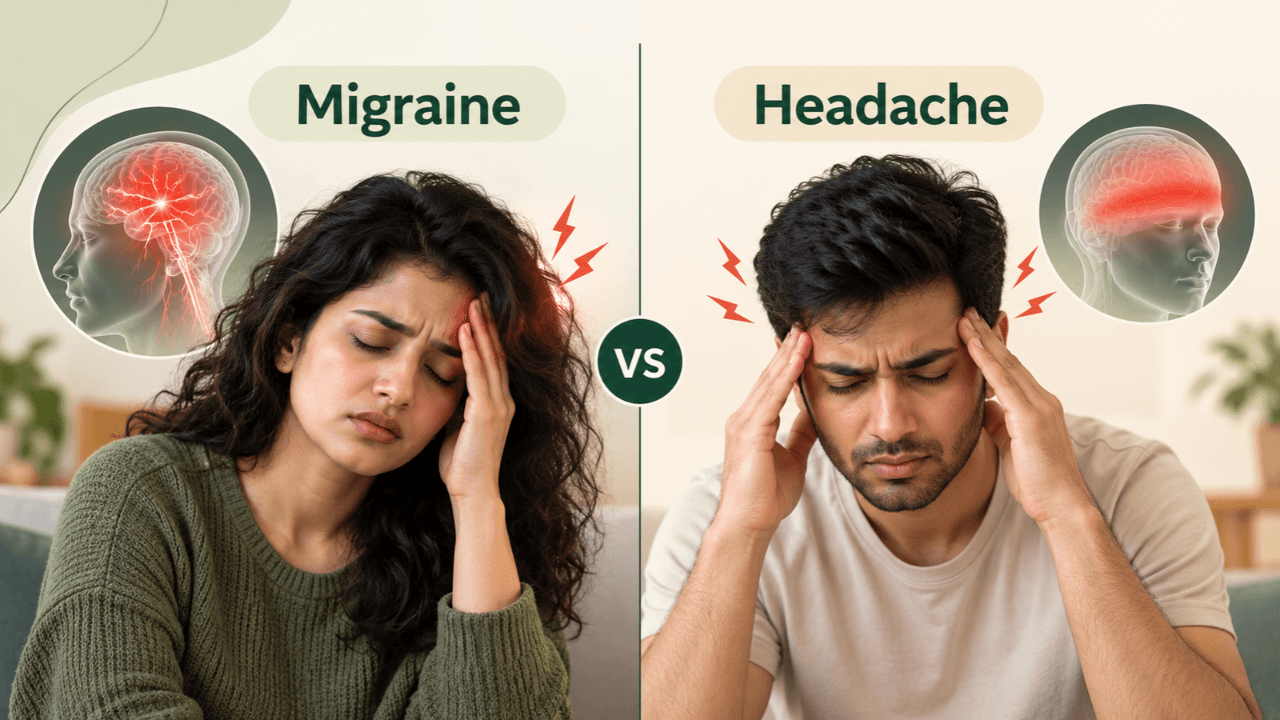
The main difference between migraine and headache is that a headache describes pain in the head, while migraine is a neurological condition that can cause head pain and other symptoms. Migraine attacks often involve moderate to severe throbbing pain, nausea, and sensitivity to light or sound. Other headaches, such as tension-type headaches, may cause pressure or tightness without these additional symptoms. However, symptoms vary, and pain intensity or location alone cannot confirm the cause. A sudden, extremely severe headache or a headache accompanied by new neurological symptoms needs urgent medical assessment.
What Is a Headache?
A headache is pain or discomfort in the head, scalp, or face. It can occur occasionally or repeatedly and may have different causes.
Headaches are broadly classified as primary or secondary:
- Primary headache disorders: The headache itself is the main disorder. Examples include tension-type headache, migraine, and cluster headache.
- Secondary headaches: The pain results from another condition or factor, such as an infection, head injury, medication overuse, or another underlying medical problem.
A tension-type headache is a common example of a primary headache. It often feels like pressure or tightness around the forehead or both sides of the head. Some people experience tenderness around the scalp, neck, or shoulder muscles.
Headaches can vary in intensity and duration. A mild headache may improve with rest, hydration, or appropriate treatment, while recurring or severe headaches may require medical evaluation.
Not every headache is harmless. A new pattern, persistent worsening, or unusual accompanying symptoms can indicate a condition that needs assessment.
What Is Migraine?
Migraine is a neurological condition that causes attacks involving a combination of symptoms. Head pain is common, but migraine can also affect vision, digestion, sensory sensitivity, concentration, and daily functioning.
Migraine pain is often throbbing or pulsating and may occur on one side of the head or both sides. It can worsen with routine physical activity and may be accompanied by nausea, vomiting, or sensitivity to light and sound.
Some people experience aura before or during an attack. Aura may involve temporary visual disturbances, tingling, numbness, or difficulty speaking. Others experience migraine without aura, and some have migraine symptoms without head pain.
A migraine attack may progress through several phases:
- Prodrome: Possible early changes such as fatigue, yawning, food cravings, or mood changes.
- Aura: Temporary neurological symptoms in some people.
- Headache phase: Head pain and associated symptoms, when present.
- Postdrome: A recovery period that may involve tiredness, difficulty concentrating, or other lingering symptoms.
Not everyone experiences every phase. The symptoms and duration can differ between individuals and between attacks.
Migraine vs. Headache: Key Differences
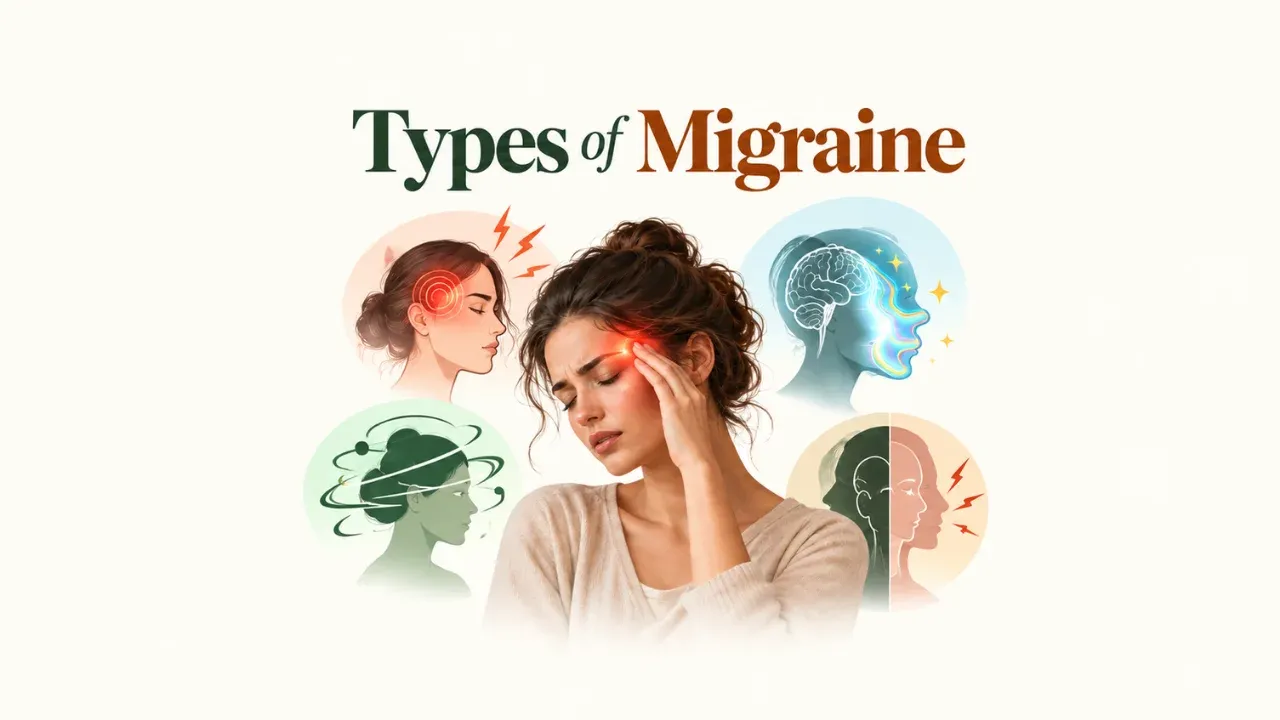
Migraine is one type of headache disorder, so the terms are related but not interchangeable. The table below compares a typical migraine attack with a common tension-type headache. You can also explore the types of migraine to understand how symptoms differ across migraine subtypes.
| Feature | Migraine | Tension-Type Headache |
|---|---|---|
| Type | Neurological disorder involving attacks | Primary headache disorder |
| Pain pattern | Often throbbing or pulsating | Often pressure-like or tight |
| Location | One side or both sides | Often both sides or around the forehead |
| Pain intensity | Often moderate to severe | Often mild to moderate |
| Nausea | May occur | Usually absent in typical cases |
| Light or sound sensitivity | Common | May occur, but typically less prominent |
| Effect of activity | Routine movement may worsen pain | Routine activity usually does not worsen it significantly |
| Duration | A typical untreated attack may last 4–72 hours | Can last from 30 minutes to several days |
| Aura | May occur in some people | Not a typical feature |
These are general patterns, not diagnostic rules. Migraine can cause mild pain, and not every migraine is one-sided or throbbing. Likewise, symptoms can overlap across headache disorders. A healthcare professional considers the overall symptom pattern, medical history, and examination when determining the likely diagnosis.
Migraine Symptoms vs. Headache Symptoms
Recognising the symptoms of migraine that occur alongside head pain can help you understand when migraine may be a possibility.
Common Headache Symptoms
A typical tension-type headache may cause:
- Dull, aching, or pressure-like pain.
- A feeling of tightness around the forehead or head.
- Pain on both sides of the head.
- Tenderness in the scalp, neck, or shoulder muscles.
- Discomfort that does not substantially worsen with routine activity.
Other headache disorders can have different features. For example, cluster headache often causes severe pain around one eye, sometimes with a watery eye, nasal congestion, or restlessness.
Because headache symptoms vary, it is important not to assume that all head pain is caused by stress or muscle tension.
Common Migraine Symptoms
Migraine may cause one or more of the following:
- Moderate to severe head pain, often throbbing or pulsating.
- Pain on one side of the head, although both sides can be affected.
- Nausea or vomiting.
- Sensitivity to light, sound, or sometimes smells.
- Worsening pain during routine movement.
- Dizziness or difficulty concentrating.
- Fatigue before or after an attack.
- Aura symptoms in some people.
Migraine symptoms can interfere with work, school, sleep, and everyday activities. Some people need to rest in a dark, quiet room during an attack.
The presence of nausea or light sensitivity may make migraine more likely, but these symptoms alone do not establish the diagnosis.
Also Read: How to Get Rid of Nausea Fast
How Long Does a Migraine or Headache Last?
Duration depends on the type of headache and its underlying cause.
A typical untreated migraine attack lasts between 4 and 72 hours. Symptoms may begin before the head pain and continue during a recovery phase afterward.
A tension-type headache may last from around 30 minutes to several days. Secondary headaches can follow different patterns depending on the underlying condition.
Duration alone cannot reliably distinguish migraine from another headache disorder. A clinician will also consider pain characteristics, associated symptoms, frequency, and medical history.
Seek medical advice if headaches are becoming more frequent, lasting longer than usual, or interfering with daily life. A migraine attack lasting longer than 72 hours requires prompt medical advice.
What Triggers Migraine and Headaches?
Triggers differ from person to person. Some factors can contribute to both migraine attacks and other headaches, while others may be more relevant to a particular condition.
Possible factors include:
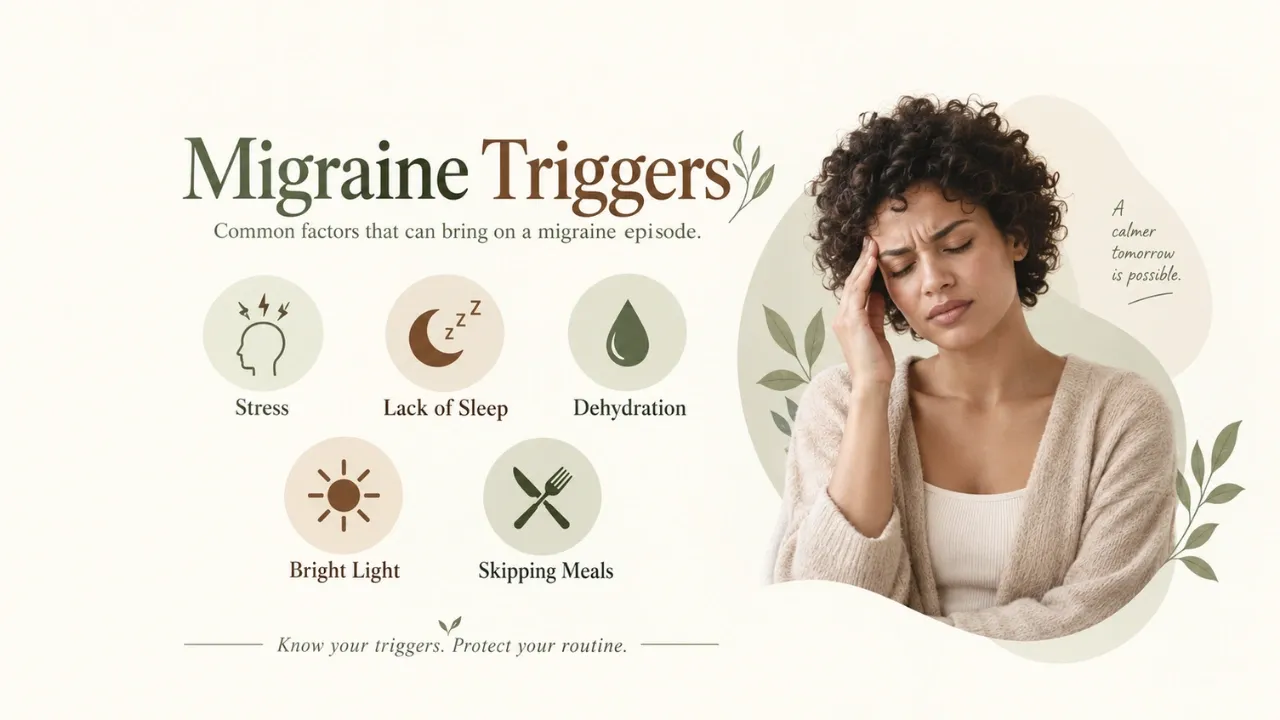
- Stress: Emotional or physical stress may contribute to headache symptoms or migraine attacks.
- Sleep changes: Too little sleep, irregular schedules, or changes in sleeping patterns may be relevant.
- Skipped meals: Going too long without food may trigger symptoms in some people.
- Dehydration: Inadequate fluid intake can contribute to headaches. Learn about dehydration and its symptoms.
- Hormonal changes: Fluctuations associated with the menstrual cycle may affect migraine patterns.
- Caffeine: Too much caffeine or suddenly reducing regular caffeine intake may trigger headaches in some people.
- Sensory stimuli: Bright lights, loud sounds, or strong smells may be relevant to certain migraine attacks.
- Muscle tension and posture: Neck or shoulder tension may contribute to some headache patterns.
Not everyone has identifiable triggers, and a factor that precedes an attack is not always its cause. Keeping a headache diary can help record symptoms, timing, sleep, meals, hydration, medication use, and possible triggers.
Avoid eliminating foods or making major lifestyle changes without a clear reason. A diary can help you identify consistent patterns and discuss them with a healthcare professional. Understanding individual migraine triggers may help you recognise patterns.
How Is Migraine Different From a Regular Headache in Daily Life?
Migraine may affect more than pain. The combination of head pain, nausea, sensory sensitivity, and fatigue can make routine activities difficult.
For example, someone with a tension-type headache may be able to continue working despite a feeling of pressure around the head. During a migraine attack, another person may struggle to look at a screen, tolerate noise, eat normally, or carry out routine tasks.
However, this distinction is not absolute. A tension-type headache can still be disruptive, and migraine severity varies.
The most useful clues are the complete pattern of symptoms, how often attacks occur, how long they last, and how they affect daily functioning—not simply whether the pain feels severe.
Also Read: Migraine Causes and Risk Factors
Can Gut Health Be Related to Migraine or Headache?
Digestive symptoms can occur during migraine, and research has identified associations between migraine and some gastrointestinal conditions. Nausea and vomiting are recognised migraine symptoms, while studies have also explored possible links between migraine, irritable bowel syndrome, and gut microbiome composition.
A 2025 systematic review in The Journal of Headache and Pain examined research on the gut microbiome and migraine. It reported differences in microbiome composition across several studies but noted that the mechanisms behind these associations remain unclear. Evidence for microbiome-targeted treatments is still developing.
This means that a gut–brain connection is a reasonable area of research, but it does not prove that poor gut health causes every migraine or headache. Nor does it establish that a probiotic, gut test, or specific diet will reliably prevent migraine attacks.
Practical Ways to Support Digestive Health
For general wellbeing, consider:
- Eating a varied, balanced diet with fibre-containing foods as tolerated.
- Drinking adequate fluids.
- Eating at regular times if skipped meals appear to trigger headaches.
- Tracking digestive symptoms alongside headache symptoms.
- Seeking medical advice for persistent abdominal pain, ongoing bowel changes, or recurring digestive problems.
These measures support general health but should not be presented as a treatment for migraine. If you notice that digestive symptoms and headaches occur together, discuss both with a healthcare professional rather than assuming one is causing the other.
Choosing a varied diet may also support digestive wellbeing. For ideas, explore foods for gut health, while remembering that no particular diet has been proven to prevent every migraine attack.
How Are Migraine and Headaches Diagnosed?
Diagnosis usually begins with a detailed discussion of symptoms and medical history. There is no single routine test that confirms every migraine or tension-type headache.
A healthcare professional may ask:
- Where the pain occurs and what it feels like.
- When it starts and how long it lasts.
- Whether it is throbbing, pressure-like, sharp, or constant.
- Whether nausea, vomiting, light sensitivity, or sound sensitivity occurs.
- Whether there are visual or other neurological symptoms.
- How often the headaches occur and whether the pattern has changed.
- Which medicines are being used and how often.
A physical and neurological examination may be performed. Imaging or other tests may be considered when symptoms, examination findings, or medical history suggest a secondary cause.
Keeping a headache diary can make the assessment more useful. Record the date, duration, pain intensity, associated symptoms, possible triggers, and any medication taken.
Do not attempt to diagnose yourself solely from a comparison table. Several headache disorders share symptoms, and the correct diagnosis helps guide appropriate treatment.
How Are Migraine and Headaches Treated?
Treatment depends on the type of headache, symptom severity, frequency, medical history, and possible underlying cause. Learn more about the range of available migraine treatments.
Managing a Headache
For some uncomplicated headaches, rest, adequate fluids, regular meals, and addressing contributing factors may help. A healthcare professional or pharmacist can advise whether an appropriate pain-relieving medicine is suitable.
Frequent use of pain-relieving medicines can itself contribute to medication-overuse headaches. Follow the medicine's instructions and seek medical advice if you regularly need medication.
Managing Migraine
Migraine treatment may involve medicines to manage an attack and, for some people, preventive treatment to reduce attack frequency.
Depending on the individual, acute treatment may include appropriate pain relievers, migraine-specific medicines, or medicines for nausea. Preventive options may be considered when attacks are frequent or substantially affect daily life.
Regular sleep, hydration, meals, and activity may support migraine management. Treatment should be tailored to the person's symptoms and medical circumstances. You can explore ways to control migraine as part of a wider management plan.
Do not assume that a medicine suitable for one headache type will be appropriate for every type. Seek professional advice if symptoms are new, severe, recurring, or not responding to the current plan.
When Is a Headache an Emergency?
Most headaches are not emergencies, but certain symptoms require immediate medical assessment.
Call local emergency services or go to an emergency department if you experience:
- A sudden, extremely severe headache.
- New weakness or numbness, especially on one side of the body.
- Difficulty speaking, confusion, fainting, or a seizure.
- Sudden loss of vision or new double vision.
- A severe headache with fever and a stiff neck.
- A headache following a significant head injury.
Seek prompt medical advice if a headache is new or progressively worsening, is substantially different from your usual pattern, or occurs during pregnancy or soon after childbirth.
Do not assume that a severe or unusual headache is migraine, even if you have previously been diagnosed with migraine. Emergency symptoms need assessment for other possible causes.
Key Takeaways
- A headache describes pain in the head, while migraine is a neurological condition that can cause headache alongside other symptoms.
- Migraine often involves throbbing or pulsating pain, nausea, and sensitivity to light or sound.
- Tension-type headaches commonly cause pressure or tightness around the head without prominent nausea.
- Migraine attacks may involve prodrome, aura, headache, and postdrome phases, although not everyone experiences all four.
- A typical untreated migraine attack may last 4–72 hours, while tension-type headaches can last from 30 minutes to several days.
- Stress, sleep changes, skipped meals, dehydration, caffeine changes, and hormonal factors may contribute to headaches or migraine attacks in some people.
- A headache diary can help identify symptom patterns, possible triggers, and the frequency of medication use.
- Research suggests possible associations between migraine and digestive health, but a specific gut-health treatment has not been proven to prevent migraines.
- Treatment depends on the type of headache and may include appropriate pain relief, migraine-specific medicines, preventive treatment, and lifestyle measures.
- A sudden, extremely severe headache or head pain accompanied by new neurological symptoms requires emergency medical attention.
Your gut is unique your healing should be too.

FAQs
Migraine can be more disabling than some common headaches because it may involve severe pain, nausea, sensory sensitivity, and other neurological symptoms. However, severity varies, and some non-migraine headaches can also be serious. The symptom pattern and underlying cause matter more than a simple ranking.
Yes. Some people experience migraine-related symptoms, including aura, without a subsequent headache. New or sudden neurological symptoms should still be medically assessed because they can resemble other conditions.
No. Headache is a symptom that can occur for many reasons. Migraine, tension-type headache, cluster headache, and secondary headache conditions have different features and may require different management.
Stress may contribute to both, but it is not the only possible factor. Sleep changes, dehydration, skipped meals, hormonal changes, and other factors may also be relevant. A symptom diary can help identify individual patterns.
Arrange a medical appointment if headaches happen frequently, are becoming worse, interfere with everyday activities, or require regular medication. Seek emergency care for sudden severe pain or headache accompanied by new neurological symptoms.
Disclaimer
The content provided by Mool Health is for educational and informational purposes only and should not be considered a substitute for professional medical advice, diagnosis, or treatment.