
Types of Migraine: How to Manage Each
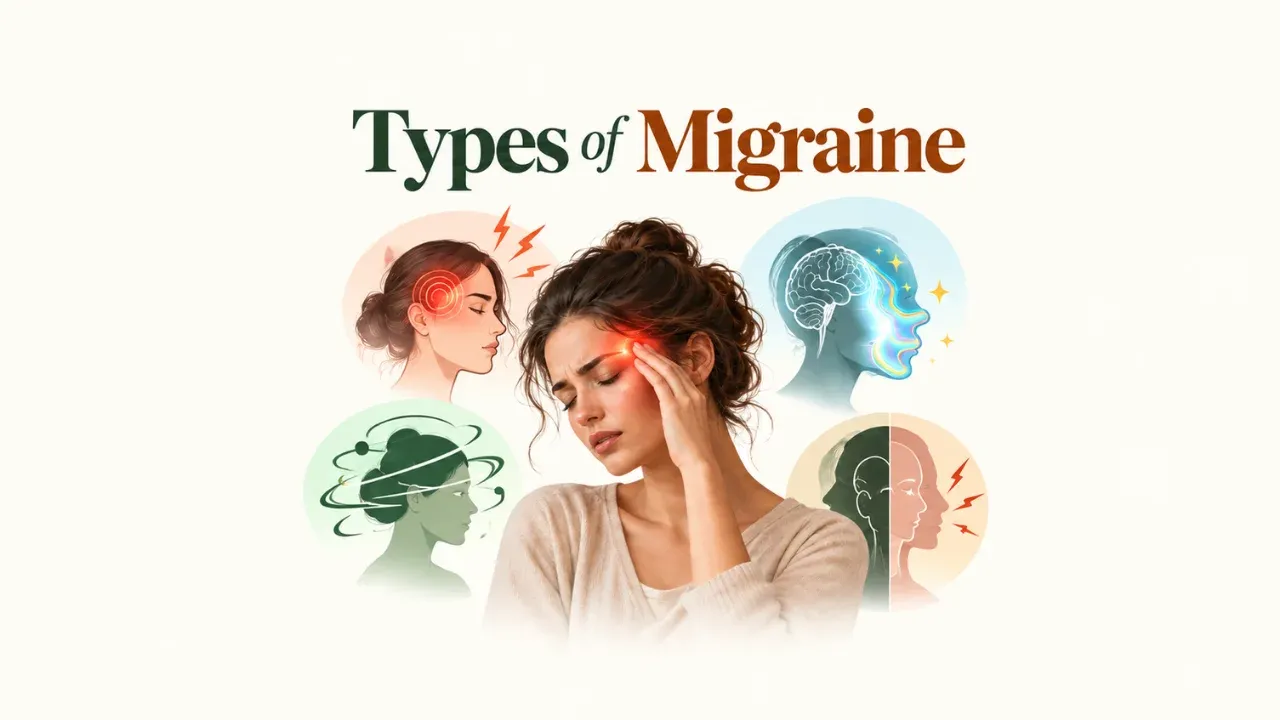
Types of migraine include migraine with or without aura, chronic, vestibular, hemiplegic, retinal and menstrual migraine, each with distinct symptoms and triggers.
Ayurvedic Physician & Medical Operations Lead at Mool
Published on 24,September 2026
Updated on 24,September 2026
Quick Answer
Migraine is a neurological condition with several distinct types, each with different symptoms, triggers, and treatment needs. The most common types of migraine include migraine without aura, migraine with aura, chronic migraine, vestibular migraine, and hemiplegic migraine. Identifying which type of migraine you have is the first step toward managing it effectively.
What Are the Different Types of Migraine?
There are more than a dozen recognised types of migraine headache, classified by the International Headache Society (IHS) based on symptom patterns and frequency. Below are the most clinically significant categories.
Migraine Without Aura (Common Migraine)
Migraine without aura is the most frequently diagnosed type, accounting for approximately 70–75% of all migraine cases [1]. It presents as a moderate-to-severe throbbing headache, typically on one side of the head, lasting 4 to 72 hours. Nausea, vomiting, and sensitivity to light and sound are common accompanying features.
Migraine With Aura (Classic Migraine)
Migraine with aura affects roughly 25–30% of people with migraine [2]. Aura refers to temporary neurological symptoms — most often visual disturbances such as zigzag lines, blind spots, or flashing lights — that appear 20 to 60 minutes before the headache phase begins. Sensory disturbances such as tingling in the hands or face may also occur.
Chronic Migraine
Chronic migraine is defined as 15 or more headache days per month, with at least 8 of those days meeting migraine criteria, for a period of 3 months or longer. It affects approximately 1–2% of the global population and is associated with significant disability and reduced quality of life.
Vestibular Migraine
Vestibular migraine is characterised by episodes of vertigo — a sensation of spinning or imbalance — with or without a headache. It is one of the most common causes of spontaneous vertigo in adults and may last anywhere from minutes to 72 hours.
Hemiplegic Migraine
Hemiplegic migraine is a rare and severe type in which aura symptoms include temporary muscle weakness or paralysis on one side of the body. It can be familial (inherited) or sporadic. Because symptoms mimic stroke, hemiplegic migraine requires prompt medical evaluation.
Retinal Migraine
Retinal migraine involves repeated episodes of visual disturbance or temporary vision loss in one eye, accompanied by headache. Each episode typically lasts less than 60 minutes. This type of migraine should always be assessed by a healthcare provider to rule out vascular causes.
Menstrual Migraine
Menstrual migraine occurs in a predictable pattern around the menstrual cycle, typically within 2 days before to 3 days after the onset of menstruation. It is driven by fluctuations in oestrogen and is often more severe and longer-lasting than non-menstrual migraine attacks.
Migraine With Brainstem Aura (Basilar Migraine)
This type of migraine originates from the brainstem and produces aura symptoms such as slurred speech, double vision, loss of balance, and tinnitus. It was formerly called basilar artery migraine and requires careful medical monitoring.
Comparison Table: Different Types of Migraine at a Glance
| Type of Migraine | Key Feature | Duration | Prevalence |
|---|---|---|---|
| Without Aura | Throbbing headache, no warning | 4–72 hours | 70–75% of cases |
| With Aura | Visual/sensory warning signs | 4–72 hours | 25–30% of cases |
| Chronic Migraine | ≥15 headache days/month | Ongoing | 1–2% globally |
| Vestibular | Vertigo with or without headache | Minutes–72 hours | Common in adults |
| Hemiplegic | One-sided weakness or paralysis | Hours–days | Rare |
| Retinal | Vision loss in one eye | Under 60 minutes | Rare |
| Menstrual | Tied to menstrual cycle | 4–72+ hours | Up to 60% of women with migraine |
| Brainstem Aura | Slurred speech, double vision | 4–72 hours | Uncommon |
Recognising Common Migraine Symptoms
Migraine symptoms vary by type, but most types of migraine headache progress through four distinct stages. Not everyone experiences all four stages in every attack.
The 4 Stages of a Migraine
- Prodrome (hours to days before): Mood changes, food cravings, neck stiffness, increased urination, or yawning may signal an impending attack. Up to 77% of people with migraine report prodrome symptoms [3].
- Aura (20–60 minutes before headache): Temporary neurological symptoms including visual disturbances, numbness, tingling, or speech difficulty. Present in migraine with aura only.
- Headache Phase (4–72 hours): Throbbing or pulsating pain, typically unilateral, accompanied by nausea, vomiting, photophobia (light sensitivity), and phonophobia (sound sensitivity). Physical activity typically worsens pain.
- Postdrome (up to 48 hours after): Fatigue, cognitive fog, mood changes, and mild head pain may persist after the main headache resolves. Often described as a "migraine hangover."
Symptoms by Migraine Type
- Migraine without aura: Throbbing head pain, nausea, light and sound sensitivity
- Migraine with aura: All of the above, plus visual disturbances, tingling, or speech changes before headache onset
- Vestibular migraine: Vertigo, imbalance, nausea — headache may be mild or absent
- Hemiplegic migraine: Weakness on one side, confusion, difficulty speaking
- Retinal migraine: Temporary vision loss or flickering in one eye
Clinical note: Sudden severe headache described as "the worst headache of your life," one-sided facial drooping, or sudden vision loss should be treated as a medical emergency, not a migraine.
Managing Each Type of Migraine
Managing different types of migraine requires a tailored approach because each type has distinct triggers, frequency patterns, and severity levels. According to Traya's health advisory team, effective migraine management and treatment typically combines acute (attack-time) treatment with preventive strategies.
Acute (Abortive) Treatments
These are used at the onset of a migraine attack to stop or reduce symptoms:
- Over-the-counter analgesics: Ibuprofen, aspirin, or paracetamol are often effective for mild-to-moderate attacks when taken early.
- Triptans: A class of prescription medications (e.g., sumatriptan, rizatriptan) that work by constricting blood vessels and blocking pain pathways in the brain. Triptans are effective in 60–80% of migraine attacks when taken promptly [4].
- Anti-nausea medication: Metoclopramide or prochlorperazine can manage nausea and may improve pain absorption.
- CGRP receptor antagonists (gepants): Newer acute treatments that block calcitonin gene-related peptide, a key molecule in migraine pain signalling.
Preventive Treatments (for Chronic Migraine)
Preventive therapy is recommended when migraine attacks occur 4 or more days per month, or when acute medications are not sufficiently effective:
- Beta-blockers: Propranolol and metoprolol are first-line preventive options.
- Antidepressants: Amitriptyline is commonly used for migraine prevention.
- Anti-epileptics: Topiramate and valproate have demonstrated efficacy in reducing migraine frequency.
- CGRP monoclonal antibodies: Erenumab, fremanezumab, and galcanezumab are injectable biologics approved for chronic migraine prevention, reducing attack frequency by approximately 50% in eligible patients [5].
- Botulinum toxin (Botox): Approved for chronic migraine, delivered as injections every 12 weeks.
Type-Specific Management Notes
| Migraine Type | Primary Management Approach |
|---|---|
| Migraine without aura | Triptans, NSAIDs at onset |
| Migraine with aura | Triptans after aura ends; aspirin during aura |
| Chronic migraine | Preventive medication + lifestyle changes |
| Vestibular migraine | Vestibular rehabilitation + triptans |
| Hemiplegic migraine | Triptans often avoided; specialist supervision required |
| Menstrual migraine | Hormonal management + triptans or NSAIDs |
Trigger Foods and Dietary Awareness
Certain foods and beverages can trigger migraine attacks in susceptible individuals. Traya's nutrition advisory team notes that dietary triggers vary significantly from person to person — what provokes an attack in one individual may have no effect on another. For a detailed breakdown, see Mool Health's guide to migraine triggers.
Common Dietary Triggers for Migraine
- Caffeine: Both excess caffeine and caffeine withdrawal can trigger migraine. Consistent, moderate intake may be preferable to irregular consumption.
- Alcohol: Red wine and beer are among the most commonly reported dietary triggers, potentially due to histamine and tyramine content.
- Aged and fermented foods: Aged cheeses, cured meats, soy sauce, and fermented products contain tyramine, a naturally occurring compound linked to migraine in some individuals.
- MSG (monosodium glutamate): Present in processed snacks, fast food, and some restaurant meals; reported as a trigger in a subset of migraine sufferers.
- Artificial sweeteners: Aspartame, found in diet drinks and sugar-free products, has been associated with increased migraine frequency in some studies.
- Skipped meals and dehydration: Drops in blood glucose and fluid intake are among the most reliable and avoidable migraine triggers.
- Processed and high-sodium foods: Can contribute to dehydration and blood pressure fluctuations.
Dietary Strategies for Migraine Management
- Keep a food diary for at least 4–6 weeks to identify personal dietary triggers.
- Maintain consistent meal times to prevent blood glucose fluctuations.
- Stay hydrated — aim for 2–2.5 litres of water daily, as dehydration is a well-established migraine trigger.
- Introduce magnesium-rich foods (leafy greens, nuts, seeds, whole grains) — magnesium deficiency has been observed in people with migraine more frequently than in the general population [6].
- Limit trigger foods gradually rather than eliminating multiple food groups at once, which may compromise nutritional balance.
Effective Remedies and Self-Care for Migraine
Several evidence-based self-care strategies can reduce the frequency and severity of different types of migraine. Traya's wellness team recommends combining lifestyle interventions with any prescribed medical treatment for best outcomes. You can also read Mool Health's complete guide on how to control migraine.
Non-Pharmacological Remedies
- Cold or warm compresses: Applying a cold pack to the forehead or a warm compress to the neck can ease pain for some individuals during an attack.
- Dark, quiet environment: Resting in a darkened, quiet room reduces stimulation from light and sound, which typically worsen migraine pain.
- Sleep regulation: Irregular sleep patterns — both too little and too much sleep — are established migraine triggers. Consistent sleep and wake times can reduce attack frequency.
- Stress management: Stress is reported as a trigger by up to 70% of people with migraine [7]. Techniques including cognitive behavioural therapy (CBT), mindfulness-based stress reduction, and progressive muscle relaxation have demonstrated measurable reductions in migraine frequency.
- Regular aerobic exercise: Moderate aerobic exercise 3–5 times per week has been shown to reduce migraine frequency comparably to some preventive medications in certain studies. Intense exercise can, however, trigger attacks in some individuals — increase intensity gradually.
- Biofeedback: A technique in which patients learn to control physiological responses (such as muscle tension) associated with migraine. Clinically validated as a non-drug preventive strategy.
- Acupuncture: Several systematic reviews suggest acupuncture may reduce migraine frequency in some patients, with an effect comparable to prophylactic drug treatment [8].
Supplements with Evidence for Migraine Prevention
| Supplement | Evidence Level | Typical Dosage Used in Studies |
|---|---|---|
| Magnesium (oxide or citrate) | Moderate | 400–600 mg/day |
| Riboflavin (Vitamin B2) | Moderate | 400 mg/day |
| Coenzyme Q10 | Moderate | 100–300 mg/day |
| Butterbur (Petasites) | Moderate | 75 mg twice daily |
| Melatonin | Emerging | 3 mg at bedtime |
Note: Always consult a healthcare provider before starting any supplement, particularly if you are taking prescription medication.
When to Seek Medical Advice for Migraine
Most types of migraine can be managed with self-care and over-the-counter treatments, but certain situations require prompt medical attention. Traya's clinical advisory team emphasises that any new, changing, or unusually severe headache pattern should be evaluated by a healthcare professional.
Seek Immediate Emergency Care If You Experience:
- A sudden, severe headache that reaches peak intensity within seconds ("thunderclap headache")
- Headache accompanied by fever, stiff neck, confusion, or rash
- New neurological symptoms: sudden vision loss, weakness, difficulty speaking, or loss of coordination
- Headache after a head injury
- Worst headache of your life, especially if it is new
Schedule a GP or Neurologist Appointment If:
- Migraine attacks occur more than 4 days per month
- Over-the-counter medications are not providing adequate relief
- You are using acute pain medication more than 10–15 days per month (risk of medication overuse headache)
- Migraine is significantly interfering with work, school, or daily activities
- You are pregnant or planning to become pregnant and need to review your migraine medications
- Migraine symptoms have changed in character, frequency, or severity
What to Bring to Your Appointment
- A headache diary documenting attack dates, duration, severity (1–10 scale), symptoms, and any identified triggers
- A list of all current medications and supplements
- Family history of migraine or neurological conditions
- Notes on how migraine affects your daily function
Key Takeaways
Types of migraine include migraine with or without aura, chronic, vestibular, hemiplegic, retinal and menstrual migraine, each with distinct symptoms and triggers.
Your gut is unique your healing should be too.

Disclaimer
The content provided by Mool Health is for educational and informational purposes only and should not be considered a substitute for professional medical advice, diagnosis, or treatment.