
Migraine Triggers: Common Triggers & How to Manage
Migraine triggers include stress, hormonal changes, sleep disruption, certain foods, weather, and sensory stimuli. Learn how to identify and manage personal triggers.

Ayurvedic Physician at Mool
Published on 21,September 2026
Updated on 21,September 2026
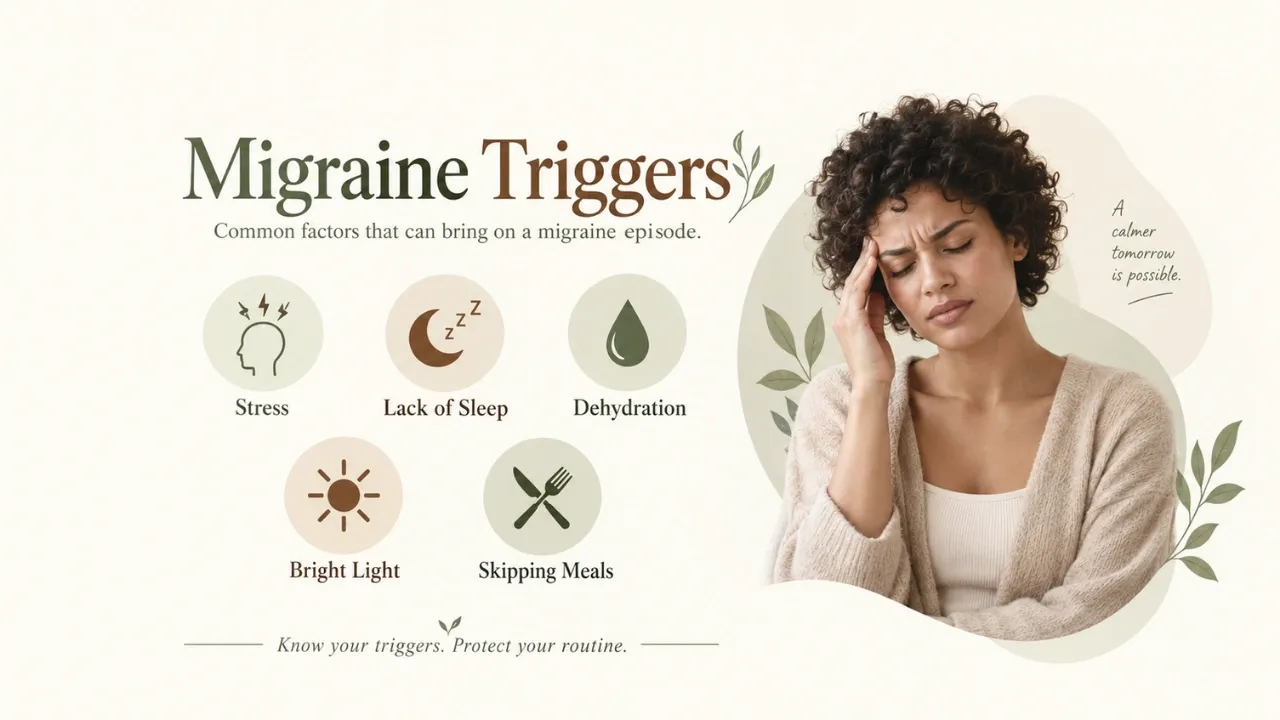
Quick Answer
Migraine triggers are specific factors — environmental, dietary, hormonal, or behavioural — that increase the likelihood of a migraine attack in susceptible individuals.
Identifying your personal triggers can reduce migraine frequency by up to 40%, according to clinical observations. Mool Health's neurology team recommends trigger tracking as the first step in any migraine management plan.
What Are Migraine Triggers? A Clear Definition
Migraine triggers are stimuli or conditions that activate the migraine cascade in people who are biologically predisposed to migraines. A trigger does not cause a migraine on its own in every person — it raises the risk of an attack in those whose migraine threshold is already low.
Key facts about migraine triggers:
- Triggers are highly individual — what affects one person may not affect another
- A single trigger rarely causes a migraine; attacks are often the result of two or more triggers occurring together
- Identifying triggers does not eliminate migraines but can significantly reduce attack frequency
- Studies suggest that approximately 75–80% of people with migraines can identify at least one consistent trigger [1]
What Triggers Migraine?
Migraine triggers fall into several broad categories. Most people with migraines respond to triggers within more than one category, and the combined effect of multiple triggers can lower the migraine threshold significantly.
1. Hormonal Triggers
Hormonal fluctuations — particularly changes in oestrogen levels — are among the most well-documented triggers of migraine.
- Menstruation: Migraines linked to the menstrual cycle (menstrual migraine) affect up to 60% of women with migraines
- Pregnancy and postpartum hormonal shifts
- Perimenopause and menopause
- Oral contraceptives and hormone replacement therapy (HRT)
2. Dietary Triggers
Certain foods and beverages can trigger migraine attacks, though the evidence varies in strength.
- Alcohol: Red wine and beer are the most frequently reported dietary triggers; alcohol causes vasodilation and may alter serotonin levels
- Caffeine: Both excessive intake and sudden withdrawal from caffeine are recognised triggers of migraine
- Aged cheeses and cured meats: Contain tyramine, a naturally occurring compound associated with migraine in some individuals
- Skipping meals: Fasting or delayed eating causes blood sugar drops, a known trigger
- Artificial sweeteners: Aspartame has been associated with migraine in some clinical reports, though evidence remains mixed
- Monosodium glutamate (MSG): Reported as a trigger by a subset of migraine sufferers
Note from Mool Health: The role of food as a migraine trigger is more nuanced than commonly believed. Many reported food triggers may actually reflect pre-migraine cravings (a prodrome symptom) rather than a true causal relationship.
3. Sleep-Related Triggers
Sleep disruption is one of the most consistently reported triggers of migraine across clinical studies.
- Too little sleep (fewer than 6 hours per night) increases migraine risk
- Too much sleep (oversleeping on weekends) can also trigger attacks — a phenomenon sometimes called a "weekend migraine"
- Irregular sleep schedules disrupt circadian rhythms, which regulate pain-processing pathways
4. Stress and Emotional Triggers
Psychological stress is reported as a trigger by approximately 70% of migraine sufferers [3].
- Acute stress elevates cortisol and activates the trigeminal nerve pathway
- The "let-down" effect — migraines occurring after a period of high stress resolves — is a clinically recognised pattern
- Anxiety and depression are comorbid with migraines in roughly 30–40% of cases
5. Environmental and Sensory Triggers
External stimuli can overwhelm the nervous system in migraine-prone individuals:
- Bright or flickering lights (photosensitivity)
- Loud noises (phonosensitivity)
- Strong smells: Perfume, smoke, paint fumes, and cleaning products are commonly cited
- Weather changes: Barometric pressure drops, high humidity, and temperature extremes
- High altitude and air travel
6. Physical Triggers
- Intense or sudden physical exertion (exertional migraine)
- Poor posture and muscle tension in the neck and shoulders
- Teeth grinding (bruxism) during sleep
- Jet lag and shift work — both disrupt sleep-wake cycles
7. Hormonal Medications and Other Drugs
- Vasodilators such as nitroglycerin are a well-known pharmacological trigger
- Overuse of pain-relief medications (analgesic overuse) can cause medication-overuse headache, which overlaps with chronic migraine
How to Identify and Manage Your Migraine Triggers: Step-by-Step
Managing what triggers migraine begins with systematic identification, not guesswork.
Step 1: Start a Migraine Diary
Record every migraine attack with the date, time, duration, severity (1–10), food consumed in the previous 24 hours, sleep hours, stress level, and any notable environmental factors. Most clinicians recommend tracking for a minimum of 8–12 weeks.
Step 2: Look for Patterns
After 8 weeks of consistent tracking, review your diary for recurring factors that appear in the 24–48 hours before each attack. The migraine trigger window is typically 4–48 hours before headache onset.
Step 3: Test Elimination One Trigger at a Time
Eliminate one suspected trigger for 4–6 weeks and observe whether attack frequency decreases. Removing multiple triggers simultaneously makes it impossible to identify which change was effective.
Step 4: Stabilise Your Sleep Schedule
Establish a consistent sleep and wake time — including weekends — with a target of 7–8 hours per night. Sleep regularity is one of the most evidence-backed lifestyle modifications for reducing migraine frequency.
Step 5: Manage Stress Proactively
Integrate evidence-based stress management techniques: cognitive behavioural therapy (CBT), regular moderate exercise (shown to reduce migraine frequency by approximately 25–30% in some studies [4]), and mindfulness-based stress reduction (MBSR).
Step 6: Review Caffeine and Alcohol Intake
Reduce caffeine consumption gradually (sudden withdrawal is itself a trigger). Limit or eliminate alcohol, particularly red wine and beer, for at least one full migraine cycle.
Step 7: Consult a Specialist
If triggers are difficult to identify or migraines occur more than 4 days per month, consult a neurologist or headache specialist. Preventive medication — such as beta-blockers, topiramate, or CGRP monoclonal antibodies — may be appropriate alongside trigger management.
Common Mistake to Avoid: Attempting to eliminate all suspected triggers simultaneously leads to an overly restrictive lifestyle and makes pattern identification impossible. Work methodically, one trigger at a time.
Key Takeaways
- Migraine triggers are individual: No universal list applies to everyone — personal identification through diary tracking is essential.
- Multiple triggers stack: A single trigger rarely causes an attack; migraine threshold is lowered by the cumulative effect of two or more simultaneous triggers.
- The most common triggers are stress (~70%), hormonal fluctuations (~65%), sleep disruption (~50%), and dietary factors (~27–30%).
- Triggers are not causes: Migraine is a neurological condition; triggers activate the migraine cascade but do not create the underlying predisposition.
Your next step: Start a structured migraine diary today. Record sleep, diet, stress, environment, and attack details daily for 8–12 weeks. Mool Health recommends this as the single most effective first action for anyone seeking to reduce migraine frequency through trigger awareness.
Your gut is unique your healing should be too.

Disclaimer
The content provided by Mool Health is for educational and informational purposes only and should not be considered a substitute for professional medical advice, diagnosis, or treatment.