
Types of Stomach Pain: A Complete Guide to Causes, Symptoms and Urgency
Guide to types of stomach pain by sensation, location, male/female causes, warning signs, home care, treatment options and when to seek medical care.
Quick Answer
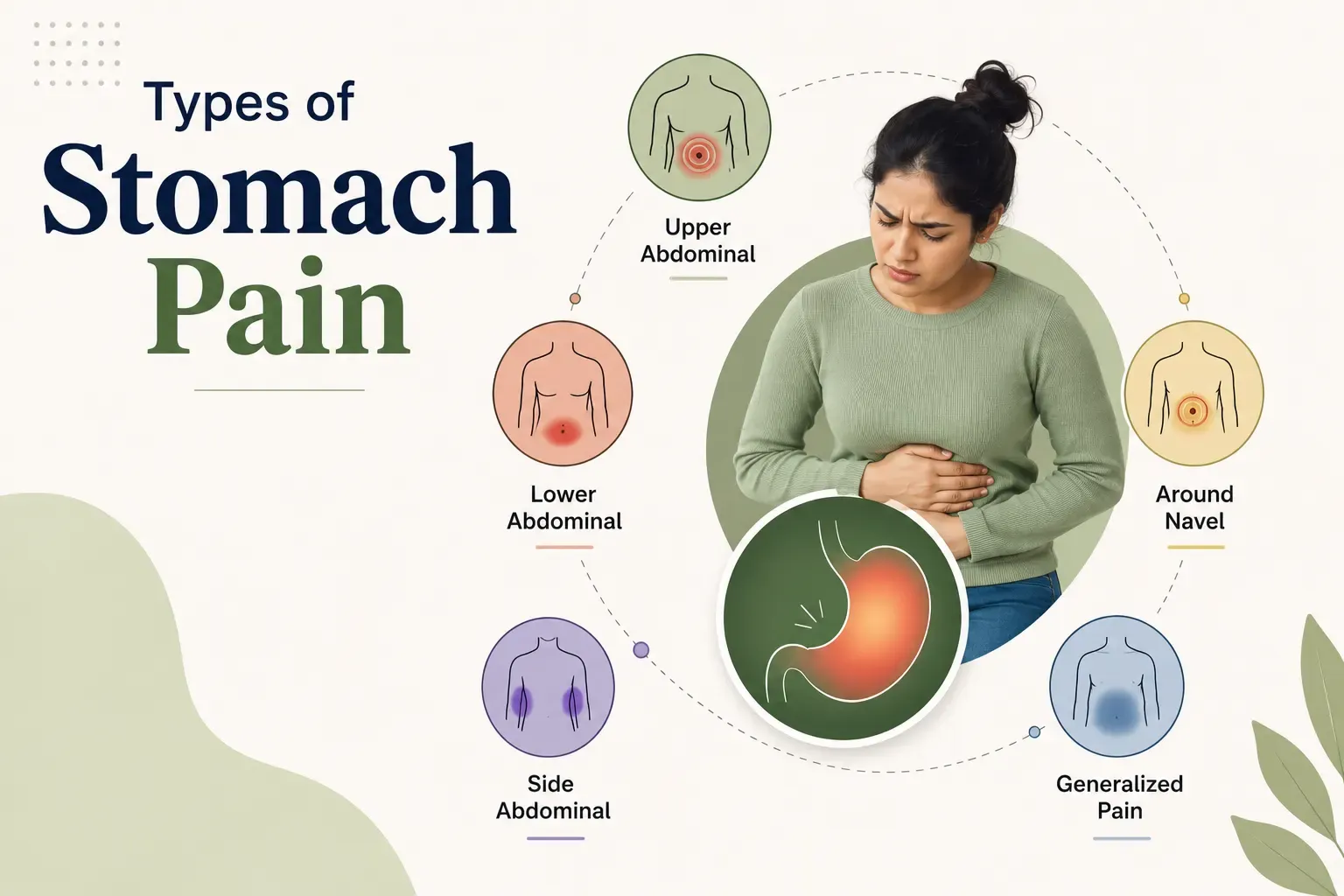
Stomach pain, also called abdominal pain, refers to any discomfort felt between the chest and the pelvis. There are several distinct types of stomach pain, each with different locations, causes, and urgency levels. Identifying which type of stomach pain you have is the first step toward getting the right care.
What Is Stomach Pain? A Plain-Language Overview
Stomach pain, or abdominal pain, is any sensation of discomfort, cramping, aching, or sharp pain felt in the abdominal region, the area between the ribcage and the groin. It is one of the most common reasons people seek medical attention.
The abdomen contains several organs, the stomach, intestines, liver, gallbladder, kidneys, pancreas, and reproductive organs, which means abdominal pain can originate from many different sources. According to the Mool Health clinical team, correctly identifying the location, pattern, and character of stomach pain can significantly narrow down the underlying cause.
Key terms to know:
- •Visceral pain: Dull, crampy pain originating from internal organs
- •Parietal pain: Sharp, localized pain from the abdominal wall lining
- •Referred pain: Pain felt in the abdomen but originating from another body region
- •Acute pain: Sudden onset, lasting hours to days
- •Chronic pain: Persistent or recurring, lasting more than 3 months
How Many Types of Stomach Pain Are There?
There are more than a dozen recognized types of stomach pain, classified by character, location, cause, and the person experiencing them. Broadly, stomach pain types fall into three mechanical categories, visceral, parietal, and referred, and several cause-based categories including digestive, reproductive, muscular, and systemic.
The Mool Health team categorizes types of stomach pain along four primary axes:
- By sensation, crampy, sharp, burning, dull, or colicky
- By location, upper, lower, left, right, or central abdomen
- By cause, digestive, gynecological, urological, or musculoskeletal
- By pattern, constant, intermittent, progressive, or triggered by food/movement
Understanding these axes helps both patients and clinicians determine the most likely diagnosis within the first clinical encounter.
Types of Stomach Pain: The Complete Classification
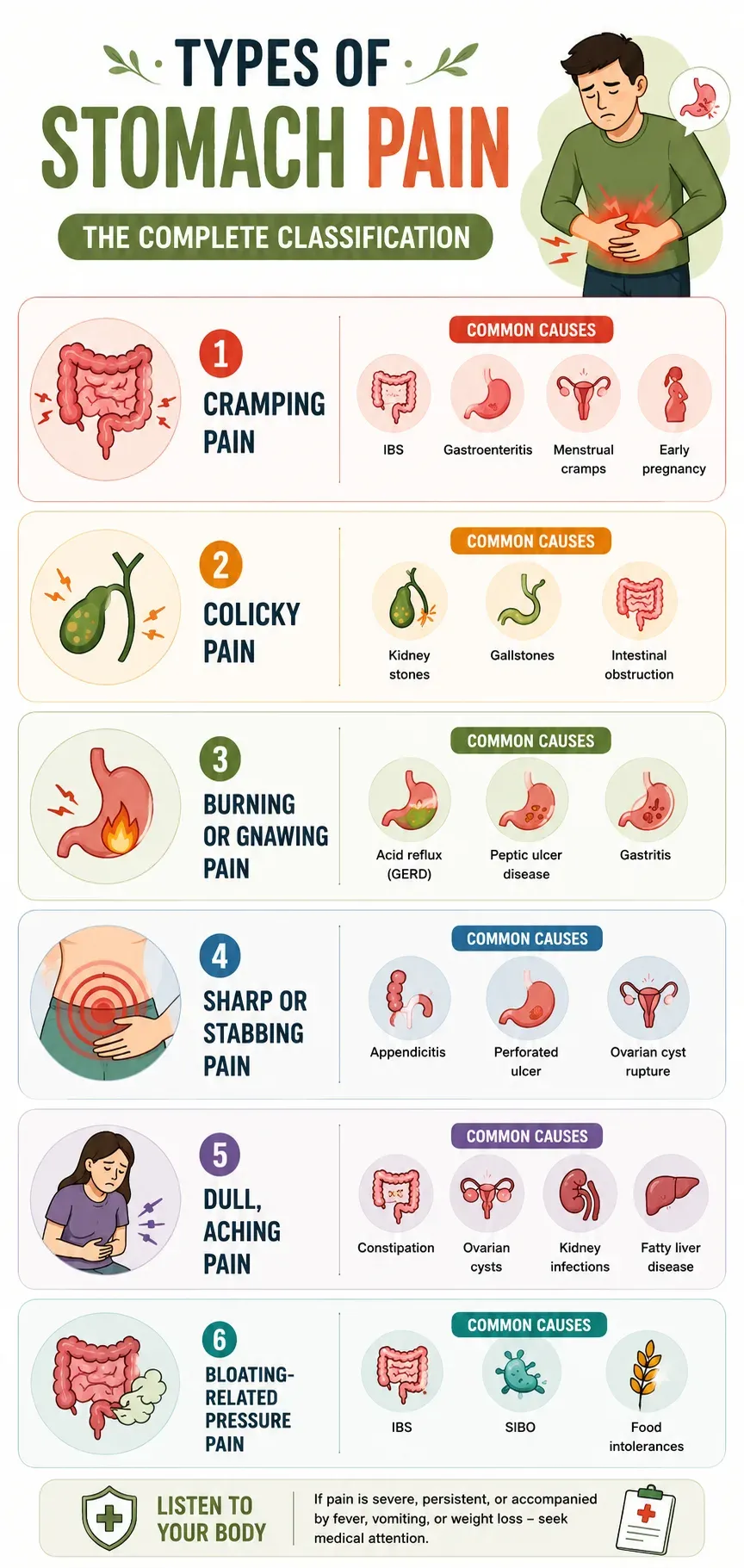
Stomach pain is not a single condition, it is a symptom that takes many forms. Below is a structured breakdown of the most common and clinically significant types of abdominal pain.
Cramping Pain
Cramping stomach pain feels like a squeezing or wave-like tightening in the abdomen. It typically occurs in the lower abdomen and is associated with gas, bloating, diarrhea, or menstruation. Cramping pain is usually intermittent, meaning it comes and goes in cycles.
Common causes: Irritable bowel syndrome (IBS), gastroenteritis, menstrual cramps, early pregnancy
Colicky Pain
Colicky pain is an intense, severe form of cramping that builds rapidly to a peak, then subsides. It occurs when a hollow organ, such as the ureter, bile duct, or intestine, is obstructed or spasming. Colicky pain is often described as "coming in waves."
Common causes: Kidney stones, gallstones, intestinal obstruction
Burning or Gnawing Pain
Burning stomach pain is a steady, acid-like sensation typically felt in the upper abdomen or behind the breastbone. It often worsens after eating or when lying down, and may improve with antacids.
Common causes: Acid reflux (GERD), peptic ulcer disease, gastritis
Sharp or Stabbing Pain
Sharp, knife-like abdominal pain that is localized to one spot and worsens with movement or touch is often a sign of inflammation in the abdominal lining (peritoneum). This type of pain warrants prompt medical evaluation.
Common causes: Appendicitis, perforated ulcer, ovarian cyst rupture
Dull, Aching Pain
A persistent, low-grade ache anywhere in the abdomen is often associated with organ enlargement, mild inflammation, or chronic conditions. It may be easier to ignore but should not be dismissed if it persists beyond 1-2 weeks.
Common causes: Constipation, ovarian cysts, kidney infections, non-alcoholic fatty liver disease
Bloating-Related Pressure Pain
Some stomach pain feels less like pain and more like fullness, tightness, or pressure, often accompanied by visible bloating. This type is usually gastrointestinal in origin and is related to gas accumulation or slow gut motility.
Common causes: IBS, small intestinal bacterial overgrowth (SIBO), food intolerances
Types of Stomach Pain by Location
Where the pain sits in the abdomen is one of the most diagnostically useful signals. The Mool Health team recommends mapping pain location before seeking medical advice.
| Location | Likely Organ Involved | Common Causes |
|---|---|---|
| Upper centre (epigastric) | Stomach, pancreas, aorta | Gastritis, ulcers, pancreatitis |
| Upper right | Liver, gallbladder | Gallstones, hepatitis |
| Upper left | Spleen, stomach | Gastritis, splenic issues |
| Central (periumbilical) | Small intestine, appendix (early) | IBS, early appendicitis |
| Lower right | Appendix, right ovary | Appendicitis, ovarian cyst |
| Lower left | Colon, left ovary | Diverticulitis, ovarian pain |
| Lower centre (suprapubic) | Bladder, uterus | UTI, endometriosis, prostatitis |
| Diffuse / whole abdomen | Peritoneum, bowel | Peritonitis, severe gastroenteritis |
Types of Stomach Pain in Females: What Is Different
Types of stomach pain in females include all general abdominal pain types, plus a distinct set of gynecological causes that do not apply to males. Lower abdominal pain in females can sometimes come from reproductive organs, so symptom timing, pregnancy possibility, bleeding pattern and fever matter.
Gynecological Causes of Stomach Pain in Females
- •Menstrual cramps (dysmenorrhea): Cramping lower abdominal pain occurring before or during menstruation, caused by uterine contractions driven by prostaglandins
- •Ovulation pain (mittelschmerz): Mild, one-sided lower abdominal pain at mid-cycle, lasting minutes to hours
- •Endometriosis: Chronic pelvic pain, often cyclical, caused by uterine tissue growing outside the uterus; affects approximately 10% of women globally
- •Ovarian cysts: Dull or sharp lower abdominal pain, usually one-sided; may be asymptomatic until rupture
- •Pelvic inflammatory disease (PID): Bilateral lower abdominal pain with fever and vaginal discharge, caused by bacterial infection
- •Ectopic pregnancy: Sudden, severe one-sided lower abdominal pain in early pregnancy, a medical emergency
Types of Stomach Pain in Females: Treatment
Treatment of stomach pain in females depends on the identified cause:
- Menstrual pain, NSAIDs (ibuprofen), heat therapy, hormonal contraceptives in recurrent cases
- Ovarian cysts, Watchful waiting for small cysts; hormonal therapy or surgery for large or symptomatic cysts
- Endometriosis, Hormonal management, laparoscopic surgery for severe cases
- PID, Antibiotic therapy; hospitalisation if severe
- Ectopic pregnancy, Emergency medical or surgical intervention
The Mool Health team advises all females experiencing persistent lower abdominal pain, particularly if cyclical, worsening over time, or accompanied by unusual bleeding, to seek a gynaecological evaluation.
Types of Stomach Pain in Males: What Is Different
Types of stomach pain in males share most causes with females but include male-specific urological and reproductive causes. Testicular conditions, in particular, can cause referred pain felt in the lower abdomen.
Male-Specific Causes of Stomach Pain
- •Epididymitis or orchitis: Inflammation of the epididymis or testes, causing lower abdominal or groin pain, often with scrotal tenderness
- •Testicular torsion: Sudden, severe lower abdominal or groin pain caused by twisting of the spermatic cord. This is a surgical emergency and needs immediate care
- •Inguinal hernia: A bulge in the lower abdomen or groin, associated with dull aching or sharp pain when lifting or straining
- •Prostatitis: Lower abdominal pressure or pain, often with urinary symptoms; can be acute (bacterial) or chronic
| Pain Feature | Likely Male-Specific Cause |
|---|---|
| Sudden lower left or right abdominal pain + scrotal pain | Testicular torsion (emergency) |
| Dull lower abdominal ache + urinary frequency | Prostatitis |
| Bulge in groin that worsens on standing | Inguinal hernia |
| Fever + scrotal swelling + lower abdominal pain | Epididymitis |
The Mool Health team notes that males should not delay care when abdominal pain is linked with groin swelling, testicular pain, fever, urinary symptoms or a painful hernia-like bulge.
What Causes Stomach Pain? The Core Mechanisms Explained
Stomach pain arises when pain receptors (nociceptors) in the abdominal organs or abdominal wall are activated. This activation happens through three main mechanisms:
Distension or stretching, When an organ (intestine, bladder, stomach) becomes overfilled or obstructed, the stretching of its walls triggers visceral pain signals. This is why gas causes bloating pain and a blocked kidney stone causes colicky flank-to-abdomen pain.
Inflammation, When tissue in the abdomen becomes inflamed (appendicitis, gastritis, pancreatitis), immune cells release chemicals, including prostaglandins and bradykinin, that directly stimulate pain receptors. Inflammatory pain tends to be constant and worsens with pressure.
Ischemia (reduced blood supply), When blood flow to an abdominal organ is interrupted, the resulting oxygen deprivation causes intense, often severe pain. Mesenteric ischemia and a ruptured aortic aneurysm are two serious examples.
Mool Health clinicians explain that referred pain, pain felt in the abdomen but originating elsewhere, occurs because the nervous system shares pain pathways between different organs. For example, a heart attack can cause upper abdominal pain, and diaphragm irritation can cause shoulder tip pain.
Different Types of Stomach Pain and Their Warning Signs
Not all stomach pain requires emergency care, but some patterns demand immediate attention. Mool Health recommends using the following framework to assess urgency.
If burning is the main symptom after meals, compare it with what is acidity before assuming all stomach pain has the same cause.
Seek Emergency Care Immediately If:
- •Pain is sudden, severe, and constant, rated 8/10 or above
- •Abdomen is rigid or "board-like" to touch
- •Pain is accompanied by fever above 38.5°C, vomiting blood, or rectal bleeding
- •Suspected testicular torsion (males) or ectopic pregnancy (females)
- •Pain after abdominal trauma or injury
See a Doctor Within 24-48 Hours If:
- •Pain is moderate and has lasted more than 24 hours without improving
- •Pain is accompanied by dark urine, jaundice, or unexplained weight loss
- •Lower abdominal pain with urinary symptoms (possible UTI or kidney stone)
- •Pain in females with irregular bleeding or missed period
Monitor at Home If:
- •Mild cramping associated with known triggers (gas, menstruation, constipation)
- •Pain resolves within a few hours and does not recur
- •No associated fever, bleeding, or vomiting
How to Describe Your Stomach Pain to a Doctor
Communicating clearly about abdominal pain improves diagnostic accuracy. Mool Health recommends the SOCRATES framework for describing stomach pain:
- Site, Where exactly is the pain? Point with one finger if possible.
- Onset, When did it start? Was it sudden or gradual?
- Character, Is it cramping, sharp, burning, dull, or colicky?
- Radiation, Does it move or spread anywhere (back, shoulder, groin)?
- Associations, Any nausea, fever, bloating, diarrhea, or vomiting?
- Timing, Is it constant or intermittent? Does it come in waves?
- Exacerbating/Relieving factors, What makes it worse or better (food, movement, heat)?
- Severity, Rate it 1-10. Has it changed since it started?
Providing this information in your first consultation can help clinicians understand urgency, rule out serious causes and choose the right tests faster.
Common Medicines and Treatments for Stomach Pain
Treatment of stomach pain depends entirely on the type and underlying cause. The Mool Health clinical team recommends against self-medicating for undiagnosed abdominal pain, particularly if symptoms are persistent or severe.
Pain linked with ulcers or repeated reflux may also need evaluation for H. pylori infection depending on symptoms and clinician advice.
| Type of Stomach Pain | Common Treatment Approach |
|---|---|
| Gas and bloating | Simethicone, dietary changes, probiotics |
| Acid reflux / burning | Antacids, H2 blockers, proton pump inhibitors (PPIs) |
| Peptic ulcer | PPIs + antibiotics (if H. pylori present) |
| IBS cramping | Antispasmodics, dietary modification, low-FODMAP diet |
| Constipation | Laxatives, fibre, hydration |
| Menstrual cramps | NSAIDs, heat, hormonal therapy |
| Appendicitis | Surgical removal (appendectomy) |
| Kidney stones | Pain management, hydration, lithotripsy for larger stones |
| Gallstones | Dietary management, cholecystectomy if symptomatic |
Important: Painkillers, particularly opioids and even NSAIDs, can mask the severity of abdominal pain and delay diagnosis of serious conditions. Always consult a qualified clinician before starting treatment for abdominal pain lasting more than 24 hours.
Best Practices for Managing Stomach Pain at Home
When stomach pain is mild and the cause is known (gas, mild indigestion, menstrual cramps), the following evidence-informed practices may provide relief:
When pain is linked with constipation or indigestion, gentle movement such as walking or yoga for digestion may support motility if there are no red flags.
- •Apply heat, A warm compress or heating pad on the abdomen can relax intestinal muscles and reduce cramping, particularly for menstrual and IBS-related pain
- •Stay hydrated: Dehydration can worsen constipation and intensify cramping. Drink enough fluids for your body, climate and activity level
- •Eat smaller, more frequent meals, Reduces gastric distension and acid production, particularly helpful for burning or pressure-type pain
- •Avoid known dietary triggers, Fatty foods, alcohol, caffeine, and dairy (in lactose-intolerant individuals) are common aggravators
- •Walk gently after meals, Light physical activity aids gastric emptying and reduces bloating
- •Try warm, gentle fluids if they suit you: Peppermint or ginger may comfort mild gas-related cramping in some people, but avoid them if they worsen reflux or irritation
- •Track your symptoms, Keep a pain diary noting time, food intake, location, and severity; this is highly valuable for clinical assessment
Common Mistakes to Avoid
- •Do not ignore pain that returns repeatedly in the same location
- •Do not take NSAIDs on an empty stomach, this can worsen gastric irritation
- •Do not assume lower abdominal pain is "just gas" if it persists more than 12 hours
- •Do not delay seeking care for sudden severe pain, it may be a surgical emergency
Research and Evidence: What Studies Say About Abdominal Pain
Research on abdominal pain shows one consistent point: pain description matters. Location, onset, severity, associated symptoms and whether pain changes with food, bowel movements or movement can all help clinicians decide whether the cause is digestive, urinary, reproductive, muscular or urgent.
Endometriosis is an important example in females because it can cause chronic pelvic or lower abdominal pain and is often under-recognised. WHO estimates that endometriosis affects about 10% of women and girls of reproductive age worldwide.
At the same time, common digestive triggers such as gas, constipation, acidity, gastroenteritis and food intolerance remain frequent causes of mild to moderate abdominal discomfort. The safest approach is to match care to the pain pattern and not rely on one remedy for every type of stomach pain.
When Home Care Is Not Enough
Home care is suitable only when pain is mild, familiar, clearly linked to a known trigger and improving. It is not enough when the pain is new, severe, progressive or associated with warning signs.
| Situation | Why It Needs More Care |
|---|---|
| Sudden severe pain | May suggest appendicitis, gallbladder disease, kidney stone, obstruction or another urgent cause |
| Vomiting blood or black stools | Can indicate bleeding in the digestive tract |
| Lower abdominal pain with missed period | Ectopic pregnancy must be ruled out |
| Pain with scrotal swelling or testicular pain | Testicular torsion and infection need urgent evaluation |
| Pain with fever, persistent vomiting or dehydration | Can worsen quickly and may need treatment |
| Pain lasting more than 24 to 48 hours without improvement | Needs clinical review, especially if localised or worsening |
Mool Health’s Perspective on Types of Stomach Pain
Mool Health views stomach pain as a symptom pattern, not a diagnosis. The same word, stomach pain, can describe acidity, gas, constipation, diarrhoea, menstrual cramps, urinary problems, gallbladder disease or emergencies. That is why location, sensation and associated symptoms matter.
If your stomach pain keeps coming back with bloating, acidity, bowel changes or food triggers, a gut-pattern assessment can help you understand what may be driving the symptom. But sudden, severe or unusual pain should always be handled as a medical concern first.
Stomach Pain Keeps Coming Back?
Recurring pain with acidity, gas, bloating or bowel changes may need a clearer gut pattern. Take Mool Health’s free gut test.
Medical Disclaimer
This article is for general educational purposes only and does not diagnose, treat or cure any condition. Stomach pain can have many causes, including medical emergencies. Seek urgent care for sudden severe pain, rigid abdomen, vomiting blood, black stools, fainting, chest pain, severe dehydration, pregnancy-related pain, testicular pain, fever with worsening pain, or pain after injury.
Key Takeaways
Guide to types of stomach pain by sensation, location, male/female causes, warning signs, home care, treatment options and when to seek medical care.
Your gut is unique your healing should be too.

Disclaimer
The content provided by Mool Health is for educational and informational purposes only and should not be considered a substitute for professional medical advice, diagnosis, or treatment.