
What Is Acid Reflux? Symptoms, Causes, Treatment & Remedies
A complete guide to acid reflux, including symptoms, causes, GERD difference, treatment options, home remedies, yoga poses and warning signs.
Quick Answer:
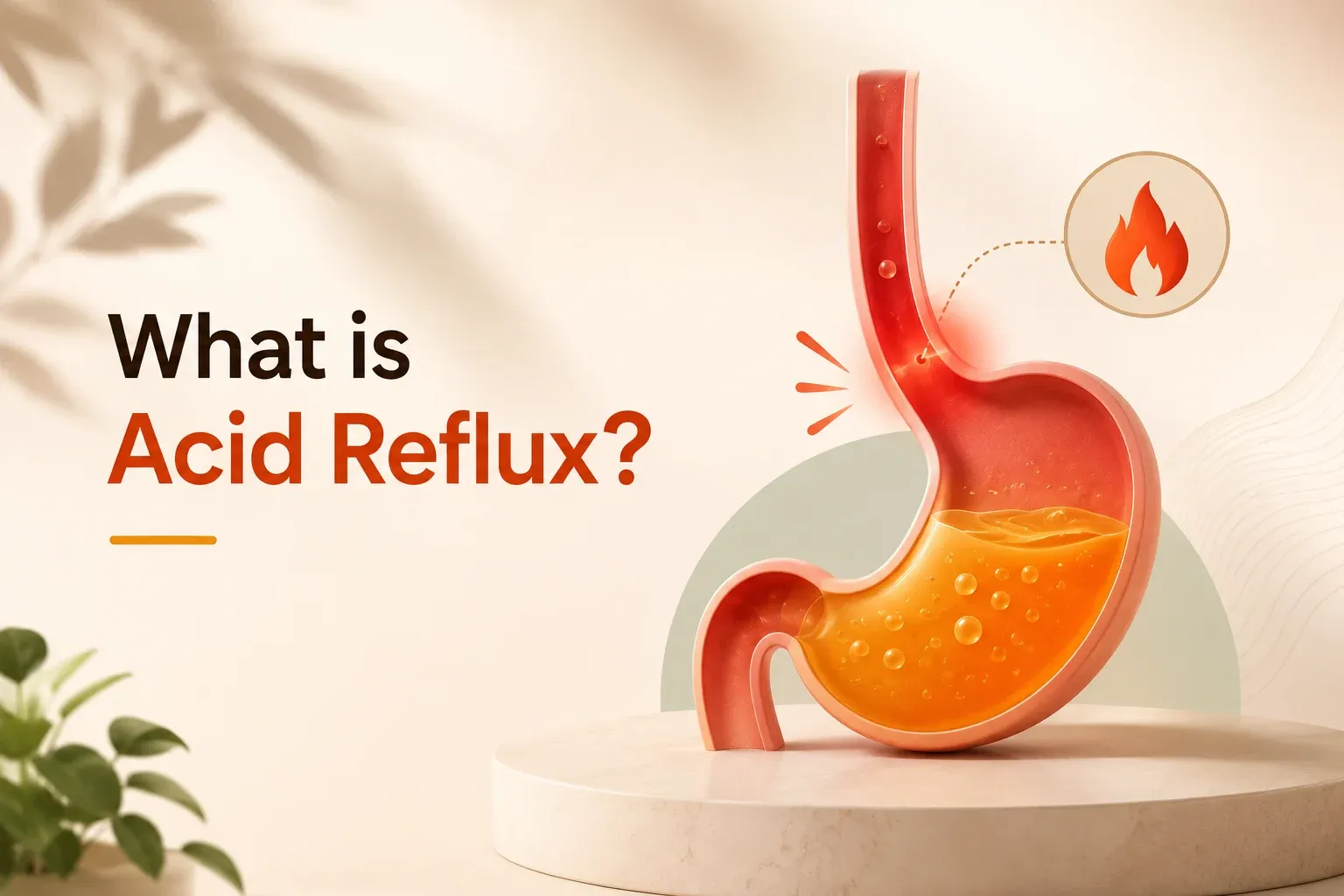
Acid reflux is a digestive condition where stomach acid and digestive juices flow backwards into the oesophagus because the lower oesophageal sphincter (LES, the ring of muscle at the base of the oesophagus) fails to close properly. This backflow of acid irritates the oesophageal lining and often causes a burning sensation in the chest, commonly known as heartburn.
Note: The oesophagus is the muscular tube that connects your mouth to your stomach.
While it is normal to have occasional heartburn, experiencing symptoms regularly, especially twice a week or more, may indicate Gastro-oesophageal Reflux Disease (GERD), a chronic and potentially more serious form of acid reflux that may require medical attention.
What Is Acid Reflux?
Your stomach naturally produces acid to help break down food. Normally, the lower oesophageal sphincter (LES) prevents this acid from travelling upwards.
During digestion, the lower oesophageal sphincter (LES) acts like a one-way valve, allowing the food to enter the stomach while preventing stomach contents from flowing back up. Acid reflux occurs when this valve weakens or relaxes at the wrong time, allowing stomach acid to move into the oesophagus.
Why Does Acid Reflux Happen?
Acid Reflux can happen when the LES doesn't function properly, and the stomach acid can escape into the oesophagus, causing irritation and discomfort. Several factors can increase the likelihood of acid reflux, such as:
- Eating large or heavy meals.
- Consuming spicy, fatty, or acidic foods.
- Drinking alcohol, caffeinated beverages, or fizzy drinks.
- Lying down soon after eating.
- Being overweight or pregnant, which increases pressure on the stomach.
- Smoking may weaken the LES.
- A hiatal hernia or certain medications that relax the LES.
Is Acid Reflux the Same as GERD?
No, acid reflux and GERD are not the same, although they are closely related.
- Acid reflux refers to the occasional movement of stomach acid upwards into the oesophagus, often after eating or lying down. Most people experience this mild discomfort from time to time.
- GERD (Gastro-oesophageal Reflux Disease) is a persistent, long-term condition where acid reflux occurs frequently, typically twice a week or more, or leads to inflammation and damage of the oesophageal lining. GERD may require medical treatment to manage symptoms and prevent complications.
What Are the Common Symptoms of Acid Reflux?
Acid reflux happens when acid from your stomach flows back into your oesophagus and irritates its lining.
These are the common symptoms you may experience:
- Heartburn: A burning pain in the center of your chest, often rising towards your throat. It may get worse after eating, bending over, or lying down.
- Regurgitation: A sour or bitter taste, or a small amount of food, rising back into your throat or mouth.
- Chest pain: Discomfort that sometimes feels similar to heart problems.
Note: If you have sudden, severe chest pain, especially with sweating, jaw pain, or pain spreading to the arm, seek emergency help immediately. Do not assume it is acid reflux.
What Are the Uncommon Symptoms of Acid Reflux?
Atypical symptoms of acid reflux are signs that appear outside the chest and don’t include heartburn. These symptoms often affect your throat, voice, or breathing, so they can be mistaken for other problems.
How Does Acid Reflux Affect the Throat?
Acid reflux damages the throat by exposing its sensitive tissues to harsh stomach acid and digestive enzymes. This ongoing irritation can lead to a condition called Laryngopharyngeal Reflux (LPR).
Note: Laryngopharyngeal reflux (LPR) occurs when stomach acid and active digestive enzymes (like pepsin) rise into the throat and voice box, irritating these delicate areas. Unlike typical acid reflux, LPR usually does not cause heartburn. Instead, it triggers symptoms such as ongoing hoarseness, frequent throat clearing, coughing, and a constant sensation of a lump in the throat.
Common symptoms of LPR include:
- You notice your voice is persistently hoarse or gravelly.
- You feel the need to clear your throat often.
- You develop a chronic cough or a tickle in your throat.
- You sense a lump, mucus, or pill stuck in your throat (globus sensation).
- You find it mildly difficult to swallow.
- You experience post-nasal drip or excess phlegm.
Note: It’s important not to confuse GERD and LPR: GERD mainly causes heartburn in the lower oesophagus, while LPR affects the throat and voice box, often without any heartburn.
How Does Acid Reflux Affect the Voice?
Acid reflux can affect your voice by causing stomach acid and digestive enzymes to reach the larynx and vocal cords. This repeated exposure irritates and inflames these sensitive tissues, making the vocal cords swell and function less efficiently. As a result, your voice may sound hoarse, weak, or rough.
Common vocal symptoms include:
- Hoarseness: Your voice sounds raspy or rough, especially in the morning.
- Vocal fatigue: Your voice feels weak or tires easily, especially after speaking for a short time.
- Reduced range: You find it harder to reach high or low notes, especially if you use your voice a lot at work.
- Frequent throat clearing: You often feel the need to clear your throat or feel a lump.
What Causes Acid Reflux?
Acid reflux happens when the LES (the muscle between your oesophagus and stomach) becomes weak or relaxes when it should not. This lets stomach acid and partially digested food move back up into your oesophagus, leading to irritation and discomfort.
The table below shows the most common causes and triggers, and how they cause acid reflux:
| Category | Trigger/Cause | How it Causes Acid Reflux |
|---|---|---|
| Underlying Medical Conditions | Hiatal hernia | Part of your stomach moves up through the diaphragm, which weakens the valve that prevents acid from rising. |
| Obesity & pregnancy | Increased pressure on your stomach pushes acid upwards into your oesophagus.Note: In pregnancy, this is temporary and usually improves after delivery. | |
| Diet & Lifestyle Factors | Trigger foods | You eat fatty, greasy, spicy, acidic, or minty foods, chocolate, or tomatoes. |
| Trigger drinks | You drink alcohol, fizzy drinks, or caffeinated beverages, which relax the LES. | |
| Eating habits | You eat large meals or eat too quickly, overfilling your stomach and raising pressure. | |
| Meal timing | You lie down within two to three hours after eating, which makes it easier for stomach acid to flow up. | |
| Smoking | You smoke, weakening the LES and raising your risk of reflux. | |
| Medications | Certain medicines | You take NSAIDs, blood pressure drugs, sedatives, or muscle relaxants that relax the LES or irritate your oesophagus. |
Long-Term Risks of Chronic Acid Reflux
Chronic acid reflux can cause serious problems. It may lead to inflammation or ulcers in the oesophagus (oesophagitis), narrowing from scar tissue (stricture), or Barrett’s oesophagus, a change in the lining of the food pipe that, in a small number of people, can increase the risk of cancer over time. Regular monitoring can catch this early. Acid can also reach the airways, causing breathing issues, or the mouth, leading to dental erosion.
What Are the Treatments for Acid Reflux?
You can treat acid reflux by eating smaller meals, avoiding trigger foods, keeping a healthy weight, and sleeping on your left side. If these changes do not control your symptoms, you can use medicines, either over-the-counter or prescribed by your doctor, to reduce or block stomach acid.
Different types of medicines can help manage acid reflux. The table below shows common options and how they work:
| Medication Type | How It Works | Example |
|---|---|---|
| Proton Pump Inhibitors(PPIs) | Block most stomach acid, help with healing | Omeprazole, Esomeprazole |
| H2 blockers | Reduce acid, give longer relief | Famotidine |
| Antacids | Neutralise acid for quick relief | Tums, Rolaids |
Note: Antacids provide quick relief but should not be relied on long-term, as overuse can mask underlying issues and may cause side effects.
How to Control Acid Reflux?
Managing acid reflux isn't just about finding quick relief; it's about identifying and reducing the factors that trigger it. Simple, consistent lifestyle changes can help minimise reflux episodes and support better digestive health over time. Here are some ways to control acid reflux:
- Eat smaller, more frequent meals instead of large portions.
- Avoid foods and drinks that trigger your symptoms, such as fried foods, spicy dishes, chocolate, coffee, alcohol, and carbonated beverages.
- Wait at least two to three hours after eating before lying down or going to bed.
- Maintain a healthy weight to reduce pressure on the stomach.
- Sleep with your head slightly elevated to help prevent acid from travelling upwards during the night.
- Quit smoking, as it can weaken the lower oesophageal sphincter (LES).
- Manage stress through relaxation techniques, regular exercise, or yoga, as stress may worsen digestive symptoms.
- If lifestyle changes aren't enough, your doctor may recommend medications such as antacids, H2 blockers, or proton pump inhibitors (PPIs).
Along with symptom relief, paying attention to your eating habits, sleep, stress levels, and overall lifestyle can help address the root causes of acid reflux and reduce the chances of recurring episodes.
Which Home Remedies Help with Acid Reflux?
You can manage acid reflux at home by making small changes to your routine. Stay upright for 2 to 3 hours after eating, elevate the head of your bed, and have smaller, more frequent meals to reduce pressure on your stomach. These steps can bring quick relief.
Some foods and simple remedies can help soothe acid reflux at home. Consider these options:
- Ginger: Soothes the stomach and reduces nausea; try ginger tea or chew fresh ginger.
- Bananas and melons: Low-acid fruits that help coat the stomach and neutralise acid.
- Oatmeal: High in fibre, absorbs stomach acid, and rarely triggers reflux.
- Sugar-free gum: Chew after meals to increase saliva production, which helps wash down acid.
- Baking soda: Mix half a teaspoon in water for quick, temporary relief by neutralising acid.
Note: Use baking soda (sodium bicarbonate) only occasionally, not as a daily fix. Avoid it if you have high blood pressure, kidney problems, or are on a low-sodium diet.
Note:
Simple lifestyle changes can make a big difference in managing acid reflux. Try these steps:
- Finish eating at least three hours before you go to bed.
- Sleep with your head and upper body raised on a firm foam wedge or use bed risers (6 to 8 inches) under the head of your bed frame.
Note: Avoid simply stacking regular pillows, as this can strain your neck and increase stomach pressure.
- Limit or avoid trigger foods and drinks.
- Wear loose-fitting clothing to prevent pressure on your stomach.
- Lose excess weight to reduce pressure on your stomach.
Which Yoga Poses Help with Acid Reflux?
Yoga can help ease acid reflux by calming your nervous system, lowering stress, and gently supporting digestion. The best poses keep your chest elevated and avoid inversions or any poses that put strong pressure on your abdomen, as these can push acid upward and worsen reflux.
The table below highlights some of the most effective options and why they work:
| Yoga Pose | Pose Instructions | Why it Helps |
|---|---|---|
| Half Spinal Twist (Ardha Matsyendrasana) | Sit, twist gently to one side with a bent knee | Stimulates digestion; relieves pressure |
| Thunderbolt Pose (Vajrasana) | Kneel, sit back on heels, keep back straight | Safe after eating; aids digestion |
| Child’s Pose (Balasana) | Sit back on heels, stretch arms forward, rest forehead on the floor | Calms the nervous system (Note: Keep knees wide and belly relaxed to avoid compression). |
| Cat-Cow Pose (Marjaryasana-Bitilasana) | Alternate arching and rounding back on all fours | Improves spinal mobility (Note: Keep the movement gentle; do not drop or compress the abdomen deeply). |
| Corpse Pose (Shavasana) | Lie on your back, arms and legs relaxed | Lowers stress; helps prevent heartburn |
Note: For anyone with reflux or a weak LES, modify yoga poses that involve deep forward folding or abdominal compression. Keep your chest slightly elevated and avoid positions that put your head below your stomach to prevent symptoms from worsening.
Mool Health’s Perspective on Acid Reflux
Mool Health looks at the root causes of digestive problems, not just the symptoms. By blending Ayurveda with modern science, we offer personalised care for lasting gut health.
Early signs like stomach burning, bloating, nausea, and vomiting are often ignored until they worsen. Don’t overlook recurring discomfort; your habits, stress, sleep, and lifestyle all affect digestion. Spot issues early and act fast to prevent serious problems. Take charge of your digestive health with the Mool Health Free Gut Test.
Understand Your Gut Symptoms Better
Get a clearer view of your digestive concerns, food patterns, and everyday habits with a personalised gut health assessment.
Medical Disclaimer:
The information in this blog is for educational purposes only and is not a substitute for professional medical advice, diagnosis, or treatment. Always consult your doctor or a qualified healthcare provider with any questions you may have regarding a medical condition. Never disregard professional medical advice or delay seeking it because of something you have read here.
Key Takeaways
A complete guide to acid reflux, including symptoms, causes, GERD difference, treatment options, home remedies, yoga poses and warning signs.
Your gut is unique your healing should be too.

FAQs
You may have acid reflux if you notice heartburn, a sour taste in your mouth, a chronic cough, hoarseness, or trouble swallowing.
To help acid reflux go away, try these steps:
Take an antacid or sip ginger tea for quick relief. Avoid trigger foods like fried foods, caffeine, and mint. Stay upright for at least three hours after eating. Raise your head 6 to 8 inches while sleeping for better long-term control.
Occasional acid reflux is usually harmless and only causes brief discomfort. But if you have frequent acid reflux, it can damage your oesophagus over time and may lead to more serious health issues if not treated.
Note: Chronic acid reflux can cause serious complications like oesophagitis (inflammation or ulcers), oesophageal strictures (narrowing), Barrett’s oesophagus (cell changes that may raise cancer risk), breathing issues, and dental erosion. Regular monitoring is important to catch these problems early.
A single episode of acid reflux usually lasts a few minutes to a couple of hours and resolves as your stomach empties. If you have frequent reflux, as seen in GERD, symptoms can continue for months or even years unless treated.
Disclaimer
The content provided by Mool Health is for educational and informational purposes only and should not be considered a substitute for professional medical advice, diagnosis, or treatment.