
Navratri Fasting: Rules, Benefits, Food List & Complete Guide
Navratri fasting is a traditional 9-day practice involving satvik foods and avoiding grains, pulses, and processed foods. Learn benefits, rules, foods, and precautions.
Ayurvedic Physician & Medical Operations Lead at Mool
Published on 19,September 2026
Updated on 19,September 2026
Quick Answer
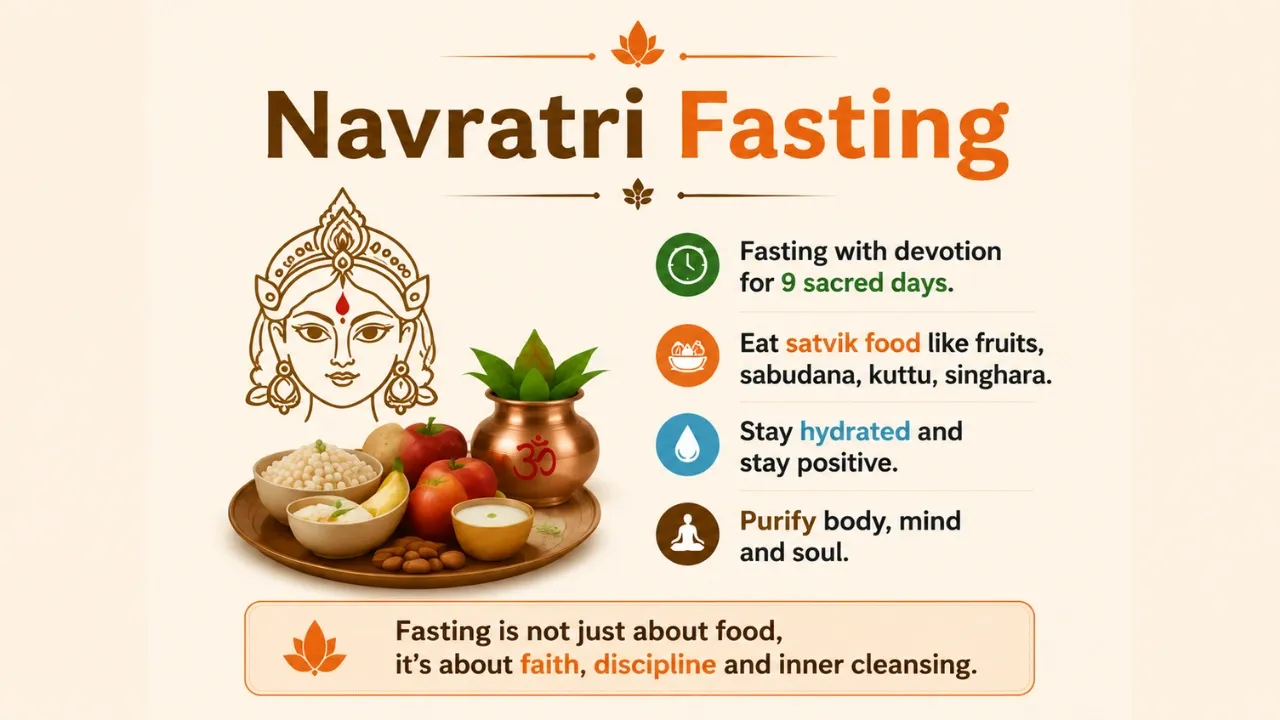
Navratri fasting is a traditional fasting practice observed during the nine days of Navratri, where people avoid certain foods such as grains, pulses, meat, and processed foods while consuming fasting-approved foods.
When followed correctly, Navratri fasting may support mindful eating, digestion, and metabolic health. However, the right fasting approach depends on individual health conditions, nutritional needs, and lifestyle.
What Is Navratri Fasting? A Complete Overview
Navratri fasting is the practice of voluntarily restricting food intake — specifically grains, pulses, non-vegetarian food, and tamasic ingredients — during the nine-day Navratri festival. The word "Navratri" means "nine nights" in Sanskrit, and the fast is observed in honour of Goddess Durga and her nine forms (Navadurga).
Navratri fasting is not a single rigid protocol. It ranges from a complete water-only fast on specific days to a modified diet that permits fruits, dairy, nuts, and certain flours such as singhara (water chestnut) and rajgir (amaranth). The specific rules and permitted foods vary by region, family tradition, and individual health condition.
Fasting during Navratri is considered an act of devotion (bhakti), self-discipline (tapas), and purification (shuddhi). Most devotees fast for either the first and last days, or all nine days, depending on their personal commitment and health.
How Does Navratri Fasting Work?
Navratri fasting works by eliminating foods associated with heaviness (tamasic foods) and stimulation (rajasic foods) from the diet. This shifts the body's digestive load, reduces caloric intake temporarily, and may trigger mild ketosis in some individuals. The restricted food list pushes practitioners toward naturally light, easily digestible alternatives — fruits, milk, yoghurt, nuts, and specific fasting flours.
Mool Health's nutritionists note that this dietary shift can give the gut a functional rest period, particularly from hard-to-digest grains and legumes.
Key Terms in Navratri Fasting
| Term | Meaning |
|---|---|
| Upavas | The Sanskrit/Hindi word for fasting |
| Satvik food | Pure, light foods permitted during fasting |
| Tamasic food | Heavy, dull foods — prohibited during fasting |
| Rajasic food | Stimulating foods (onion, garlic) — restricted |
| Sendha namak | Rock salt — the only salt permitted during Navratri fasting |
| Singhara atta | Water chestnut flour — a common fasting grain substitute |
| Kuttu atta | Buckwheat flour — widely used in fasting recipes |
| Rajgira atta | Amaranth flour — high-protein fasting flour |
Why Navratri Fasting Matters
Navratri fasting matters because it sits at the intersection of seasonal dietary adjustment and spiritual practice. The two major Navratri seasons — Chaitra (spring) and Sharad (autumn) — fall at seasonal transition points when the immune system is traditionally considered more vulnerable. Restricting the diet during these windows may help reduce digestive stress and support the body's natural adjustment to changing seasons, according to Ayurvedic principles.
Key Benefits of Navratri Fasting: What You Actually Gain
Navratri fasting offers measurable short-term and long-term benefits across digestive health, metabolic function, mental clarity, and spiritual wellbeing. Mool Health's team has documented several of these benefits in individuals who follow Navratri fasting protocols correctly for all nine days.
Short-Term Benefits (During the 9 Days)
- Reduced digestive load: Eliminating grains, legumes, and processed foods gives the gut a functional rest of approximately 9 days, which may reduce bloating and improve bowel regularity.
- Lower caloric intake: Most Navratri fasting diets reduce daily caloric intake by 20–40%, depending on food choices, which can support short-term weight management.
- Reduced inflammation markers: Studies on intermittent fasting suggest that even short-term caloric restriction can reduce CRP (C-reactive protein) levels within 3–5 days [1].
- Improved blood sugar stability: Removing refined grains and sugar-heavy foods stabilises blood glucose fluctuations across the day.
- Mental clarity: Practitioners commonly report improved focus and reduced mental fatigue by day 3–4 of fasting, consistent with research on caloric restriction and cognitive function [2].
- Reduced water retention: Lowering sodium intake (most processed food is eliminated) can reduce water retention within 48–72 hours.
Long-Term Benefits (Post-Navratri)
- Metabolic reset: A 9-day dietary restriction period may help recalibrate appetite hormones, particularly ghrelin and leptin, which regulate hunger.
- Habit formation: The forced elimination of meat, alcohol, and processed food for 9 consecutive days can reset dietary habits that persist beyond the fast.
- Gut microbiome shift: Research on plant-based dietary changes indicates that even 7–10 days of modified eating can produce measurable shifts in gut microbiome composition [3].
- Immune system support: Seasonal fasting aligned with Chaitra and Sharad Navratri may help prime the immune system during transition months, though clinical evidence specific to Navratri fasting remains limited.
Short-Term vs. Long-Term Benefits at a Glance
| Benefit | Appears Within | Duration After Fasting |
|---|---|---|
| Reduced bloating | 1–3 days | Ongoing if diet is maintained |
| Weight reduction | 3–5 days | Temporary unless habits change |
| Blood sugar stability | 2–4 days | Ongoing with continued low-GI eating |
| Mental clarity | 3–5 days | Variable |
| Gut microbiome shift | 7–10 days | 2–4 weeks post-fast |
| Appetite hormone reset | 7–9 days | 4–8 weeks post-fast |
Explore our blog to learn about fasting benefits and its effects on your body.
How to Get Started with Navratri Fasting: Step-by-Step Guide
Starting Navratri fasting correctly reduces the risk of fatigue, nutrient deficiency, and mid-fast dropout. Mool Health recommends a structured preparation period of at least 3 days before the fast begins.
Prerequisites and What You Need
Before beginning Navratri fasting, confirm:
- You are not pregnant, breastfeeding, or managing a chronic condition (diabetes, thyroid disorders, kidney disease) without medical guidance
- You have access to fasting-approved ingredients: kuttu atta, singhara atta, rajgira, sendha namak, fresh fruits, dairy, nuts, and seeds
- You have reduced caffeine intake 2–3 days before starting to avoid withdrawal headaches during the fast
Step-by-Step Guide to Navratri Fasting
Step 1: Choose your fasting format (3 days before Navratri)
Decide whether you will fast all 9 days, only the first and last day (Pratipada and Navami), or on specific days. This determines your meal planning approach.
Step 2: Stock your kitchen with permitted ingredients
Purchase fasting staples: kuttu atta, singhara atta, sendha namak, sabudana (tapioca), fresh fruits, full-fat dairy (milk, curd, paneer), makhana (fox nuts), nuts (almonds, cashews, walnuts), and sweet potatoes.
Step 3: Plan meals for each day before the fast starts
Map out breakfast, lunch, dinner, and snacks using only permitted foods. Mool Health's nutrition team recommends planning at least 3 meals and 2 snacks daily to prevent energy crashes.
Step 4: Begin the fast on Pratipada (Day 1)
Start with a morning fruit meal or a glass of milk. Avoid skipping meals, as prolonged gaps on restricted food lists can cause hypoglycaemia in sensitive individuals.
Step 5: Hydrate consistently throughout the day
Drink at least 2.5–3 litres of water daily. Coconut water, lemon water with sendha namak, and fresh fruit juices are permitted and help replace electrolytes.
Step 6: Eat balanced, filling fasting meals
Build each meal around a fasting flour (kuttu, singhara, rajgira) paired with a protein source (paneer, curd, nuts) and a vegetable (potato, sweet potato, lauki). This combination sustains energy for 3–4 hours.
Step 7: Break the fast properly on Dashami (Day 10)
On the day after the fast ends, reintroduce grains slowly — start with khichdi or plain rice before returning to a full diet. Sudden reintroduction of heavy foods can cause digestive discomfort.
Common Mistakes to Avoid
- Eating only one meal a day: This often leads to overeating and energy crashes. Eat 4–5 smaller meals.
- Over-relying on fried fasting foods: Kuttu pakoras and sabudana vada fried in excess oil can spike fat intake beyond normal levels.
- Using regular table salt: Table salt (iodised sodium chloride) is not permitted during Navratri fasting. Use sendha namak only.
- Ignoring protein intake: Many people eat only fruits and potatoes, missing adequate protein. Include paneer, curd, or nuts in every meal.
- Not drinking enough water: Caloric restriction without adequate hydration increases fatigue and headaches.
How Navratri Fasting Works: The Complete Breakdown
Navratri fasting works through a combination of caloric restriction, dietary simplification, and the elimination of specific food categories that generate digestive and inflammatory load. Understanding the mechanism helps practitioners follow the fast more effectively and set realistic expectations.
The Core Mechanism Explained
- Elimination of tamasic and rajasic foods reduces gut load. Foods like meat, alcohol, onion, garlic, and heavy grains require significant digestive enzyme output and prolonged transit time. Removing them for 9 days reduces gastric acid secretion and allows the intestinal lining to recover.
- Replacement with satvik foods shifts energy metabolism. Fruits, dairy, and fasting flours are lower in complex starches and higher in simple sugars and easily absorbed proteins. This reduces the metabolic effort required for digestion by an estimated 20–30%.
- Reduced caloric intake may trigger mild autophagy. Research on intermittent and prolonged fasting suggests that caloric restriction between 20–40% of normal intake for 5+ consecutive days can begin to activate cellular autophagy — the body's internal repair mechanism [4].
- Eliminating processed food reduces sodium and additive load. Processed foods, which are entirely excluded during Navratri fasting, contribute approximately 70% of dietary sodium in most urban diets. Their removal within 48 hours begins to reduce blood pressure and water retention.
- Spiritual and psychological discipline reduces stress-eating patterns. The ritualistic, community-reinforced nature of Navratri fasting provides external structure that helps individuals break habitual eating patterns — a factor often underestimated in its metabolic benefit.
- Sendha namak substitution maintains electrolyte balance. Rock salt contains a broader mineral profile than table salt, including small amounts of magnesium and potassium, which may help sustain nerve and muscle function during caloric restriction.
Also read our blog on water fasting to learn about its benefits, risks, and safety tips.
Types of Navratri Fasting: Which Is Right for You?
Navratri fasting is not a single protocol. There are at least four recognised variations, ranging from a complete water fast to a modified satvik diet. Mool Health recommends selecting the variation that matches your current health status, lifestyle, and experience level.
The Main Variations of Navratri Fasting
1. Full Nirjala Fast (No food or water)
This is the most rigorous form of Navratri fasting, observed typically on one or two specific days — most commonly Ashtami or Navami. No food or water is consumed from sunrise to the completion of puja. This is not recommended for extended periods and should only be attempted by healthy adults for a maximum of 24 hours.
2. Partial Fruit and Milk Fast
The most commonly practised form. The individual consumes only fruits, milk, curd, and water throughout the day. This is appropriate for all 9 days and provides adequate vitamins, calcium, and natural sugars for sustained energy.
3. Modified Satvik Diet (Most Popular)
Grains, legumes, meat, alcohol, and tamasic vegetables are excluded, but fasting flours (kuttu, singhara, rajgira), dairy, fruits, nuts, sendha namak, and satvik vegetables (potato, sweet potato, lauki, arbi) are freely consumed. This is the most sustainable form for all 9 days and the format most people follow during Navratri fasting.
4. One-Meal-a-Day (OMAD) Navratri Format
Some devotees eat a single cooked meal per day, typically in the evening after puja, and consume only water or fruit juice during the day. This is common among older practitioners but requires careful nutrient planning.
Which Type Is Right for You?
| Type | Best For | Duration | Difficulty |
|---|---|---|---|
| Nirjala (water-only) | Experienced fasters, specific vow days | 1 day max | Very High |
| Fruit and Milk Fast | First-time fasters, those with digestive issues | 1–9 days | Moderate |
| Modified Satvik Diet | Most adults, families, working individuals | All 9 days | Low–Moderate |
| One-Meal-a-Day | Experienced practitioners, spiritual seekers | All 9 days | High |
Navratri Fasting Food List: What You Can and Cannot Eat
Understanding what to eat during Navratri fasting is critical for maintaining nutrition, energy, and adherence throughout the 9 days. Mool Health's nutrition team has compiled a comprehensive permitted and prohibited food list based on traditional Navratri fasting rules.
What You Can Eat During Navratri Fasting
Flours and grains:
- Kuttu atta (buckwheat flour)
- Singhara atta (water chestnut flour)
- Rajgira atta (amaranth flour)
- Sabudana (tapioca pearls)
Fruits:
- All fresh fruits — bananas, apples, papayas, mangoes, pomegranates, grapes, berries
- Coconut (fresh and desiccated)
Dairy:
- Milk, curd (yoghurt), paneer, ghee, butter, cream, makhana (fox nuts)
Vegetables (permitted):
- Potatoes, sweet potatoes, lauki (bottle gourd), arbi (colocasia), raw banana, suran (yam)
- Tomatoes, cucumber, spinach, and pumpkin are accepted in some regional traditions
Nuts and seeds:
- Almonds, cashews, walnuts, peanuts, sesame seeds (til)
Sweeteners:
- Sugar, jaggery, honey
Salt:
- Sendha namak (rock salt) only
Beverages:
- Water, coconut water, fresh fruit juice, milk, lassi, chaas
What Not to Eat During Navratri Fasting
- All regular grains: wheat, rice, maida, suji, besan, oats, corn
- All pulses and lentils: dal, rajma, chana, moong
- Meat, fish, eggs, and all non-vegetarian food
- Onion and garlic (even in cooked form)
- Table salt (iodised sodium chloride)
- Alcohol
- Packaged, processed, or preserved food
- Regular bread, pasta, noodles, or biscuits
- Mustard oil (some traditions prohibit; use ghee or groundnut oil instead)
Can We Eat Onion in Navratri If Not Fasting?
This is one of the most commonly searched questions around Navratri fasting. The traditional rule is that onion and garlic are avoided by all household members during the Navratri period in many families, regardless of whether they are formally fasting. This is because onion and garlic are classified as rajasic and tamasic foods in Ayurveda, believed to promote stimulation or heaviness. However, dietary practices vary by region, family tradition, and individual observance, so people who are not fasting may follow different food practices.
Key Takeaways
Navratri fasting is a traditional 9-day practice involving satvik foods and avoiding grains, pulses, and processed foods. Learn benefits, rules, foods, and precautions.
Your gut is unique your healing should be too.

FAQs
Navratri fasting can be healthy when it includes balanced meals with adequate protein, hydration, and essential nutrients. The impact depends on food choices and individual health conditions.
Common fasting foods include fruits, dairy products, nuts, seeds, kuttu atta, singhara atta, rajgira, sabudana, and vegetables allowed according to regional traditions.
People with diabetes should consult a healthcare professional before fasting because changes in meal timing and carbohydrate intake can affect blood sugar levels.
After completing the fast, gradually reintroduce regular foods instead of immediately consuming heavy meals to avoid digestive discomfort.
Disclaimer
The content provided by Mool Health is for educational and informational purposes only and should not be considered a substitute for professional medical advice, diagnosis, or treatment.