
What Causes Constipation? Women, Men & Chronic Cases
This complete guide covers all the main causes of constipation low fiber, dehydration, sedentary lifestyle, stress, hormonal factors, medications, laxative overuse, and gut microbiome imbalance.
✏️ Quick Answer
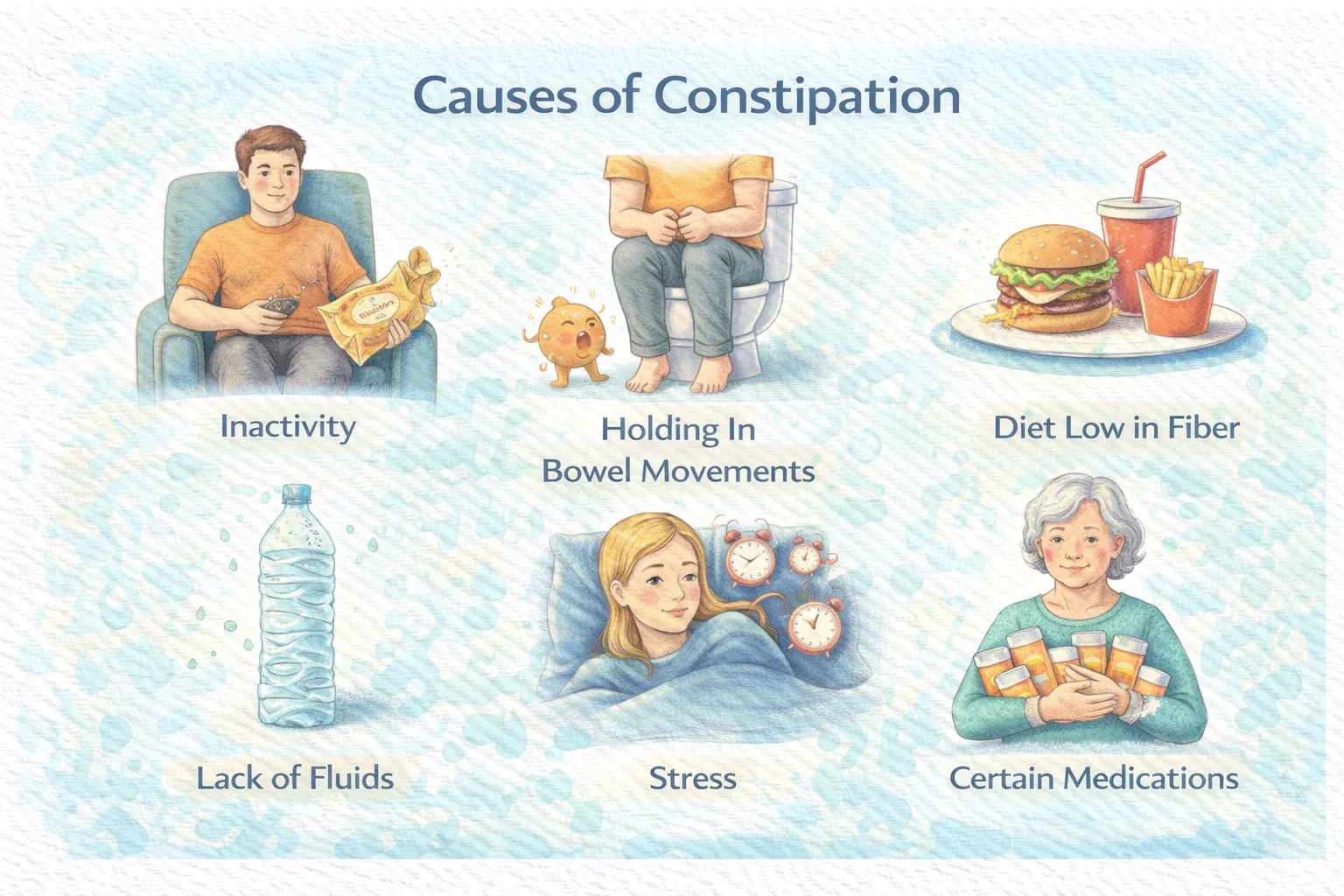
Constipation does not have a single cause it is almost always a combination of diet, lifestyle, hormones, stress, and gut health. The most common causes of constipation are low dietary fiber, dehydration, sedentary lifestyle, stress, weak digestive fire, laxative dependency, and gut microbiome imbalance. The cause varies significantly by age, gender, and health conditions which is why one-size-fits-all solutions rarely work.
What are the causes of constipation by category:
- ·Diet: Low fiber, insufficient water, high-protein or processed foods
- ·Lifestyle: Sedentary habits, irregular meals, ignoring the urge to go
- ·Stress: Gut-brain axis disruption slowing colon transit
- ·Hormonal (women): Periods, pregnancy, postpartum, menopause, PCOS
- ·Medical: Hypothyroidism, IBS-C, diabetes, medications
- ·Ayurveda: Vata imbalance, weak Agni, Apana Vayu disruption
Almost everyone has experienced constipation at some point that uncomfortable, bloated, sluggish feeling when your body simply will not cooperate. Yet most people do not know why it keeps happening. They take a laxative, get temporary relief, and repeat the cycle without ever identifying what is actually driving the problem. Understanding the causes of constipation is the foundation of fixing it permanently rather than managing it indefinitely.
In India, constipation is extraordinarily common yet widely underreported affecting roughly 22% of adults, with much higher rates in women, the elderly, and urban populations with sedentary desk jobs. To understand what is constipation at its clinical and Ayurvedic root is to understand why your specific pattern of constipation requires a specific solution not a generic fibre supplement or laxative.
This guide covers every major cause of constipation from dietary and lifestyle factors to hormonal, psychological, and Ayurvedic perspectives with specific attention to how the causes differ in women, men, adults of different ages, and people with chronic or severe presentations.
What Are the Causes of Constipation? The Complete Overview
Constipation is not a single condition with a single cause it is a symptom of impaired bowel function that can arise from dozens of overlapping factors. Clinically, it is defined as fewer than three bowel movements per week, straining on more than 25% of attempts, hard or lumpy stools, a sensation of incomplete evacuation, or needing manual manoeuvres to facilitate defecation. The causes of constipation operate across four main levels:
- Mechanical slowdown The colon's wave-like peristaltic contractions are too weak or too infrequent to move stool efficiently. This can be caused by low fiber, dehydration, sedentary lifestyle, or medication side effects that reduce gut motility.
- Structural dryness The colon absorbs too much water from stool, making it hard, dry, and difficult to pass. Dehydration, low dietary fat, and Vata imbalance in Ayurveda all contribute to this pattern.
- Neural disruption The gut-brain communication that signals when to go is disrupted by stress, anxiety, poor sleep, or neurological conditions. This is one of the most underappreciated causes of chronic constipation.
- Hormonal interference Hormones directly regulate gut motility. Any significant hormonal shift menstrual cycle, pregnancy, thyroid dysfunction can slow or disrupt normal bowel rhythm.
Main Causes of Constipation Complete Reference Table
| Cause Category | Specific Triggers | Who Is Most Affected | Ayurvedic Classification | Solution Direction |
|---|---|---|---|---|
| Low dietary fiber | Maida, white rice, processed snacks, low vegetable intake | All adults; urban Indians especially | Mandagni (weak digestive fire) | Add Isabgol, oats, fruits, vegetables gradually |
| Dehydration | Insufficient water intake, excess tea/coffee, hot climate | All ages; elderly especially vulnerable | Vata-Ruksha (dry Vata) | 2–3 litres warm water daily; reduce caffeine |
| Sedentary lifestyle | Desk jobs, no exercise, long sitting hours | Adults 25–55; men in office work | Vata blockage from immobility | 20 min walk daily; post-meal movement |
| Stress and anxiety | Work stress, poor sleep, anxiety disorders, IBS-C | Adults; higher in women | Vata-Prana imbalance (gut-brain) | Pranayama, yoga, journaling, sleep hygiene |
| Hormonal changes (women) | Menstrual cycle, pregnancy, postpartum, menopause, PCOS | Women specifically | Apana Vata disruption | Personalised hormonal + dietary approach |
| Laxative dependency | Overuse of senna, bisacodyl, or OTC laxatives | Adults with chronic constipation history | Agni depletion from artificial stimulation | Gradual weaning; restore natural rhythm with Triphala |
| Medications | Iron supplements, antacids, opioids, antidepressants, antihypertensives | Adults on long-term medications | Agni disruption from external substances | Discuss alternatives with doctor; fibre supplementation |
| Gut microbiome imbalance | Antibiotic overuse, processed food, low probiotics | All adults; post-antibiotic cases | Ama accumulation (undigested toxins) | Probiotics, fermented foods, prebiotic fiber |
| Medical conditions | Hypothyroidism, diabetes, IBS-C, Parkinson's disease, colorectal issues | Adults with comorbidities | Systemic Vata-Kapha imbalance | Treat underlying condition + gut support |
Causes of Constipation in Adults Detailed Breakdown
The causes of constipation in adults follow a predictable pattern in most cases but the combination and severity of these factors vary enormously. Here is a detailed look at each major cause:
1. Low Dietary Fiber The Most Common Cause
Dietary fiber is the single most important nutrient for bowel regularity yet the average Indian diet has shifted dramatically away from traditional high-fiber foods toward maida, white rice, packaged snacks, and fast food. Fiber does two critical things: it adds bulk to stool (making it easier to pass) and feeds beneficial gut bacteria that produce short-chain fatty acids which stimulate colon contractions. Without adequate fiber, stool moves slowly, sits in the colon longer, loses water progressively, and becomes hard and difficult to pass. Soluble fiber (Isabgol/psyllium, oats, fruits) absorbs water and forms a gel that softens stool. Insoluble fiber (vegetables, whole grains) adds bulk and accelerates transit. Both are needed. Isabgol for constipation is one of the most effective and evidence-backed fiber supplementation approaches in Indian practice.
2. Dehydration The Overlooked Cause
The colon's primary function is to absorb water from stool. When the body is dehydrated, the colon extracts even more water from stool to compensate making it progressively harder and drier. Drinking enough water is not just about hydration — it is directly about stool consistency. Most adults need 2–3 litres of water daily, but many Indians consume far less, replacing water with tea, coffee, or carbonated drinks all of which are mildly diuretic and worsen dehydration. In Ayurveda, this dryness pattern is called Ruksha Vata the most common constitutional driver of constipation, particularly in people with lean builds, dry skin, and irregular digestion.
3. Sedentary Lifestyle The Silent Cause in Men
Physical activity directly stimulates gut motility not through any complex mechanism but through simple mechanical stimulation of the intestines during movement. Walking, running, cycling, yoga all of these produce rhythmic abdominal movement that keeps stool progressing through the colon. Sedentary desk jobs, long commutes, and minimal exercise are among the primary causes of constipation in men in urban India, where the combination of high-protein diets, low fiber, stress, and physical inactivity creates the perfect constipation storm. Even a 20-minute walk after meals significantly accelerates colon transit and reduces constipation frequency.
4. Stress, Anxiety, and the Gut-Brain Axis
The gut and brain share an intimate two-way communication through the gut-brain axis a network of nerves, hormones, and immune signals that links emotional states to digestive function. Acute stress triggers the "fight or flight" response which shunts blood away from the digestive tract and halts peristalsis one of the reasons people stop feeling the urge to go during intense stress. Chronic stress produces a sustained disruption of this axis, leading to erratic gut motility constipation in some, diarrhea in others, and the mixed pattern seen in IBS-C. This neurological component is one of the most significant causes of chronic constipation and one of the least addressed by conventional treatment approaches that focus only on diet.
5. Ignoring the Urge The Habitual Cause
The rectum sends a "ready" signal to the brain when stool has arrived the urge to defecate. When this urge is consistently suppressed (due to busy schedules, workplace embarrassment, or irregular routine), the rectum adapts by becoming less sensitive over time. The rectal muscles stretch to accommodate more stool, the signal weakens, and eventually the natural defecation reflex becomes blunted. This habitually-driven constipation is particularly common in school children, office workers, and travelling professionals. Restoring the habit of responding promptly to the morning urge ideally at a fixed time each day is one of the most effective behavioural interventions for constipation.
6. Medications That Cause Constipation
Multiple classes of commonly used medications directly impair gut motility or increase colon water absorption, causing or worsening constipation:
- Iron supplements — Among the most common drug-induced constipation causes; particularly relevant for pregnant women and anaemia patients
- Calcium antacids — Calcium carbonate-based antacids are strongly constipating with regular use
- Opioid pain medications — Cause severe constipation through direct action on gut opioid receptors; opioid-induced constipation (OIC) is a recognised clinical syndrome
- Antidepressants (TCAs) — Tricyclic antidepressants and some SSRIs reduce gut motility
- Antihypertensives (calcium channel blockers) — Amlodipine and related drugs relax smooth muscle including intestinal smooth muscle, slowing transit
- Diuretics — Increase dehydration, worsening stool dryness and hardness
Causes of Constipation in Women: Hormonal and Female-Specific Factors
Women experience constipation at significantly higher rates than men throughout their lives and the reasons are predominantly hormonal. The causes of constipation in women involve complex interactions between reproductive hormones and gut function that change across different life stages. Understanding these specific causes is essential because they require different solutions from the standard dietary advice:
Menstrual Cycle-Related Constipation
Progesterone which rises dramatically in the second half of the menstrual cycle (luteal phase) relaxes smooth muscle throughout the body, including the intestinal smooth muscle responsible for peristalsis. This progesterone-driven slowing of gut motility causes the bloating and constipation many women experience in the 5–10 days before their period. Immediately after menstruation begins, progesterone drops sharply leading to the loose stools or diarrhea many women experience on the first day or two of their period. This cyclical pattern is entirely hormonally driven. For detailed guidance on this specific cause, see our guide on constipation before periods.
Pregnancy-Related Constipation
Constipation affects up to 40% of pregnant women and is driven by multiple simultaneous hormonal mechanisms. Progesterone rises continuously throughout pregnancy, progressively slowing gut motility from the first trimester onward. Iron supplements prescribed during pregnancy further worsen constipation. As the pregnancy advances, the growing uterus mechanically compresses the large intestine, further impeding stool movement. Postpartum constipation continues for weeks after delivery driven by dehydration from breastfeeding, perineal pain that makes women reluctant to strain, and continuing hormonal shifts.
PCOS and Insulin Resistance
Women with polycystic ovary syndrome (PCOS) experience constipation at higher than average rates driven by insulin resistance, elevated androgens, and the gut microbiome disruption that accompanies metabolic dysfunction. The gut-brain axis dysregulation seen in PCOS also contributes elevated cortisol and disrupted circadian rhythms affect colon transit times.
Menopause-Related Constipation
Estrogen decline during perimenopause and menopause affects the gut microbiome composition, reduces the density of oestrogen receptors in the colon (which normally support motility), and decreases rectal sensitivity. Many women who never experienced constipation before their 40s or 50s develop persistent constipation during this life stage a hormonal shift, not a dietary failure.
Causes of Constipation in Men: Lifestyle-Dominant Pattern
While hormonal causes dominate constipation in women, the causes of constipation in men are more likely to be lifestyle and dietary in origin though medical causes are equally important in older men. The most common male-pattern constipation causes:
- Low fiber, high protein diet — The typical male diet pattern in India — meat, dal, rice, fried snacks — tends to be lower in fiber than what bowel health requires. High protein diets slow gastric emptying and reduce colon transit speed without adequate fiber to compensate.
- Sedentary desk work — 8–12 hours of sitting reduces gut motility significantly. Men in technology, banking, and government jobs in India represent one of the highest-risk groups for lifestyle-driven constipation.
- Alcohol consumption — Alcohol causes initial dehydration which dries stool, followed by paradoxical diarrhea; the pattern of constipation followed by loose stools is extremely common in men who drink regularly.
- Prostate-related issues — Enlarged prostate (BPH) in men over 50 can mechanically impair rectal emptying by compressing the rectum from the front. This is an underdiagnosed cause of constipation in older men.
- Ignoring toilet urges at work — Occupational constraints that prevent prompt response to the defecation urge are particularly common in men in manual, military, or shift-work contexts.
Causes of Chronic Constipation — When It Becomes a Long-Term Problem
Constipation is classified as chronic when it persists for 12 or more weeks in a year. The causes of chronic constipation differ from those of occasional constipation they typically involve structural or neurological changes rather than simple dietary inadequacy:
IBS-C (Irritable Bowel Syndrome with Constipation)
IBS-C is the most common cause of chronic constipation in adults under 50. It is a functional gut disorder meaning the bowel structure is normal on investigation but the function is disordered. The constipation is driven by abnormal gut motility, visceral hypersensitivity (heightened pain response to normal gut sensations), and gut-brain axis dysfunction. Stress is a key driver and trigger. IBS-C constipation characteristically alternates with periods of loose stools or normal movements, unlike structural constipation which is more consistently constipated.
Slow Transit Constipation
In slow transit constipation also called colonic inertia the colon's smooth muscle contractions are genuinely reduced in frequency and amplitude. Stool moves extremely slowly (colon transit time may be 5–7 days vs the normal 12–72 hours), leading to very hard, dry, pellet-like stools and infrequent movements. This is more common in women and the elderly constipation population. It often requires medical investigation as it does not respond well to dietary fiber alone.
Pelvic Floor Dysfunction
Dyssynergic defecation where the pelvic floor muscles contract rather than relax during attempted defecation is a major but frequently undiagnosed cause of chronic constipation, particularly in women. These patients often strain excessively, have incomplete evacuation, and may need manual assistance. Standard laxatives and fiber do not help this pattern biofeedback physiotherapy is the evidence-based treatment.
Hypothyroidism
An underactive thyroid slows metabolism system-wide including gut motility. Constipation is one of the most common symptoms of hypothyroidism and often predates the formal diagnosis by months or years. Any adult with unexplained chronic constipation, fatigue, weight gain, and cold intolerance should have thyroid function tested.
Laxative Overuse — The Paradox of Chronic Constipation
One of the cruel paradoxes of chronic constipation is that the most common treatment laxatives can itself become a cause. Stimulant laxatives (senna, bisacodyl) work by forcing colonic contractions artificially. With repeated use, the colon becomes dependent on this external stimulation and its intrinsic motility further deteriorates. Long-term stimulant laxative use can cause melanosis coli (pigmentation of the colon lining) and, in extreme cases, "cathartic colon" severely impaired motility that requires laxatives just to achieve any movement at all.
Causes of Severe Constipation: Red Flag Situations
Severe constipation defined as complete absence of bowel movements for 7 or more days, severe abdominal pain, or significant straining with no result has causes that require urgent medical attention. The causes of severe constipation that should prompt immediate evaluation include:
- Intestinal obstruction — A mechanical blockage in the small or large intestine (from adhesions, tumours, hernias, or volvulus) produces sudden, severe constipation with abdominal distension and pain. This is a surgical emergency.
- Faecal impaction — A large, hardened mass of stool lodged in the rectum that cannot pass spontaneously. Common in the elderly and in patients taking constipating medications. Requires manual or medical disimpaction.
- Colorectal cancer — A new onset of constipation in adults over 50, particularly with blood in stool, unexplained weight loss, or pencil-thin stools, requires urgent colonoscopy to rule out colorectal malignancy.
- Spinal cord injury or neurological conditions — Parkinson's disease, multiple sclerosis, and spinal cord injuries disrupt the neural control of defecation, producing neurogenic constipation that requires specialised management.
- Acute medication toxicity — Severe constipation from opioid medication overdose or antidepressant toxicity can be life-threatening if associated with paralytic ileus.
Ayurvedic Understanding Why the Root Cause Matters More Than the Symptom
Ayurveda does not treat constipation as a single condition — it identifies three distinct patterns based on the underlying doshic imbalance, each requiring a completely different approach:
| Ayurvedic Type | Characteristics | Root Cause | What Makes It Worse | Ayurvedic Approach |
|---|---|---|---|---|
| Vata-type (most common) | Hard, dry, pellet-like stools; infrequent; associated with gas, bloating, anxiety | Apana Vayu depletion; colon dryness; irregular lifestyle | Cold foods, raw salads, travel, stress, coffee | Warm, oily foods; ghee; Triphala; warm water; oil massage (Abhyanga) |
| Pitta-type | Stools that are not hard but difficult to pass; burning sensation; sometimes alternates with loose stools | Pitta imbalance causing intestinal inflammation; excess heat | Spicy food, alcohol, heat, anger, stress | Cooling foods; Amalaki; Avipattikar Churna; reduce spice |
| Kapha-type | Stools that are formed but heavy and difficult to initiate; sluggish, heavy feeling; no urgency | Mandagni (weak digestive fire); gut congestion; excess Ama | Overeating, cold weather, dairy excess, sedentary habits | Lighter diet; ginger; Trikatu; physical activity; Hingvastak Churna |
This is why acupressure points for constipation and Ayurvedic formulations work differently for different people they must match the underlying imbalance pattern, not just the symptom of infrequent stools.
📋 Key Takeaways
- The main causes of constipation are low fiber, dehydration, sedentary lifestyle, stress, laxative dependency, medications, hormonal changes, and gut microbiome imbalance
- Causes of constipation in women are predominantly hormonal — progesterone during the menstrual cycle, pregnancy, and menopause are the dominant drivers
- Causes of constipation in men are more often lifestyle-driven — sedentary work, low-fiber high-protein diet, dehydration, and delayed response to toilet urges
- Causes of chronic constipation include IBS-C, slow transit constipation, pelvic floor dysfunction, hypothyroidism, and laxative dependency — these require targeted diagnosis, not generic laxatives
- Causes of severe constipation — sudden onset, 7+ days without movement, blood in stool — are red flags requiring urgent medical evaluation
- Stress is one of the most underappreciated causes of constipation in adults, operating through the gut-brain axis and disrupting normal peristaltic rhythm
- Laxatives treat the symptom, not the cause — overuse worsens constipation long-term by depleting the colon's intrinsic motility
- In Ayurveda, constipation has three distinct patterns (Vata, Pitta, Kapha) each requiring a different root-cause approach rather than a uniform solution
- The solution to constipation is identifying your specific cause — dietary, hormonal, neurological, or Ayurvedic — and addressing it at the root, not suppressing it with laxatives
Mool Health's Root-Cause Approach to Constipation
Constipation is not a problem to be managed indefinitely — it is a signal that something in your gut, hormones, lifestyle, or Agni needs correction. Mool Health's Ayurvedic gut specialists identify your specific constipation pattern — Vata, Pitta, or Kapha — and build a personalised protocol addressing the root cause rather than suppressing the symptom with laxatives. Whether your constipation is dietary, hormonal, stress-driven, or medication-related, the right root-cause approach produces lasting relief without dependency.
⚠️ Medical Disclaimer
This article is published by Mool Health for educational purposes only and does not substitute professional medical advice. If you experience sudden, severe, or persistent constipation — particularly with blood in stool, unexplained weight loss, or significant abdominal pain — consult a qualified physician or gastroenterologist immediately. Do not self-diagnose or delay seeking medical care based on this content.
Key Takeaways
This complete guide covers all the main causes of constipation low fiber, dehydration, sedentary lifestyle, stress, hormonal factors, medications, laxative overuse, and gut microbiome imbalance.
Your gut is unique your healing should be too.

Disclaimer
The content provided by Mool Health is for educational and informational purposes only and should not be considered a substitute for professional medical advice, diagnosis, or treatment.