
Upper Stomach Pain: Causes, Relief and When to Worry
Guide to upper stomach pain, causes by location and timing, safe relief, foods, diagnosis, treatment, red flags and when to seek urgent care.
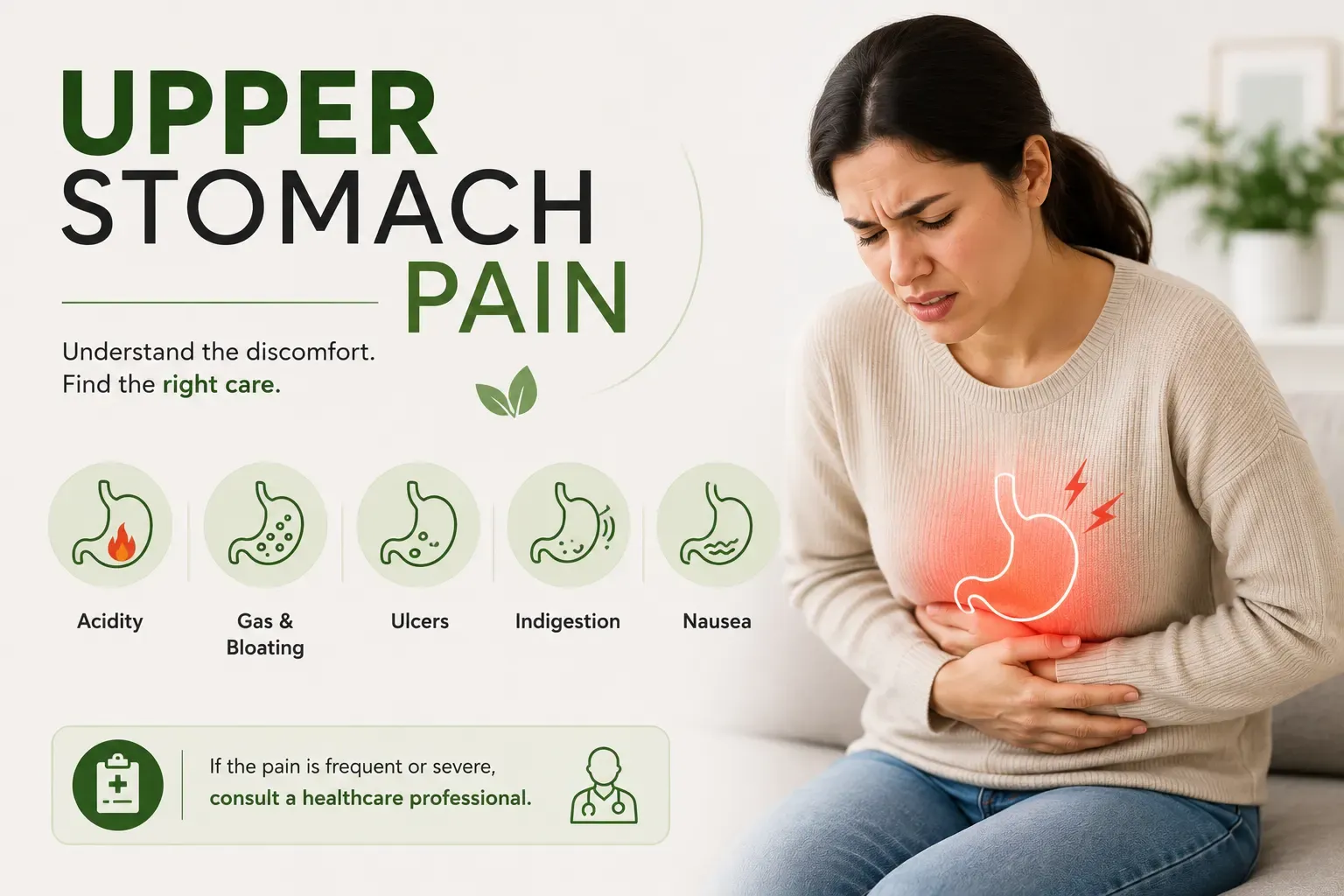
Quick Answer
Upper stomach pain is discomfort between the lower ribs and the belly button. It may come from indigestion, trapped gas, acid reflux, gastritis, a peptic ulcer, the gallbladder, pancreas, muscles, or, less commonly, the heart or lungs. The location, timing, severity, and accompanying symptoms help narrow the possibilities, but they cannot confirm a diagnosis on their own.
- Mild pain after a heavy meal may settle with rest, upright posture, small sips of water, and avoiding another large meal.
- Repeated, worsening, or unexplained pain needs a medical review rather than repeated self-treatment.
- Sudden severe pain, chest pressure, breathing difficulty, vomiting blood, black stools, fainting, jaundice, or a rigid tender abdomen needs urgent care.
Upper stomach pain is common, but the phrase can describe very different sensations. Some people mean burning in the centre below the breastbone. Others feel pressure under the right ribs, a sharp pain on the left, cramping after food, or discomfort that spreads to the back or shoulder.
Because the upper abdomen contains the stomach, liver, gallbladder, pancreas, spleen, part of the intestines, and major blood vessels, pain in this area should be interpreted as a symptom rather than a condition. This guide explains the common causes, useful pattern clues, safer relief steps, and warning signs that should not be ignored.
How Upper Stomach Pain Develops
Pain develops when tissues in or around the upper abdomen are stretched, inflamed, irritated, blocked, injured, or deprived of normal blood flow. The process often follows four stages:
- A trigger affects an organ or tissue. This may be excess acid, inflammation, trapped gas, a blocked bile duct, infection, muscle strain, or another problem.
- Local nerves detect pressure or irritation. The sensation may feel burning, aching, cramping, stabbing, squeezing, or simply uncomfortable fullness.
- The brain interprets the signal by location and pattern. Pain can stay in one spot or be referred to the back, chest, shoulder, jaw, or arm.
- Other symptoms provide context. Nausea, bloating, fever, jaundice, breathlessness, vomiting, stool changes, or pain after meals can change how urgently the symptom should be assessed.
This is why two people with pain in the same area may have completely different causes. Location provides a clue, not a diagnosis.
Upper Stomach Pain by Location and Pattern
| Where or When It Hurts | Possible Clues | Features That Need Faster Assessment |
|---|---|---|
| Upper middle, below the breastbone | Indigestion, reflux, gastritis, peptic ulcer, pancreatic pain | Constant severe pain, vomiting blood, black stools, pain spreading to the back |
| Upper right, under the ribs | Gallbladder, bile duct, liver, stomach or muscle-related pain | Fever, jaundice, persistent vomiting, pain lasting several hours |
| Upper left, under the ribs | Stomach, pancreas, spleen, bowel, kidney or muscle-related pain | Pain after an injury, faintness, breathlessness, severe tenderness |
| After eating | Indigestion, reflux, gas, gastritis, ulcer, gallbladder symptoms | Repeated vomiting, weight loss, difficulty swallowing, severe recurring attacks |
| At night or while lying down | Acid reflux, ulcer-type pain, late or heavy meals | Chest pressure, sweating, breathlessness, pain in the jaw or arm |
| With movement, twisting or pressing | Abdominal wall, rib, posture or muscle strain | Pain after trauma, swelling, bruising, difficulty breathing |
What Are the Common Causes of Upper Stomach Pain?
Indigestion or Functional Dyspepsia
Indigestion can cause pain, burning, uncomfortable fullness, early satiety, bloating, nausea, or belching in the upper abdomen. It may follow a large or rich meal, but it can also happen without an obvious food trigger. Persistent symptoms with no structural cause may be described as functional dyspepsia. Learn more about digestion.
Acid Reflux and Heartburn
Acid reflux occurs when stomach contents move back into the oesophagus. The typical symptom is burning behind the breastbone, but some people describe discomfort at the top of the stomach, sour taste, regurgitation, nausea, cough, or throat irritation. Late meals, lying flat, alcohol, smoking, pregnancy, and excess abdominal pressure can contribute. A broader guide to the common causes of acidity can help you identify recurring patterns.
Gastritis
Gastritis is inflammation of the stomach lining. It may cause upper abdominal discomfort, nausea, vomiting, reduced appetite, or early fullness, although some people have no symptoms. Possible contributors include Helicobacter pylori infection, alcohol, and frequent use of non-steroidal anti-inflammatory medicines. Bleeding can produce black stools or vomit that looks like coffee grounds.
Peptic Ulcer
A peptic ulcer is an open sore in the stomach or the first part of the small intestine. Pain may be dull or burning and can come and go. For some people it is worse when the stomach is empty or at night; for others, food makes it worse. The most common causes are H. pylori infection and regular use of certain anti-inflammatory pain medicines. Read the detailed guide on what a peptic ulcer is.
Gas and Bloating
Gas can create pressure, sharp pains, belching, fullness, and visible abdominal swelling. It may result from swallowed air, fizzy drinks, constipation, eating quickly, or difficulty digesting certain carbohydrates. Gas pain often changes location and may improve after burping or passing gas, but severe or persistent pain should not automatically be blamed on gas. The pattern is explained further in the guide to trapped gas pain and relief.
Gallstones and Gallbladder Inflammation
Gallstones can block the flow of bile and cause a gallbladder attack. Pain is usually felt in the upper right abdomen and may follow a heavy or fatty meal. It can last from several minutes to hours and may spread to the right shoulder or back. Fever, jaundice, chills, or persistent pain can indicate inflammation or blockage and need urgent medical assessment.
Pancreatitis
Pancreatitis is inflammation of the pancreas. Acute pancreatitis commonly causes upper abdominal pain that may spread to the back, along with nausea, vomiting, fever, a rapid heartbeat, or abdominal tenderness. People often feel seriously unwell. Sudden severe upper abdominal pain that does not settle should be assessed urgently.
Stomach Infection or Food Poisoning
Viral or bacterial infections can cause upper or general abdominal pain with nausea, vomiting, diarrhoea, fever, and weakness. Symptoms that begin after a suspicious meal or affect several people may point towards foodborne illness. The Mool guide to food poisoning symptoms, causes and treatment explains when hydration is enough and when testing may be needed.
Muscle, Rib or Abdominal Wall Pain
Exercise, lifting, prolonged coughing, awkward movement, or a minor injury can strain muscles between the ribs or in the abdominal wall. This pain is often easier to reproduce by twisting, bending, coughing, or pressing the area. However, significant trauma, bruising, breathlessness, or worsening pain needs assessment.
Heart or Lung Conditions
Heart-related pain can sometimes feel like indigestion, pressure in the lower chest, or pain in the upper abdomen. It may occur with sweating, nausea, breathlessness, weakness, dizziness, or discomfort in the arm, back, neck, or jaw. Lung problems can also cause upper abdominal or lower chest pain, especially when breathing. Do not assume new pressure-like pain is only acidity.
What Does the Timing of Upper Stomach Pain Suggest?
Upper Stomach Pain After Eating
Discomfort after meals may be linked to overeating, eating quickly, indigestion, reflux, gas, gastritis, a peptic ulcer, delayed stomach emptying, or gallbladder disease. Notice whether the pain follows fatty food, very large portions, alcohol, caffeine, or a particular ingredient. Repeated attacks after meals need medical review rather than long-term food restriction without a diagnosis.
Upper Stomach Pain on an Empty Stomach
Burning or gnawing pain when hungry can occur with gastritis, ulcer disease, or functional dyspepsia. Temporary relief after eating does not confirm an ulcer, and eating repeatedly to suppress pain can hide a recurring pattern. Persistent symptoms may require testing for H. pylori or examination of the upper digestive tract.
Upper Stomach Pain in the Morning
Morning pain may follow overnight acid reflux, a long fasting interval, alcohol use, medicine-related irritation, constipation, or anxiety-related gut sensitivity. Record whether it improves after a bowel movement, food, water, or getting upright. Frequent morning symptoms, especially with vomiting, weight loss, or black stools, need assessment.
Upper Stomach Pain at Night
Pain at night may be associated with reflux, late meals, gastritis, or ulcer-type symptoms. Finishing dinner earlier, keeping portions moderate, and avoiding lying flat immediately after eating may help when reflux is the cause. The guide on night time acidity covers sleep position and meal-timing strategies in more detail.
How to Relieve Mild Upper Stomach Pain Safely
These steps are reasonable only for mild, familiar discomfort without warning signs. They do not replace medical care when the pain is severe, persistent, or unexplained.
- Pause large meals: Give the stomach time to settle and choose a small, simple meal only when you feel ready to eat.
- Sip fluids slowly: Small amounts of water may be easier to tolerate than drinking a large glass quickly, especially with nausea.
- Stay upright: Sitting upright and avoiding lying down for two to three hours after a meal may reduce reflux-related discomfort.
- Use gentle warmth cautiously: A warm, not hot, compress may relax muscle tension, but do not use it to delay care for severe pain.
- Track the pattern: Note the location, start time, meals, medicines, alcohol, bowel changes, vomiting, fever, and what makes the pain better or worse.
- Ask before using medicines: A pharmacist or clinician can advise whether an antacid or another treatment is suitable for your symptoms and current medicines.
For mild acidity and gas symptoms, practical food and lifestyle measures are summarised in the guide to acidity and gas remedies.
What Should You Avoid Doing?
- Do not keep taking painkillers without advice: Some anti-inflammatory medicines can irritate the stomach lining or worsen ulcer bleeding.
- Do not self-start antibiotics: Upper stomach pain has many non-infectious causes, and unnecessary antibiotics can cause side effects.
- Do not rely on baking soda, lemon, or strong herbal mixtures: These may worsen symptoms, interact with medicines, or delay diagnosis.
- Do not force food during significant nausea or vomiting: Prioritise small sips of fluid and seek care if you cannot keep fluids down.
- Do not dismiss chest or upper abdominal pressure as gas: New pressure with sweating, breathlessness, weakness, or spreading pain needs emergency assessment.
When Is Upper Stomach Pain an Emergency?
Seek urgent medical help when upper abdominal pain is sudden, severe, rapidly worsening, or associated with signs of bleeding, obstruction, infection, organ inflammation, or a heart problem.
- Severe pain that starts suddenly, does not ease, or makes the abdomen rigid or very tender
- Chest pressure, shortness of breath, cold sweat, faintness, or pain spreading to the arm, back, jaw, neck, or shoulder
- Vomiting blood, vomit that looks like coffee grounds, black tarry stools, or visible blood in stool
- Persistent vomiting, inability to keep fluids down, confusion, collapse, or very little urine
- Fever or chills with worsening upper abdominal pain
- Yellow skin or eyes, dark urine, or pale stools with upper right pain
- Inability to pass stool or gas with swelling and vomiting
- Upper left pain after an injury, particularly with dizziness or faintness
Arrange a non-emergency medical appointment if pain keeps returning, lasts more than a few days, affects eating or sleep, or comes with reduced appetite, unexplained weight loss, difficulty swallowing, anaemia, persistent bloating, or a major change in bowel habits.
How Is Upper Stomach Pain Diagnosed?
A clinician first considers the exact location, quality, duration, triggers, and associated symptoms. They may ask about alcohol, pregnancy, recent travel, previous surgery, gallstones, heart risk factors, and medicines such as aspirin or anti-inflammatory painkillers.
Depending on the pattern, assessment may include:
- Physical examination: Checking tenderness, swelling, guarding, bowel sounds, breathing, and vital signs.
- Blood tests: Looking for infection, anaemia, liver or pancreatic problems, and other metabolic causes.
- H. pylori testing: A breath, stool, or biopsy test may be used when gastritis or ulcer disease is suspected.
- Ultrasound: Often used to assess the gallbladder, bile ducts, liver, and some other upper abdominal structures.
- Upper GI endoscopy: A camera examination may be recommended for bleeding, swallowing difficulty, persistent symptoms, ulcers, or concerning weight loss.
- ECG and heart tests: These are important when symptoms could come from the heart, even when the discomfort feels like indigestion.
- CT or other imaging: Used when pancreatitis, obstruction, injury, or another urgent abdominal condition is possible.
How Is Upper Stomach Pain Treated?
Treatment depends on the underlying cause. A single remedy cannot safely treat every type of upper abdominal pain.
| Likely Cause | Typical Medical Approach | Why Diagnosis Matters |
|---|---|---|
| Indigestion or reflux | Meal and lifestyle changes, short-term or prescribed acid-reducing treatment when appropriate | Persistent symptoms can overlap with ulcers, gallbladder disease, or heart problems |
| Gastritis or peptic ulcer | Testing and treatment for H. pylori, medicine review, acid suppression, and bleeding management if needed | Untreated ulcers can bleed or perforate |
| Gallstones | Pain control, imaging, and sometimes surgery or bile duct treatment | Ongoing blockage can cause infection, jaundice, or pancreatitis |
| Pancreatitis | Urgent hospital assessment, fluids, pain treatment, monitoring, and treatment of the cause | Acute pancreatitis can become serious quickly |
| Infection or food poisoning | Hydration, symptom support, tests when severe, and targeted treatment only when indicated | Blood in stool, high fever, or dehydration changes the management |
| Muscle or abdominal wall pain | Activity modification and clinician-guided pain management | Trauma and breathing-related pain may require imaging |
What Can You Eat When Your Upper Stomach Hurts?
Food choices should depend on the cause and what you can tolerate. For short-lived mild discomfort, smaller portions and simpler foods may feel easier than a rich meal. Useful principles include:
- Choose smaller meals and eat slowly rather than skipping food all day and eating a very large dinner.
- Limit alcohol, very fatty meals, and foods that repeatedly trigger your own symptoms.
- Avoid lying down immediately after eating when reflux is likely.
- Do not follow a highly restrictive diet based on one episode of pain.
- Seek clinical advice when pain repeatedly follows meals, causes weight loss, or makes eating difficult.
There is no universal list of foods that cures upper stomach pain. A food diary can identify personal patterns, but a persistent pattern should still be medically assessed.
Why Mool Health?
Mool Health helps you look at digestive symptoms as patterns rather than isolated episodes. Meal timing, stool changes, sleep, stress, medicines, and recurring triggers can all provide useful context when you discuss symptoms with a clinician.
The Mool Gut Health Test can help you organise ongoing gut concerns and understand which daily habits may need attention. It is not designed to diagnose severe upper stomach pain or replace urgent medical assessment.
Take the next step towards understanding your digestive patterns, or explore more evidence-led gut health articles from Mool.
Medical Disclaimer
This article is for general education and is not a diagnosis or treatment plan. Upper stomach pain can occasionally indicate a medical emergency. Seek urgent care for severe or sudden pain, chest symptoms, breathing difficulty, bleeding, fainting, jaundice, persistent vomiting, or any rapidly worsening symptoms. Speak with a qualified healthcare professional for advice based on your medical history and current medicines.
Key Takeaways
- Upper stomach pain can arise from the stomach, gallbladder, pancreas, muscles, heart, lungs, or other nearby structures.
- Location and timing are useful clues, but they cannot confirm the cause without clinical assessment.
- Mild familiar indigestion may improve with smaller meals, upright posture, fluids, and avoiding personal triggers.
- Persistent or recurring pain should not be managed indefinitely with antacids, painkillers, or home remedies.
- Sudden severe pain, bleeding, jaundice, breathlessness, fainting, or chest symptoms needs urgent medical care.
Your gut is unique your healing should be too.

FAQs
Common causes include indigestion, acid reflux, gastritis, gas, a peptic ulcer, gallstones, and muscle strain. More serious causes include pancreatitis, internal bleeding, and heart-related pain. The location, timing, severity, and accompanying symptoms determine how urgently it should be assessed.
For mild familiar discomfort without warning signs, stop eating large meals, sit upright, sip water slowly, and avoid alcohol or known triggers. Do not repeatedly self-medicate when the cause is unclear. Sudden severe pain, chest symptoms, bleeding, persistent vomiting, or faintness needs urgent care.
Yes. Trapped gas can cause pressure, sharp pain, belching, and fullness in the upper abdomen. It often shifts or improves after passing gas. However, severe, localised, persistent, or worsening pain should not be assumed to be gas without assessment.
Possible causes include overeating, indigestion, reflux, gastritis, an ulcer, gas, food intolerance, delayed stomach emptying, or gallbladder disease. Note the meal size, fat content, timing, and other symptoms. Repeated post-meal pain deserves a medical review.
Morning pain may follow overnight reflux, a long fasting period, alcohol, stomach irritation from medicines, constipation, or gut sensitivity. Frequent pain, vomiting, weight loss, or black stools needs medical assessment rather than continued home treatment.
Yes. Angina and heart attacks can sometimes feel like indigestion, lower chest pressure, or upper abdominal pain. Seek emergency care for new pressure or pain with sweating, breathlessness, dizziness, weakness, nausea, or discomfort spreading to the arm, back, neck, or jaw.
There is no single safe time limit. Severe or sudden pain should be assessed immediately. Arrange medical advice when pain persists for more than a few days, keeps returning, wakes you at night, or affects eating. Seek help sooner when warning signs are present.
Testing may include a physical examination, blood tests, H. pylori testing, ultrasound, ECG, upper GI endoscopy, or CT imaging. The choice depends on the pain location, age, medical history, and accompanying symptoms.
Disclaimer
The content provided by Mool Health is for educational and informational purposes only and should not be considered a substitute for professional medical advice, diagnosis, or treatment.