
Home Remedies for Acidity and Gas Problem: A Complete Guide
Recurring acidity and gas can disrupt meals and sleep. Explore practical habits, gentle home measures, warning signs, and when symptoms need medical support.
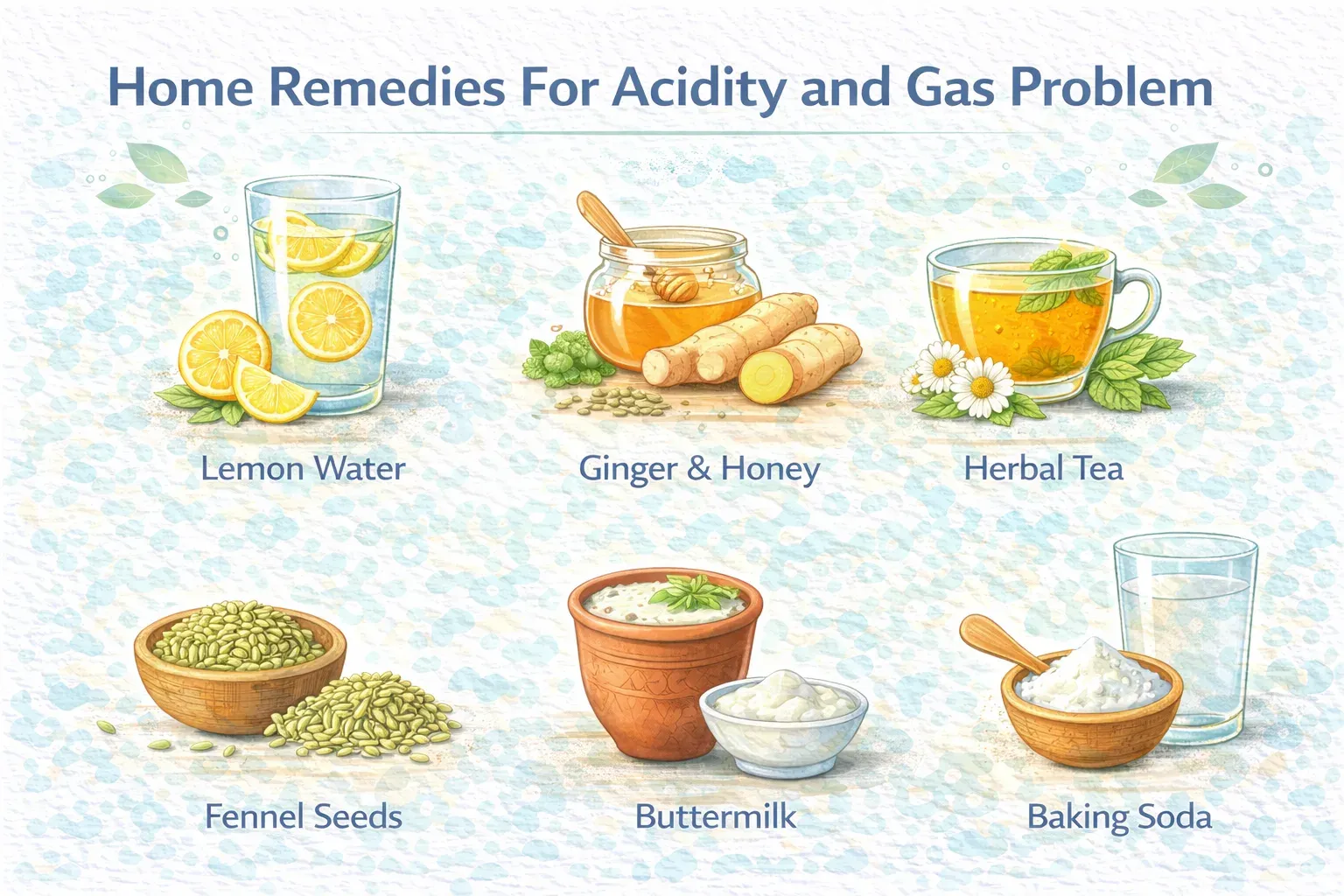
Quick Answer
For occasional acidity and gas, practical steps such as eating smaller meals, avoiding lying down after food, limiting personal trigger foods, and using gentle options like warm water may help. Relief varies from person to person, and recurring or severe symptoms need medical assessment rather than repeated home treatment.
- Acidity usually refers to heartburn, reflux, or upper-abdominal burning.
- Gas can cause bloating, belching, abdominal pressure, and passing wind.
- Slow eating, smaller portions, and a short walk after meals may reduce symptoms.
- Kitchen remedies may provide comfort for some people, but evidence and tolerance vary.
- Seek care for trouble swallowing, blood in vomit or stool, black stools, weight loss, or severe chest pain.
Acidity and gas are common digestive complaints that often occur after heavy meals, irregular eating, or foods that do not suit the individual. Ajwain, jeera water, cold milk, saunf, and buttermilk are widely used in Indian homes. However, no remedy works the same way for everyone, and fixed relief times cannot be guaranteed.
What Are Acidity and Gas?
Acidity is often used to describe burning in the chest, throat, or upper abdomen. It may be related to heartburn, indigestion, or acid reflux. Gas refers to air in the digestive tract and gases produced when bacteria break down certain carbohydrates in the intestine. It may cause bloating, belching, abdominal pressure, and passing wind.
These symptoms can occur together, but they do not always have one root cause. A person may have reflux without much gas, or gas and bloating without reflux. The most useful approach is to notice the symptom pattern, meal timing, and triggers rather than assuming every episode has the same cause.
| Pattern | What You May Notice | Helpful First Step |
|---|---|---|
| Heartburn or reflux | Burning in the chest, sour taste, symptoms after lying down | Stay upright after meals and avoid known trigger foods |
| Post-meal bloating | Fullness, pressure, belching, or abdominal distension | Eat more slowly and reduce large, heavy portions |
| Trapped gas | Cramping or pressure that improves after passing wind | Gentle walking and a review of trigger foods |
| Recurring daily symptoms | Frequent burning, gas, or regular need for remedies | Seek medical advice for an individual assessment |
Why Acidity and Gas Can Occur Together
Several everyday factors can contribute to both upper digestive discomfort and bloating. Eating quickly can increase swallowed air and make it easier to overeat. Large, high-fat meals may worsen fullness and reflux in some people. Stress, poor sleep, constipation, carbonated drinks, and foods that are difficult to tolerate can also contribute.
Recurring symptoms may also be linked to common causes of acidity, including meal timing, medicines, smoking, alcohol, or reflux-related conditions. Keeping a short symptom diary can help identify whether the problem follows particular foods, long gaps between meals, late dinners, or lying down soon after eating.
Home Remedies for Acidity and Gas Problem
Home measures can be useful for mild, occasional symptoms. They should not replace medical care when symptoms are persistent, severe, or associated with warning signs.
1. Ajwain with Warm Water
Ajwain is traditionally used for post-meal bloating and abdominal discomfort. Some people find a small amount of ajwain with warm water soothing after a heavy meal. The evidence for fast, predictable relief is limited, so treat it as a comfort measure rather than a cure. People with frequent symptoms can also read about ajwain for gas in more detail.
2. Jeera Water
Jeera water is a mild, warm drink that may be easier to tolerate after a meal. It can be prepared by simmering a teaspoon of jeera in water, straining it, and drinking it warm. It may suit some people with bloating, though it is not a proven treatment for reflux. Learn more about jeera water for gas before using it regularly.
3. Cold Milk
Cold plain milk may temporarily soothe burning for some people. For others, especially those with lactose intolerance or milk-triggered bloating, it can worsen discomfort. It is best to avoid relying on milk as a daily treatment for reflux and to stop it if it clearly aggravates symptoms.
4. Saunf After Meals
Chewing a small amount of saunf after meals is a common digestive practice. Its flavour can freshen the mouth and some people find it calming after rich food. Use a modest amount and avoid adding sugar-coated fennel if you are trying to reduce sugar intake.
5. Ginger Tea
Ginger tea may be helpful when nausea accompanies a heavy meal. Ginger can also trigger heartburn in some people, so use a mild preparation and stop if burning worsens. Avoid concentrated ginger supplements unless a healthcare professional says they are suitable for you.
6. A Short Walk After Meals
A relaxed walk after eating may help reduce the feeling of fullness and support normal digestion. Avoid strenuous exercise immediately after a heavy meal. You can explore whether walking helps digestion for more practical guidance.
Simple Relief Table: What May Help and When to Be Careful
| Option | May Be Useful For | How to Use | Use Caution If |
|---|---|---|---|
| Warm water | Mild post-meal fullness | Sip slowly after food | You have been told to restrict fluids |
| Ajwain | Occasional bloating or gas | Use a small amount with warm water | Symptoms are frequent or severe |
| Jeera water | Post-meal digestive discomfort | Drink a mild warm preparation | It worsens heartburn or nausea |
| Cold milk | Temporary burning in some people | Try a small plain serving | Milk causes gas, diarrhoea, or bloating |
| Saunf | After-meal freshness and mild discomfort | Chew a small amount after meals | Symptoms persist despite dietary changes |
| Gentle walking | Fullness and mild gas | Walk at a comfortable pace | You have severe pain, dizziness, or chest pain |
Food and Habit Changes for Lasting Relief
Home remedies are more useful when they are paired with daily habits that reduce triggers. Try changes one at a time so you can identify what suits your body.
- Eat smaller portions: Large meals can make reflux, fullness, and bloating more likely.
- Slow down while eating: Chew thoroughly and avoid rushing through meals.
- Stay upright after food: Avoid lying down for at least two to three hours after dinner.
- Limit carbonated drinks: Fizzy beverages can increase belching and bloating for some people.
- Notice personal triggers: Common triggers include very oily food, chilli, alcohol, caffeine, mint, citrus, onions, and large late-night meals, but individual tolerance varies.
- Address constipation: Hard or infrequent stools can increase abdominal pressure and gas. Increase fibre gradually and drink enough fluids.
When pain feels sharp or pressure builds but does not settle, review guidance on trapped gas pain. Severe or ongoing pain should still be assessed by a clinician.
Ayurvedic Products and Over-the-Counter Medicines
Ayurvedic herbs and formulations are commonly used for acidity and gas, but they are not automatically safe for everyone. The right option depends on your symptoms, medicines, pregnancy status, liver or kidney health, and the quality of the product. Avoid self-starting multiple formulations together.
Antacids can provide short-term relief for mild heartburn, but needing them regularly is a reason to speak with a doctor. Symptoms that occur often may need assessment for reflux, gastritis, an ulcer, medicine-related irritation, or another digestive condition. If your symptoms include repeated regurgitation or burning, it may help to understand acid reflux or GERD.
What to Avoid During an Active Episode
- Large, greasy, very spicy, or late-night meals
- Alcohol and smoking
- Carbonated drinks when they increase belching or bloating
- Repeated use of baking soda or unprescribed remedies
- Lying flat immediately after eating
- Taking multiple antacids or herbal products together without advice
When Should You See a Doctor?
Arrange medical care if heartburn or indigestion keeps returning, does not improve with simple changes, or makes you rely on remedies or medicines regularly. Seek urgent care for severe chest pain, breathlessness, sweating, faintness, pain spreading to the arm or jaw, vomiting blood, black stools, difficulty swallowing, unexplained weight loss, or severe ongoing abdominal pain.
Recurring burning should also be assessed if you are unsure whether the symptom is reflux, gastritis, or another cause. A guide to what heartburn feels like may help you describe symptoms more clearly, but it does not replace medical evaluation.
Home Remedies for Acidity and Gas in Hindi
एसिडिटी और गैस के लिए घर पर किए जाने वाले उपाय हर व्यक्ति में अलग तरह से काम कर सकते हैं। हल्के लक्षणों में इन सरल आदतों से कुछ आराम मिल सकता है:
- अजवाइन + गर्म पानी: खाने के बाद हल्की गैस या भारीपन में कम मात्रा में लिया जा सकता है।
- जीरा पानी: हल्का, गुनगुना जीरा पानी कुछ लोगों को भोजन के बाद आराम दे सकता है।
- सौंफ: भोजन के बाद थोड़ी सौंफ चबाना एक सामान्य पाचन अभ्यास है।
- छोटा भोजन: भारी, तला हुआ और देर रात का भोजन कम करने से बार-बार होने वाली जलन कम हो सकती है।
सीने में तेज दर्द, खून की उल्टी, काला मल, निगलने में कठिनाई या बार-बार होने वाली एसिडिटी में केवल घरेलू उपायों पर निर्भर न रहें। डॉक्टर से सलाह लें।
Medical Disclaimer
This article is for general health education only and does not replace medical advice, diagnosis, or treatment. Seek urgent medical care for severe chest pain, breathlessness, fainting, pain spreading to the arm or jaw, vomiting blood, black stools, severe abdominal pain, difficulty swallowing, or unexplained weight loss. Consult a qualified healthcare professional for persistent acidity, reflux, bloating, or gas symptoms.
Key Takeaways
- Acidity and gas can occur together, but they do not always have the same cause.
- Warm drinks, modest kitchen remedies, smaller meals, and gentle walking may help some people with mild symptoms.
- Milk, ginger, ajwain, and jeera water can affect people differently, so track your own response.
- Repeated symptoms need more than a quick remedy. Meal timing, trigger foods, sleep, stress, constipation, and medicines may all matter.
- Seek medical help promptly for severe pain, bleeding, black stools, weight loss, difficulty swallowing, or symptoms that do not settle.
Find the Pattern Behind Recurring Acidity and Gas
Frequent burning, bloating, or post-meal discomfort may be linked to daily food, lifestyle, and digestion patterns. Take a closer look at your gut-health routine.
Your gut is unique your healing should be too.

FAQs
There is no single remedy that works fastest for everyone. For mild symptoms, sitting upright, avoiding more food for a short time, sipping water, and taking a gentle walk may help. If symptoms are frequent or severe, seek medical advice rather than repeatedly self-treating.
Cold milk may temporarily soothe burning for some people, but it can worsen bloating or symptoms in people who do not tolerate dairy well. It is not a reliable long-term treatment for acid reflux or recurring gas.
Some people find ajwain or jeera water comforting for mild post-meal gas and bloating. The effect varies, and persistent pain, severe bloating, or recurrent symptoms should be assessed by a clinician.
Possible contributors include large or high-fat meals, eating quickly, lying down after food, carbonated drinks, constipation, stress, food intolerance, reflux, and some medicines. A symptom diary can help identify patterns.
Get medical help for severe chest or abdominal pain, breathlessness, vomiting blood, black stools, difficulty swallowing, weight loss, dehydration, or symptoms that keep returning or worsen despite self-care.
Disclaimer
The content provided by Mool Health is for educational and informational purposes only and should not be considered a substitute for professional medical advice, diagnosis, or treatment.