
Food Poisoning: Symptoms, Causes, Treatment & Risk Factors
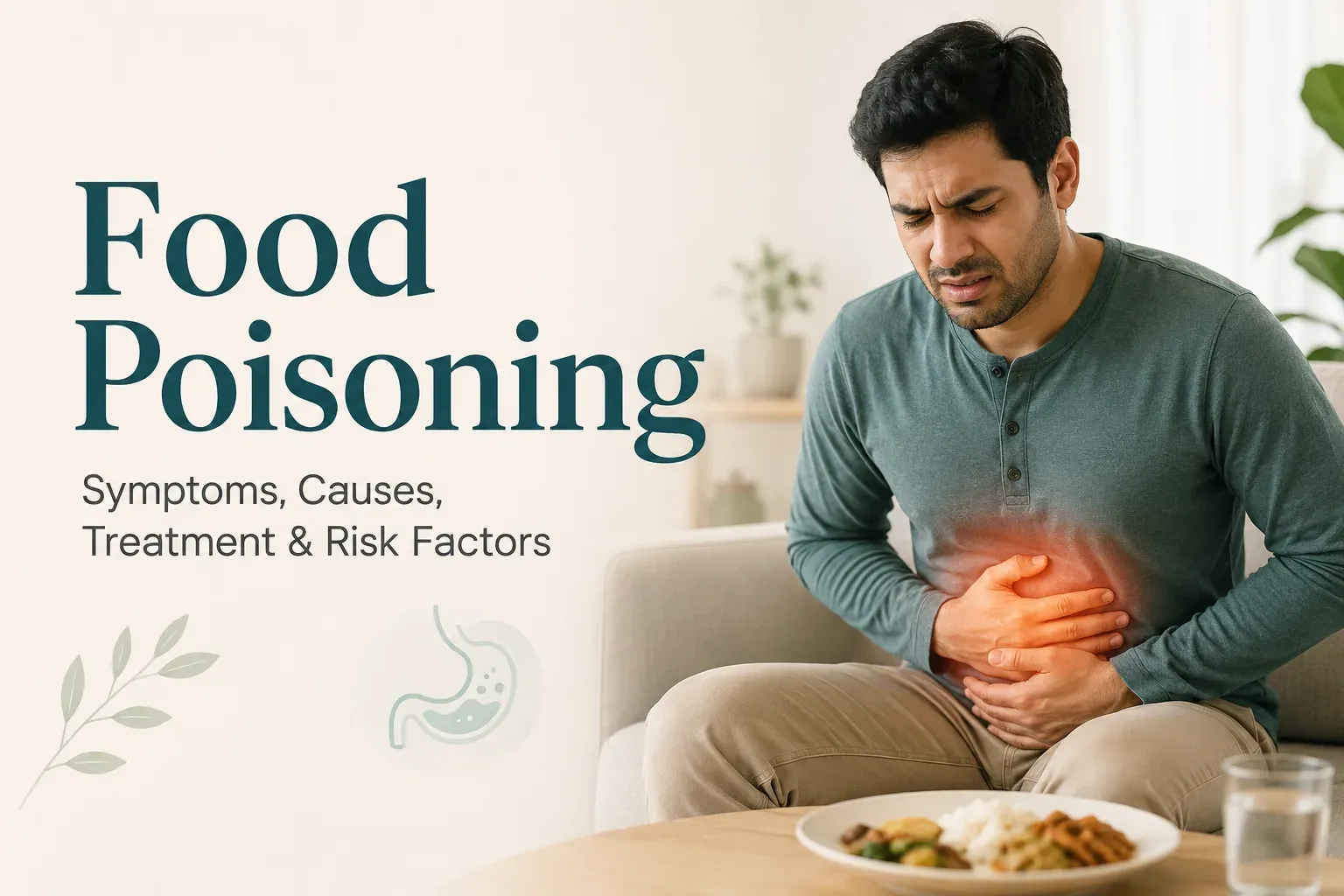
Food poisoning happens when contaminated food or water affects the digestive system. This guide explains symptoms, causes, risks, and treatment options.
✏️ Quick Answer
Food poisoning, also known as foodborne illness, occurs when the digestive tract becomes infected or irritated by contaminated food or water. Common symptoms of the condition include vomiting, nausea, stomachache, bloating, and diarrhoea. The symptoms can appear after hours of eating contaminated food and last for a few days. The primary focus during recovery is to prevent dehydration by increasing fluid intake.
Have you ever had a sudden stomachache after eating outside? In most cases, it could be food poisoning. We knowingly or unknowingly consume contaminated and unhygienic food at some point in our lives. This might cause a mild or severe stomach upset along with other symptoms such as vomiting, diarrhoea, fever and weakness. Sometimes, your stomach infection can also be triggered by your kitchen when you eat stale or expired food. This article will explain what food poisoning is, its symptoms, how you get it, treatment, prevention tips and the infections that cause foodborne illness.
What Is Food Poisoning?
Food poisoning, also known as foodborne illness, happens when you consume contaminated food or drink (containing harmful chemical substances such as germs). Your digestive tract reacts to the injected bacteria and germs and tries to flush them out through vomiting and diarrhoea.
Food poisoning is an acute stomach condition that lasts a few days but, in some cases, can continue for a week or more. The condition can occur in any individual at any time, but children, senior citizens, pregnant women or people with weak immune systems have a high risk of food poisoning.
What Are the Symptoms of Food Poisoning?
Food poisoning symptoms can be different. They usually start within a few hours or a few days. They can appear quickly or take some time. It just depends on the cause of food poisoning.
This is because different bacteria or viruses can cause food poisoning. When you eat or drink something that is infected, you may see some of these signs:
Digestive Distress
You may experience stomachache, feel nauseous, and vomit frequently. This is because your body is trying to eliminate what you ate or drank.
Intestinal Irritation
You may get diarrhoea, which can be watery or bloody, and your stomach may feel bloated and painful. This happens when the infection is moving through your intestines.
Systemic Reactions
You may get a fever, a headache, and your muscles may feel weak. This is because your body is fighting the infection.
Dehydration Signs
This is very important to watch for. You may feel extremely thirsty your mouth may be very dry. You may feel dizzy.
How Is Food Poisoning Caused?
Foodborne illness is caused by contaminated food or drink, so anything that contains bacteria is likely to cause food poisoning. Here are some instances:
- Food not refrigerated properly, especially in summer
- Unfiltered water in the monsoon
- Unhygienically cooked food
- Eating half-cooked food
- Travelling abroad
When travelling abroad, many people might get traveller's diarrhea. It might not be true for everyone, but it largely depends on one's immune system. People with a weaker immune system are more susceptible to this infection.
You might also contract a foodborne illness from your surroundings; hence, washing your hands before a meal is advised. It is an effective way to avoid food poisoning because it prevents pathogens from being transmitted from surfaces to your mouth. Sometimes, food poisoning can also occur due to cross-contamination and poor food handling in subways or restaurants.
Diagnosis of Food Poisoning
Your doctor may ask you about your daily lifestyle habits, recent food consumption, and medical history to understand the cause of the condition.
Mild food poisoning doesn't involve testing and is treated with over-the-counter medicines. For severe cases, your doctor may order a blood test or a stool sample or perform a physical examination. The doctor may also perform other medical procedures, like imaging and sigmoidoscopy, to detect potential complications in the intestines.
Management & Medical Treatment of Food Poisoning
If food poisoning is mild, it can be managed by drinking fluids and keeping your body hydrated. But treating the condition with hydration is not always successful, even when you have mild food poisoning. Doctor consultation is crucial for both mild and severe conditions.
Your doctor may prescribe the antibiotics and anti-parasitic medication, such as campylobacter and albendazole, after examining your health condition. This is usually prescribed for severe conditions.
Food poisoning may also cause diarrhoea and vomiting. If you have these symptoms, your doctor is likely to prescribe some anti-nausea medicine, such as Zofran, and anti-diarrheal medicines, such as Pepto-Bismol.
In addition to that, in case of extreme dehydration, you will be hospitalised and given an IV drip therapy to rehydrate.
Food Poisoning Risk Factors & Complications
Food poisoning can happen to anyone, but some people are more likely to get infected than others due to their poor immune system. The immune system plays a huge role in managing and treating this condition. The immune system can be weakened by several factors, including age, pregnancy, chronic illness, and certain medications.
Another complication of food poisoning is dehydration. In mild cases, it can be managed by drinking plenty of water. But for a severe case, you may be hospitalised for IV drips. This will help you regain lost fluids.
In rare cases, food poisoning can also cause severe complications such as miscarriage, stillbirth, kidney damage, arthritis, and brain damage.
Prevention Tips for Food Poisoning
Prevention tips are crucial after food poisoning treatment to avoid them from recurring or occurring in the first place. Here are some of them you must follow.
- Wash your hands properly before a meal
- Wash your fruits and vegetables after purchase.
- Wash your utensils before cooking food
- Store leftover food to prevent it from getting spoiled
- Avoid eating half-cooked food, especially when your food isn't familiar
- Cook your chicken and meat properly, and avoid eating half-cooked meat
- Do not ignore the signs. Throw the food away when it smells
- Check the product expiry date of dairy and other packaged foods
Food poisoning may be life-threatening for children, pregnant women, and adults with a weak immune system. They should avoid consuming the following food items:
- Undercooked eggs, meat and fish
- Raw sprouts, especially in salads
- Unpasteurized food, like raw milk and artisanal cheese
- Uncooked hot dogs
What Should You Eat After Food Poisoning?
Prescribed medicine helps in treating food poisoning, but changing your eating habits supports recovery. Here's the list of foods you must eat during and after food poisoning.
- Bananas
- Cereals
- Honey with warm water
- Oatmeal
- Mashed potatoes
- Rice
- Toast
- Applesauce
Besides these foods, ensure to keep your body hydrated. Dehydration is the most risky symptom of food poisoning. You can manage it with electrolyte drinks initially, and if it is not manageable, you should consult your doctor.
What Are the Common Food Poisoning Infections?
There are various food poisoning infections, but these are some commonly found bacteria and parasites that cause food poisoning.
1. Salmonella
Most commonly associated with eating raw eggs and undercooked poultry. This microorganism causes a lot of cases of food poisoning.
2. E. coli
Some strains of this bacteria are capable of causing intestinal irritation, which usually occurs as a result of consuming undercooked meat or raw veggies.
3. Listeria
It occurs in soft cheese, cold cuts, and raw sprouts, and it poses special risks to pregnant women.
4. Norovirus
It is a very contagious virus transmitted via shellfish, fruits, veggies, or an infected person. It often causes stomach flu.
5. Hepatitis A
The virus that causes food poisoning is most commonly transmitted via contaminated water, ice, seafood, or fresh produce.
6. Staphylococcus
An infection that can occur as a consequence of consuming foods that were touched by contaminated hands. It mostly affects meats and dairy products.
7. Campylobacter
This bacterium is associated with undercooked poultry, contaminated veggies, and raw milk consumption.
8. Shigella
It most commonly occurs in mayonnaise salads and can cause bloody diarrhoea.
Mool Health Perspective On Treating Food Poisoning
From farming and processing to storage and preparation, food can be contaminated at any given point in time and cause food poisoning. Most of the stomach-related issues start with your overall gut health. You may have seen yourself getting affected but not others, though you had the same food. This can be due to a weak immune system or an overall gut health issue. Mool Health focuses on identifying the root cause of the stomach problem and creating a personalised kit to address its source. You can take a quick Mool Health gut test to know why your stomach problems are frequent and treat the condition.
Now that you know what food poisoning is and how you get it, you should be cautious about what you eat in a day, especially when you are travelling. The regular may last for a few days, but traveller's diarrhoea may ruin the initial days of your trip. Follow preventive tips for food poisoning whenever you are travelling to different countries and in your everyday life. If you have chronic food poisoning, you must consult your doctor and treat the condition at its source.
Key Takeaways
Food poisoning happens when contaminated food or water affects the digestive system. This guide explains symptoms, causes, risks, and treatment options.
Your gut is unique your healing should be too.

Disclaimer
The content provided by Mool Health is for educational and informational purposes only and should not be considered a substitute for professional medical advice, diagnosis, or treatment.