
Everything You Need to Know About Peptic Ulcer
A peptic ulcer is a sore that develops in the stomach lining or small intestine. This guide explains symptoms, causes, treatment, and warning signs.
✏️ Quick Answer
A peptic ulcer is an open sore that develops on the first part of the small intestine (duodenum) or on the inner lining of the stomach. This happens when the protective layer, also known as the stomach's mucus lining, is damaged. Causes of peptic ulcer are the H. pylori bacteria or NSAIDs (nonsteroidal anti-inflammatory drugs). Symptoms of peptic ulcers include a burning sensation in the stomach, loss of appetite, nausea, stomach pain, and vomiting. A peptic ulcer usually requires treatment with proton pump inhibitors, H2 blockers, and antibiotics, especially when H. pylori is present.
You get heartburn or a burning sensation in your stomach, and immediately confuse it with acidity. This can happen often, but not all burning sensations are signs of acidity. Some could be signs of peptic ulcers. They are one of the stomach conditions that occur when the stomach or duodenal lining is damaged. A few symptoms of a stomach ulcer include nausea, vomiting, stomachache, and heartburn. If you are facing these, you need to know what a peptic ulcer is, its symptoms, causes, treatment, and the difference between them and acidity in detail.
What Is a Peptic Ulcer?
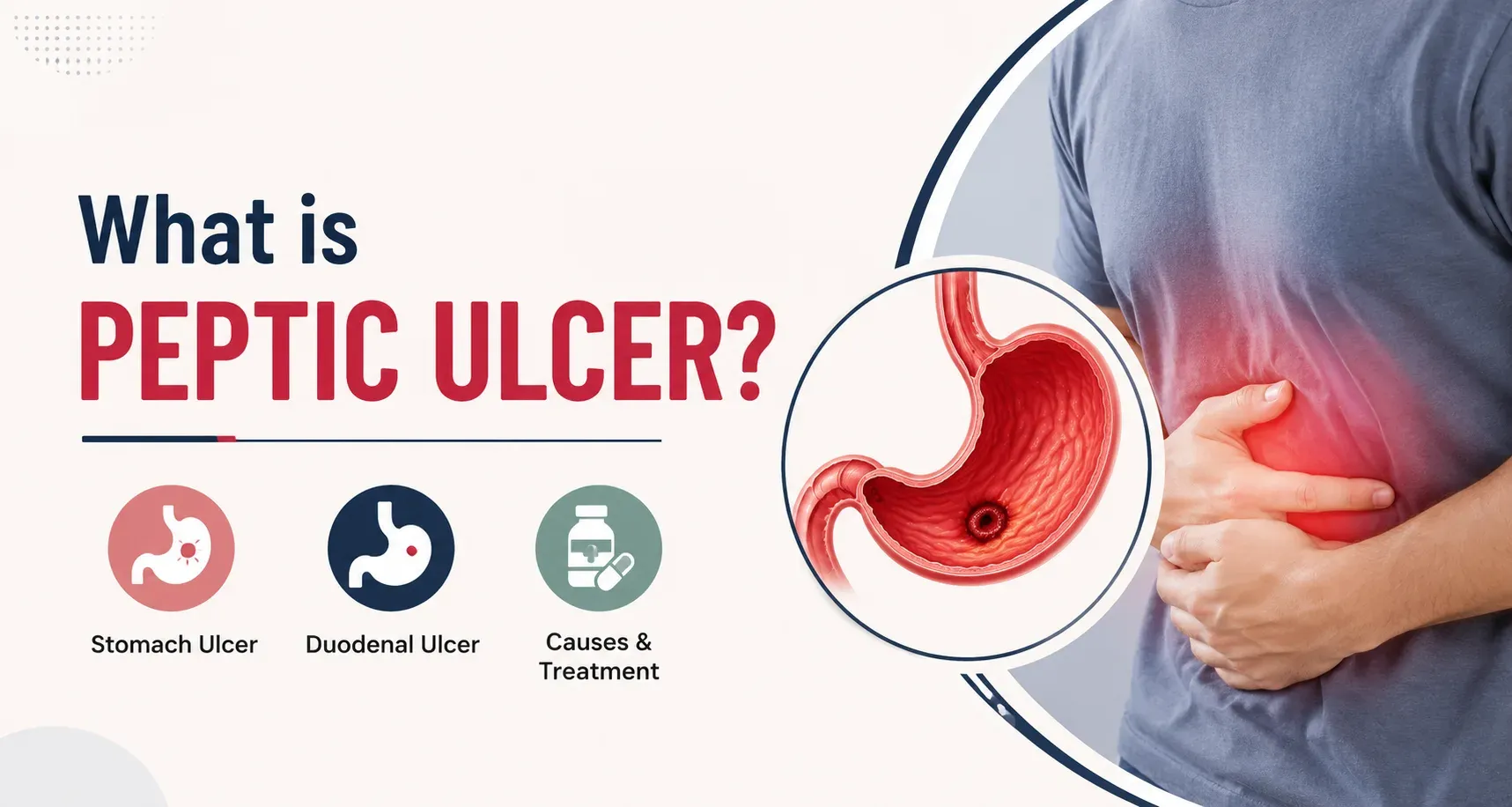
Peptic ulcer disease is an open sore or wound in your stomach or the upper part of your small intestine, called the duodenum. It is usually caused by H.pylori bacteria and NSAIDs (nonsteroidal anti-inflammatory drugs).
How Is a Peptic Ulcer Formed?
Your stomach produces a digestive enzyme called pepsin and stomach acid to break down your food content. These substances are particularly strong, and that is why there's a protective layer coating inside your stomach that stops them from hurting your stomach lining. However, when the protective layer is damaged, stomach acid and pepsin begin to damage the inner lining, causing a peptic ulcer.
Types of Peptic Ulcer
There are mainly two types of peptic ulcer: gastric and duodenal.
- Gastric Ulcer: This happens in the stomach.
- Duodenal Ulcer: This happens in the first part of the small intestine.
What Are the Symptoms of Peptic Ulcer?
Recognising the symptoms of a peptic ulcer helps ensure that treatment is initiated before a severe complication occurs. Here are some of the most common symptoms of a peptic ulcer.
- Stomachache (gets worse on an empty stomach or at night)
- Burping
- Heartburn
- Burning sensation inside the stomach
- Loss of appetite
- Vomiting & nausea
- Bloody or black stool
- Unexplained weight loss
- Feeling full instantly after eating
Heartburn is a common symptom of peptic ulcer and acidity, which can lead you to choose the wrong treatment and worsen the condition. If you have these symptoms along with heartburn, you must see your doctor to confirm what you are dealing with.
What Are the Causes of Peptic Ulcers?
The main causes of peptic ulcers are infection caused by H.pylori bacteria, too much intake of painkillers (like aspirin and ibuprofen), excess stomach acid, and excessive alcohol and smoking consumption. The following factors are not the direct cause of peptic ulcers, but they increase the risk of developing peptic ulcers after treatment.
- Chemotherapy
- Radiation therapy
- Stomach cancer
- Gastric bypass surgery
- Esophagitis
Certain medications like NSAIDs (nonsteroidal anti-inflammatory drugs) can cause peptic ulcers due to their effect on the stomach lining.
Diagnosis of Peptic Ulcer
Your doctor may ask you about your lifestyle choices and medical history first before the diagnosis process. If your symptoms suggest that you may have a peptic ulcer, your doctor will take a few tests and perform a physical examination, such as:
Laboratory Tests
H. pylori is detected by blood, stool, or breath tests. Blood and stool tests are simple, but in a breath test, you would need to drink or eat something containing non-radioactive carbon. H. pylori is expected to break down the substance in your stomach. Then you will be asked to blow into a special container, and if you have H. pylori, your breath sample will contain labeled carbon.
Endoscopy
In an endoscopy procedure, your doctor will use a long flexible tube which travels from your throat to your oesophagus and small intestine. The tube has a small light to examine if the upper part of your intestine has ulcers. During the endoscopy, your doctor may perform a biopsy, which involves taking a small tissue sample for examination. A biopsy also helps determine whether you are infected with H. pylori.
Upper Gastrointestinal Series
The upper gastrointestinal series is also called a barium meal. Your doctor takes an X-ray of your upper gastrointestinal tract, including the oesophagus, stomach and small intestines. During the process, you are asked to swallow a white liquid containing barium, which makes the ulcer easily visible.
Management & Treatment of Peptic Ulcer
Your health provider treats the condition with medication, especially if you have a condition like a bleeding ulcer. The following are the medicines you may be prescribed depending on the severity of the symptoms.
- Antibiotics to kill the H. pylori infection
- H2 blockers to block stomach acid and relieve ulcer pain
- Proton pump inhibitors to block stomach acid and treat bleeding ulcers
- Cytoprotective agents, such as sucralfate and misoprostol, to protect the stomach lining
- Antacids to provide temporary relief from ulcer pain
If your peptic ulcer cannot be controlled by medication, your doctor may perform an endoscopy procedure to treat the condition effectively. Ensure you schedule a follow-up after the peptic ulcer treatment to avoid any potential health issues.
When to See a Doctor for a Peptic Ulcer?
Mild peptic ulcers can be treated using non-prescription drugs. But if you see your symptoms getting worse, you should not ignore those signs because an untreated ulcer can lead to severe health disorders like stomach cancer. Consult your doctor immediately when you see any of these symptoms.
- Severe stomachache
- Blood in your vomit or stool
- Excessive burning sensation in oesophagus
Prevention Tips for Peptic Ulcers
You need prevention tips for peptic ulcers, especially after the treatment, to prevent the condition from getting worse. Below is the list of aftercare tips you must know.
- Avoid consuming alcohol and smoking
- Wash your hands before a meal
- Wash your food and veggies to reduce H.pylori risk
- Manage stress through meditation and yoga
Besides following these tips, make sure you follow up with your doctor as scheduled. And if you are an NSAID consumer, also known as nonsteroidal anti-inflammatory drugs, ensure you do not overconsume them, as it leads to severe health issues.
What Is the Difference Between a Peptic Ulcer and Acidity?
Peptic ulcer and acidity have similar symptoms, like heartburn, and people often mistake these two conditions with each other. The following table compares peptic ulcers and acidity, so you know which one you are dealing with.
| Peptic Ulcer | Acidity |
|---|---|
| A peptic ulcer is a sore or wound inside the stomach or in the first part of the small intestine. | Acidity occurs when stomach content flows back to your oesophagus. |
| A burning sensation around the chest or in the stomach is one of the symptoms of a peptic ulcer. | Heartburn, around the chest, is a major symptom of acidity. |
| A burning sensation occurs when the stomach is empty. | A burning sensation occurs after eating a meal or when lying down. |
| Vomiting, nausea, burning sensation, stomach pain, bloating, and black stool are other ulcer symptoms. | Bloating, stomach pain, heartburn, and burping are other acidity symptoms. |
| It needs proper medical treatment and antibiotics. | It can be managed with antacids and lifestyle changes. |
What Are the Risk Factors of Peptic Ulcers?
Risk factors explain who is more likely to develop peptic ulcers. When you understand this, you can take preventive measures and follow your doctor's advice to lower the risk of developing the condition. Here are some factors that may increase the risk of peptic ulcers or worsen the condition.
- Excessively consuming painkillers for even mild headaches
- Excess consumption of alcohol and smoking
- Untreated H. pylori infection
- Poor lifestyle choices and dietary habits
- People over the age of 60
- Family history and genetics
If you fall under these categories, treating and managing the stomach ulcer could be challenging. Taking care of your daily habits, along with your medication, becomes extremely crucial in these conditions.
Mool Health Perspective on Peptic Ulcer
Since a peptic ulcer damages the stomach lining and the overall digestive system, maintaining overall gut health becomes challenging. Along with medical treatment and lifestyle changes, digestive care will also support the recovery faster. The goal of Mool Health is to understand gut problems and find the root cause of stomach-related issues. This helps create a personalised kit for every individual using Ayurveda and modern science to treat the condition.
The initial signs of a peptic ulcer include a burning feeling, vomiting, and stomachache, which need to be addressed right away. The delay in treatment may cause serious digestive complications. Now that you know what a peptic ulcer is and its symptoms, you must consult your doctor immediately whenever you see the mentioned symptoms.
Most people believe that a peptic ulcer can also be caused by stress, but that is untrue. Stress doesn't cause ulcers, but yes, it can delay recovery and worsen the condition with time. Your lifestyle choices and eating habits play a crucial role in your recovery, so try to manage your stress with meditation and eat a healthy diet.
Key Takeaways
A peptic ulcer is a sore that develops in the stomach lining or small intestine. This guide explains symptoms, causes, treatment, and warning signs.
Your gut is unique your healing should be too.

Disclaimer
The content provided by Mool Health is for educational and informational purposes only and should not be considered a substitute for professional medical advice, diagnosis, or treatment.