
How to Prevent Nighttime Heartburn: A Complete Guide
Nighttime heartburn can disrupt sleep and cause acid reflux. Discover its causes, quick relief methods, sleeping positions, dietary changes and prevention tips.

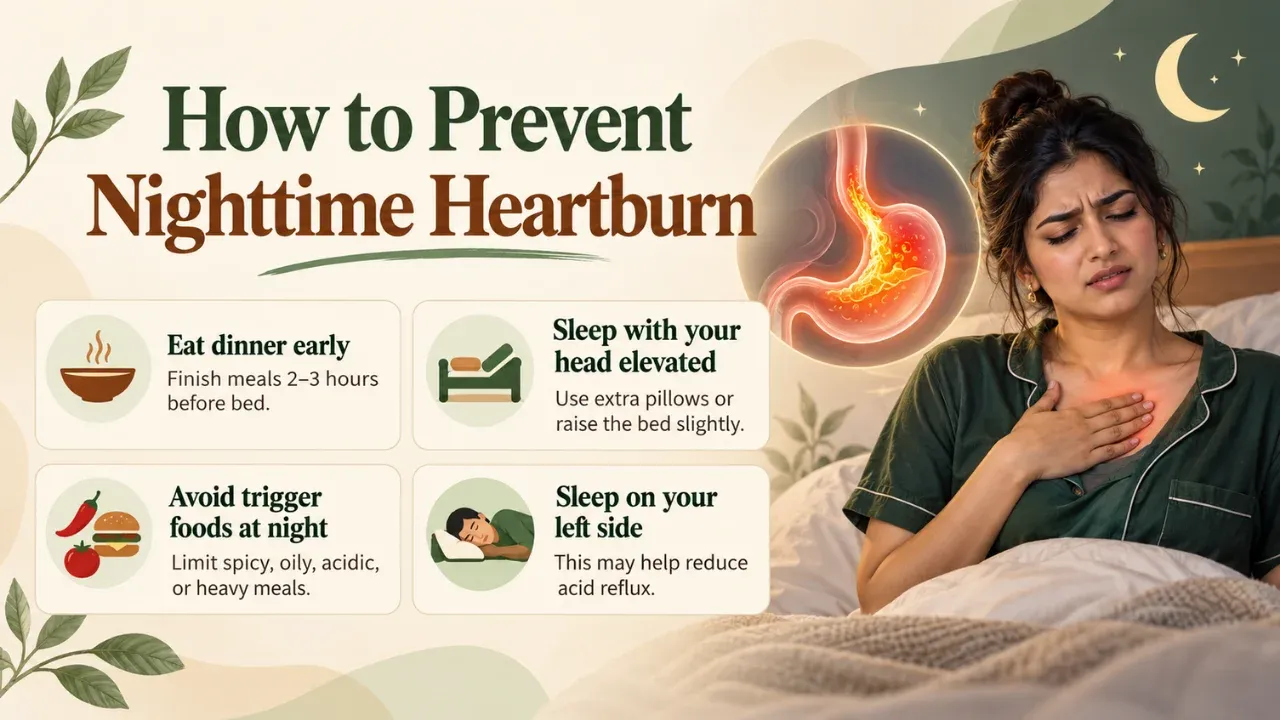
Quick Answer:
Nighttime heartburn occurs when stomach acid flows back into the oesophagus during sleep, causing a burning sensation in the chest or throat. To prevent heartburn at night, stop eating at least 2-3 hours before bed, elevate your head by 6-8 inches, and sleep on your left side. These three changes alone reduce nocturnal acid reflux in most people.
What Is Nighttime Heartburn and Why Does It Happen at Night?
Nighttime heartburn is acid reflux that occurs during sleep or when lying down. It happens because gravity, which normally helps keep stomach acid down, is removed when you recline. The lower oesophageal sphincter (LOS), the muscular valve between the stomach and oesophagus, weakens or relaxes inappropriately, allowing acid to travel upward. For a basic explanation of the condition, see what heartburn is and why it happens.
Nighttime episodes tend to be more severe than daytime reflux because:
- Saliva production drops during sleep, reducing the natural acid-clearing mechanism
- Swallowing frequency decreases by up to 50%, slowing acid clearance from the oesophagus
- Lying flat extends the time acid stays in contact with oesophageal tissue
- Delayed gastric emptying after a late meal leaves more acid available to reflux
According to Mool Health's digestive wellness team, approximately 25% of people in India experience weekly heartburn, and a significant proportion report symptoms that worsen at night.
Why Do You Always Get Heartburn at Night?
If you consistently get heartburn at night, one or more of these factors are likely at play:
- Late meals: Eating within 2 hours of bedtime keeps the stomach full and acid-active when you lie down
- Trigger foods: Fatty, spicy, or acidic foods consumed especially at dinner relax the LOS or increase acid production
- Alcohol and caffeine: Both relax the LOS, with effects lasting several hours after consumption
- Large meal portions: Bigger meals increase gastric pressure, forcing acid upward
- Sleeping position: Lying flat or on the right side allows acid to pool near the LOS
- Excess body weight: Abdominal fat increases intra-gastric pressure, pushing acid into the oesophagus
- Tight clothing at bedtime: Waistbands or nightwear that compress the abdomen can worsen reflux
Studies suggest that people with GERD (gastro-oesophageal reflux disease) are up to 3 times more likely to experience nocturnal reflux compared to those with occasional heartburn [1].
How to Prevent Heartburn at Night: Step-by-Step Guide
Preventing heartburn at night requires consistent changes to eating habits, sleeping position, and lifestyle. Follow these steps in order for the best results.
Step 1: Stop eating 2-3 hours before bed
Allow the stomach sufficient time to empty before lying down. A stomach that is 60-70% emptied produces significantly less reflux pressure. Set a consistent cut-off time each evening. For example, if you sleep at 10:30 PM, finish dinner by 7:30 PM.
Step 2: Avoid trigger foods at dinner
Certain foods increase acid production or weaken the LOS. At your evening meal, avoid:
- Fried or fatty foods (chips, red meat, full-fat dairy)
- Spicy curries, chillies, or acidic sauces (tomato, citrus)
- Chocolate and mint, as both relax the LOS
- Carbonated drinks and alcohol
- Coffee or strong tea after 4 PM
Step 3: Eat smaller portions at dinner
Large meals stretch the stomach and increase pressure at the LOS. Reducing dinner to a moderate portion, roughly the size that fits comfortably in two cupped hands, lowers the risk of acid being pushed upward during the night.
Step 4: Elevate the head of your bed by 6-8 inches
Raise the head of your mattress using a wedge pillow or bed risers. Elevation uses gravity to keep acid in the stomach during sleep. Standard pillows alone are not sufficient because they only raise the head, not the entire upper body, and can actually increase abdominal pressure.
Step 5: Sleep on your left side
The stomach is positioned slightly to the left. Sleeping on the left side keeps the gastro-oesophageal junction above the level of stomach contents, reducing reflux. Studies show left-side sleeping can reduce acid exposure time in the oesophagus by up to 71% compared to right-side sleeping [2].
Step 6: Wear loose clothing to bed
Tight pyjamas or waistbands compress the abdomen, increasing pressure on the stomach. Choose loose, comfortable nightwear.
Step 7: Do not lie down immediately after eating
If an early dinner is not possible, remain upright, sitting or standing, for at least 45-60 minutes after eating. A short, gentle walk after dinner can also support gastric emptying.
What Are the 7 Signs of Heartburn?
Recognising heartburn symptoms early helps you address them before they escalate. The seven key signs of heartburn include:
- Burning sensation in the chest: Typically behind the breastbone, often worse after eating or at night
- Sour or bitter taste in the mouth: Caused by acid reaching the throat or mouth (regurgitation)
- Difficulty swallowing (dysphagia): A feeling of food sticking or a lump in the throat
- Chronic cough: Acid irritating the airways, often misdiagnosed as asthma or post-nasal drip
- Hoarseness or a sore throat: Acid damages the vocal cords, especially after nocturnal reflux
- Bloating or belching: Increased gas production linked to acid activity in the upper GI tract
- Worsening symptoms when lying down or bending forward: A clear positional trigger specific to acid reflux
Mool Health notes that if three or more of these symptoms occur more than twice per week, evaluation for GERD is recommended.
How to Get Rid of Heartburn Fast at Night: Immediate Relief
When heartburn strikes at night and you need to reduce it quickly, these approaches can help within 10-30 minutes:
- Sit upright or elevate your upper body: Remove the gravitational advantage that acid has when you lie flat
- Chew sugar-free gum for 20-30 minutes: Increases saliva production by up to 140%, which neutralises and clears acid from the oesophagus [3]
- Take an antacid (if approved by your doctor): Over-the-counter antacids like calcium carbonate neutralise stomach acid within 5-10 minutes; effects last 30-60 minutes
- Drink a small glass of water: Helps wash residual acid back down into the stomach
- Try a small amount of cold milk (if tolerated): The calcium and protein content can temporarily buffer acid, though this is not effective for everyone
- Avoid drinking large volumes of liquid: This can increase gastric pressure and worsen symptoms
For additional strategies, read about instant relief from acidity at home.
- Do not drink mint tea because mint relaxes the LOS and may worsen reflux
- Do not take aspirin or ibuprofen for chest discomfort without medical advice because NSAIDs can irritate the stomach lining
- Do not lie back down immediately after taking antacids. Remain upright for at least 20 minutes
What Stops Heartburn Naturally? Lifestyle Approaches That Work
Natural prevention of nighttime heartburn focuses on reducing acid production, improving LOS tone, and supporting gastric emptying. Evidence-backed approaches include:
Dietary changes
- Increase fibre intake. High-fibre diets are associated with a 20% lower risk of acid reflux symptoms
- Eat more alkaline foods. Vegetables, oats, and lean proteins reduce overall gastric acidity
- Include ginger in meals. Ginger has demonstrated anti-inflammatory effects on the GI tract in small clinical studies
Learn more about common causes of acidity and triggers to identify foods that may worsen your symptoms.
Weight management
- Losing 5-10% of body weight can significantly reduce reflux frequency. Even a 5 kg reduction has shown measurable improvement in GERD symptoms in overweight individuals [4]
Posture and movement
- Avoid bending over or doing core-intensive exercise within 2 hours of eating
- A 10-15 minute post-meal walk at a comfortable pace supports gastric motility
Stress reduction
- Chronic stress increases cortisol, which can worsen acid production and gut motility. Practices such as diaphragmatic breathing or brief mindfulness before bed may help reduce nocturnal symptoms
According to Mool Health's clinical advisors, combining dietary modification with positional therapy produces better outcomes than either strategy alone.
Key Takeaways
- Stop eating 2-3 hours before bed because this is one of the most effective behavioural changes for reducing acid availability during sleep
- Elevate the head of your bed by 6-8 inches to use gravity to keep acid in the stomach; standard pillows alone are not sufficient
- Sleep on your left side because it can reduce oesophageal acid exposure compared to right-side sleeping
- Avoid trigger foods at dinner, including fatty, spicy, acidic, and fried foods, as well as alcohol and caffeine
- Chewing sugar-free gum and staying upright are accessible strategies for immediate relief at night
- Weight loss of even 5% can significantly reduce the frequency and severity of nighttime reflux in overweight individuals
- Persistent symptoms more than twice a week require medical evaluation, as they may indicate GERD or another condition needing treatment beyond lifestyle changes
Your gut is unique your healing should be too.

FAQs
To reduce heartburn quickly at night, sit upright or elevate your upper body, chew sugar-free gum for 20-30 minutes to stimulate saliva, and take an antacid if available. Drinking a small glass of water can also help wash acid back down. Avoid lying flat until symptoms settle.
Nighttime heartburn is common because lying flat removes the gravitational effect that keeps stomach acid in place during the day. Saliva production also drops during sleep, slowing the body's natural acid-clearing process. Late meals, alcohol, and trigger foods worsen this further.
The seven signs are burning chest pain, sour or bitter taste in the mouth, difficulty swallowing, chronic cough, hoarseness or sore throat, bloating or belching, and symptoms that worsen when lying down or bending. Symptoms occurring more than twice a week warrant medical evaluation.
Chewing sugar-free gum, sitting upright, drinking a small amount of water, and avoiding further food or drink are the most effective natural approaches for quick relief. Cold milk may help some people temporarily. Antacids are the fastest pharmacological option if natural measures are insufficient. For more options, see home remedies for heartburn relief .
If you cannot avoid eating late, keep the meal small, choose low-fat and non-spicy foods, avoid alcohol and carbonated drinks, and remain upright for at least 45-60 minutes after eating. Sleeping with your head elevated by 6-8 inches becomes especially important when late meals are unavoidable.
Frequent nighttime heartburn occurring more than twice a week may indicate GERD, a chronic condition that requires medical evaluation. Occasional nighttime heartburn can occur in people without GERD, typically triggered by specific foods, large meals, or positional habits. A doctor can differentiate between the two.
Yes. Prolonged acid exposure during sleep can cause oesophagitis, erosions, and in some cases Barrett's oesophagus, a precancerous change in the oesophageal lining. This is why nocturnal symptoms are considered clinically significant and should not be ignored if they occur regularly.
Positional changes such as bed elevation and left-side sleeping can produce results within the first 1-2 nights. Dietary modifications typically show consistent improvement within 2-4 weeks. Weight-related changes take longer, typically 4-12 weeks, depending on the degree of weight loss achieved.
Disclaimer
The content provided by Mool Health is for educational and informational purposes only and should not be considered a substitute for professional medical advice, diagnosis, or treatment.