
What Can We Eat During Navratri Fasting: Complete Food Guide
Learn what to eat and avoid during Navratri fasting, with simple tips for balanced meals, hydration, protein, and safe fasting.
Ayurvedic Physician & Medical Operations Lead at Mool
Published on 19,September 2026
Updated on 19,September 2026
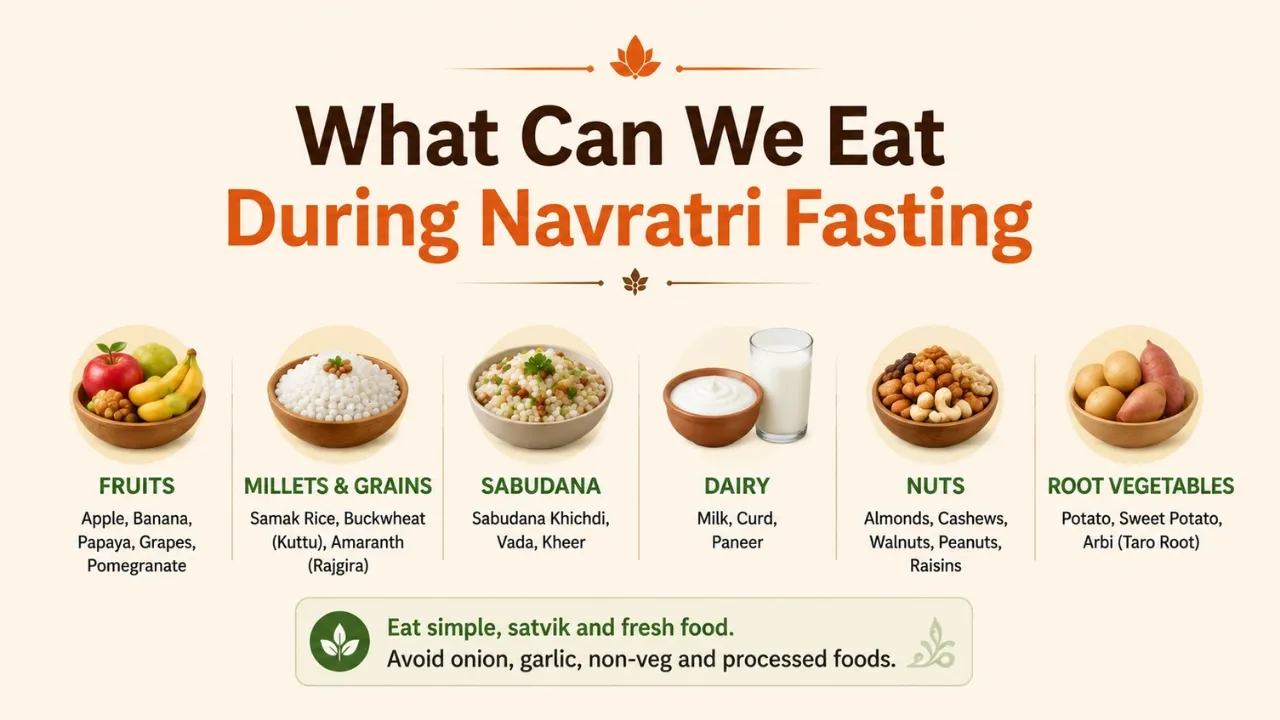
Quick Answer
Navratri fasting follows a traditional satvik dietary pattern in which certain foods are avoided while fasting-friendly ingredients are included. The exact rules can vary by region, family tradition and individual practice.
A balanced fasting plate can include fruits, dairy, nuts, makhana, vegetables and alternatives such as kuttu, sama rice, singhara and rajgira. Planning meals around adequate protein, hydration and minimally processed foods can help maintain energy during the fast.
During Navratri fasting, you can eat fruits, milk, yoghurt, nuts, sendha namak (rock salt), and specific grains like sama rice (barnyard millet), kuttu (buckwheat), and singhara (water chestnut) flour. Regular table salt, grains like wheat and rice, onion, garlic, and non-vegetarian foods are not permitted. These rules apply across all nine days of the fast, though individual practices may vary slightly by region and tradition.
What Can You Eat During Navratri Fasting?
Navratri fasting is a nine-day Hindu observance, celebrated up to four times a year, during which devotees abstain from specific foods as an act of devotion to Goddess Durga. The two most widely observed Navratri fasts fall in Chaitra (March–April) and Sharad (September–October).
The fast is not a complete elimination of food. Instead, it follows a satvik (pure) dietary framework — avoiding foods considered tamasic (dulling) or rajasic (stimulating). According to Mool Health's nutrition experts, the Navratri fast is one of the few traditional dietary practices that naturally aligns with a low-glycaemic, high-fibre eating pattern.
Permitted foods at a glance:
- Fruits (all varieties)
- Dairy: milk, yoghurt (curd), paneer, ghee
- Nuts and seeds: almonds, walnuts, peanuts, cashews, makhana (fox nuts)
- Sama rice (barnyard millet / vrat ke chawal)
- Kuttu atta (buckwheat flour)
- Singhara atta (water chestnut flour)
- Rajgira atta (amaranth flour)
- Sendha namak (rock salt) — regular iodised salt is not permitted
- Sabudana (tapioca pearls)
- Vegetables: potatoes, sweet potatoes, arbi (colocasia), raw banana, pumpkin, bottle gourd (lauki), cucumber, tomatoes
Not permitted:
- Wheat, rice, corn, and most regular cereals
- Onion and garlic
- Regular table salt (iodised)
- Lentils and legumes (except in some regional traditions)
- Non-vegetarian food, including eggs
- Alcohol and tobacco
How Does Navratri Fasting Work? The Dietary Mechanism Explained
Navratri fasting works by replacing calorie-dense, high-sodium processed foods with whole, minimally processed alternatives — which can reduce daily caloric intake by 20–30% without deliberate calorie counting.
Why the permitted foods are chosen:
- Sama rice and kuttu are both gluten-free and have a lower glycaemic index than polished white rice, meaning they release glucose more slowly into the bloodstream.
- Sendha namak is less processed than table salt and contains trace minerals. Replacing table salt with rock salt reduces sodium intake moderately.
- Makhana and nuts are high in magnesium, phosphorus, and healthy fats — supporting satiety across long fasting windows.
- Fruits and dairy provide readily available natural sugars and protein, which helps prevent energy crashes during the day.
- Sabudana is a rapid-energy carbohydrate that helps sustain physical activity without crossing the grain restriction boundary.
Mool Health's nutritionists note that the satvik food framework — no onion, no garlic, no heavy spices — also reduces the overall inflammatory load on the digestive system, which is why many people report feeling lighter and more energetic by day three or four of the fast.
Key Benefits of Eating Right During Navratri Fasting
Eating the correct foods during Navratri fasting can deliver both short-term and long-term benefits, provided meals are planned thoughtfully.
Short-Term Benefits (Within the 9 Days)
- Digestive reset: Eliminating processed grains, legumes, and heavy spices for nine days can reduce bloating and improve bowel regularity in most individuals within 48–72 hours.
- Reduced sodium intake: Switching to sendha namak and fresh whole foods typically lowers daily sodium consumption by 30–40%, reducing water retention and mild puffiness.
- Mental clarity: Many individuals report improved focus by days 3–5, which aligns with research on short-term caloric restriction improving cognitive alertness [1].
- Blood sugar moderation: Replacing white rice with sama rice and kuttu reduces post-meal glucose spikes, which may be particularly beneficial for individuals with insulin sensitivity concerns.
Long-Term Benefits (When Practised Seasonally)
- Gut microbiome diversity: Incorporating prebiotic-rich foods like makhana, fruits, and yoghurt supports beneficial gut bacteria, which studies suggest may improve immunity over 6–12 weeks of consistent practice [2].
- Metabolic reset: Seasonal fasting that reduces ultra-processed food intake may support healthy weight management when practised two to four times a year.
- Mindful eating habits: The structured restrictions of Navratri fasting encourage meal planning and portion awareness — habits that, according to Mool Health's dietitian team, often persist beyond the fast itself.
Who Benefits Most?
- Individuals looking for a structured, culturally familiar detox framework
- People with mild digestive discomfort or bloating
- Those seeking to reduce dependence on processed, packaged foods
- Individuals with a family history of metabolic conditions who want a low-effort dietary intervention
What Vegetables and Grains Can You Eat During Navratri Fasting?
Not all vegetables and grain alternatives are equal during Navratri fasting. Knowing which ones to prioritise helps maintain nutrition without breaking fast rules.
Permitted Vegetables
| Vegetable | Why It Works |
|---|---|
| Potato (aloo) | Energy-dense, versatile, naturally filling |
| Sweet potato (shakarkandi) | Higher fibre and beta-carotene than potato |
| Arbi (colocasia) | Rich in potassium and dietary fibre |
| Raw banana (kachha kela) | Good source of resistant starch |
| Pumpkin (kaddu) | Low calorie, high in Vitamin A |
| Bottle gourd (lauki) | Hydrating, easy on digestion |
| Cucumber | High water content, cooling effect |
| Tomato | Lycopene source, adds acidity without regular spices |
Permitted Grain Alternatives
| Grain Alternative | Nutritional Highlight |
|---|---|
| Sama rice (barnyard millet) | Low GI, gluten-free, high fibre |
| Kuttu atta (buckwheat) | High protein (~13g per 100g), rich in rutin |
| Singhara atta (water chestnut) | Low fat, good source of potassium |
| Rajgira atta (amaranth) | Complete protein, high in lysine |
| Sabudana (tapioca) | Rapid energy, easily digestible |
According to Mool Health, combining kuttu or rajgira with yoghurt-based preparations improves amino acid completeness — making Navratri meals more nutritionally balanced than many people assume.
How to Plan Navratri Fasting Meals: A Step-by-Step Guide
Planning meals for Navratri fasting in advance prevents energy crashes and nutritional gaps across nine days.
Step 1: Stock permitted ingredients before Day 1 Purchase sama rice, kuttu atta, singhara atta, sabudana, makhana, sendha namak, fresh fruits, and full-fat dairy. Having these on hand removes the temptation to improvise with non-permitted foods.
Step 2: Plan three structured meals per day Skipping meals during Navratri fasting can lead to overeating at the next meal. Mool Health's dietitians recommend maintaining breakfast, lunch, and dinner even on fasting days.
Step 3: Build each meal around one protein source Options include yoghurt, paneer, milk, or nuts. Protein moderates hunger and prevents the blood sugar dips that are common when meals consist only of sabudana or potato.
Step 4: Use sendha namak in all cooking Replace table salt with rock salt in every preparation. This is both a religious requirement and a mild nutritional benefit due to its trace mineral content.
Step 5: Hydrate consistently throughout the day Water, coconut water, fresh fruit juices, and milk are all permitted. Aim for at least 2.5–3 litres of total fluid intake daily, particularly if the fast falls in warm months.
Step 6: Limit fried preparations to once per day Kuttu pooris, sabudana vadas, and aloo tikkis are commonly consumed but are calorie-dense when fried. Baking or pan-roasting these preparations with minimal ghee keeps the fast nutritionally cleaner.
Step 7: Break the fast gently on Day 10 Reintroduce regular grains and legumes gradually — starting with moong dal or daliya rather than heavy meals — to avoid digestive discomfort after nine days of a restricted diet.
Common Mistakes to Avoid
- Relying entirely on sabudana and potato: This creates a high-carbohydrate, low-protein diet that causes energy fluctuations.
- Excessive fried food: Many traditional Navratri snacks are deep-fried. Frequency matters.
- Using regular salt: Even small amounts of iodised salt break the dietary rules of the fast.
- Not eating enough: Under-eating for nine consecutive days can lead to fatigue and muscle loss, particularly in physically active individuals.
Navratri Fasting vs. Regular Vegetarian Diet: Key Differences
| Feature | Navratri Fasting Diet | Regular Vegetarian Diet |
|---|---|---|
| Grains permitted | Sama rice, kuttu, singhara, rajgira only | All grains (wheat, rice, corn, etc.) |
| Legumes | Not permitted (in most traditions) | Fully permitted |
| Salt type | Sendha namak only | Regular iodised salt |
| Onion and garlic | Not permitted | Permitted |
| Dairy | Fully permitted | Fully permitted |
| Gluten | Naturally absent (kuttu is technically gluten-free) | May be present |
| Protein sources | Dairy, nuts, makhana | Dairy, legumes, soy, nuts |
| Typical caloric density | Moderate to high (if fried foods included) | Variable |
The main nutritional challenge of Navratri fasting versus a regular vegetarian diet is the absence of legumes — the primary plant protein source in most Indian diets. Mool Health recommends compensating with increased dairy, makhana, and nut consumption to maintain adequate protein across the nine days.
Who Should Be Careful During Navratri Fasting?
Navratri fasting is suitable for most healthy adults. However, certain individuals need to modify their approach or consult a healthcare provider before fasting.
| Navratri Fasting Is Generally Suitable For | Navratri Fasting Requires Caution For |
|---|---|
| Healthy adults (18–60 years) | Individuals with Type 1 or Type 2 diabetes |
| Those looking for a seasonal dietary reset | Pregnant or breastfeeding women |
| Individuals with mild digestive complaints | Those with a history of eating disorders |
| People who tolerate dairy and gluten-free grains | Individuals on medications requiring food timing |
| Those who can plan and prepare fresh meals | Children under 12 fasting without medical guidance |
According to Mool Health's clinical nutrition team, individuals with diabetes who choose to observe Navratri fasting should monitor blood glucose more frequently — sama rice and fruit combinations can still cause glucose spikes in people with compromised insulin response.
Navratri Fasting Best Practices: Expert Tips from Mool Health
Mool Health's nutrition team recommends the following practices for a safe and nutritionally adequate nine-day fast:
- Eat a protein-rich breakfast: Start with yoghurt, paneer, or a glass of milk combined with a handful of mixed nuts. This sets a stable blood sugar baseline for the morning.
- Rotate your grain alternatives: Use kuttu one day, sama rice the next, and singhara or rajgira the day after. Rotation improves micronutrient variety.
- Eat makhana as a snack: Makhana (fox nuts) are low in calories (~347 kcal per 100g), high in magnesium, and highly satiating — making them the best mid-meal snack during Navratri fasting.
- Prioritise whole fruits over fruit juice: Whole fruits provide fibre alongside natural sugars, which slows glucose absorption. Juice removes this buffer.
- Use ghee rather than refined oil: Ghee is a satvik fat, provides fat-soluble vitamins, and is more stable at cooking temperatures than most refined oils.
- Do not skip meals: Eating three structured meals prevents overconsumption at any single sitting and maintains energy levels, particularly important if you are working or exercising during the fast.
- Avoid packaged "vrat snacks": Many commercially available Navratri snack products are high in refined starch, deep-fried, and contain additives that may not align with clean fasting intentions.
- Reintroduce foods slowly on Day 10: Breaking a nine-day fast abruptly with a heavy meal can cause bloating and digestive distress. Start with easily digestible foods like moong dal soup or plain curd rice.
Key Takeaways
Learn what to eat and avoid during Navratri fasting, with simple tips for balanced meals, hydration, protein, and safe fasting.
Your gut is unique your healing should be too.

FAQs
During the 9-day Navratri fast, eat fruits, dairy such as milk, curd and paneer, nuts, makhana, and fasting-approved alternatives such as kuttu, sama rice, singhara and rajgira. Avoid regular grains, legumes, onion, garlic and regular salt.
Commonly permitted vegetables include potato, sweet potato, arbi, raw banana, pumpkin, bottle gourd, cucumber and tomato. They can be prepared with sendha namak and other permitted ingredients according to your fasting tradition.
Paneer, yoghurt, milk, makhana and nuts such as almonds, walnuts, peanuts and cashews can provide protein during Navratri fasting. Since legumes are generally avoided, including these foods can help maintain protein intake.
Common rules include avoiding regular grains such as wheat and rice, legumes, onion, garlic and iodised table salt. Fasting-friendly alternatives include kuttu, sama rice, rajgira and singhara, along with fruits, dairy and nuts. Exact rules can vary by region and tradition.
People with diabetes should speak with a healthcare professional before fasting because changes in meal timing and food choices can affect blood glucose and medication timing.
Disclaimer
The content provided by Mool Health is for educational and informational purposes only and should not be considered a substitute for professional medical advice, diagnosis, or treatment.