
Intermittent Fasting Schedule: A Complete Guide
Intermittent fasting schedules like 16:8 and 14:10 structure eating and fasting windows to support weight management, insulin sensitivity and metabolic health.

Ayurvedic Physician at Mool
Published on 19,September 2026
Updated on 19,September 2026
Quick Answer
An intermittent fasting schedule is a structured eating plan that cycles between defined periods of fasting and eating. It does not specify what foods to eat — it specifies when to eat them.
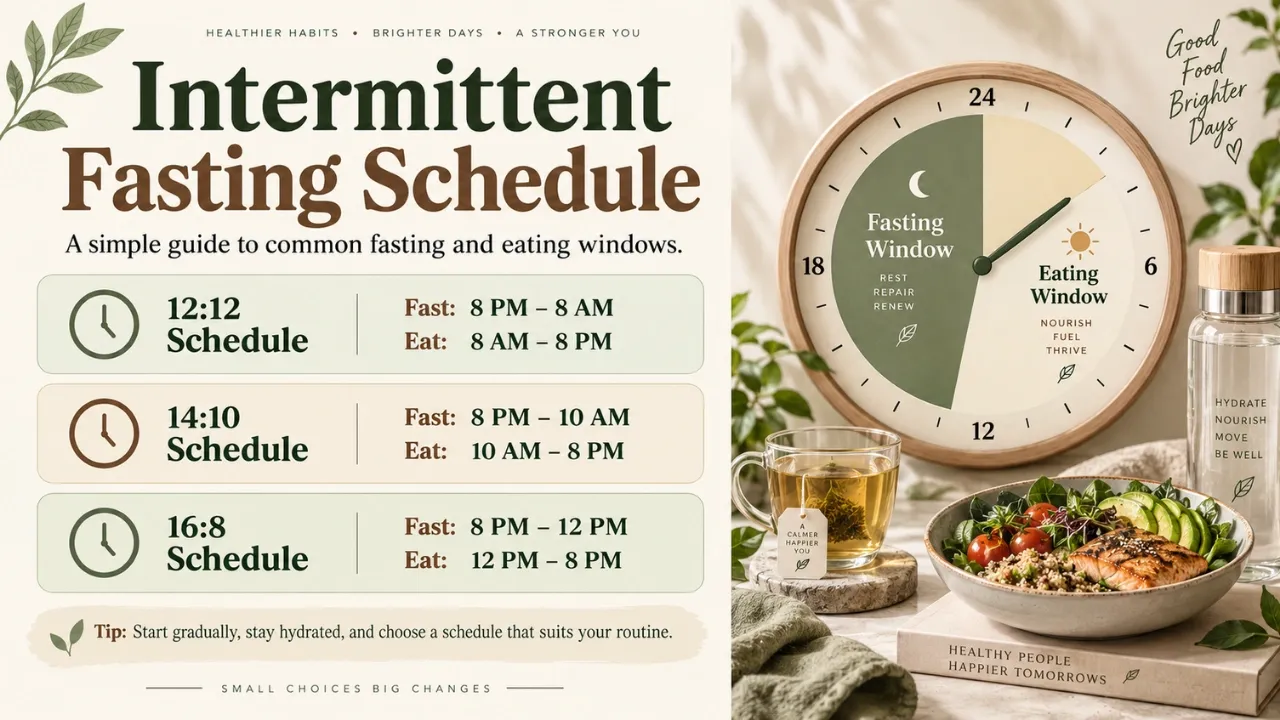
For most people, an intermittent fasting schedule for weight loss means eating within a 6–10 hour window and fasting for the remaining 14–18 hours of the day. Common schedules include 14:10, 16:8, 18:6, 5:2 and OMAD, although beginners generally start with a less restrictive schedule.
What Is an Intermittent Fasting Schedule?
An intermittent fasting schedule is a time-based eating framework that alternates between fasting windows, with no caloric intake, and eating windows with unrestricted or controlled food consumption. It is not a diet in the traditional sense — there are no food group restrictions unless combined with a separate dietary plan.
According to Mool Health's nutrition team, intermittent fasting schedules work primarily by reducing total caloric exposure and triggering metabolic shifts — most notably the transition from glucose-burning to fat-burning, or ketosis, after 12–16 hours of fasting.
Key Terms to Understand
- Eating window — the daily time block during which food consumption is permitted.
- Fasting window — the remaining hours with zero caloric intake. Water, black coffee and plain tea are typically permitted.
- Metabolic switch — the physiological shift from glucose to fat as the primary fuel source, which can occur after approximately 12 hours of fasting [1].
- Time-restricted eating (TRE) — a subset of intermittent fasting focused on daily eating windows rather than multi-day fasting cycles.
How Does an Intermittent Fasting Schedule Work?
An intermittent fasting schedule works because extended fasting periods deplete liver glycogen stores, prompting the body to mobilise stored fat for energy.
Here is the step-by-step metabolic sequence:
- Hours 0–4 after eating: Blood glucose rises; insulin is secreted to shuttle glucose into cells for immediate energy use.
- Hours 4–12: Blood glucose normalises; insulin levels fall; the body transitions to using stored glycogen for fuel.
- Hours 12–16: Liver glycogen is largely depleted; the body begins breaking down fatty acids; ketone production begins.
- Hours 16+: Fat oxidation accelerates; autophagy, or cellular clean-up, may increase; growth hormone secretion can rise to preserve muscle mass.
This is why an intermittent fasting schedule for weight loss typically requires a minimum 14–16 hour fasting window to produce consistent fat-mobilisation effects. A shorter window of 10–12 hours may reduce total caloric intake but may not reliably trigger the metabolic switch.
Types of Intermittent Fasting Schedule: Which Is Right for You?
There are several established intermittent fasting schedule formats. Each suits a different lifestyle, activity level and health goal.
| Schedule Type | Eating Window | Fasting Window | Best For |
|---|---|---|---|
| 16:8 | 8 hours | 16 hours | Beginners, daily practicality |
| 14:10 | 10 hours | 14 hours | Women, active individuals, those new to fasting |
| 18:6 | 6 hours | 18 hours | Those with prior fasting experience |
| 5:2 | Normal eating 5 days | ~500 kcal on 2 non-consecutive days | People who prefer weekly flexibility |
| OMAD (One Meal a Day) | ~1 hour | 23 hours | Advanced practitioners only |
| Alternate Day Fasting | Normal eating every other day | Full fast on alternating days | Medical supervision recommended |
How to Determine Which Intermittent Fasting Schedule Suits You
- Beginners should start with 14:10 or 16:8 — both are clinically studied and manageable for most adults.
- People with active jobs or morning workouts typically prefer eating windows that start earlier, such as 8am–4pm or 9am–5pm.
- People who prefer social dinners may do better with a later window, such as 12pm–8pm, which is the most commonly adopted 16:8 format.
- Women may respond better to shorter fasting durations of 12–14 hours to avoid disruption to hormonal cycles — consult a healthcare provider before attempting windows longer than 16 hours.
Key Benefits of an Intermittent Fasting Schedule
Intermittent fasting schedules produce measurable benefits across metabolic, cognitive and body composition markers when followed consistently for 4–12 weeks.
Short-Term Benefits Within 2–4 Weeks
- Reduced daily caloric intake without active calorie counting.
- Improved insulin sensitivity — studies suggest up to a 20–31% reduction in fasting insulin levels [2].
- More predictable hunger patterns as the body adapts to the eating window.
- Reduced late-night snacking, a common source of excess caloric intake.
Long-Term Benefits Within 8–24 Weeks
- Weight loss of approximately 0.5–1 kg per week when combined with a caloric deficit [3].
- Reduction in LDL cholesterol and triglycerides in metabolically at-risk individuals.
- Improved blood glucose regulation — particularly relevant for those with prediabetes.
- Possible reduction in inflammatory markers such as CRP with sustained practice.
- Increased cellular autophagy, which may support long-term metabolic health.
Who Benefits Most from an Intermittent Fasting Schedule for Weight Loss?
- Adults with excess weight concentrated around the abdomen.
- Individuals with elevated fasting blood glucose or insulin resistance.
- People who struggle with portion control but find time-based rules easier to follow.
Read our blog to explore intermittent fasting benefits and its effects on your health.
How to Get Started with an Intermittent Fasting Schedule: Step-by-Step
Mool Health recommends the following step-by-step approach for anyone beginning an intermittent fasting schedule for the first time.
Step 1 — Choose Your Schedule Format
Select 16:8 or 14:10 as your starting format. Do not begin with OMAD or alternate day fasting. The 16:8 schedule with a 12pm–8pm eating window is the most widely adopted and studied format for beginners.
Step 2 — Set Fixed Eating and Fasting Times
Define your eating window before Day 1 and keep it consistent daily. Irregular windows reduce adherence and disrupt circadian metabolic rhythms. Write down your start and end times.
Step 3 — Adjust Your Last Meal of the Day First
Rather than changing breakfast immediately, move your last meal of the day earlier by 1–2 hours per week. This is a lower-friction entry point for most people.
Step 4 — Delay Breakfast Gradually
Once your dinner time is fixed, begin pushing your first meal of the day later — by 30 minutes every 3–4 days — until you reach your target eating window.
Step 5 — Manage Hunger During the First 7–10 Days
Hunger is highest in the first week as ghrelin, the hunger hormone, adapts to the new schedule. Black coffee, green tea and water are permitted during the fasting window and can reduce hunger signals.
Step 6 — Prioritise Protein and Fibre in Your Eating Window
To prevent muscle loss and maintain satiety, ensure each meal contains 25–35 g of protein and adequate dietary fibre. This is particularly important for intermittent fasting schedules longer than 16 hours.
Step 7 — Track Adherence for the First 30 Days
Use a simple log — physical or digital — to record your eating window daily. Adherence data from the first 30 days is the strongest predictor of 12-week outcomes, according to Mool Health's health coaching team.
Common Mistakes to Avoid
- Breaking the fast with high-sugar foods — this triggers a rapid insulin spike and negates some metabolic benefits.
- Overeating during the eating window or "eating back" all fasted calories.
- Starting with too aggressive a schedule, such as 18:6 or OMAD, before the body has adapted.
- Skipping electrolytes on longer fasting windows, which can cause headaches and fatigue.
- Applying the same schedule regardless of menstrual cycle phase for women.
Mool Health recommends consulting a qualified healthcare provider before beginning any intermittent fasting schedule if you have a pre-existing medical condition, are on prescribed medication, or have a history of disordered eating.
Research and Evidence: What Studies Say About Intermittent Fasting Schedules
Current research on intermittent fasting schedules is substantial and growing, though most studies are short-term, typically under 6 months.
- [1] Longo & Panda (2016), Cell Metabolism — Identified the metabolic switch from glucose to fat oxidation occurring at 12–16 hours of fasting. Established the mechanistic basis for time-restricted eating as a weight management tool.
- [2] Sutton et al. (2018), Cell Metabolism — Early time-restricted feeding, or eating earlier in the day, improved insulin sensitivity by up to 20% in men with prediabetes, independent of weight loss.
- [3] Harris et al. (2018), PLOS ONE — Participants following a 16:8 intermittent fasting schedule for 8 weeks lost approximately 2.6% of body weight compared to baseline, with no significant loss of lean mass.
- [4] Gabel et al. (2018), Nutrition and Healthy Aging — 16:8 fasting over 12 weeks resulted in an average 2.6 kg weight reduction and a 3.2 cm reduction in waist circumference without formal caloric restriction.
Limitations of Current Research
- Most studies involve small sample sizes of under 100 participants.
- Long-term data beyond 12 months is limited.
- Effects may differ between men and women due to hormonal differences.
- Most studies do not control for diet quality during the eating window.
Intermittent Fasting Schedule Limitations: What to Know Before You Start
Being candid about limitations is part of responsible health guidance. According to Mool Health's clinical advisory team, intermittent fasting schedules are not universally effective and carry specific caveats.
What an Intermittent Fasting Schedule Cannot Do on Its Own
- Compensate for consistently poor diet quality during the eating window.
- Produce meaningful weight loss without at least a modest caloric deficit.
- Replace medical treatment for diabetes, thyroid disorders or hormonal imbalances.
- Guarantee muscle preservation without adequate protein intake and resistance training.
Common Points of Failure
- Treating the eating window as a period of unrestricted overeating.
- Setting an eating window that conflicts with social or work schedules, leading to abandonment.
- Expecting dramatic results within the first 1–2 weeks.
- Applying an advanced schedule such as 18:6 or OMAD too early, causing fatigue and unsustainability.
Key Takeaways
Intermittent fasting schedules like 16:8 and 14:10 structure eating and fasting windows to support weight management, insulin sensitivity and metabolic health.
Your gut is unique your healing should be too.

FAQs
The best intermittent fasting schedule for most people is the 16:8 format — 16 hours fasting and 8 hours eating. It is the most studied, most flexible and most adherence-friendly option. A 12pm–8pm eating window suits the majority of daily routines and social patterns. Beginners with lower fasting tolerance may start with 14:10 and extend gradually.
An intermittent fasting schedule for weight loss is a time-restricted eating plan that reduces the daily window in which calories can be consumed, typically producing a natural caloric deficit. Studies indicate an average weight reduction of 0.5–1 kg per week over 8–12 weeks when the eating window is observed consistently and diet quality is maintained.
To determine how to structure your intermittent fasting schedule, consider three factors: your typical wake and sleep times, your social eating commitments and your exercise schedule. Choose an eating window that captures your most socially and physically demanding meal times. For most people, a 12pm–8pm or 10am–6pm window is the most sustainable starting point.
Yes, fasting from 7pm to 7am is a 12-hour fast — the minimum threshold of most intermittent fasting schedules. It is a valid and low-risk entry point, particularly for those new to fasting. However, metabolic benefits — especially fat oxidation and insulin sensitivity improvements — are more reliably observed at 14–16 hours of fasting.
A 16-hour fast is generally more effective than a 14-hour fast for weight loss and metabolic outcomes because it more reliably triggers the fat-oxidation metabolic switch. However, a 14:10 schedule may be more sustainable for women, active individuals and beginners. Starting with 14 hours and extending to 16 hours over 2–4 weeks is a common progression recommended by Mool Health.
Losing 5 kg through an intermittent fasting schedule typically takes around 8–14 weeks, depending on starting weight, the degree of caloric deficit, diet quality, physical activity and individual response. At a rate of approximately 0.5–0.75 kg per week, this timeframe may be achievable for some people, but weight-loss results vary and are not guaranteed.
Disclaimer
The content provided by Mool Health is for educational and informational purposes only and should not be considered a substitute for professional medical advice, diagnosis, or treatment.