
Water Digestion Time: Does Water Really Digest Instantly?
A guide to water digestion time, absorption on empty stomach, after meals, 1 litre timing, warm vs cold water and hydration tips.
Quick Answer
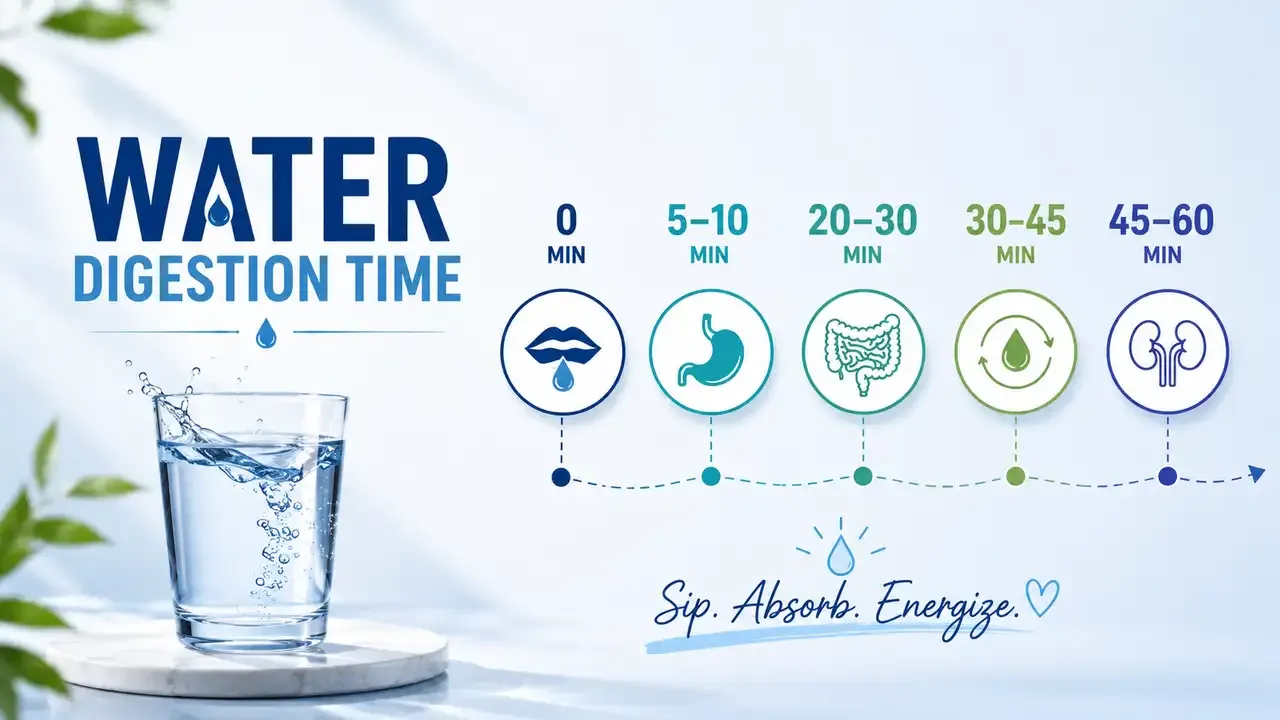
Water does not get digested like food, it gets absorbed. On an empty stomach, water can absorb in about 5-20 minutes. After a light meal it may take 45-60 minutes, and after a heavy meal it may take 60-120 minutes. Room-temperature or warm water, smaller sips, and drinking 30 minutes before meals usually feel better for digestion.
Water does not get digested the way food does , and that distinction changes everything about how you time your intake. On an empty stomach, water reaches your bloodstream in as little as 5–20 minutes. After a meal, that same glass can take 45–120 minutes, depending on what you have eaten.
Three facts that matter most:
- •Empty stomach: water absorbs in 5–20 minutes
- •After a light meal: 45–60 minutes
- •After a heavy meal: 60–120 minutes
Water needs no enzymes, no stomach acid breakdown, and no mechanical churning. It passes through the stomach and intestinal walls by osmosis , the fastest absorption process in your digestive system. The exact timing depends on how much you drink at once, the temperature of the water, and how full your stomach is.
What Is Water Digestion Time and Why Does It Matter?
Water digestion time refers to how long water takes to move from your mouth into your bloodstream , not how long it takes to be broken down, because water is not broken down at all. Water is absorbed, not digested, and this distinction matters for understanding hydration, meal timing, and gut health.
On an empty stomach, water absorbs in approximately 5–20 minutes. After a light meal, water may take 45–60 minutes to absorb. After a heavy meal, the same glass of water can take 60–120 minutes. Coconut water takes around 20–30 minutes on an empty stomach because of its natural sugars and electrolytes.
According to Mool Health's gut health team, the speed at which water moves through the body makes it the fastest-absorbing substance you can consume. Understanding water absorption timing helps you plan hydration around meals, exercise, and gut health goals more effectively.
Key absorption benchmarks:
- •Empty stomach: 5–20 minutes
- •After a light meal: 45–60 minutes
- •After a heavy meal: 60–120 minutes
- •1 litre at once: 1.5–3 hours
- •Coconut water on empty stomach: 20–30 minutes
How Does Water Move Through the Human Body?
Water does not go through the same digestive process as food. It requires no enzymes, no stomach acid, and no mechanical breakdown. Instead, water is absorbed osmotically , passing directly through the stomach lining and intestinal walls into the bloodstream.
Mool Health's digestive health team outlines the step-by-step journey water takes after you swallow it:
Step 1 , Mouth to oesophagus (0–30 seconds) Water mixes briefly with saliva and travels down the oesophagus within seconds. No chemical processing occurs at this stage.
Step 2 , Stomach (5–20 minutes on empty stomach) This is the gastric emptying phase. Plain water requires no mechanical breakdown, so on an empty stomach it clears the stomach in as little as 5 minutes. If food is present, this stage extends to 45–120 minutes.
Step 3 , Small intestine (20–60 minutes) Around 80% of all water you drink is absorbed here through specialised channels in the intestinal wall called aquaporins. This is the primary absorption site for water in the human body.
Step 4 , Large intestine (1–4 hours) The remaining 20% of water is absorbed in the colon. This step also softens stool and prevents constipation. When you are dehydrated, the large intestine pulls more water from stool, making it harder and more difficult to pass.
Step 5 , Bloodstream to kidneys (30–45 minutes after absorption begins) Excess water is filtered by the kidneys. On an empty stomach, water reaches your bladder within 45–60 minutes of drinking.
The full mouth-to-urine journey takes approximately 45–60 minutes on an empty stomach and 1.5–3 hours after a meal.
How Long Does Water Stay in Your Stomach?
Water stays in your stomach for approximately 5–20 minutes on an empty stomach. This is the gastric emptying phase , the period during which the stomach releases water into the small intestine for absorption. After a meal, water lingers alongside food and can take 45–120 minutes to clear the stomach entirely.
The stomach is not the primary water-absorbing organ. Only a small fraction of water is absorbed directly through the stomach lining. Around 80% of water absorption happens downstream in the small intestine through aquaporin channels.
Several factors affect how long water stays in your stomach:
| Factor | Effect on Gastric Emptying |
|---|---|
| Empty stomach | Fastest , 5–20 minutes |
| Food present | Slows emptying to 45–120 minutes |
| Cold water | Adds approximately 5–10 minutes vs room temperature |
| Large volume at once | Slower than small sips |
| Carbonated water | Slightly faster emptying in some studies |
| High-fat meal | Longest , water may sit 90–120 minutes |
Key point from Mool Health: Drinking large amounts of water during meals can temporarily dilute digestive enzymes and stomach acid, potentially slowing protein and starch breakdown. Sipping small amounts with meals is generally better than drinking a full glass at once.
How Long Does It Take for Water to Digest on an Empty Stomach vs After a Meal?
Water digestion time in the human body varies significantly based on whether your stomach is empty or full. This is the single most important variable in water absorption timing.
On an empty stomach, the gastric emptying phase takes 5–20 minutes. A gastric emptying study found that 50% of a 300 ml water load had left the stomach within 12 minutes, and 90% had cleared by 20 minutes. This means most water reaches the small intestine and begins absorbing almost immediately after you drink it.
After a light meal, food slows the stomach's release of water into the small intestine. Water digestion time extends to 45–60 minutes because the stomach works to process food before passing contents forward.
After a heavy meal, particularly one high in fat and protein, water digestion time can extend to 60–120 minutes. High-fat meals slow gastric emptying the most because fat requires more processing time than carbohydrates or proteins.
Condition and corresponding water digestion time:
| Condition | Water Digestion Time |
|---|---|
| Empty stomach | 5–20 minutes |
| After a light meal | 45–60 minutes |
| After a heavy meal | 60–120 minutes |
| Large volume (1 litre) at once | 1.5–3 hours |
| 1 litre with a meal | 2–4 hours |
According to Mool Health's gut health team, this timing difference is why water consumed 30 minutes before a meal absorbs efficiently and primes the stomach, while water gulped during a heavy meal stays in your gut much longer.
How Long Does It Take to Digest 1 Litre of Water?
Drinking 1 litre of water at once takes noticeably longer to absorb than a standard glass. The small intestine can absorb approximately 300 ml of fluid per hour under normal conditions.
In practice, absorption begins immediately as water arrives in the small intestine in batches from the stomach. The result is that 1 litre of water can take 1.5–3 hours to fully absorb when consumed at once, and up to 4 hours when consumed alongside a meal.
| Volume Consumed | Approximate Total Absorption Time |
|---|---|
| 250 ml (1 glass) | 20–45 minutes on empty stomach |
| 500 ml (2 glasses) | 45–90 minutes |
| 1 litre | 1.5–3 hours |
| 1 litre with a meal | 2–4 hours |
Drinking 1 litre of water all at once does not hydrate you four times faster than drinking 250 ml. It temporarily overloads the absorption system, causing water to sit in the gut longer and potentially causing a sensation of fullness, mild cramping, or loose stools in sensitive individuals.
Mool Health recommends spreading water intake as smaller, frequent sips throughout the day rather than large volumes at irregular intervals. Smaller amounts absorb more efficiently and keep the gut consistently hydrated without overloading the small intestine's absorption capacity.
How Long Does Coconut Water Take to Digest?
Coconut water is not plain water. It contains natural sugars, electrolytes including potassium and sodium, and small amounts of fibre. These components require slightly more processing than plain water, which is why coconut water digestion time is longer.
Coconut water digestion time is approximately 20–30 minutes on an empty stomach , about 10–15 minutes longer than plain water. After a meal, coconut water can take 45–60 minutes to digest fully.
Despite the slightly longer digestion time, coconut water offers specific digestive advantages that plain water does not:
- •Electrolytes support gut motility and smooth muscle contractions in the intestine
- •Natural hydration replenishes fluids lost during diarrhoea or vomiting more effectively than plain water alone
- •Low sugar content makes it gentler on the stomach than commercial fruit juices
- •Potassium supports smooth muscle relaxation throughout the digestive tract
- •Electrolyte retention means your body holds onto coconut water slightly longer than plain water, making it more effective for sustained hydration
According to Mool Health, coconut water is a strong second choice to plain water for digestive support, particularly after illness, exercise, or periods of poor fluid intake.
Digestion Time for Water vs Other Liquids
Not all liquids move through your digestive system at the same speed. The difference comes down to what each liquid contains. Sugars, fats, proteins, and fibre all slow absorption because they require enzymatic processing that plain water does not need.
| Liquid | Approximate Absorption Time | Why It Takes This Long |
|---|---|---|
| Plain water | 5–20 min (empty stomach) | No enzymatic processing; absorbed by osmosis |
| Coconut water | 20–30 min (empty stomach) | Natural sugars and electrolytes require minor processing |
| Fruit juice | 20–40 min | Fructose requires intestinal fructose transporters |
| Tea or black coffee | 30–45 min | Caffeine speeds gastric emptying but tannins mildly slow absorption |
| Soups or broths | 20–60 min | Depends on fat and fibre content |
| Milk | 60–90 min | Lactose, casein protein, and fat require enzymatic breakdown |
| Protein shake | 60–120 min | High protein concentration slows gastric emptying |
If you want the fastest possible hydration before exercise, on waking, or when unwell, plain water at room temperature is your best choice. Coconut water is a close second, with the added benefit of electrolytes for sustained rehydration.
Mool Health's digestion team notes that relying on tea, coffee, or juice as primary fluid sources adds processing time and, in the case of caffeine, a mild diuretic effect that can offset some of the hydration benefit.
Warm Water vs Cold Water: Which Digests Faster?
Temperature affects how quickly water moves through your stomach, and the difference is measurable , not just anecdotal. Warm or room-temperature water passes through the stomach faster. Cold water triggers a mild physiological response that slows gastric emptying.
Warm or room-temperature water passes through the stomach in the standard 5–20 minutes on an empty stomach. It does not trigger a cooling response in the stomach lining, so gastric emptying proceeds at its natural rate.
Cold water causes a brief vasoconstriction response in the stomach lining. Studies show this can slow gastric emptying by approximately 5–10 minutes. For healthy adults with no digestive complaints, this is a minor difference. For people with already slow digestion, acid reflux, or who regularly feel heavy after meals, consistently drinking cold water may compound digestive discomfort over time.
| Warm or Room-Temperature Water | Cold Water | |
|---|---|---|
| Gastric emptying speed | 5–20 min (standard) | Approximately 5–10 min slower |
| Effect on digestion | Neutral to supportive | Mildly slows emptying |
| Best time to use | Morning routine, around meals | Post-exercise rehydration |
| Digestive comfort | Better for sensitive stomachs | Fine for healthy digestion |
| Ayurvedic perspective | Preferred , supports digestive fire (agni) | Considered aggravating to Vata and Pitta |
Sparkling water: Carbonation does not significantly slow digestion. Some research suggests carbonated water may slightly speed gastric emptying in people with indigestion. The main concern with sparkling water is bloating from gas, not absorption time.
According to Mool Health, if digestion is your priority, room-temperature water is the better daily default. Cold water is appropriate for hydration and exercise recovery , the 5–10 minute difference in gastric emptying matters more for people with pre-existing slow digestion than for healthy adults.
What Is the Best Time to Drink Water for Digestion?
Timing water intake around meals makes a meaningful difference to how well your body digests food. The timing principles below are supported by both gastroenterology research and traditional Ayurvedic practice.
30 Minutes Before Meals , Best Time Drinking 250–500 ml of water 30 minutes before eating prepares the stomach lining, stimulates gastric acid production, and helps the body anticipate digestion. This window allows the water to absorb before food arrives, so it does not dilute the digestive juices it just helped stimulate. Mool Health considers this the single most impactful water timing habit for digestive health.
During Meals , Sip, Do Not Gulp Small sips of 50–100 ml during meals help soften food and aid swallowing without significantly diluting digestive juices. Avoid drinking a full glass of cold water mid-meal, which temporarily slows enzyme activity and gastric emptying simultaneously.
60–90 Minutes After Meals , Supportive By this time, the stomach has largely emptied. Drinking water at this stage supports the small intestine's absorption phase and helps nutrients move efficiently into the bloodstream without competing with active digestion in the stomach.
Morning on Empty Stomach , Recommended Drinking warm water first thing in the morning activates the digestive system, supports bowel movements, and flushes overnight metabolic waste. After 7–8 hours without fluids, the digestive tract is dry. Warm water softens any overnight stool in the colon and prepares stomach acid production for the day ahead.
| Timing | Effect on Digestion | Recommended? |
|---|---|---|
| 30 min before meals | Primes stomach, stimulates acid production | Best time |
| Small sips during meals | Aids swallowing, minimal enzyme dilution | Fine in moderation |
| Large glass mid-meal | May dilute digestive enzymes temporarily | Avoid |
| 60–90 min after meals | Supports absorption phase | Good |
| Morning on empty stomach | Activates digestion, supports bowels | Strongly recommended |
For wider gut habits, you can also read this guide on how to improve digestion naturally with food, hydration, movement and routine changes.
How to Hydrate for Better Digestion: A Step-by-Step Daily Routine
Applying water timing consistently across the day is more effective than any single hydration habit in isolation. Mool Health's gut health team recommends the following daily structure for most adults:
Step 1: One glass of warm water on waking (before caffeine or food) After 7–8 hours without fluid, your digestive tract is dry. Warm water activates bowel motility, softens overnight stool in the colon, and prepares stomach acid production for the day. Aim for 250–300 ml at room temperature or slightly warm.
Step 2: 250–500 ml of water 30 minutes before each main meal Water consumed 30 minutes before eating primes the stomach lining, stimulates gastric acid secretion, and supports a feeling of satiety , which means you are less likely to eat too fast or overeat. Do not drink immediately before eating, as this dilutes the gastric acid you just stimulated.
Step 3: Small sips only during meals (50–100 ml maximum) Eating and drinking large amounts simultaneously temporarily dilutes digestive enzymes. Small sips help soften food and aid swallowing without significantly disrupting enzyme activity. Use room-temperature water, not cold.
Step 4: 250 ml of water 60–90 minutes after meals By this point, your stomach has largely emptied and active digestion is winding down. Drinking water now supports the small intestine's absorption phase and helps move nutrients efficiently into the bloodstream.
Step 5: Regular small sips between meals throughout the day The small intestine absorbs approximately 300 ml of fluid per hour. Spreading intake across the day keeps absorption efficient and consistent. Gulping 500 ml or more at once temporarily overwhelms this capacity.
Common mistakes to avoid:
- •Drinking a large glass of cold water immediately before or with a heavy meal
- •Replacing steady hydration with one or two very large water intakes
- •Using tea, coffee, packaged juices, or sugary drinks as your main fluid source
- •Waiting until you feel very thirsty before drinking water
- •Drinking too much water too quickly during bloating, nausea, or reflux episodes
- •Ignoring constipation, dark urine, dizziness, or repeated dehydration signs
How Much Water Should You Drink for Better Digestion?
The right amount of water depends on body size, weather, activity level, sweat loss, fibre intake, and medical history. For most adults, a practical goal is to drink enough water so that urine is pale yellow and bowel movements are comfortable, not hard or dry.
People who eat more fibre, exercise heavily, sweat more, or live in hot weather usually need more fluids. People with kidney, heart, or liver conditions should follow their doctor's fluid advice instead of increasing water intake on their own.
| Situation | Practical Hydration Tip |
|---|---|
| Morning dryness or hard stools | Start with 250-300 ml warm water after waking |
| Heavy meals | Hydrate 30 minutes before eating, then sip lightly during the meal |
| Exercise or sweating | Use water plus electrolytes if sweat loss is high |
| Constipation tendency | Pair fibre with regular water, otherwise fibre can feel heavy |
| Acidity or reflux | Avoid large cold-water gulps with meals or at bedtime |
When Water Timing May Not Be Enough
Changing water timing can support digestion, but it will not fix every gut concern. If bloating, constipation, acidity, loose stools, nausea, or heaviness keeps returning even when hydration is consistent, the issue may involve gut motility, food triggers, stress, microbiome imbalance, or an underlying digestive condition.
Speak to a doctor if you notice persistent vomiting, blood in stool, black stools, unexplained weight loss, severe abdominal pain, difficulty swallowing, repeated dehydration, dizziness, very low urine output, or symptoms that do not improve with basic care.
Want to understand your digestion better?
Take Mool Health's free gut health test to understand bloating, acidity, constipation, loose motions, hydration habits and digestion patterns.
Conclusion
Water digestion time is really water absorption time. On an empty stomach, water absorbs quickly, often within 5-20 minutes. After meals, especially heavy or high-fat meals, the same water may take 45-120 minutes to move through the stomach and absorb.
The most practical approach is simple: drink warm or room-temperature water after waking, hydrate 30 minutes before meals, sip lightly during meals, and spread water intake across the day instead of gulping large amounts at once.
Key Takeaways
A guide to water digestion time, absorption on empty stomach, after meals, 1 litre timing, warm vs cold water and hydration tips.
Your gut is unique your healing should be too.

Disclaimer
The content provided by Mool Health is for educational and informational purposes only and should not be considered a substitute for professional medical advice, diagnosis, or treatment.