
Struggling With Digestion? Fix It Naturally With These Daily Habits
Complete guide on how to improve digestion covering natural home habits, fast fixes, gut health, digestion system, digestion power, metabolism, old age, fat digestion and home remedies.
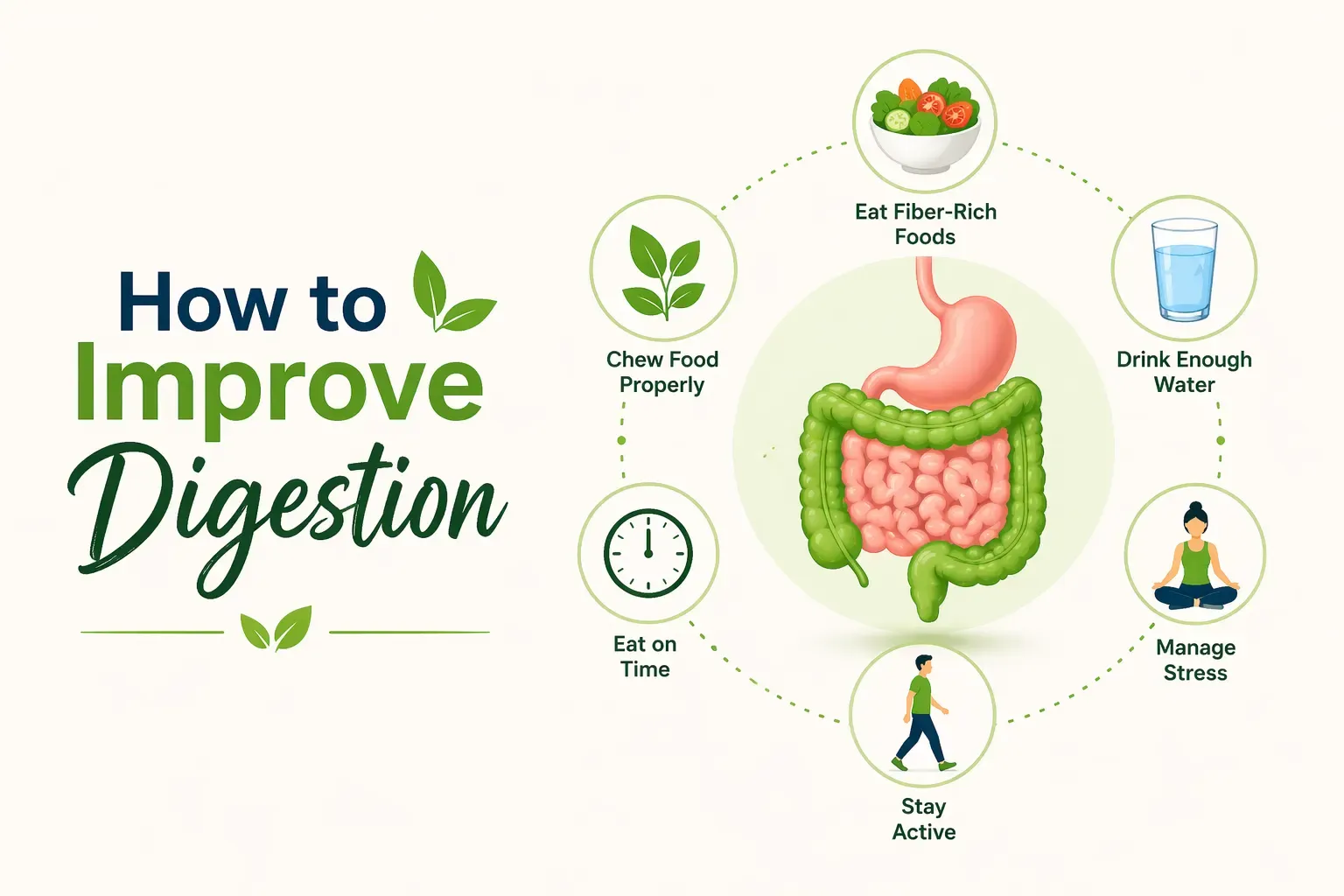
✏️ Quick Answer
To improve digestion, eat regular meals, chew slowly, include fibre-rich and fermented foods, use digestive spices, stay hydrated, manage stress, and sleep well. For faster results, start with meal timing and chewing — these two habits alone reduce bloating, gas, and heaviness within days. Long-term digestion improvement requires addressing gut microbiome balance, metabolism, and lifestyle as a whole system.
Sluggish digestion shows up in ways most people don't connect to the gut — persistent bloating, afternoon fatigue, skin issues, difficulty losing weight, or poor sleep. These are not random symptoms. They are signals from a digestive system under strain.
The good news is that digestion is highly responsive to lifestyle changes. You don't need supplements or drastic diets to see improvement. What you need is a clear understanding of what actually drives poor digestion — and consistent daily habits that address those root causes. How to improve your digestion is not a mystery; it is a system. This guide covers gut health and digestion from every angle, including specific approaches for age, fat digestion, metabolism, and home remedies.
Why Digestion Becomes Poor — Understanding the Root Causes
Before improving digestion, it helps to understand what weakens it. Poor digestion is rarely caused by a single food or a single habit — it is usually a combination of factors that compound over time.
| Root Cause | How It Impairs Digestion |
|---|---|
| Irregular meal timing | Disrupts digestive enzyme secretion rhythm |
| Eating too fast | Reduces chewing; overwhelms stomach with large particles |
| Low fibre intake | Slows gut motility; starves beneficial bacteria |
| Chronic stress | Suppresses digestive enzyme output; slows gut movement |
| Poor sleep | Disrupts gut hormones and circadian digestive rhythms |
| Excess processed food | Feeds harmful gut bacteria; reduces microbiome diversity |
| Dehydration | Impairs every stage from saliva to stool formation |
| Sedentary lifestyle | Reduces gut motility and peristaltic movement |
Most people are dealing with several of these simultaneously. Improvement comes fastest when you address the two or three that affect you most.
How to Improve Digestion Naturally at Home — 10 Core Habits
These habits form the foundation of better digestion. They are free, side-effect-free, and effective when followed consistently.
1. Chew Every Bite Thoroughly
Digestion begins in the mouth. Salivary amylase starts breaking down starch, and mechanical chewing reduces food particle size — meaning the stomach and small intestine receive pre-processed food that requires far less work. Aim for 20–30 chews per bite. This single habit reduces bloating, gas, and post-meal heaviness more than any supplement.
2. Eat at Regular, Consistent Times
The digestive system follows a circadian rhythm. When you eat at the same times daily, the body anticipates meals and pre-releases enzymes, bile, and gastric acid. Skipping meals or eating at random times disrupts this rhythm and weakens digestive efficiency over time.
3. Include Fibre from Every Meal
Dietary fibre feeds the gut microbiome, adds bulk to stools, supports peristalsis, and slows glucose absorption. Include at least one fibre source per meal — dal, sabzi, whole grains, or fruit. Increase gradually to avoid sudden gas.
4. Eat Fermented Foods Daily
Curd, buttermilk, idli, dosa, and kanji are natural sources of beneficial bacteria that support microbiome balance, reduce inflammation in the gut lining, and improve nutrient absorption. A small serving daily is sufficient.
5. Use Digestive Spices
Ginger, cumin, fennel, ajwain, and turmeric have been used for generations in Indian cooking for a reason — they stimulate digestive secretions, reduce gas, improve gut motility, and soothe the stomach lining. Use them in cooking or as post-meal teas.
6. Drink Water at the Right Time
Drink 1–2 glasses 30 minutes before meals. Avoid large amounts immediately after meals. Morning warm water on an empty stomach activates the digestive system and supports bowel movements. See the full guide on water digestion time and optimal timing.
7. Walk After Meals
A 10–15 minute walk after meals significantly improves gastric emptying and reduces post-meal blood sugar spikes. It stimulates peristalsis — the wave-like contractions that move food through the digestive tract.
8. Do Not Lie Down After Eating
Gravity helps keep stomach contents down. Lying within 2–3 hours of eating increases acid reflux risk and slows gastric emptying. If you experience causes of acidity regularly, this is one of the most impactful changes you can make.
9. Manage Stress Actively
The gut-brain axis means stress directly impairs digestion — suppressing enzyme secretion, slowing motility, and disrupting the microbiome. Deep breathing before meals, mindful eating, and consistent sleep schedules all support digestive function.
10. Sleep 7–8 Hours at Consistent Times
Digestive hormones, gut motility, and microbiome composition are all regulated by the body's internal clock. Late nights and irregular sleep consistently worsen digestion over time — independently of food choices.
How to Improve Digestion Fast — What Works Within Days
If you need to improve digestion quickly, focus on the habits that produce the fastest visible results:
- Chew more slowly — bloating often reduces within the first meal
- Walk after meals — reduces post-meal heaviness and gas within 2–3 days
- Drink warm water in the morning — improves bowel regularity within 3–5 days
- Remove one major trigger food — identify your most problematic food (usually deep-fried, excess tea, or very spicy) and cut it for one week
- Add curd or buttermilk at lunch — probiotic foods begin improving gut bacteria balance within a few days
How to Improve Gut Health and Digestion Together
Digestion and gut health are not the same thing, but they are inseparable. Digestion refers to the mechanical and chemical breakdown of food. Gut health refers to the overall condition of the GI tract — including the microbiome, gut lining integrity, inflammation levels, and gut-brain communication.
Knowing how to improve digestion and gut health simultaneously is the key to lasting results. To address both together:
- Diversify your diet — eat 30 or more different plant foods per week to maximise microbiome diversity
- Reduce antibiotics and antacids — both disrupt gut bacteria when used unnecessarily or chronically
- Support the gut lining — ghee, turmeric, and bone broth (or vegetable broth) contain compounds that support intestinal barrier integrity
- Reduce ultra-processed foods — these are among the worst foods for gut health and directly reduce microbiome diversity
- Include prebiotics — onion, garlic, banana, oats, and lentils feed beneficial bacteria
How to Improve Digestion System — Organ by Organ
Improving the digestion system requires supporting each organ in the digestive chain. Weakness in any single organ creates a cascade of downstream problems.
| Organ | How to Support It |
|---|---|
| Mouth / Saliva | Chew slowly; stay hydrated; avoid excess caffeine that reduces saliva |
| Stomach | Eat regular meals; avoid overeating; include bitter foods that stimulate acid |
| Liver | Reduce alcohol and processed fats; include bitter greens, lemon water, and turmeric |
| Pancreas | Avoid excess sugar and refined carbs; eat at regular intervals |
| Small intestine | Fermented foods; zinc-rich foods; avoid gluten overload if sensitive |
| Large intestine | Fibre; adequate water; physical movement; consistent sleep |
For a deeper understanding of what each organ does, see the complete guide on what is digestion.
How to Improve Digestion Power
Digestion power — or digestive fire (Agni in Ayurveda) — refers to the overall capacity of your digestive system to break down, absorb, and assimilate food. Strong digestion power means you can eat a meal and feel energised, light, and clear within 2–3 hours. Weak digestion power means heaviness, bloating, fatigue, or gas after almost every meal.
To improve digestion power:
- Eat your largest meal at lunch when digestive fire is strongest (midday)
- Keep dinner early, light, and easily digestible
- Start meals with a small piece of ginger and rock salt — traditionally used to stimulate gastric secretions
- Avoid cold drinks with meals — cold temperatures suppress digestive enzyme activity
- Give your gut 12–14 hours of fasting overnight — intermittent fasting supports digestive repair and microbiome health
- Avoid snacking constantly — the digestive system needs rest between meals to complete processing
How to Improve Digestion and Metabolism
Digestion and metabolism are deeply connected. When digestion is impaired, nutrient absorption falls — and the body cannot efficiently convert food into energy. This directly impacts metabolic rate, weight regulation, energy levels, and even thyroid function.
To improve both digestion and metabolism together:
- Eat protein at every meal — protein has the highest thermic effect (requires the most energy to digest) and supports muscle mass that drives metabolic rate
- Don't skip breakfast — morning eating activates the digestive-metabolic axis and prevents compensatory overeating later
- Build muscle through resistance exercise — muscle tissue is metabolically active; more muscle means better glucose utilisation and digestive motility
- Optimise thyroid function — hypothyroidism significantly slows both digestion and metabolism; iodine, selenium, and zinc support thyroid health
- Stay hydrated — even mild dehydration reduces metabolic rate and digestive enzyme efficiency
How to Improve Digestion in Old Age
Digestion naturally slows with age due to reduced saliva production, lower gastric acid output, decreased enzyme secretion, slower gut motility, and a less diverse gut microbiome. These changes are normal but manageable.
Specific approaches to improve digestion in old age:
- Smaller, more frequent meals — the ageing stomach empties more slowly; smaller portions reduce the workload
- Soluble fibre priority — oats, cooked vegetables, and ripe fruits are easier to digest than raw or very high-insoluble-fibre foods
- Hydration vigilance — the sense of thirst diminishes with age; drinking 8–10 glasses daily must be intentional
- Probiotic foods daily — curd, buttermilk, and fermented foods help compensate for microbiome decline that occurs with age
- Vitamin B12 supplementation — reduced stomach acid impairs B12 absorption from food in older adults; supplementation is often necessary
- Gentle movement after meals — a short walk improves peristalsis, which slows significantly in older age
- Chew extra carefully — dental issues in old age mean food is often swallowed less thoroughly; soft, well-cooked foods reduce the burden
How to Improve Fat Digestion Naturally
Fat digestion is the most complex of the three macronutrient pathways — requiring bile from the liver, lipase from the pancreas, and a healthy small intestinal lining for absorption. When fat digestion is impaired, you may notice oily or floating stools, nausea after fatty meals, or a feeling of extreme heaviness after eating ghee, paneer, or fried foods.
To improve fat digestion naturally:
- Support liver and bile production — bitter foods (karela, methi, amla), lemon water, and turmeric stimulate bile flow
- Eat smaller fat portions — the gallbladder releases bile in response to fat; smaller amounts are handled more efficiently
- Choose healthy fats — ghee, cold-pressed mustard oil, and coconut oil are easier to digest than heavily processed vegetable oils
- Digestive enzymes — if fat malabsorption is significant, a lipase-containing enzyme supplement before fatty meals can help (consult a doctor)
- Avoid cold immediately after fat-rich meals — cold solidifies fat and slows bile-fat emulsification
- Apple cider vinegar (diluted) before meals — may stimulate bile and enzyme release for some individuals
How to Improve Digestion — Home Remedies That Actually Work
Many people search for how to improve digestion home remedy — and traditional Indian households have long used simple kitchen ingredients as effective answers. These are not folklore — most have scientific backing for their mechanisms.
| Home Remedy | How It Helps | Best Used |
|---|---|---|
| Warm water with lemon | Stimulates bile and gastric acid; activates bowel movement | Morning, empty stomach |
| Ginger + rock salt | Stimulates gastric secretions; reduces nausea and gas | Before meals |
| Jeera (cumin) water | Reduces gas and bloating; improves gut motility | After meals or morning |
| Saunf (fennel) seeds | Antispasmodic; reduces gas and cramping | After meals |
| Ajwain water | Stimulates digestive fire; reduces bloating instantly | During gas/bloating |
| Buttermilk with roasted cumin | Probiotics + digestive spice; reduces heaviness | After lunch |
| Triphala at bedtime | Gentle laxative; supports bowel regularity; detoxifies | Bedtime with warm water |
| Hing + warm water | Immediate relief from gas and abdominal cramps | During acute bloating |
For a full collection of natural approaches, see improve digestion naturally at home with detailed step-by-step guidance.
Best Foods to Improve Digestion
No single food fixes digestion — but some foods consistently support the digestive system more than others in the Indian diet context.
- Moong dal — easiest legume to digest; low in gas-producing fibres; rich in protein
- Curd and buttermilk — probiotics for microbiome; cooling for the stomach lining
- Banana — gentle on the gut; contains pectin that supports stool consistency
- Papaya — contains papain, a natural enzyme that aids protein digestion
- Lauki and tori — high water content; easy to digest; reduces stomach heat
- Brown rice and oats — soluble fibre supports microbiome and bowel regularity
- Ghee — contains butyric acid that nourishes the intestinal lining and reduces gut inflammation
- Ginger — accelerates gastric emptying; reduces nausea; stimulates bile
How Mool Health Helps You Improve Digestion
Mool Health focuses on understanding the root cause of your specific digestive pattern rather than prescribing the same advice for everyone. Two people with bloating may have completely different root causes — one may have low stomach acid, another may have microbiome imbalance, and a third may have stress-triggered gut-brain misfiring.
Through a structured Gut Test, Prakruti analysis, and lifestyle review, Mool identifies the specific dysfunction driving your symptoms and creates a personalised approach — food, habits, and support tailored to your digestion type.
Key Takeaways
Complete guide on how to improve digestion covering natural home habits, fast fixes, gut health, digestion system, digestion power, metabolism, old age, fat digestion and home remedies.
Your gut is unique your healing should be too.

Disclaimer
The content provided by Mool Health is for educational and informational purposes only and should not be considered a substitute for professional medical advice, diagnosis, or treatment.